


All tourists and residents travelling to Sharjah must have a negative Covid-19 test result before they board their flights, officials have announced.
The results will be valid for up to 96 hours from the time the PCR test is taken, said the Sharjah Emergency, Crisis and Disaster Management Committee on Wednesday.
All passengers will have to take a second PCR test once they land in the emirate.
Travellers must also self-quarantine at their residence or hotel and wait for the test results.
Those who test positive will have to isolate for 14 days.
All medical expenses will be borne by individuals. It is recommended that tourists and residents get adequate health insurance that covers all costs of testing, treatment and isolation.
Tourists will also have to fill out a health disclosure form at the airport and disclose any medical symptoms and underlying conditions they may have.
-

Hand sanitisers set up across the facilities at the Ramada by Wyndham Downtown Dubai. Antonie Robertson / The National -
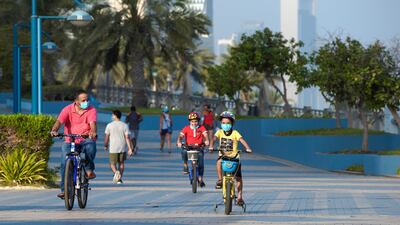
A father and his son enjoy a bike ride along the Corniche in Abu Dhabi. Victor Besa / The National -
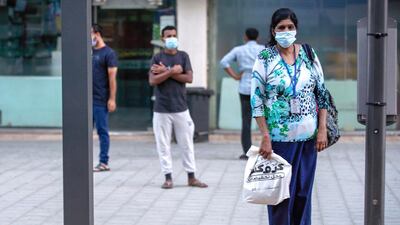
Abu Dhabi residents wait for their bus. Victor Besa / The National -
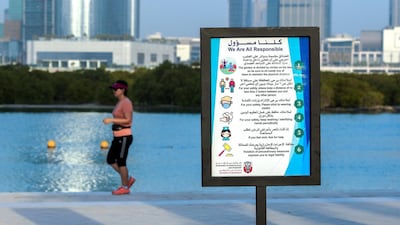
A Covid-19 sign along Reem Beach reminds residents exercising to be responsible. Victor Besa / The National -
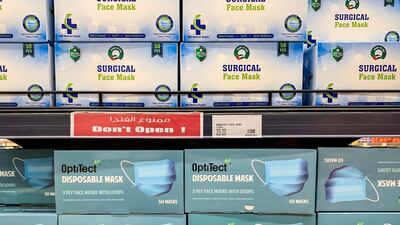
Face masks on Union Coop’s shelves in Al Barsha Mall in Dubai. Reem Mohammed / The National -
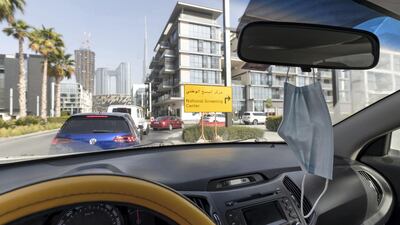
People wait in a queue to get tested for Covid-19 in City Walk. Chris Whiteoak / The National -

Cleaning staff disinfect the sitting area at the Towers Rotana hotel on Sheikh Zayed road in Dubai. Pawan Singh / The National -
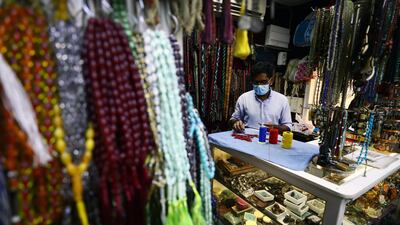
A man makes prayer beads in his shop at Central Souq in Sharjah. Getty -
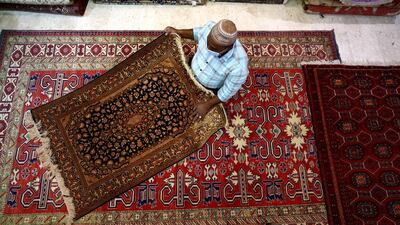
A vendor arranges carpets in his shop at Central Souq in Sharjah. Getty Images -
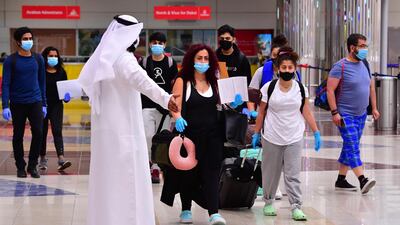
Tourists arrive at Dubai airport as the emirate reopened its doors to international visitors. AFP


Sharjah residents are now allowed to enter the emirate without any prior approvals.
Citizens and residents will also have to download the Al Hosn app that monitors the isolation and quarantine of positive cases.
Travelling abroad from Sharjah
Citizens and residents are now allowed to travel abroad from Sharjah airport.
But they will have to take a PCR test, no earlier than 96 hours before the date of travel.
This will be applicable if any country requires the test result as a prerequisite to travel.
Such passengers will be tested at the Sharjah airport and should have international health insurance when travelling abroad.
Travel rules in Dubai
UAE airspace was officially reopened on June 23 and travel to Dubai for tourism was permitted from July 7.
All citizens, residents, tourists and transit passengers must have a negative Covid-19 test result before arriving into Dubai International Airport or Dubai World Central.
All passengers including citizens, residents and tourists departing from both airports to the European Union or the United Kingdom need a negative test result.
The results are valid for up to 96 hours from the time of the PCR test taken.
Children under the age of 12 and children with moderate to severe disabilities are exempt from the test requirements.
Some passengers may be required to take another PCR test upon arrival in Dubai.
All Dubai resident visa holders who are flying back to the emirate must still apply for and receive approval from the UAE’s General Directorate of Residency and Foreign Affairs prior to travel.
Travel rules in Abu Dhabi
A negative Covid-19 test is needed to enter Abu Dhabi.
Passengers travelling to the capital will have to take a PCR test after landing.
All inbound travellers must self-isolate for 14 days and on the 12th day of quarantine they must take a second PCR test to ensure they are clear of the virus.
It is also mandatory that they wear an electronic wristband during the quarantine period.
If the second test is negative, the wristband can be removed on the 14th day.
Passengers arriving directly to Abu Dhabi through any UAE port or entry point must take a PCR test and register under the quarantine system.
Those who arrive in the UAE through Abu Dhabi but wish to go straight to another emirate must undergo a PCR test within 96 hours of travel to the capital.
On arrival, they must also take a DPI laser test and, if negative, can move on provided they sign a form stating their location and agreeing to abide by any regulations in place. If an arrival does not have a test, they must take one and wait for a negative result.
Health authorities will decide on where people may be asked to quarantine, depending on whether or not they live alone and can self-isolate without putting others at risk.
Those who live with others may be asked to quarantine in a hotel or accommodation provided by authorities for 14 days. Families travelling together may quarantine at home.
Everyone leaving Abu Dhabi International Airport on an Etihad flight is required to take a PCR swab test, regardless of their destination.
The test must be carried out 96 hours prior to departure. A negative Covid-19 PCR test result is required to obtain approval to board.
The rule has been in force since August 16.
Approval to return is no longer required for UAE residents of the six emirates of Abu Dhabi, Ajman, Fujairah, Umm Al Quwain and Sharjah.

