
The UAE was formed in December 1971 but it took more than a year before the new country got its own currency.
On May 20, 1973, in came the dirham and out went the rupee, the dinar, the riyal and even the Maria Theresa silver thaler.
Having a currency was an expression of sovereignty and unity, especially when so many others had been in circulation throughout the seven emirates.
The new designs were another reflection of this, incorporating familiar symbols and landmarks.
Six denominations made up the first issue of banknotes, including a Dh1 note that featured the Deira clock tower and Dubai Police station. It was withdrawn in the late 1970s, and examples now sell for as much Dh350 on eBay.

Since then, there have been five issues of banknotes and various design changes. The Dh500 made its debut in 1983, and the Dh200 in 1989.
The Dh1,000 has been around since 1973, although then, as now, it is of little use in a taxi or baqala.
Since 2017, today's bank notes have been printed in the UAE and incorporate the latest security measures to prevent fraud.
Six coins were also introduced in 1973, although inflation means that only the 25 fils, 50 fils and one dirham are still in circulation.
The dirham has always been pegged to the US dollar, currently at a rate of Dh3.67 to $1. Back in 1973, the exchange rate for UK £1 was Dh10, while an Indian rupee was worth about 50 fils. Today, the British pound will buy just Dh5, while a single dirham is valued at about 20 rupees.
In this weekly series, The National breaks down the historical and cultural significance of the designs for each of the UAE currency's denominations.
25 fils
The 25 fils coin is now the lowest in circulation, since the 1, 5 and 10 copper fils were gradually phased out. It features a sand gazelle facing right, above the date in Arabic in the Gregorian and Islamic Hijri calendar.
The gazelle, listed as vulnerable by the International Union for Conservation of Nature, is native to the region and the growth of its population can be credited to the UAE, where breeding programmes have been under way for years.
The other side of the 25 fils coin has the value in Arabic and the words United Arab Emirates in English and Arabic – features of all UAE coins.
It is produced for the UAE Central Bank by the Royal Canadian mint, and is made from non-magnetic copper-nickel.
50 fils
Like the 25 fils and Dh1 coins, the 50 fils uses a design from the first issue in 1973, featuring three oil derricks as symbols of the country’s economy.
What has changed is the coin's shape. It was originally circular and the same size as today's Dh1 coin. In 1995, it was reduced in size and produced as an equilateral curve heptagon, or having seven sides.
Dh1
With its familiar design of a traditional dallah coffee pot, the Dh1 coin represents the hospitality of the UAE. It was also reduced in size in 1995, although older coins very occasionally come up in your change. Also worth looking out for are the limited edition commemorative Dh1 coins – nearly 50 at the last count.
These were first issued in the 1980s, with subjects as diverse as the 1981 Dubai chess olympiad, the 25th anniversary of offshore oil production in 1987, the 1990 Fifa World Cup and the Year of Zayed in 2018.
The only other circulating commemorative coin was for Dh5, issued in 1981 to mark the start of the 15th Hijri century.
The inspiration behind the design of the UAE's currency
-
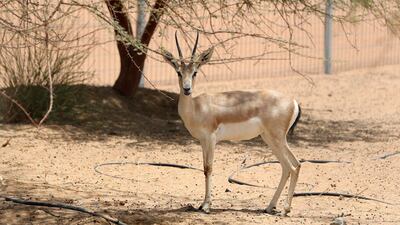
An Arabian sand gazelle at the Mleiha Archaeological Centre in Sharjah. The gazelle is native to the region and can be found on the 25 fils coin. Chris Whiteoak / The National -
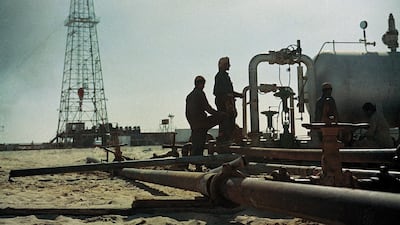
The Murban 2 oil well in Abu Dhabi, pictured in 1956. The discovery of oil transformed the emirate and eventually the UAE. Three oil derricks are featured on the 50 fils coin. Adnoc -
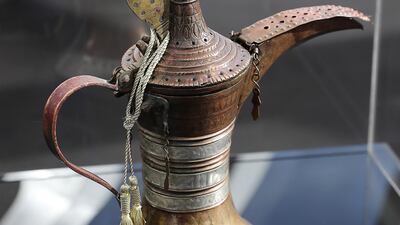
A dallah belonging to Sheikh Zayed in the early 20th century on display during the Majlis Zayed Exhibition in Abu Dhabi. The traditional coffee pot, a symbol of Emirati hospitality, appears on the Dh1 coin. Pawan Singh / The National -

One of the entrances to the Central Market, also known as the Blue Souq, in Sharjah. The market was built in 1979 and is adorned with Islamic designs. It can be seen on the Arabic side of the Dh5. Amy Leang / The National -
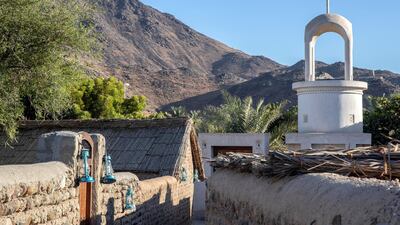
Salem Al Mutawa Mosque is one of the oldest two in the UAE. About 200 years old, it can be seen on the English side of the Dh5 along with the Khor Fakkan coastline. Antonie Robertson / The National -
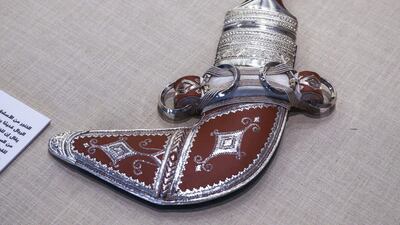
The khanjar is a curved ceremonial dagger worn by men in the UAE and Oman. An illustration of the knife can be seen on the Arabic side of the Dh10. Victor Besa / The National -
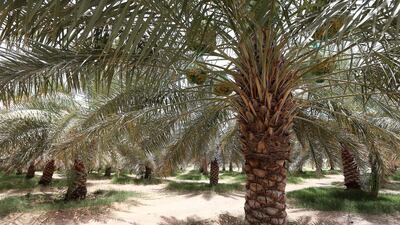
Date palm tree at Al Dahra farm in Al Ain. A date tree and farm are the main illustrations on the Dh10 note. Pawan Singh / The National -
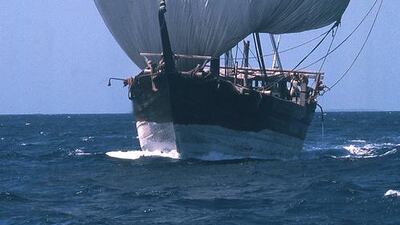
An Arabian dhow at sea in 1973. The vessel features prominently on the Dh20 note. Marion Kaplan -
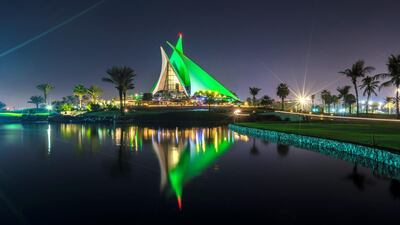
Dubai Creek Golf & Yacht Club opened in 1993 and can be seen on the Arabic side of the Dh20 note. Tourism Ireland -
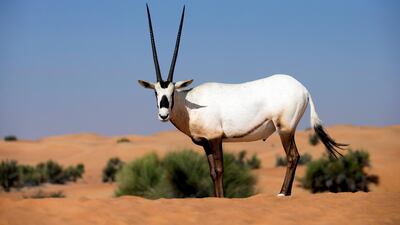
An Arabian oryx at Al Maha Desert Resort in Dubai. The species was endangered but conservation efforts, led by Sheikh Zayed, helped it to flourish. It can be seen on the Dh50 note. Gerry O’Leary -
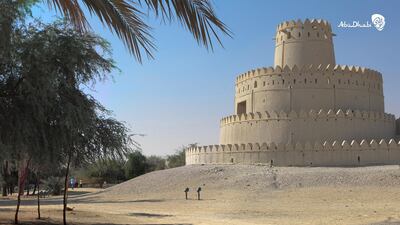
Completed in 1898 on the orders of Sheikh Zayed the First, Al Jahili Fort in Al Ain is one of the country’s largest. It appears on the English-language side of the Dh50 note. Abu Dhabi Culture and Tourism -
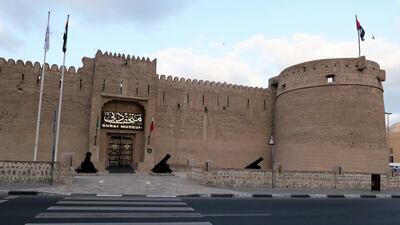
Al Fahidi Fort in Dubai was built in 1787. Since then, it has had many uses, even functioning as a prison for outlaws for a time. It can be found on the Arabic face of the Dh100 note. Pawan Singh / The National -
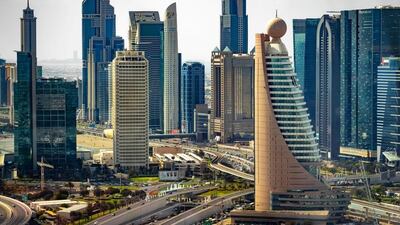
Dubai World Trade Centre (the grey, rectangular building to the middle left) was opened by Queen Elizabeth II in 1979. The tallest building in the UAE until 1999, it appears on the Dh100 banknote. Alamy -

Established in 1980, the UAE Central Bank was preceded by the Currency Board, which issued the country’s first independent currency: the dirham. The headquarters now features on the Dh200 note. Sammy Dallal / The National -
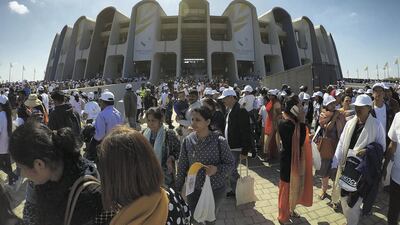
Worshippers leave the stadium at Zayed Sports City, Abu Dhabi, after Pope Francis led a holy Mass there in 2019. The building opened in 1979 and is featured on the Dh200 banknote. Pawan Singh / The National -
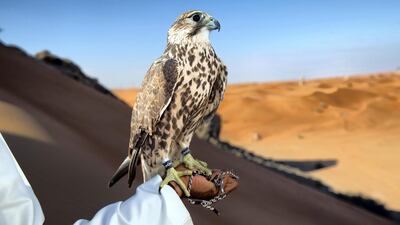
Falcons feature on each of the dirham notes, but the beloved bird takes centre stage on the Arabic side of the Dh500. Getty -
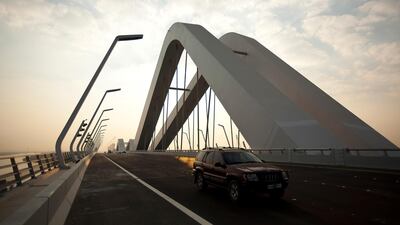
Sheikh Zayed Bridge was designed by renowned Iraqi architect Zaha Hadid. It was opened in 2010, becoming the third gateway from Abu Dhabi island to the greater emirate. During the Year of Zayed in 2019, a special Dh100 note, which is still in circulation, was printed depicting the bridge. Andrew Henderson / The National -
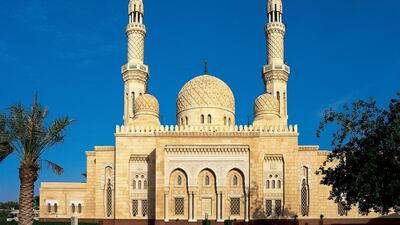
Jumeirah Mosque in Dubai opened in 1979. One of two mosques open to non-Muslims, it is a distinctive feature of the Dh500 note. Getty -
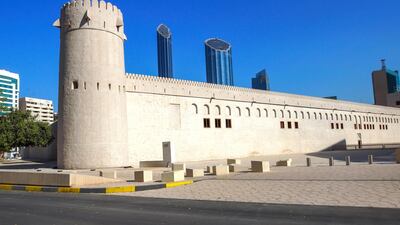
Qasr Al Hosn, the birthplace of Sheikh Zayed, is on the Arabic side of the Dh1,000 note. Victor Besa / The National -
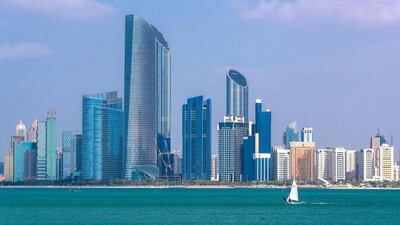
Abu Dhabi’s skyline has changed dramatically since the dirham was launched. The UAE’s capital is featured on the Dh1,000 note. Chris Whiteoak / The National



