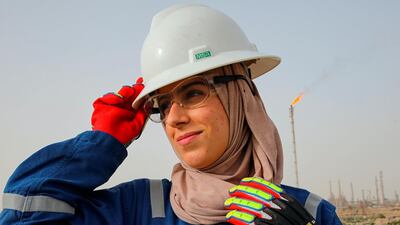
Involving more women in industrial sectors can boost the wider economy. AP

How companies in the Middle East can catch up on gender equality


  • English
  • Arabic

It is no surprise that the Covid-19 pandemic has been a major disruptor to economies at large and as we zoom in on the implications of this global fallout, a pattern of gender disparity becomes clear. As women are the ones who handle the bulk of family caregiving responsibilities and with the disruption of the childcare sector, women's jobs were 1.8 times more impacted by the pandemic than men. This not only raises a social dilemma, but will also have a measurable impact on the global economy, where the global GDP could be $1 trillion lower in 2030 versus $13tn higher if gender inequality is not properly addressed, according to a recent report by consulting firm McKinsey on the future of work.

Across the globe, pressures felt by women to assume bigger roles as the primary caregivers during the pandemic led to a disproportionate increase in time spent on family responsibilities. In India, this figure equated to a 30 per cent rise in time spent on unpaid care. Comparatively, women in the US spent an additional 1.5 to two hours tending to caregiving duties. The impact this has on the global labour force is further amplified by the fact that in some markets, such as Nigeria, women are disproportionately represented in sectors that have been negatively affected by the pandemic.

Gender parity is more than just a tagline and cannot be achieved through a single “cultural” initiative; it is a conscious business decision that enhances the bottom line, and one that should be integrated as part of the business model. As a first step, employers need to revisit their diversity and inclusion strategies and start identifying any existing gaps in their workplace cultures and organisational policies.

Saudi female employees work at the customer service desk at a hypermarket, newly launched by the operator LuLu and run by a team of women, in the Saudi Arabian port city of Jeddah, on February 21, 2021. AFP
Efforts to create an inclusive culture have led to an increase in participation by women in the UAE's workforce

Today, the Middle East is falling behind. Despite improvements that have taken place in some industries and governments, the region overall still holds the lowest female labour force participate rate in the world, according to another McKinsey report from 2020 on the region's prospects for women at work. A study cited in the report in found that women in the Middle East are exposed to challenges including constrained interactions with seniors, limited support from team members and reduced exposure to role models and mentors. Other barriers that have been identified include limited policies on work-life balance, lack of clarity on advancement opportunities and lack of essential services at work.

Still, the picture is not all negative. In the UAE, the passing of a labour law in 2018 guaranteed equal pay for men and women who perform the “same work” or work of “equal value”. The following year, the UAE introduced three months’ paid maternity leave for government employees, placing pressure on the private sector to follow suit by increasing the number of days allotted to women, which currently stands at 45. Similarly, efforts to create a truly inclusive culture have led to a notable increase in participation by women in the UAE’s workforce, reaching 53 per cent in 2019, from 29 per cent in 1990. Elsewhere in the region, Saudi Arabia set out to achieve 30 per cent participation in the workforce by women as part of the country’s Vision 2030 campaign. As of 2019, that figure had reached 23 per cent, up from 16 per cent in 1990.

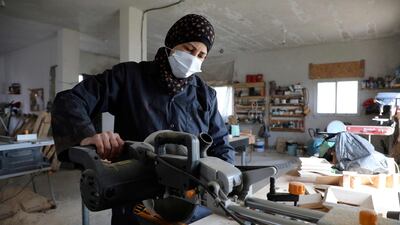
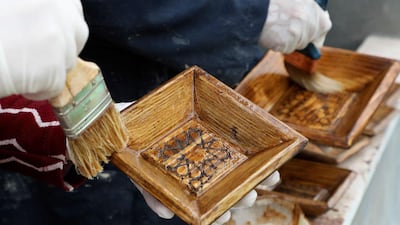
  • A Palestinian woman works at a carpentry shop in Al Walajah village, close to the West Bank city of Bethlehem. Five years ago, a group of housewives began recycling waste timber into usable products, which were sold to souvenir shops. AFP
    A Palestinian woman works at a carpentry shop in Al Walajah village, close to the West Bank city of Bethlehem. Five years ago, a group of housewives began recycling waste timber into usable products, which were sold to souvenir shops. AFP
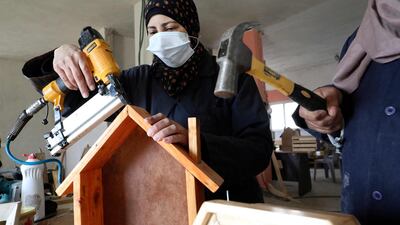
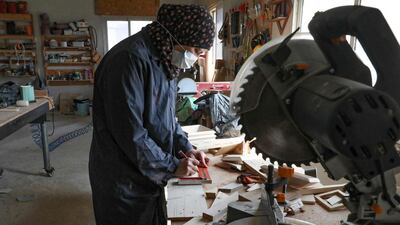
  • A Palestinian woman works at a carpenter workshop, established and run by a group of women, in the village of Al Walajeh near the West bank town of Bethlehem. AFP
    A Palestinian woman works at a carpenter workshop, established and run by a group of women, in the village of Al Walajeh near the West bank town of Bethlehem. AFP
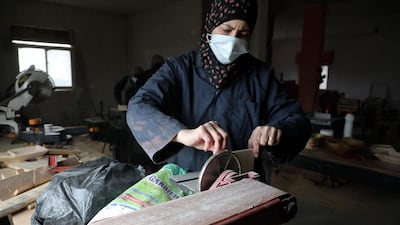
  • A Palestinian woman works at a carpenter workshop, established and run by a group of women, in the village of Al Walajeh near the West bank town of Bethlehem. AFP
    A Palestinian woman works at a carpenter workshop, established and run by a group of women, in the village of Al Walajeh near the West bank town of Bethlehem. AFP
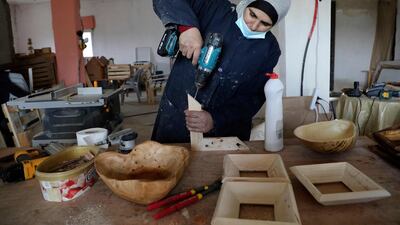
  • A Palestinian woman works at a carpenter workshop, established and run by a group of women, in the village of Al Walajeh near the West bank town of Bethlehem. AFP
    A Palestinian woman works at a carpenter workshop, established and run by a group of women, in the village of Al Walajeh near the West bank town of Bethlehem. AFP
  • A Palestinian woman works at a carpenter workshop, established and run by a group of women, in the village of Al Walajeh near the West bank town of Bethlehem. AFP
    A Palestinian woman works at a carpenter workshop, established and run by a group of women, in the village of Al Walajeh near the West bank town of Bethlehem. AFP
  • A Palestinian woman works at a carpenter workshop, established and run by a group of women, in the village of al-Walajeh near the West bank town of Bethlehem. AFP
    A Palestinian woman works at a carpenter workshop, established and run by a group of women, in the village of al-Walajeh near the West bank town of Bethlehem. AFP
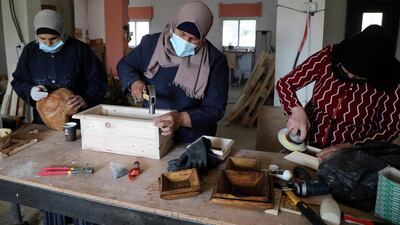
  • Palestinian women work at a carpenter workshop, established and run by a group of women, in the village of Al Walajeh near the West bank town of Bethlehem. AFP
    Palestinian women work at a carpenter workshop, established and run by a group of women, in the village of Al Walajeh near the West bank town of Bethlehem. AFP
  • A Palestinian woman works at a carpenter workshop, established and run by a group of women, in the village of Al Walajeh near the West bank town of Bethlehem. AFP
    A Palestinian woman works at a carpenter workshop, established and run by a group of women, in the village of Al Walajeh near the West bank town of Bethlehem. AFP
  • Palestinian women work at a carpenter workshop, established and run by a group of women, in the village of Al Walajeh near the West bank town of Bethlehem. AFP
    Palestinian women work at a carpenter workshop, established and run by a group of women, in the village of Al Walajeh near the West bank town of Bethlehem. AFP

In paving the way for more progress, employers should look to seize opportunities that make a measurable difference in addressing these gender disparities by upscaling their organisational policies and increasing female participation in their activities. As an immediate step, it is essential to educate the workforce through awareness-based trainings on gender equality with the aim of countering gender-based stereotypes and biases. At Nissan, where I manage human resources for the region, we run unconscious bias trainings and continue to roll out awareness initiatives to encourage employees to become more mindful of them.

As the Middle East region continues to play catch up, female recruitment becomes all the more significant. Increased female participation in the workforce, especially in industrial sectors such as the automotive industry, delivers substantial economic and societal benefits, including an uptick in business performance, financial independence for women in society, improved well-being and accelerated economic growth.

Rolling out gender-sensitive recruitment processes that integrate a diversity policy as part of the application process and setting diversity quotas for senior positions are examples of actions that can be taken to address this disparity. In addition to upscaling recruitment and appraisal policies, Nissan’s own experience has found that offering women access to mentorship programs can help them pave their path towards career growth, increase talent retention rates and positively impact the business.

Lastly, maintaining workplace flexibility and extending unique benefits are moves that also make a variable difference in employee retention. The pandemic has really showcased the endless possibilities of remote working and how it is extremely effective. Therefore, it becomes crucial for employers to offer flexible working conditions and remote-working schemes to accommodate the evolving needs of the female workforce.

The pandemic, in many ways, has been an eye-opening phenomenon. However, it is up to us to decide whether we want to ignore its lessons or leverage them as opportunities for change and growth. The repercussions of gender disparity have proven to be substantial, while the benefits of eliminating this imbalance could really enhance social and economic outcomes for millions of women around the world. Now is the time for corporations to act and, as we embark on a new year, it is the perfect time to start introducing forward-thinking changes to the workplace.

Samar Elmnhrawy is vice president for human resources and general affairs at Nissan Africa, Middle East, India, Europe and Oceania


How does ToTok work?

The calling app is available to download on Google Play and Apple App Store

To successfully install ToTok, users are asked to enter their phone number and then create a nickname.

The app then gives users the option add their existing phone contacts, allowing them to immediately contact people also using the application by video or voice call or via message.

Users can also invite other contacts to download ToTok to allow them to make contact through the app.


Results:

Men's wheelchair 800m T34: 1. Walid Ktila (TUN) 1.44.79; 2. Mohammed Al Hammadi (UAE) 1.45.88; 3. Isaac Towers (GBR) 1.46.46.

Super 30

Produced: Sajid Nadiadwala and Phantom Productions
Directed: Vikas Bahl
Cast: Hrithik Roshan, Pankaj Tripathi, Aditya Srivastav, Mrinal Thakur
Rating: 3.5 /5

The five pillars of Islam
TECH%20SPECS%3A%20APPLE%20WATCH%20SERIES%208
%3Cp%3E%3Cstrong%3EDisplay%3A%3C%2Fstrong%3E%2041mm%2C%20352%20x%20430%3B%2045mm%2C%20396%20x%20484%3B%20Retina%20LTPO%20OLED%2C%20up%20to%201000%20nits%2C%20always-on%3B%20Ion-X%20glass%3C%2Fp%3E%0A%3Cp%3E%3Cstrong%3EProcessor%3A%3C%2Fstrong%3E%20Apple%20S8%2C%20W3%20wireless%2C%20U1%20ultra-wideband%3C%2Fp%3E%0A%3Cp%3E%3Cstrong%3ECapacity%3A%3C%2Fstrong%3E%2032GB%3C%2Fp%3E%0A%3Cp%3E%3Cstrong%3EMemory%3A%3C%2Fstrong%3E%201GB%3C%2Fp%3E%0A%3Cp%3E%3Cstrong%3EPlatform%3A%3C%2Fstrong%3E%20watchOS%209%3C%2Fp%3E%0A%3Cp%3E%3Cstrong%3EHealth%20metrics%3A%3C%2Fstrong%3E%203rd-gen%20heart%20rate%20sensor%2C%20temperature%20sensing%2C%20ECG%2C%20blood%20oxygen%2C%20workouts%2C%20fall%2Fcrash%20detection%3B%20emergency%20SOS%2C%20international%20emergency%20calling%3C%2Fp%3E%0A%3Cp%3E%3Cstrong%3EConnectivity%3A%3C%2Fstrong%3E%20GPS%2FGPS%20%2B%20cellular%3B%20Wi-Fi%2C%20LTE%2C%20Bluetooth%205.3%2C%20NFC%20(Apple%20Pay)%3C%2Fp%3E%0A%3Cp%3E%3Cstrong%3EDurability%3A%3C%2Fstrong%3E%20IP6X%2C%20water%20resistant%20up%20to%2050m%2C%20dust%20resistant%3C%2Fp%3E%0A%3Cp%3E%3Cstrong%3EBattery%3A%3C%2Fstrong%3E%20308mAh%20Li-ion%2C%20up%20to%2018h%2C%20wireless%20charging%3C%2Fp%3E%0A%3Cp%3E%3Cstrong%3ECards%3A%3C%2Fstrong%3E%20eSIM%3C%2Fp%3E%0A%3Cp%3E%3Cstrong%3EFinishes%3A%3C%2Fstrong%3E%20Aluminium%20%E2%80%93%20midnight%2C%20Product%20Red%2C%20silver%2C%20starlight%3B%20stainless%20steel%20%E2%80%93%20gold%2C%20graphite%2C%20silver%3C%2Fp%3E%0A%3Cp%3E%3Cstrong%3EIn%20the%20box%3A%3C%2Fstrong%3E%20Watch%20Series%208%2C%20magnetic-to-USB-C%20charging%20cable%2C%20band%2Floop%3C%2Fp%3E%0A%3Cp%3E%3Cstrong%3EPrice%3A%3C%2Fstrong%3E%20Starts%20at%20Dh1%2C599%20(41mm)%20%2F%20Dh1%2C999%20(45mm)%3C%2Fp%3E%0A
Avatar: Fire and Ash

Director: James Cameron

Starring: Sam Worthington, Sigourney Weaver, Zoe Saldana

Rating: 4.5/5

UK’s AI plan
  • AI ambassadors such as MIT economist Simon Johnson, Monzo cofounder Tom Blomfield and Google DeepMind’s Raia Hadsell
  • £10bn AI growth zone in South Wales to create 5,000 jobs
  • £100m of government support for startups building AI hardware products
  • £250m to train new AI models
Teri%20Baaton%20Mein%20Aisa%20Uljha%20Jiya
%3Cp%3E%3Cstrong%3EDirectors%3A%3C%2Fstrong%3E%20Amit%20Joshi%20and%20Aradhana%20Sah%3C%2Fp%3E%0A%3Cp%3E%3Cstrong%3ECast%3A%3C%2Fstrong%3E%20Shahid%20Kapoor%2C%20Kriti%20Sanon%2C%20Dharmendra%2C%20Dimple%20Kapadia%2C%20Rakesh%20Bedi%3C%2Fp%3E%0A%3Cp%3E%3Cstrong%3ERating%3A%3C%2Fstrong%3E%204%2F5%3C%2Fp%3E%0A
Sole survivors
  • Cecelia Crocker was on board Northwest Airlines Flight 255 in 1987 when it crashed in Detroit, killing 154 people, including her parents and brother. The plane had hit a light pole on take off
  • George Lamson Jr, from Minnesota, was on a Galaxy Airlines flight that crashed in Reno in 1985, killing 68 people. His entire seat was launched out of the plane
  • Bahia Bakari, then 12, survived when a Yemenia Airways flight crashed near the Comoros in 2009, killing 152. She was found clinging to wreckage after floating in the ocean for 13 hours.
  • Jim Polehinke was the co-pilot and sole survivor of a 2006 Comair flight that crashed in Lexington, Kentucky, killing 49.

Mercer, the investment consulting arm of US services company Marsh & McLennan, expects its wealth division to at least double its assets under management (AUM) in the Middle East as wealth in the region continues to grow despite economic headwinds, a company official said.

Mercer Wealth, which globally has $160 billion in AUM, plans to boost its AUM in the region to $2-$3bn in the next 2-3 years from the present $1bn, said Yasir AbuShaban, a Dubai-based principal with Mercer Wealth.

Within the next two to three years, we are looking at reaching $2 to $3 billion as a conservative estimate and we do see an opportunity to do so,” said Mr AbuShaban.

Mercer does not directly make investments, but allocates clients’ money they have discretion to, to professional asset managers. They also provide advice to clients.

“We have buying power. We can negotiate on their (client’s) behalf with asset managers to provide them lower fees than they otherwise would have to get on their own,” he added.

Mercer Wealth’s clients include sovereign wealth funds, family offices, and insurance companies among others.

From its office in Dubai, Mercer also looks after Africa, India and Turkey, where they also see opportunity for growth.

Wealth creation in Middle East and Africa (MEA) grew 8.5 per cent to $8.1 trillion last year from $7.5tn in 2015, higher than last year’s global average of 6 per cent and the second-highest growth in a region after Asia-Pacific which grew 9.9 per cent, according to consultancy Boston Consulting Group (BCG). In the region, where wealth grew just 1.9 per cent in 2015 compared with 2014, a pickup in oil prices has helped in wealth generation.

BCG is forecasting MEA wealth will rise to $12tn by 2021, growing at an annual average of 8 per cent.

Drivers of wealth generation in the region will be split evenly between new wealth creation and growth of performance of existing assets, according to BCG.

Another general trend in the region is clients’ looking for a comprehensive approach to investing, according to Mr AbuShaban.

“Institutional investors or some of the families are seeing a slowdown in the available capital they have to invest and in that sense they are looking at optimizing the way they manage their portfolios and making sure they are not investing haphazardly and different parts of their investment are working together,” said Mr AbuShaban.

Some clients also have a higher appetite for risk, given the low interest-rate environment that does not provide enough yield for some institutional investors. These clients are keen to invest in illiquid assets, such as private equity and infrastructure.

“What we have seen is a desire for higher returns in what has been a low-return environment specifically in various fixed income or bonds,” he said.

“In this environment, we have seen a de facto increase in the risk that clients are taking in things like illiquid investments, private equity investments, infrastructure and private debt, those kind of investments were higher illiquidity results in incrementally higher returns.”

The Abu Dhabi Investment Authority, one of the largest sovereign wealth funds, said in its 2016 report that has gradually increased its exposure in direct private equity and private credit transactions, mainly in Asian markets and especially in China and India. The authority’s private equity department focused on structured equities owing to “their defensive characteristics.”

Key facilities
  • Olympic-size swimming pool with a split bulkhead for multi-use configurations, including water polo and 50m/25m training lanes
  • Premier League-standard football pitch
  • 400m Olympic running track
  • NBA-spec basketball court with auditorium
  • 600-seat auditorium
  • Spaces for historical and cultural exploration
  • An elevated football field that doubles as a helipad
  • Specialist robotics and science laboratories
  • AR and VR-enabled learning centres
  • Disruption Lab and Research Centre for developing entrepreneurial skills
VEZEETA PROFILE

Date started: 2012

Founder: Amir Barsoum

Based: Dubai, UAE

Sector: HealthTech / MedTech

Size: 300 employees

Funding: $22.6 million (as of September 2018)

Investors: Technology Development Fund, Silicon Badia, Beco Capital, Vostok New Ventures, Endeavour Catalyst, Crescent Enterprises’ CE-Ventures, Saudi Technology Ventures and IFC

Abu%20Dhabi%E2%80%99s%20Racecard
%3Cp%3E%0D5pm%3A%20Al%20Bithnah%20%E2%80%93%20Maiden%20(PA)%20Dh80%2C000%20(Turf)%201%2C200m%0D%3Cbr%3E5.30pm%3A%20Al%20Khari%20%E2%80%93%20Hanidcap%20(PA)%20Dh80%2C000%20(T)%201%2C200m%0D%3Cbr%3E6pm%3A%20Al%20Qor%20%E2%80%93%20Handicap%20(PA)%20Dh80%2C000%20(T)%201%2C600m%0D%3Cbr%3E6.30pm%3A%20Wathba%20Stallions%20Cup%20%E2%80%93%20Handicap%20(PA)%20Dh70%2C000%20(T)%201%2C600m%0D%3Cbr%3E7pm%3A%20Al%20Badiyah%20%E2%80%93%20Handicap%20(PA)%20Dh80%2C000%20(T)%202%2C200m%0D%3Cbr%3E7.30pm%3A%20Al%20Hayl%20%E2%80%93%20Handicap%20(TB)%20Dh80%2C000%20(T)%202%2C200m%3C%2Fp%3E%0A
At a glance

- 20,000 new jobs for Emiratis over three years

- Dh300 million set aside to train 18,000 jobseekers in new skills

- Managerial jobs in government restricted to Emiratis

- Emiratis to get priority for 160 types of job in private sector

- Portion of VAT revenues will fund more graduate programmes

- 8,000 Emirati graduates to do 6-12 month replacements in public or private sector on a Dh10,000 monthly wage - 40 per cent of which will be paid by government

The Good Liar

Starring: Helen Mirren, Ian McKellen

Directed by: Bill Condon

Three out of five stars