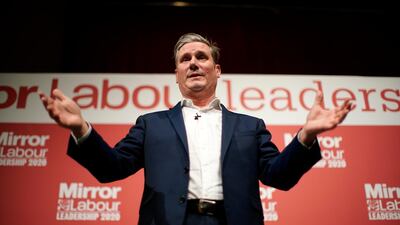

A human rights lawyer who opposed the invasion of Iraq and military action against ISIS in Syria is set to become the new leader of the UK’s opposition Labour Party.
Keir Starmer, 57, is expected to be named as the winner on Saturday of a three-way race with the immediate task of re-invigorating a party that last won an election in 2005.
Labour – which had a sustained spell of electoral success during a decade under Tony Blair from 1997 – was crushed at the polls by Boris Johnson’s right-of-centre Conservative Party in December.
Mr Starmer is a former head of criminal prosecutions for England and Wales and only became an MP in 2015.
He has campaigned for the top job on a ‘unity ticket’ in an attempt to end the bitter factionalism that developed under the leadership of veteran left-winger Jeremy Corbyn.
His first job is to make his party electable following the worst defeat for the party since the 1930s. The party’s confusing position on Brexit and internal splits saw voters in the party’s traditional northern heartlands turn to Mr Johnson in their millions.
Mr Starmer held the party’s Brexit portfolio but emerged with his reputation enhanced after being forced to juggle the competing wings of pro-European younger supporters and disaffected traditional members.
Polls shut on Thursday for the race with against two women, Lisa Nandy and Mr Corbyn’s chosen successor, Rebecca Long-Bailey, but opinion polls have given him a steady lead during a campaign overshadowed by the coronavirus outbreak.
Mr Starmer’s record as both prominent lawyer and politician raises key questions about how – and if – he will bring the powerful left-wing to heel and what his policies will mean if Britain regains its status as an influential global nation.
His ten election pledges to party members who will choose the next leader includes one to “peace and human rights”.
“No more illegal wars,” it said in an obvious reference to Mr Blair’s decision to take Britain to war in Iraq in 2003, a move that has dominated discussion of his legacy.
He has promised to review all British arms sales and to create a new Prevention of Military Intervention Act’ that would “put human rights at the heart of foreign policy.”
The statement was criticised by some supporters on the left, who applauded the decision by Mr Blair to lead humanitarian interventions to protect Bosnian Muslims in 1999 and in Sierra Leone.
Mr Starmer – who also opposed airstrikes against ISIS in 2015 in line with party policy - later told the BBC that the commitment meant that Britain would only go to war if there was a lawful case, a viable objective and the consent of MPs in parliament.
“We have to be questioning as to how swiftly we turn to military options before we exhaust all the diplomatic and political ones,” said Clive Efford, a Labour MP and a Starmer backer.

