

This month marks two major milestones for the UAE. On March 23 last year, the country announced the National Disinfection Programme and the first "stay home" order in its history, as authorities responded to the rapidly evolving Covid-19 pandemic.
It undoubtedly saved many lives. But it changed our lives, too. Phrases such as "social distancing" and "self-isolation" entered common parlance; we worked from home, studied from home, and socialised at home. We learned about video call etiquette and the importance of masks, and found new ways to greet people.
One year on, we know a lot more about this virus than we did then. We know how it transmits, and, sadly, how it kills. We know how to stop it and how to treat it. And, crucially, we have learned to live with it, as we did with other viruses and diseases previously.
The UAE is in the extremely fortunate position of having returned mostly to normal – albeit an adjusted normal. We have not plunged in and out of lockdown; most public places, schools and businesses are open and operating, and we can travel.
Which brings me to the second milestone of March – the vaccination of more than half the UAE population, the second-fastest mass vaccination program in the world after Israel. On March 16, we celebrated the vaccination of 52.4 per cent of the target population with at least one dose of a vaccine, with 67 administered for every 100 people in the country – a total of 6,668,637 doses.
-
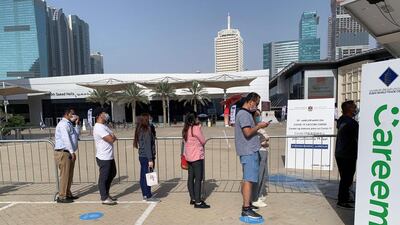
People queue for the vaccine near DIFC. The city has approved Pfizer-BioNTech, Sinopharm and Oxfrd-AstraZeneca for use, and officials hope to have half the population vaccinated by late March. AFP -
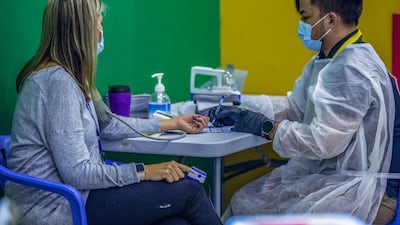
Abu Dhabi has vaccinated at least 60 per cent of teachers and school staff, many during a week-long vaccine drive in late January. Courtesy: Adek -
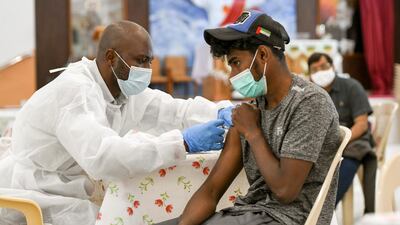
A man receives a dose of a vaccine against Covid-19 at St Paul’s Church in Abu Dhabi. Khushnum Bhandari / The National -
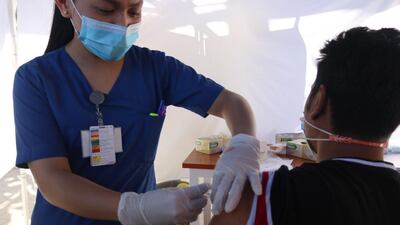
A vaccine is administered at Bareen International Hospital in Mohamed Bin Zayed City, Abu Dhabi. Courtesy: Bareen hospital -
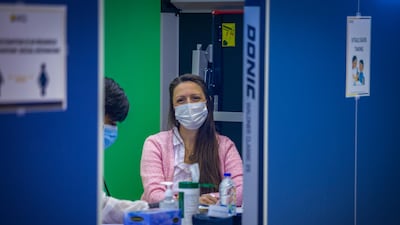
Abu Dhabi has vaccinated at least 60 per cent of teachers and school staff, many during a week-long vaccine drive in late January. Courtesy: Adek -
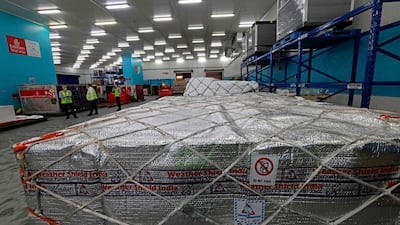
Airport personnel unload a coronavirus vaccine shipment at Dubai International Airport on February 1, 2021. AFP -
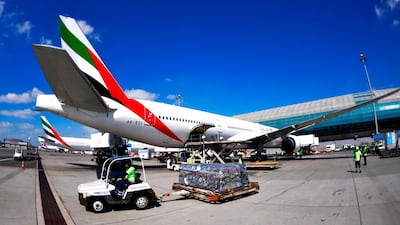
An Emirates Airlines Boeing 777 unloads a coronavirus vaccine shipment at Dubai International Airport on February 1, 2021. The airline is part of the Vaccine Logistics Alliance, which includes also logistics giant DP World. Karim Sahib / AFP -
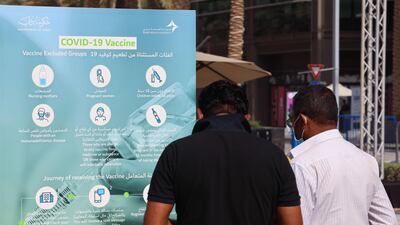
People wait to enter a vaccination centre at Dubai's financial district on January 24, 2021. AFP -
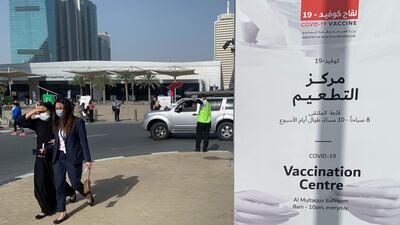
People queue for the vaccine near DIFC. The city has approved Pfizer-BioNTech, Sinopharm and Oxfrd-AstraZeneca for use, and officials hope to have half the population vaccinated by late March. AFP -
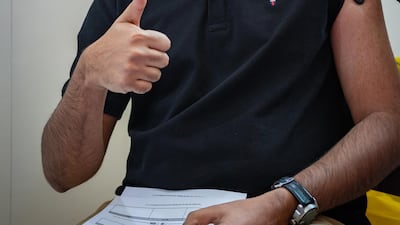
A teacher gives a thumbs up as he receives the Sinopharm vaccine in Abu Dhabi. Courtesy: Department of Education and Knowledge -
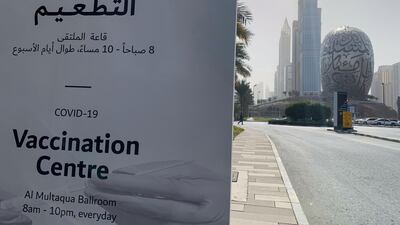
A placard informs the public of the location of a designated Covid-19 vaccination centre in Dubai's financial centre district. AFP -
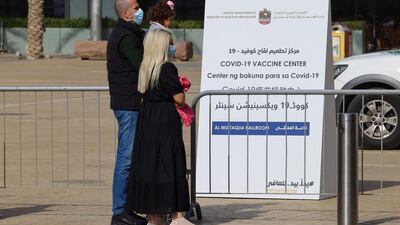
People in Dubai queue for a vaccine on January 24, 2021. AFP


What is remarkable is that this time last year scientists had only just sequenced the coronavirus genome. Historically, vaccines take around 10 years to develop, test, manufacture and gain regulatory approvals. Little more than a year since this virus was first discovered, no fewer than 170 Covid-19 vaccines are now under development.
So does this mean a return to global freedom of movement is months away? Probably not. While wealthy, developed nations are pouring resources into vaccinating their citizens, large parts of the world haven’t even started. Just 4.8 per cent of the global population has been vaccinated against Covid-19. There is a very long way to go.
This is everyone’s problem. In today’s interconnected world, no nation is safe from the virus until we all are. The UAE is no stranger to this concept, as we have always believed in multilateralism and helping those less fortunate, which is why we rank as one of the top aid donors per capita in the world.
Throughout Covid-19 we have donated thousands of tonnes of medical aid, PPE, testing kits, and food to more than 100 nations, assisting over 1.7 million medical professionals in cooperation with the United Nations. Now, we’re turning our attention to assisting with the global distribution of vaccine supplies via the Hope Consortium, a public-private partnership with freight forwarders based in Abu Dhabi. This consortium has the capacity to deliver some 6 billion vaccines across 170 countries by the end of this year.
There’s no doubt that Covid-19 has damaged globalisation as we knew it. Almost like learning to walk again, we have to re-think mobility in the 21st century. Vaccination passports, reciprocal entry protocols, common rules on testing and quarantine: all these agreements will become necessary in the months and years ahead. That entails a measure of cooperation and trust that has at times been lacking during the pandemic, as national self-interest took priority.
The last 12 months have been difficult, and the situation we face continues to challenge us. But the world we face in March 2021 is not the same as the world a year ago. There is less uncertainty and fear, and there is more hope. Vaccination is the way out of this pandemic, the same as it was for polio, smallpox, diphtheria or any of the other dangerous viruses the world has faced and overcome in the past.
Taking an internationalist, multi-lateral approach, where no person or country is left behind, will see us get there all the faster.
Hend Al Otaiba is director of strategic communications at the UAE Ministry of Foreign Affairs and International Co-operation
-
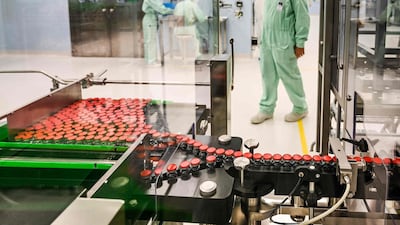
A lab technician oversees the filling and package of vials for the large-scale production of the Oxford-AstraZeneca Covid-19 vaccine candidate at the Italian manufacturing facility of Catalent in Anagni, southeast of Rome, September 11, 2020. AFP -
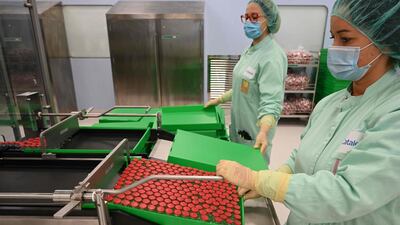
The Oxford vaccine could be among the first to hit the market. Vincenzo Pinzo / AFP -
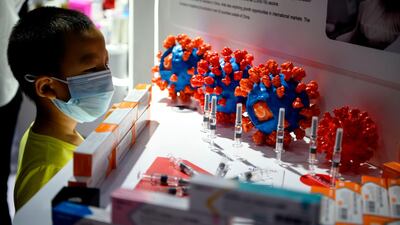
A boy looks at Sinovac Biotech's vaccine candidate at the China International Fair for Trade in Services in Beijing. AFP -
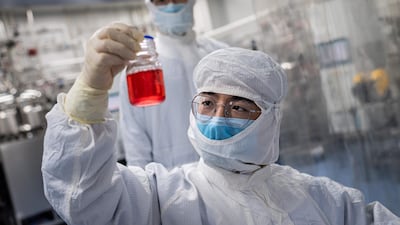
A technician looks at monkey kidney cells as he makes a test on an experimental vaccine for Covid-19 at Sinovac Biotech facilities in Beijing. AFP -
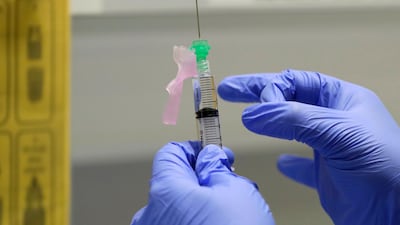
A clinical research nurse prepares a Covid-19 vaccine to administer to a volunteer, at a clinic in London. AP -
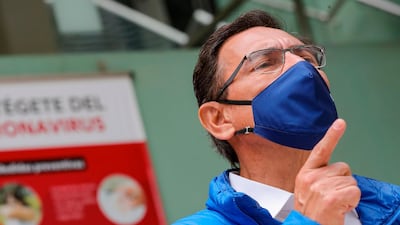
Peru's President Martin Vizcarra speaks to the press during a visit to the bio-medical department of the Cayetano Heredia National University in Lima, where studies for vaccines against coronavirus are being developed. AFP -
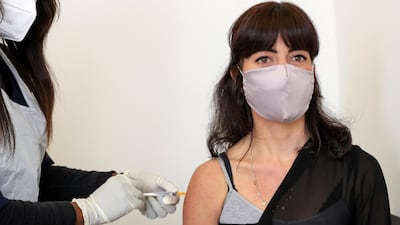
Robyn Porteous, a vaccine trial volunteer, is injected as part of South Africa's human clinical trial at the Wits RHI Shandukani Research Centre in Johannesburg, South Africa. Reuters -

A nurse inoculates volunteer Ilya Dubrovin, 36, with Russia's new coronavirus vaccine at a clinic in Moscow. AFP -
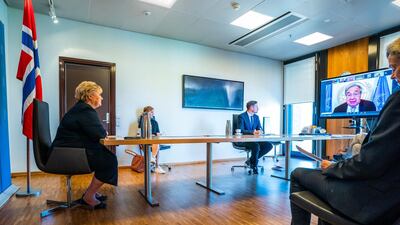
Norwegian Prime Minister Erna Solberg (L) and Minister for Development Aid Dag Inge Ulstein (R) participate in a digital meeting with international leaders about a fair global distribution of Covid-19 vaccines at the the Prime Minister's office in Oslo on 10 September 2020. EPA -
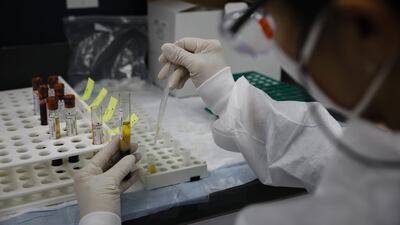
A medic works in a lab during clinical trials for a Covid-19 vaccine at Research Centres of America in Hollywood, Florida. Bloomberg



