

Well, it was nice when it lasted. For a day or two, it seemed as Antonio Conte was bound for Tottenham. He appeared proof of their pulling power.
A team that laboured to a seventh-place finish could have its potential unlocked by a tactically brilliant manager who had inherited sides which had come seventh, 10th and fourth respectively and taken them to league titles in either his first or second seasons. Or both.
If Conte could win the Premier League with Marcos Alonso and Victor Moses, what could he do with Harry Kane and Son Heung-min?
And yet the breakdown of their talks, with each side suggesting they had withdrawn from them, underlined how improbable it had been. Conte and Tottenham had felt a complete mismatch. The feeling was that neither had done their due diligence.
Spurs may have wanted the coach but not the character; managers who forever demand more money and more players and are constantly at war with their boards tick very few of Daniel Levy’s boxes.
Clubs who have a £1 billion ($1.41bn) stadium to repay, who have a limited budget and who may lose their best player, in Kane, scarcely figure on Conte’s wishlist. This did not require someone to compromise as much as to do a complete U-turn but Conte can be uncompromising; Levy too.
Circumstances may have initially promoted a rethink. When Jose Mourinho was sacked, Conte was still engaged in his successful quest to win Inter's first Scudetto since 2011.
His transformation of Chelsea in 2016-17 was one of the great managerial feats in recent Premier League history. He is the manager Mourinho used to be – combustible, demanding, short-termist but with a guarantee of glory – and the one Levy may have thought he was hiring when stardust blinded him to the Portuguese’s decline.
Perhaps the prospect of a coup, of getting a worthy rival to Pep Guardiola, Jurgen Klopp and Thomas Tuchel, meant it was logical to explore the option of Conte. But it is no secret that he is not a manager for times of austerity. He left Inter because they were cutting costs. Tottenham are unlikely to find next season's Europa Conference League hugely lucrative.
Spurs 2020/21 season ratings
-
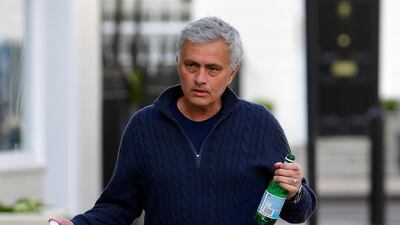
MANAGERS: Jose Mourinho 3 - A 6-2 win over Manchester United and a place at the Premier League summit masked a litany of problems between manager and squad. The team seemed unable to formulate plans to attack or defend, and the 3-0 defeat to Dinamo Zagreb in the Europa League was one of the worst performances by an English club in Europe in decades. Unceremoniously sacked less than a week before the League Cup final. Reuters -
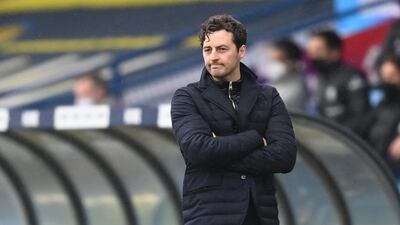
Ryan Mason 6 - Given the reins six days before the League Cup final, which Spurs went on to lose to Manchester City. Inherited a squad low on confidence but bursting with talent. It remains to be seen whether he has done enough to make the role permanent. after guiding Spurs home to seventh, above Arsenal but below West Ham. AFP -

GOALKEEPERS: Hugo Lloris 5 - The World Cup winner has been something of a liability the past two seasons, constantly putting his defenders under unnecessary pressure with passing in tight situations they are ill-equipped to deal with. At 34, the Frenchman's best days are behind him and Spurs would do well to target a significant upgrade. Reuters -

Joe Hart 5 - Was given chances in cup competitions but while the former England No 1 didn't make too many mistakes he hardly did enough to put any real pressure on Lloris. Forced to apologise after his social media team posted a message of "job done" on his Instagram account following Spurs' Europa League exit. Reuters -

DEFENDERS: Joe Rodon 7 - The Welsh defender, 23, has not looked out of place in the Premier League after signing from Championship club Swansea City last October. Can easily stake a claim as Spurs' best centre-back, given how far his more experienced teammates have fallen. Getty Images -

Davinson Sanchez 3 - Has the speed, strength and agility to be one of the best in the business. Sadly for Spurs and the Colombian, he lacks the composure and anticipation needed to go with it. Was given the runaround by Jamie Vardy on the final day of the season. Getty Images -
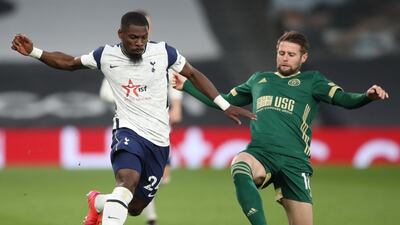
Serge Aurier 7 - The Ivorian is capable of both the sublime and stupid - often within the same 90 minutes. A tour de force when he has the wind in his sails, but defending still needs improvement. EPA -
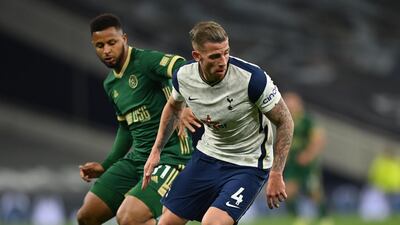
Toby Alderweireld 6 - There was a time when any defence with the Belgian in it would regularly record the most shutouts in a season. Those halcyon days looked long gone in 2020/21 but if the Belgian can recapture his best form, Spurs will once again have one of Europe's finest at the heart of their rearguard. EPA -
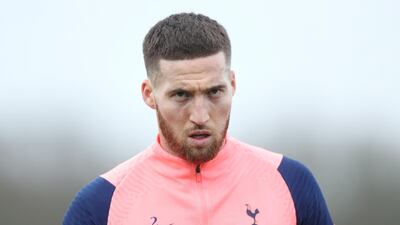
Matt Doherty 4 - Has looked uncomfortable all season whether as part of a flat back four or as a right wingback. Signed to usurp Serge Aurier but the former Wolves man has been a huge disappointment. Needs to be more consistent; Spurs will demand much more from their Irish international next season. Getty Images -
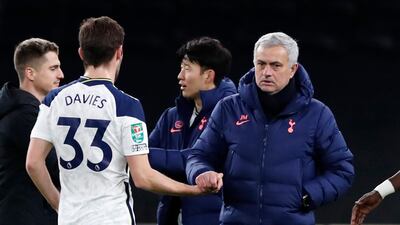
Ben Davies 5 - A solid, if unspectacular, season from the Welshman who will find it hard to dislodge Sergio Reguilon on the left of Spurs' defence. Reuters -
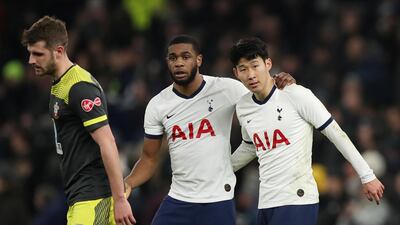
Japhet Tanganga 4 - The young defender's season has been severely hampered by injuries but is highly thought of by the Spurs hierarchy and will look to push for more regular football next season. Reuters -
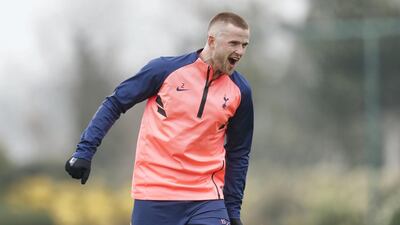
Eric Dier 6 - Restored to his more favoured position of centre-back under Mourinho. The England international's heart and desire are never in question but the same cannot always be said for his judgement and temperament. Capable of much more. Getty Images -
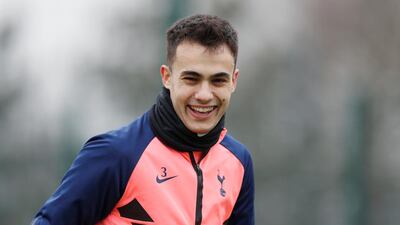
Sergio Reguilon 6 - Came into North London like a wrecking ball with some devastating performances down Tottenham's left. Has struggled to recapture that early form after a mid-season injury and hardly endeared himself to fans when he was pictured alongside teammate Erik Lamela flouting lockdown rules over the Christmas period. Getty Images -
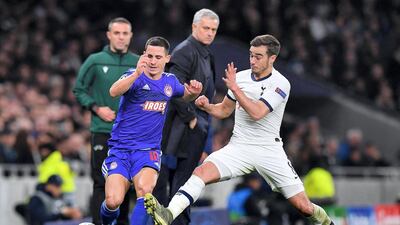
MIDFIELDERS: Harry Winks 5 - Largely discarded by Mourinho, the England midfielder struggled to impose his passing game in his limited outings. Although he was by no means alone in that department. AFP -
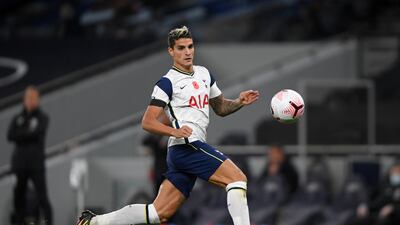
Erik Lamela 6 - Probably the only player in world football who still uses the 'drag over'. A great ball carrier but a lack of end product has always held the Argentine back. Did score one of the great goals of the North London derby with a 'Rabona' in the 2-1 defeat to Arsenal. AFP -
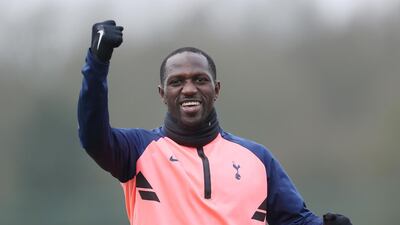
Moussa Sissoko 5 - Briefly formed an impregnable partnership with Hojbjerg at the start of the season with the two dogs of war immense in November's win over Manchester City in particular. Has looked a shadow of the player powering Spurs' midfield engine room of the past few seasons though. Getty Images -
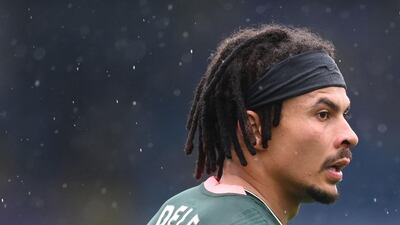
Dele Alli 5 - Another to be given the cold shoulder by Mourinho. Restored to the side under Mason but the relationship with Spurs fans has been fractured by a perceived lack of effort and interest on Alli's part. There is no doubting his talent and Spurs still have a gem if he can rediscover it. AFP -

Tanguy Ndombele 6 - The most improved player in the Spurs squad by a distance, but then the Frenchman had set a pretty low bar. Shades of Moussa Dembele the way he protects the ball and his goal against Sheffield United was world class. Can emerge as a real leader in this team if he becomes more consistent. Getty Images -

Pierre-Emile Hojbjerg 8 - The Dane's performances up until March had him earmarked as one of the signings of the season. A failure to maintain that form is more down to fatigue than any weakness in his game. The most destructive player in the league. AFP -
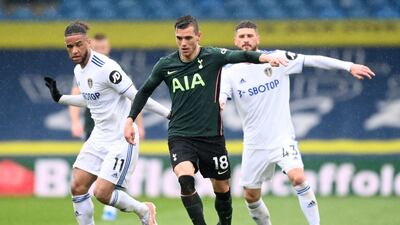
Giovani Lo Celso 6 - A class act on the ball but too often goes missing in games. AFP -
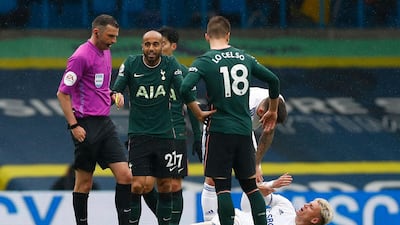
FORWARDS: Lucas Moura 7 - A fan favourite for his all-action style and 'that' Champions League hat-trick. Few players tend to run down more blind alleys than the Brazilian, who has been used in every attacking position this term without nailing down a role in any. AFP -
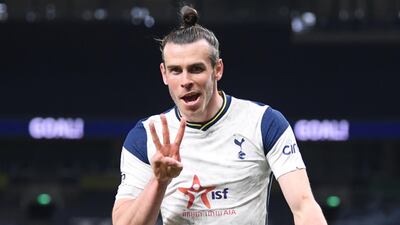
Gareth Bale 8 - Hit or miss? Though a return of 16 goals - including a sublime league hat-trick against Sheffield United - suggests Bale's return to Spurs on a season-long loan has been a success, the special moments have been fleeting. Unlikely that Spurs will pursue another deal unless the Welshman and Real Madrid drastically reduce their demands. AFP -
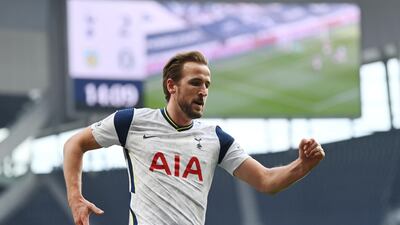
Harry Kane 8 - Received criticism after the League Cup final defeat with Spurs fans accusing their talisman of underperforming in major finals. And while it is true Kane has failed to deliver in three championship games, to overlook his overall contribution is borderline ridiculous. Finished the season with 23 league goals to claim the Golden Boot and was also the main provider for others. Looks to have finally run out of patience with Spurs' failures to challenge for major honours. Would be a huge blow if he were to leave. AFP -

Carlos Vinicius 5 - A hat-trick against non-league Marine was the highlight of the Brazilian's loan spell in North London. Has the attributes to be a top player but is unlikely to have done enough to persuade Spurs to make his move from Benfica permanent. Reuters -
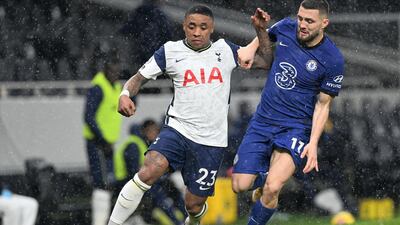
Steven Bergwijn 5 - Another who lost form and favour under Mourinho. The Dutch winger's profligacy in front of goal cost them dearly early on in the season. AFP -

Son Heung-min 8 - Simply unplayable at times early on in the season, the South Korean has the pace to terrify any defender and the poise to finish most of the chances that fall his way. Scored 17 Premier League goals as he and Kane forged a 40-goal partnership. Reuters


And it is only three weeks since Levy issued a rare mea culpa, admitting Tottenham had lost their way – references to Mourinho and the European Super League were implied rather than implicit – but where he talked of a “return to playing football with the style for which we are known – free-flowing, attacking and entertaining – while continuing to embrace our desire to see young players flourish from our academy.”
It scarcely sounds like Conte. Indeed, the blueprint for a Mauricio Pochettino-style manager both highlighted what Spurs were looking for and, along with the Argentinian's apparent unhappiness at Paris Saint-Germain, prompted talk of another reunion in a summer of managerial returns.
If the French club keep their man, however, it leaves Spurs in a mess. Targets have gone elsewhere – Julian Nagelsmann to Bayern Munich, Hansi Flick to Germany – or pledged their loyalty to their existing employers, like Brendan Rodgers at Leicester.
It will be hard to present whoever Spurs eventually appoint as even their second or third choice; nor, when they have veered from their original idea to pursue Conte, to offer much evidence of a plan.
They have at least secured Fabio Paratici’s as sporting director and he was instrumental when Juventus established a reputation as savvy recruiters (before, in a parallel with Spurs, regressing with poor decision-making in recent years).
It will be required; so, too, a manager with the capacity to revive the careers of the talents who declined under Mourinho, conjure improvement from young players and form a more compelling, coherent team.
But in a period when many other clubs – Bayern, Inter, Real Madrid, RB Leipzig – have contrived to find a new manager, Spurs haven’t. Mourinho’s reign was a waste of 18 months. The time since his sacking feels a waste of seven weeks. Their search goes on.

