


In Baghdad in July 2003, an evening curfew was in full effect. From 11pm every night, people could not be on the streets. This lifted at 7am. The main purpose of the curfew seemed to be to regain some semblance of law and order after almost all of Iraq’s security apparatus – rightly feared under Saddam Hussein’s regime until its fall earlier that year – had been rapidly dismantled following the success of the US-led invasion.
The Iraqi police were still in place but needed help. There were not enough American troops in the country to take on the policing. There had also been looting, and crime was becoming more commonplace in the wake of Saddam's removal. The ruling Coalition Provisional Authority was in charge and a liberation was evolving into an occupation.
I was usually careful about making sure that I left anywhere I was in the evening with plenty of time to spare to get to where I was staying, in the city's Karada neighbourhood. There were only two occasions on which I found myself out of the house after curfew.

The first was because my planning fell down and, along with two colleagues from the newspaper I worked at, I had failed to secure a ride home in time from the hotel and its swimming pool, which we had been spending the evening beside. Taxi drivers were understandably no longer on the roads once curfew time drew near.
I feared two things most: being shot at by American troops seeing me out, or worse, being arrested by them and disappearing into the prisons that they ran. A lesser worry – but no less real – was the risk of criminals seeing us as an opportunity for a robbery or kidnapping.
That night, as we walked gingerly through the silent neighbourhoods of Baghdad, watching and listening for even the slightest sign of soldiers, I had a surreal experience.

I noticed that a laser sight, such as the ones used by American forces, had silently targeted my chest. I stopped and motioned to the others to get away. Frozen in fear, I waited for the sound of the rifle’s report that seemed inevitable. Instead, I only heard the laughter of children. Bored and having spotted us, these three boys had stood giggling at the door of their house as one of them pointed a laser pen at me. I could only laugh in relief but shouted at them to go back inside in the strongest language I could muster.
The second time was a deliberate flouting of the curfew. An interview with a high-ranking Iraqi official was offered at 11pm during a frantic phone call, but it had to be at his residence in the Mansour area. Believing the story to be worth it, my colleague and I jumped into the pick-up of a third’s and dashed through the empty, gloomy city with dry mouths and beating hearts.
-

A soldier wears a protective face mask as he stands guard on a street during a curfew imposed to prevent the spread of coronavirus disease (COVID-19) in Baghdad, Iraq. Reuters -
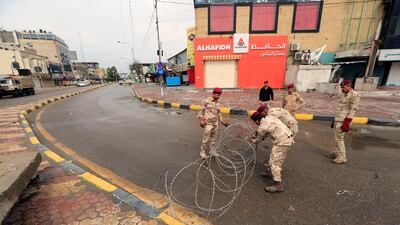
Soldiers place barbed wire on a street during a curfew in Baghdad. Reuters -
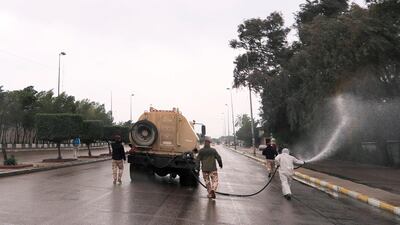
A soldier wearing a protective suit sprays disinfectants on a street. Reuters -
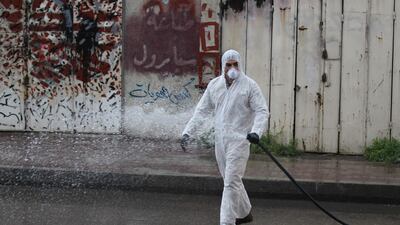
A soldier disinfects an area in the capital Baghdad. AFP -
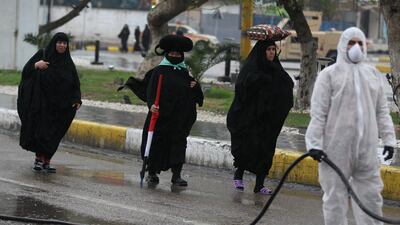
Soldiers disinfect an area in the capital Baghdad amidst efforts against the spread of COVID-19. AFP -
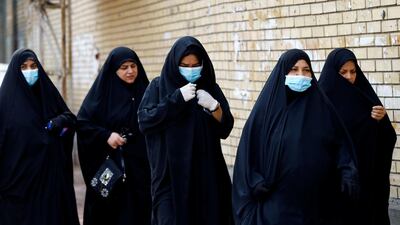
Shi'ite pilgrims make their way to Kadhimiya during a curfew imposed to prevent the spread of coronavirus. Reuters -
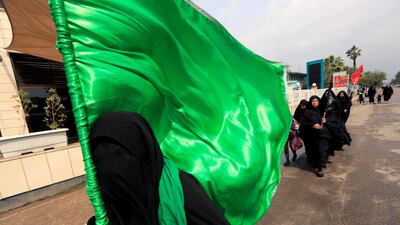
Shi'ite pilgrims make their way to Kadhimiya during a curfew. Reuters -
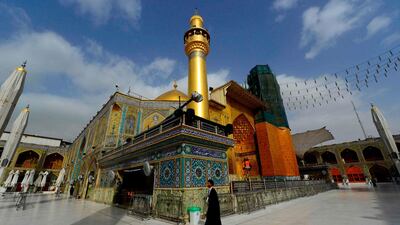
The usually busy Imam Ali Shrine in the central Iraqi holy city of Najaf is pictured empty. AFP -
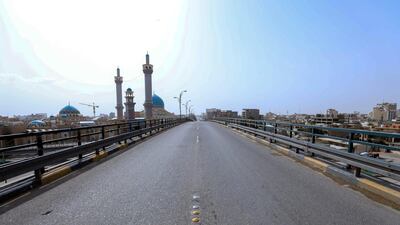
A general view of an empty street during precautionary measures against the novel coronavirus outbreak in the holy Shite city of Najaf. EPA -
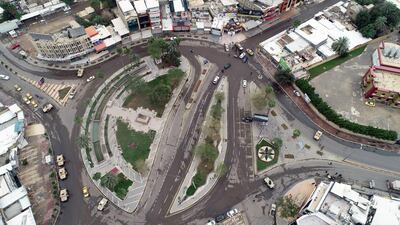
An aerial picture shows empty streets during precautionary measures against the novel coronavirus outbreak in central Baghdad. EPA -
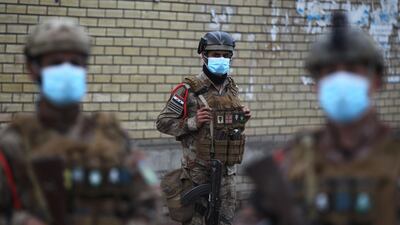
Soldiers deploy in the streets of Baghdad after the capital and some areas of the country imposed a week's curfew. AFP


Both times there were no repercussions. Yet I was lucky. All the nights I stayed in obeying the curfew were sound-tracked by sporadic machine gunfire, the rolling of tanks and the swooping of helicopters.
War was always lurking outside the front door. The curfew gave me a crumb of comfort. Actually, it turned out, despite my nightmare-filled and sketchy sleep, that I was in more danger during the day. Robbed at gunpoint at 7am, in the vicinity of mortars at lunchtime and dangerously pushed aside on the road by rushing armoured convoys of American soldiers in the afternoon.
Curfews do send strong messages to a population. I understood that I was safer indoors at night and because of the need for restrictions I also could not deny that the danger was real even if I wanted to. At the same time, curfews tell you that a situation is not normal. That might seem obvious. But in hindsight, how constructive was it to tell this to a population that had experienced the abnormality and suffering of living under Saddam?
The curfew meant that many people who stayed in absorbed what was going on outside the country through nightly sessions watching satellite TV, with its novel films and news programmes. A population denied this very mundane pastime (to most of us at least) relished the opportunity. It did, however, also underline that perhaps their own lives were lacking something they had been promised in the wake of the US invasion – freedom. Over time having a curfew may have only hardened the status quo of insecurity.
Curfews have once again become a feature of Iraqi life in the past few months, first in response to protests against the government last year and now in the face of the coronavirus pandemic.
These recent situations are not the same as what I experienced in 2003. Especially now. This time, measures such as the curfew are about a collective action in a health crisis. All countries are taking similar steps. Few would think a curfew ideal, but it is a necessity in extraordinary times. I am just so sorry that Iraqis have experienced too many of them to count.
Mustafa Alrawi is an assistant editor-in-chief at The National

