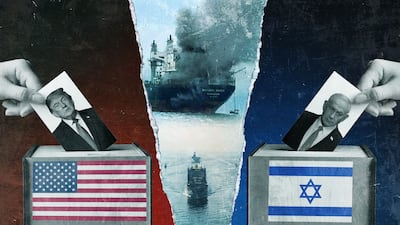

In physics, the interaction of two bodies is relatively predictable; introduce a third body, and the system is almost impossible to predict. The Middle East is caught in a war among three countries – the US, Israel and Iran – each of which is going through internal reconsiderations, and the interaction of which over the coming months is impossible to predict with any certainty. But what is also clear is that however the next months evolve – whether through diplomacy, military escalation or a continuation of the “no war, no peace” status quo – the stand-off between the three is not likely to be fundamentally resolved.
For the countries of the region, in the short term, this means continuing urgent diplomacy to bring about a de-escalation but preparing for the worst; and in the long term, factoring in long-term risk and uncertainty through building up resilience, deterrence, defence and sustained diplomacy.
The historic Democratic victory in the American midterm elections was a resounding rebuke to President Donald Trump and his Republican Party, and expressed overwhelming public dissatisfaction with the economic costs of the Iran war, as well as the President’s decision to take America to war after he had expressly promised the opposite.

This would normally suggest that the administration would try to wind down the conflict and urgently look for a deal and a way out. Indeed, this was the early signal as Vice President JD Vance reached out to Iranian security chief Mohsen Rezaei in Tehran and peace talks appeared to be on the frontburner. But Mr Trump is not an ordinary president. After initially appearing dazed by the defeat, he pivoted back to his more accustomed combative stance, doubling down on hardline policies by appointing Stephen Miller as his chief of staff and taking Mr Vance off the diplomatic track, announcing that the US did not need a deal with Iran.
As if the three-body problem is not enough, Mr Trump himself is unpredictable. While the midterm elections favour diplomacy, and the President is probably still open to a deal that opens the Strait of Hormuz and manages Iran’s nuclear programme, he has indicated that he prefers continuing the current blockade, and has also assembled an American armada to keep his escalation options open.
Iran might be banking on Congress’s ability to shape Mr Trump’s foreign policy. But he has already shown that he will be largely defying a hostile legislature for the next two years, and he is likely to use his presidential powers, especially in foreign policy, to the last day of his term.
Even former president George W Bush, after his defeat in his 2006 midterm elections, doubled down in Iraq with what was known as the “Surge”, sending tens of thousands of troops to Iraq. And it is important to note that Mr Trump does not seem particularly concerned about how his policies might affect others in the party or indeed the party itself. What matters most to him is his legacy as president and how he ends this war, which he led his administration into – with Israel.
There is also uncertainty in Israel. Like many elections there, the Knesset results do not directly determine which leader and which coalition is going to assume executive power. For now, Gadi Eisenkot has been tasked with forming a government, and if he fails, caretaker Prime Minister Benjamin Netanyahu will have another chance at power.
-

US Vice President JD Vance looks on next to US President Donald Trump's son-in-law Jared Kushner, as Iran's Foreign Minister Abbas Araqchi shakes hands with Pakistan's Prime Minister Shehbaz Sharif. Getty Images -

US Vice President JD Vance makes an opening statement at the start of the quadrilateral meeting. Reuters -

JD Vance listens to Jared Kushner. AFP -

JD Vance looks on as Pakistan's Prime Minister Shehbaz Sharif speaks while holding the hand of Sheikh Mohammed bin Abdulrahman, Qatar’s Prime Minister and Minister of Foreign Affairs. Getty images -

JD Vance, second left, US special envoy Steve Witkoff, second right, and Jared Kushner, right, meet Pakistani Prime Minister Shehbaz Sharif, centre, and Chief of Army Staff Field Marshal Asim Munir, left. AFP -

Swiss Vice President Ignazio Cassis, right, with Rafael Grossi, director general of the International Atomic Energy Agency. Photo: IAEA -

Iranian Foreign Minister Abbas Araghchi, second left, meets Mr Cassis, who is also Switzerland's Foreign Minister. Reuters -

Mr Cassis speaks with Qatari Prime Minister and Minister of Foreign Affairs, Sheikh Mohammed bin Abdulrahman bin Jassim Al Thani. Photo: FDFA -

Talks are expected to last for several days at the Burgenstock Resort, authorities said. Reuters -

The media centre in the Tennis Hall at Burgenstock. Reuters


But with Mr Eisenkot, it is not clear what policy differences, if any, we can expect. He is no less of a security hawk than Mr Netanyahu; he is famously the author of the “Dahiyeh Doctrine” and will be equally intent on confronting and guarding against threats, both near and far. But he will also have other concerns that might coax him in slightly different directions.
First, Mr Eisenkot will need to repair relations with the US; the midterm elections were as much a rebuke of the Republicans as they were of Israel, especially Israel under Mr Netanyahu. This means he is likely to feel compelled to rein in the more extreme policies pursued by far-right Israeli Finance Minister Bezalel Smotrich and far-right National Security Minister Itamar Ben-Gvir in the West Bank and Gaza, while also paying closer attention to US diplomatic priorities in negotiations with Syria and Lebanon. He might also be more open to an American deal with Iran, if the deal manages the latter’s nuclear threat.
Second, while Mr Netanyahu was partially driven by an existential personal need to cling to power, prolong wars, and avoid a reckoning that might end his political career and land him in jail, Mr Eisenkot should be able to take a more strategic and long-term approach to policy, and try to turn military gains into more lasting negotiated arrangements. But Mr Eisenkot is no dove, and while he might be open to an American deal with Iran, he will also not hesitate to engage in war with its regime if he sees the need.

The uncertainty extends to Tehran. The dominant hardline voices interpret the electoral defeats delivered to Mr Trump and Mr Netanyahu as vindication of their policies of resistance and escalation. In debates that are aired in the Iranian media, these voices argue that the hardline policies are working and hence should be sustained until the US accedes to Iran’s demands.
Other, more pragmatic voices argue that Iran should take the win, and translate its battlefield and political victories into a deal that will end the blockade, release frozen funds and lift at least some sanctions. Those voices know that Iran needs room to recover, at a time when its economy is suffering from an annual average inflation of 76 per cent, and it has suffered major military blows.
While Mr Trump himself is unpredictable, in Tehran, the uncertainty comes to a large degree from the apparently continuing struggle in decision-making among various factions of the regime, nor is it clear that supreme leader Mojtaba Khamenei has the level of control that his father, Ali Khamenei, had built after many decades. Iran could also misread either the US or Israel, or both, miscalculating what their electoral defeats may mean for foreign policy.
The ambiguity surrounding each of the three capitals leaves the region in a condition of open-ended uncertainty. While the scenario of major escalation, which was the overwhelming expectation even just days before the two elections, seems now less inevitable, it is still a very possible scenario: either initiated by Mr Trump to show his defiance of the midterm elections; or rushed into by a desperate Mr Netanyahu still clinging to power; or triggered by Iran that is seeking a way to break out of the stifling economic stranglehold.
-
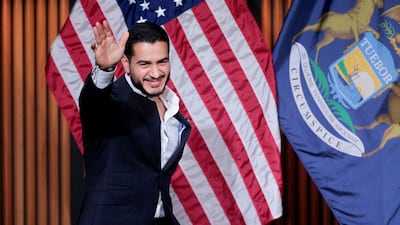
Abdul El-Sayed, who has become the first Muslim to be elected to the US Senate, celebrates his milestone victory in Detroit, Michigan. Reuters -
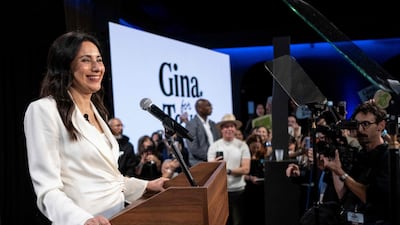
Gina Hinojosa, who has been elected as the first Latina governor of Texas, addresses supporters. AFP -
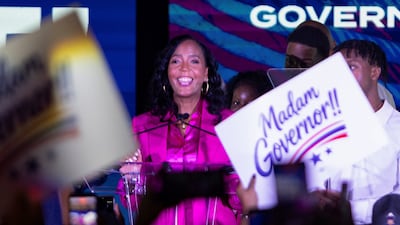
Democrat Keisha Lance Bottoms addresses supporters in Atlanta, Georgia, after becoming the first African American woman to be elected governor of a state. Reuters -
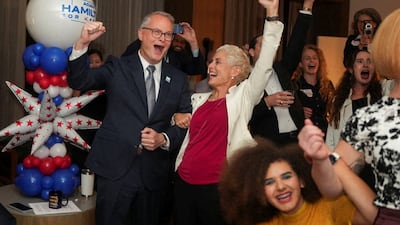
Adam Hamilton, Democratic Senate candidate for Kansas, celebrates in Overland Park as the results pour in. Reuters -
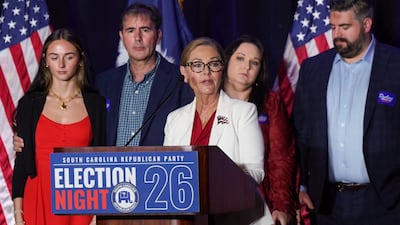
Republican Senator Darline Graham concedes defeat to Annie Andrews in the South Carolina race. AFP -
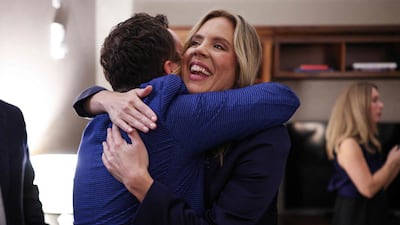
Annie Andrews, the Democratic Senate candidate for South Carolina, celebrates with her family in Charleston as results pour in. Senate. AFP -
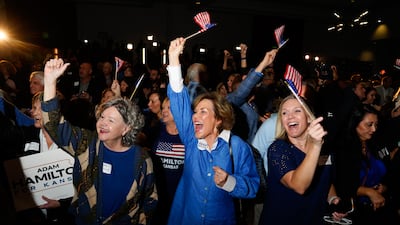
Supporters of Adam Hamilton, the Democratic Senate candidate for Kansas, cheer during an election night event in Overland Park. Bloomberg -

Roy Cooper, Democratic Senate candidate and former North Carolina governor, attends an election night rally. Reuters -
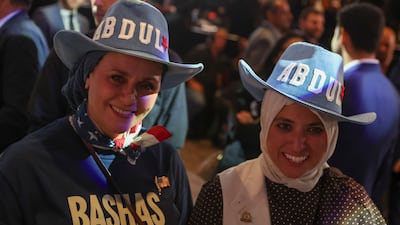
Supporters of US Senate candidate Abdul El-Sayed attend the Michigan Democrats' election night watch party in Detroit. EPA -
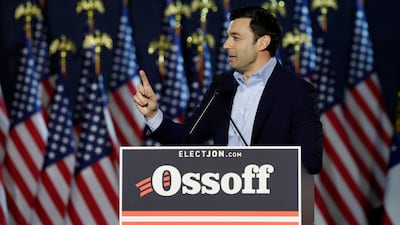
US Senator Jon Ossoff, Democrat from Georgia, speaks in Atlanta after winning re-election. AFP -
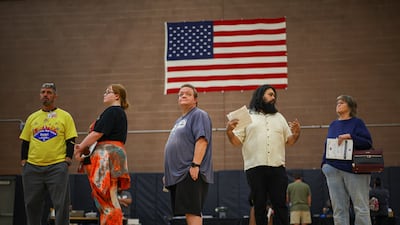
People stand in line to vote in the US midterm elections at Boulder City High School in Boulder City, Nevada. Reuters -
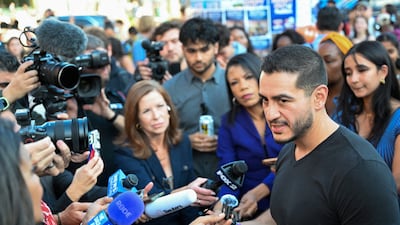
Democratic candidate for US Senate, Abdul El-Sayed, speaks to the media as he visits a polling site in Ann Arbor, Michigan. Reuters -
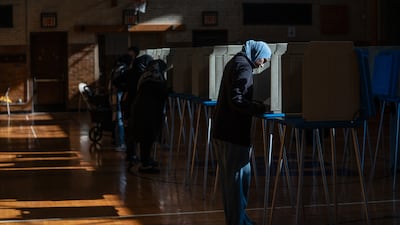
Voter cast their ballots in Dearborn, Michigan. Bloomberg -
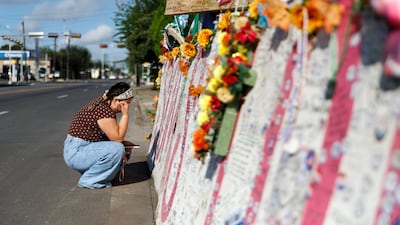
A voter cries after placing their "I Voted" sticker on a memorial for Lorenzo Salgado Araujo, who was shot dead by an Immigration and Customs Enforcement officer in July, in Houston, Texas. Bloomberg -
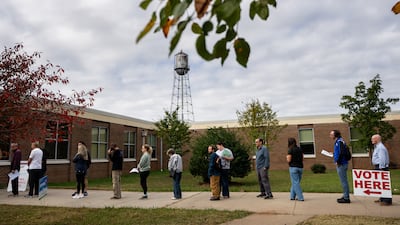
Voters wait in line to cast their ballots in Durham, North Carolina. Bloomberg -
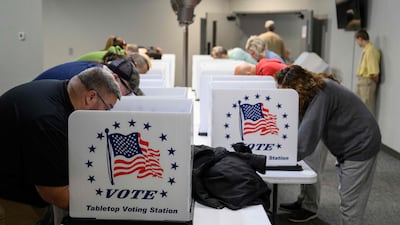
Voters cast their US midterm election ballots at a polling station at the Bridge of Hope Church in Youngstown, Ohio. AFP -
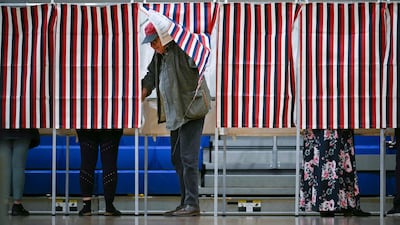
Voters in South Portland, Maine. AFP -
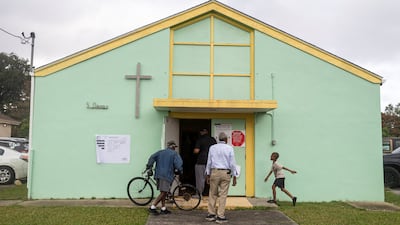
Orleans parish election commissioner Calvin Alexander stands outside St David Baptist Church, as residents arrive to vote in New Orleans, Louisiana. Reuters -
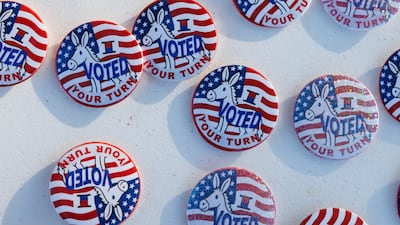
Badges at a polling site in Clayton, North Carolina. Bloomberg -
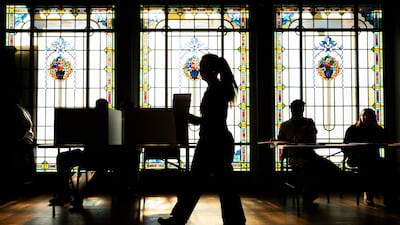
US voters cast their ballots at the Museum of Contemporary Art in Arlington, Virginia. EPA -
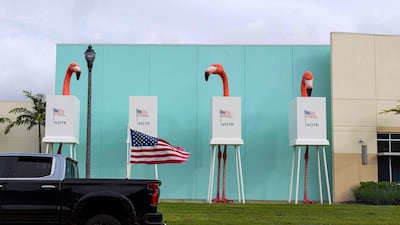
Flamingos created by artist Matthew Mazzotta outside the Supervisor of Elections building in West Palm Beach, Florida. AFP -
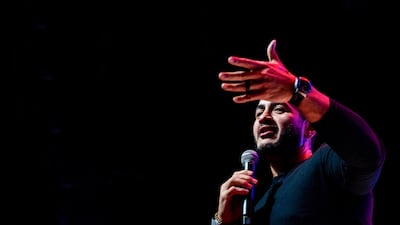
Abdul El-Sayed, Democratic US Senate candidate, from Michigan, speaks during a campaign event at the Majestic Theatre in Detroit. Bloomberg -
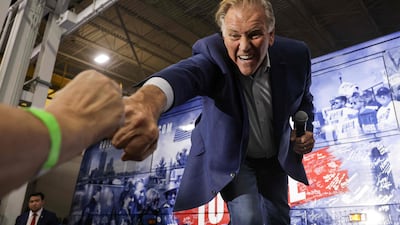
Republican Senate candidate Mike Rogers greets supporters as he takes the stage at a campaign rally in Rochester Hills, Michigan. AFP -
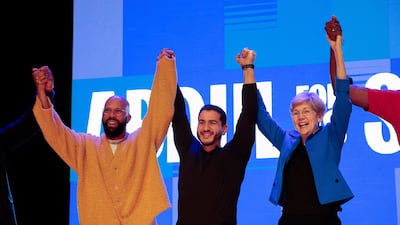
Mr El-Sayed attends a campaign rally with rapper Common and US Senator Elizabeth Warren ahead of the midterm elections, in Detroit, Michigan. Reuters -
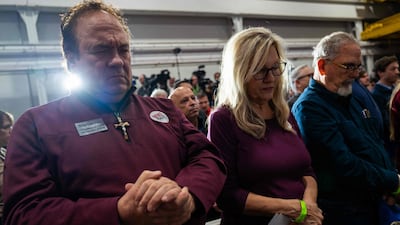
People pray during a rally for Michigan Republican Senate candidate Mike Rogers, in Rochester Hills. AFP -
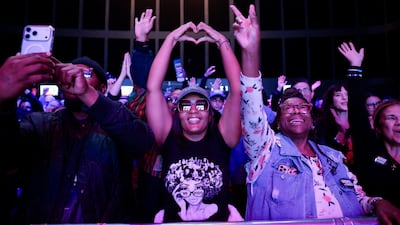
Supporters attend Mr El-Sayed's campaign rally with Common, in Detroit. Reuters -
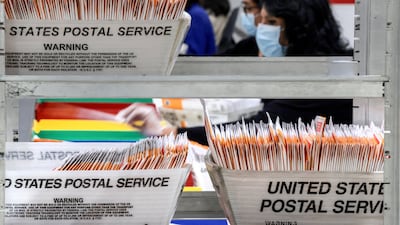
Midterm election ballots are extracted from envelopes at the Los Angeles County Ballot Processing Centre, in City of Industry, California. Reuters -
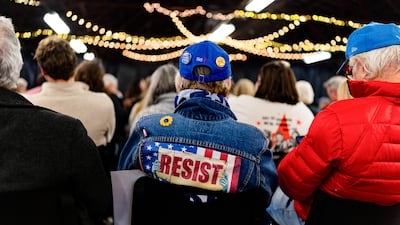
An attendee wears a "Resist" jacket during a campaign event with Abdul El-Sayed, Democratic US Senate candidate from Michigan. Bloomberg -
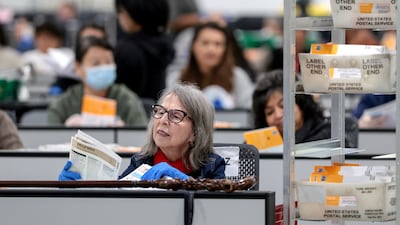
Election staff at work at the LA County Ballot Processing Centre. Reuters -
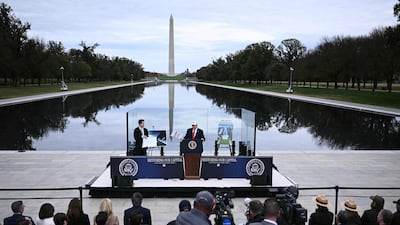
US President Donald Trump delivers a speech marking the end of the midterm election campaign, in Washington DC, the day before voting starts. AFP


Two other scenarios remain quite possible as well: an open-ended continuation of the current status quo, with ongoing costs for all parties involved; or a limited agreement that at least reopens Hormuz and temporarily manages the Iranian nuclear threat but leaving the region at risk of another conflagration some years in the future.
States and economies are not comfortable with uncertainty, but long-term risk and uncertainty are what states might have to factor into their policy planning. No matter how this current round of conflict ends, it is not likely to end the open-ended enmity between the three warring parties.
But the states of the region are not powerless in this conflict system. Key Arab states, as well as Turkey and Pakistan, have engaged in diplomacy with Iran, and can use their influence to edge both sides closer to agreement. However, they have less leverage in Israel, especially after the very extremist policies of the Netanyahu government; but if Mr Eisenkot pivots back to engagement with the region, as he must do with the US, that might give regional powers more of a diplomatic opportunity to also work on de-escalating the Israel-Iran conflict axis.
In the meantime, the countries of the region, including in the Gulf, will have to factor in long-term uncertainty and the risk of recurring conflict. This will mean investing in building national and regional resilience, hardening critical infrastructure, diversifying energy and trade routes, and building up national and regional deterrence and defence.
War may be the continuation of politics by other means. But in today’s Middle East, sound policy must be designed not only to prevent the next war, but also to withstand it if prevention fails.

