The resounding Democratic win in the US midterm elections will make life harder for President Donald Trump, but it won’t flip US Middle East policy any time soon. The bigger shift is political. On Iran, military aid to Israel and Gulf security, the new majority can start questioning long-unchallenged assumptions and testing what Washington will actually sustain.
Officials in the region – Tehran above all – will be asking two things: Can Democrats rein in Mr Trump? And will the political shift outlast him?
Mr Trump is still commander-in-chief. He runs diplomacy, controls the military and holds a veto that Democrats probably can’t override. But control of both chambers lets them hold investigations, set the terms of debate and make his choices costlier. They can narrow his options even if they can’t close them off.

The Iran war will dominate the discussion. Mr Trump and Israeli Prime Minister Benjamin Netanyahu launched operations on February 28 without asking Congress, and the war has proved costlier and messier than advertised. Petrol has hit a record high, and diesel is up 71 per cent on last year. A Chicago Council on Global Affairs survey last month found 68 per cent of Americans thought the war wasn’t worth it, and Reuters/Ipsos has Mr Trump’s approval at a record-low 31 per cent.
Expect Democrats to demand answers on costs and war aims. The real test is whether they will use appropriations to restrict operations.
History suggests caution. Democrats won Congress in 2006 on anger over Iraq, and then-president George W Bush sent in the surge the following year. Congress cut off Vietnam funding in 1973, but only after the Paris Peace Accords had mandated withdrawal of the remaining troops, and after they were already gone. Congress can change a war’s politics much faster than the facts on the ground. Democrats can make the Iran war harder to defend. Forcing Mr Trump to end it is another matter.
-
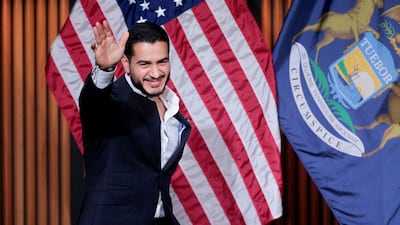
Abdul El-Sayed, who has become the first Muslim to be elected to the US Senate, celebrates his milestone victory in Detroit, Michigan. Reuters -
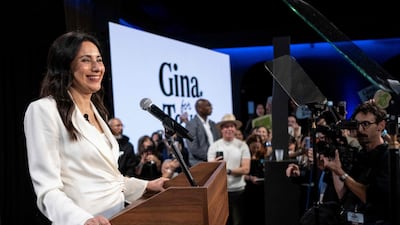
Gina Hinojosa, who has been elected as the first Latina governor of Texas, addresses supporters. AFP -
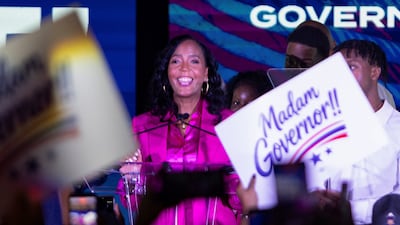
Democrat Keisha Lance Bottoms addresses supporters in Atlanta, Georgia, after becoming the first African American woman to be elected governor of a state. Reuters -
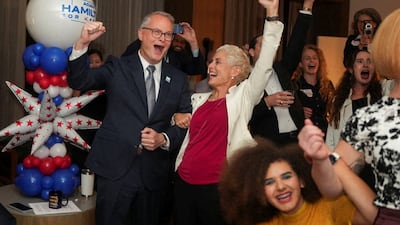
Adam Hamilton, Democratic Senate candidate for Kansas, celebrates in Overland Park as the results pour in. Reuters -
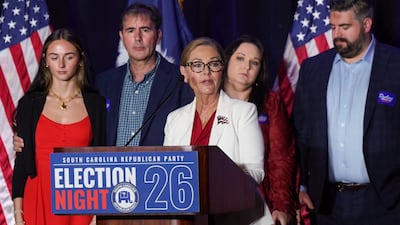
Republican Senator Darline Graham concedes defeat to Annie Andrews in the South Carolina race. AFP -

Annie Andrews, the Democratic Senate candidate for South Carolina, celebrates with her family in Charleston as results pour in. Senate. AFP -
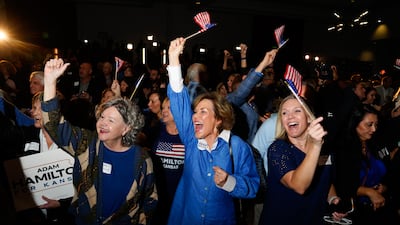
Supporters of Adam Hamilton, the Democratic Senate candidate for Kansas, cheer during an election night event in Overland Park. Bloomberg -

Roy Cooper, Democratic Senate candidate and former North Carolina governor, attends an election night rally. Reuters -
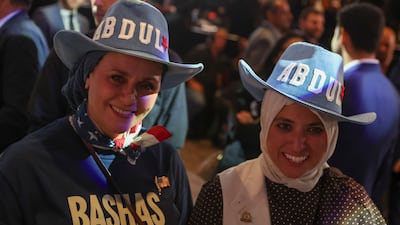
Supporters of US Senate candidate Abdul El-Sayed attend the Michigan Democrats' election night watch party in Detroit. EPA -
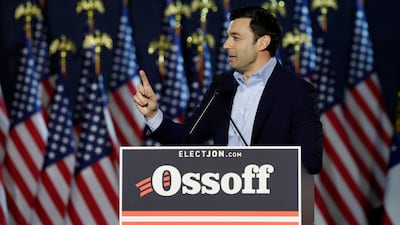
US Senator Jon Ossoff, Democrat from Georgia, speaks in Atlanta after winning re-election. AFP -
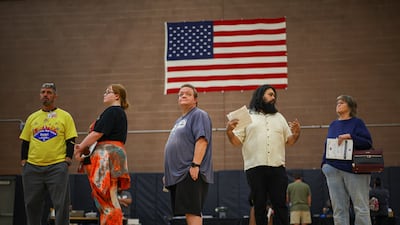
People stand in line to vote in the US midterm elections at Boulder City High School in Boulder City, Nevada. Reuters -
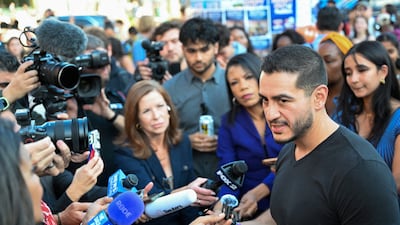
Democratic candidate for US Senate, Abdul El-Sayed, speaks to the media as he visits a polling site in Ann Arbor, Michigan. Reuters -
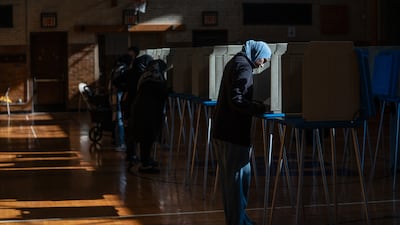
Voter cast their ballots in Dearborn, Michigan. Bloomberg -
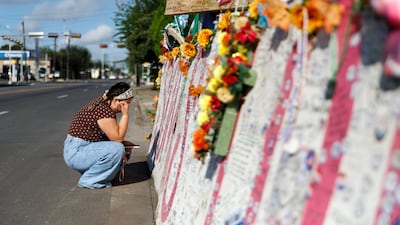
A voter cries after placing their "I Voted" sticker on a memorial for Lorenzo Salgado Araujo, who was shot dead by an Immigration and Customs Enforcement officer in July, in Houston, Texas. Bloomberg -
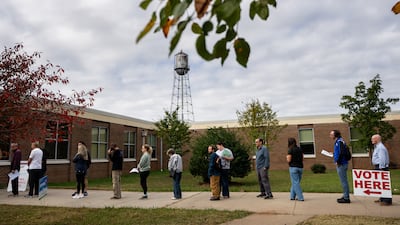
Voters wait in line to cast their ballots in Durham, North Carolina. Bloomberg -
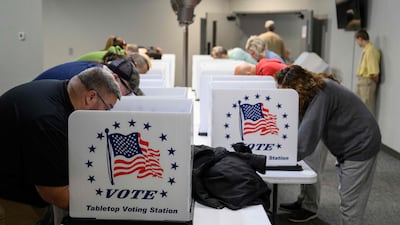
Voters cast their US midterm election ballots at a polling station at the Bridge of Hope Church in Youngstown, Ohio. AFP -
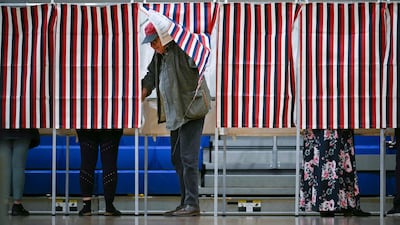
Voters in South Portland, Maine. AFP -
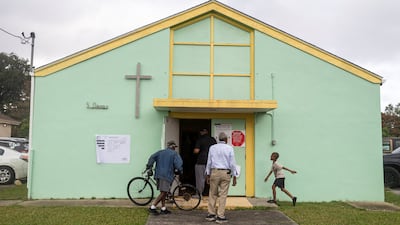
Orleans parish election commissioner Calvin Alexander stands outside St David Baptist Church, as residents arrive to vote in New Orleans, Louisiana. Reuters -
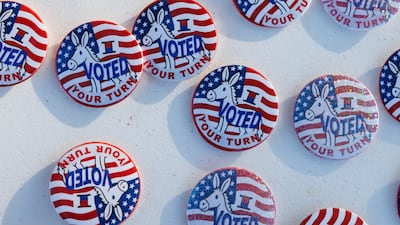
Badges at a polling site in Clayton, North Carolina. Bloomberg -
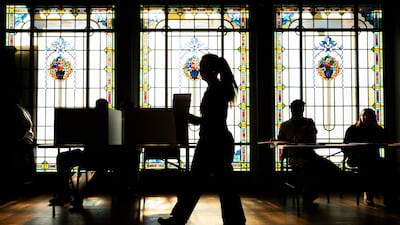
US voters cast their ballots at the Museum of Contemporary Art in Arlington, Virginia. EPA -
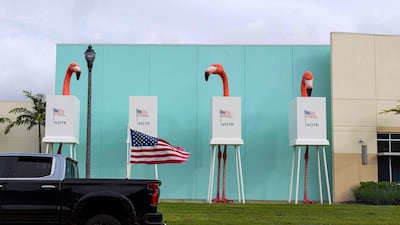
Flamingos created by artist Matthew Mazzotta outside the Supervisor of Elections building in West Palm Beach, Florida. AFP -
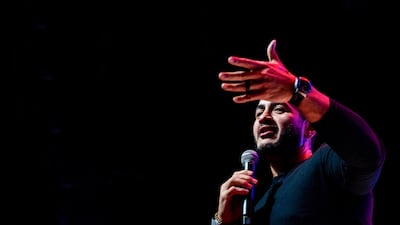
Abdul El-Sayed, Democratic US Senate candidate, from Michigan, speaks during a campaign event at the Majestic Theatre in Detroit. Bloomberg -
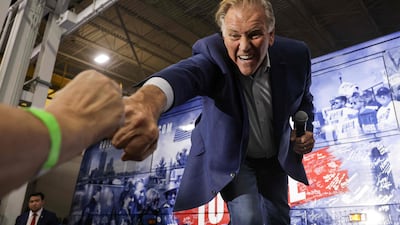
Republican Senate candidate Mike Rogers greets supporters as he takes the stage at a campaign rally in Rochester Hills, Michigan. AFP -
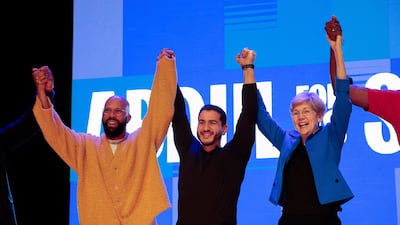
Mr El-Sayed attends a campaign rally with rapper Common and US Senator Elizabeth Warren ahead of the midterm elections, in Detroit, Michigan. Reuters -
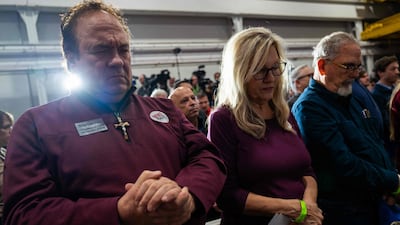
People pray during a rally for Michigan Republican Senate candidate Mike Rogers, in Rochester Hills. AFP -
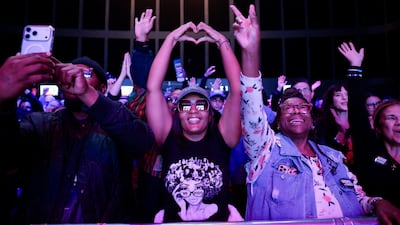
Supporters attend Mr El-Sayed's campaign rally with Common, in Detroit. Reuters -
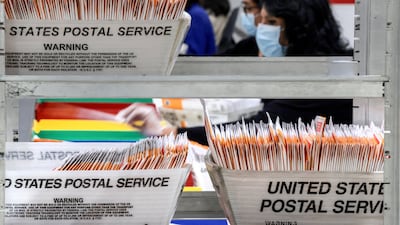
Midterm election ballots are extracted from envelopes at the Los Angeles County Ballot Processing Centre, in City of Industry, California. Reuters -
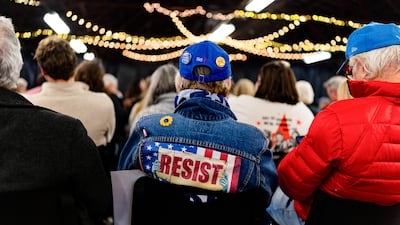
An attendee wears a "Resist" jacket during a campaign event with Abdul El-Sayed, Democratic US Senate candidate from Michigan. Bloomberg -
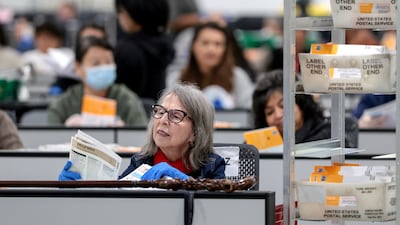
Election staff at work at the LA County Ballot Processing Centre. Reuters -
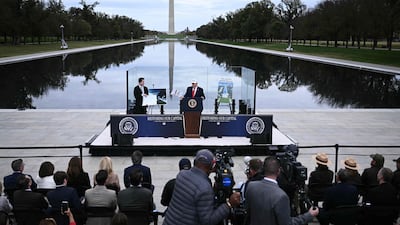
US President Donald Trump delivers a speech marking the end of the midterm election campaign, in Washington DC, the day before voting starts. AFP


The President reportedly wanted the war wrapped up right after the midterms, and Qatari mediators carried a new proposal to Tehran in the campaign’s last days. The elections may matter more as his own deadline than as a check from Congress. Democrats would probably back a negotiated settlement, but many share the administration’s worries about Iran’s nuclear programme, missiles and armed allies. Their argument is over the response, not the threat.
For Israel, the long-term effects run deeper. American favourability towards Israel has fallen to a record low, especially among Democrats, straining the bipartisan consensus that once shielded the relationship. Expect efforts to attach conditions to military aid, more hearings on civilian casualties and Gaza, and proposals to block specific weapons sales.
A full break is unlikely. Israel retains real Democratic support, and the President holds considerable sway over aid. But backing from Congress can no longer be taken for granted, and talks on a successor to the 10-year aid agreement expiring in 2028 will show how far conditions can go. Democrats are split, too: progressives such as incoming Michigan senator Abdul El-Sayed openly challenge the old consensus.
Republicans will seize on that split and accuse Democrats of abandoning Israel. Democrats must show that scrutiny of Israeli policy isn’t abandonment of Israeli security, and offer a real alternative on Iran, Hezbollah, Gaza and Houthi attacks on shipping. Criticism by itself isn’t a strategy.
For Gulf partners, the shift is subtler but still matters. Washington sent its proposed Saudi nuclear co-operation agreement to Congress in late August, tying it politically to Saudi-Israeli normalisation. Democrats will make that deal and arms sales harder to approve. None of that has to undermine core security ties, since Saudi Arabia, the UAE and Qatar have spent decades cultivating bipartisan relationships. But Riyadh must show the partnership serves American interests broadly, not just deals with Mr Trump.
The Iran war has already led Gulf governments to doubt American reliability. A sceptical Congress could deepen the worry that US support rises and falls with domestic politics, speeding up diversification. Even so, a real shift away from Washington is unlikely. American military power and technology are very hard to replace.
There’s a paradox, too. Blocked at home, Mr Trump may devote more energy to foreign policy, where he has more freedom, so tougher oversight could make his approach less predictable without making it more restrained.
The election’s biggest effect may come later. Democrats can now start defining the Middle East policy they would pursue if they win the White House in 2028: whether to cut back US military involvement and ask partners to do more, pursue diplomacy with Iran along the lines of the 2015 nuclear deal, square Israel’s security with accountability and build a workable Gulf security framework. Without clear positions, their majority risks becoming a vehicle for opposing Mr Trump rather than shaping what comes after him.
In the near term, Democratic control complicates Mr Trump’s Middle East policy without transferring it. The message isn’t American abandonment but less predictable engagement. Regional leaders will need bipartisan ties, stronger co-operation among themselves and more defence capacity, not just access to the White House.
For officials in Israel, Saudi Arabia, the UAE, Qatar and Iran, the question goes beyond Mr Trump’s policies: is America’s regional commitment changing in a fundamental way, and what comes after 2028?
Midterms rarely redirect foreign policy overnight. They change what is politically possible, and perceptions of American reliability can count as much as military power.

