


Follow the latest Sudan updates here
UN Secretary General Antonio Guterres on Tuesday called on Sudan’s warring parties to “silence the guns”.
“The fighting must stop immediately … It’s incumbent on Sudanese leaders to put the interests of their people front and centre,” he told the UN Security Council in an emergency meeting.
The North African country was plunged into chaos about two weeks ago when street battles erupted between the military and the paramilitary Rapid Support Forces.
More than 450 people have been killed while 4,000 have been wounded, UN figures show.
Mr Guterres said the power struggle was “lighting a fuse” that could detonate across borders, apart from putting Sudan’s future at risk.
He urged UN member states and regional organisations with “influence” to press the warring parties to de-escalate tension and return to the negotiating table “immediately”.
Volker Perthes, the Secretary General's special representative for Sudan, told council members that the 72-hour ceasefire brokered by the US and Saudi Arabia on Tuesday appeared to be holding in some areas.
-
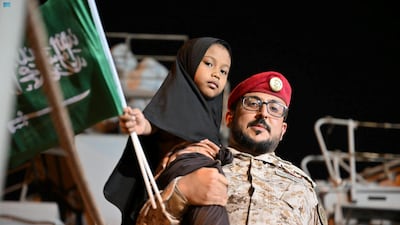
A member of the Saudi Navy carries a child from a ship at Jeddah's port during the kingdom's evacuation of civilians from Sudan. Reuters -
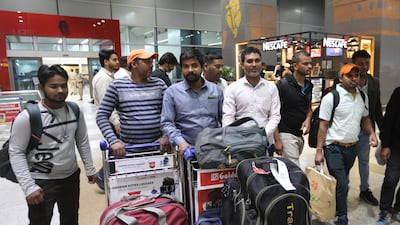
Indian nationals evacuated from Sudan arrive at Indira Gandhi International Airport in New Delhi. EPA -
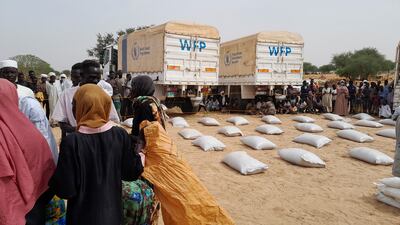
Sudanese refugees queue to receive aid from the World Food Programme near the border between Sudan and Chad in Adre, Chad. Reuters -
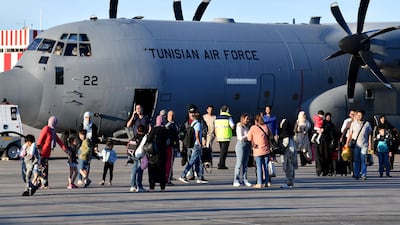
Tunisian citizens evacuated from Sudan leave a military aircraft upon their arrival at Tunis-Carthage International Airport. AFP -
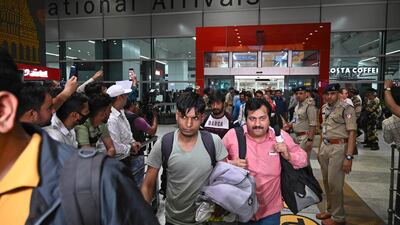
Indians evacuated from Sudan arrive on a flight at the Indira Gandhi International Airport in New Delhi, India. AP Photo -

Moroccan nationals, who have been evacuated from Sudan, arrive at Mohammed V airport in Casablanca, Morocco. EPA -
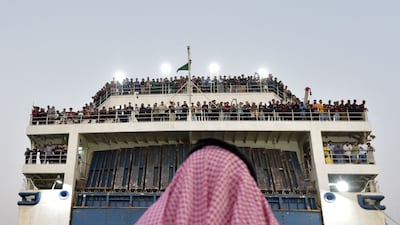
A boat with 1,687 civilians from more than 50 countries fleeing violence in Sudan, arrives at King Faisal naval base in Jeddah, Saudi Arabia. AFP -

RSF fighters in the East Nile district of greater Khartoum. AFP -
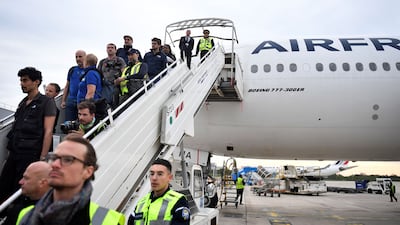
Passengers disembark a plane from Djibouti at Roissy-Charles-de-Gaulle airport near Paris after being evacuated from Sudan. AFP -
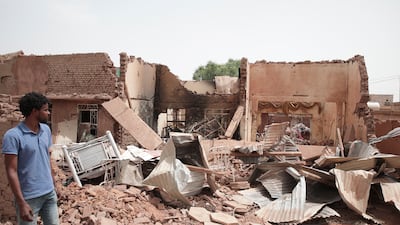
Buildings destroyed in recent fighting in Khartoum, Sudan. AP -
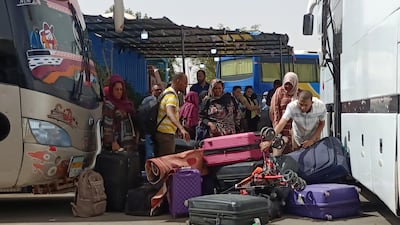
Passengers fleeing the fighting in Sudan arrive at Wadi Karkar bus station in Aswan, Egypt. EPA -
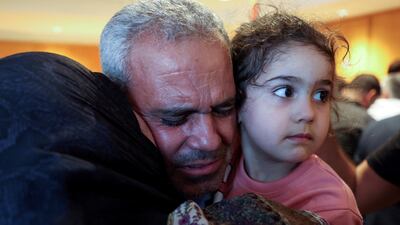
Ali Mazloum, a Lebanese citizen who was evacuated from Sudan, is welcomed upon his arrival at Beirut airport. Reuters -
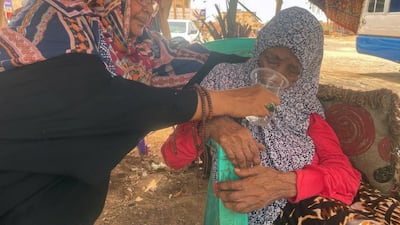
A woman helps another after fleeing clashes between the paramilitary Rapid Support Forces and the army in Khartoum. Reuters -
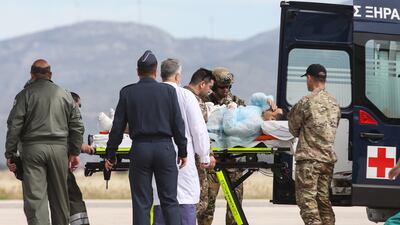
Soldiers attend to Greek citizens evacuated from Sudan as they disembark from a military aircraft in Attica, Greece. EPA -
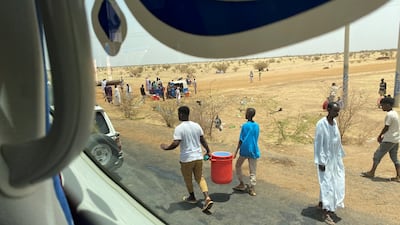
People carry hibiscus juice and cold water for those being evacuated from Khartoum to Port Sudan. Reuters -
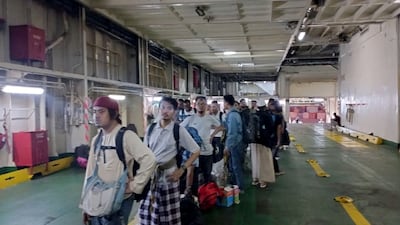
Thais wait to be evacuated by boat at a port in Sudan. EPA -
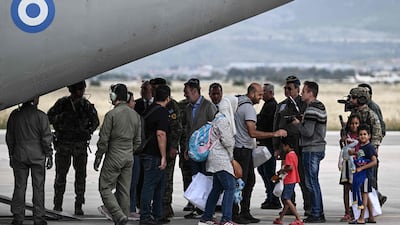
Greek citizens arrive from Sudan on a military plane in Elefsina, south of Athens. AFP -

Japan's senior Vice Foreign Minister Shunsuke Takei welcomes his country's citizens in Djibouti after they were rescued from Sudan. AFP -
A member of the Saudi Royal Navy carries a child who was rescued from Sudan, in Jeddah. Reuters -
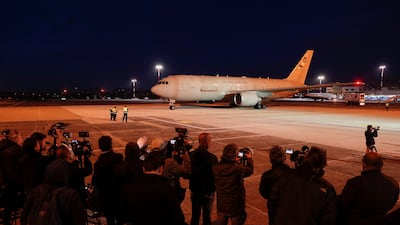
A military plane carrying evacuees arrives at Ciampino Airport near Rome, Italy. Reuters -
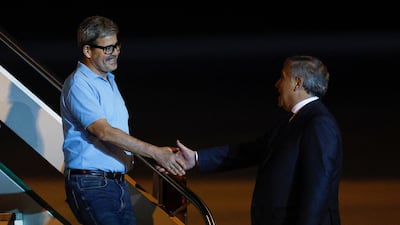
Italy's Foreign Minister Antonio Tajani greets the country's ambassador to Sudan, Michele Tommasi, as he arrives at Ciampino Airport. Reuters -
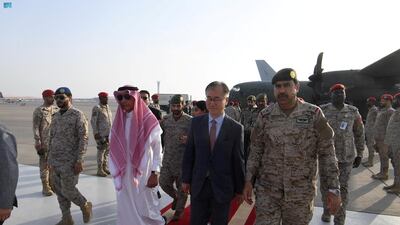
South Korea's ambassador to Saudi Arabia, Park Joon-yong, at a Saudi Air Force base in Jeddah, where he met diplomats from his country evacuated from Sudan by the kingdom's air force. Reuters -
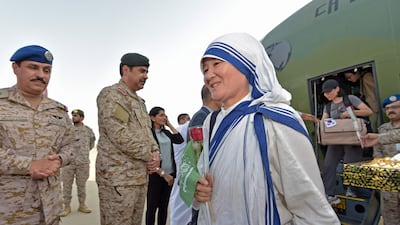
Having fled from Sudan, a South Korean nun disembarks from a military plane after landing at King Abdullah Air Base in Jeddah. AFP -
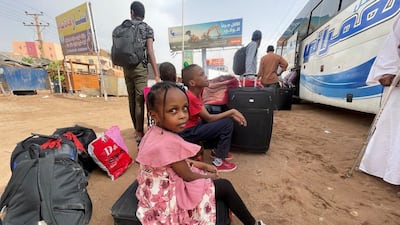
People gather as they seek to escape the violence in Khartoum. Reuters -

Spanish diplomatic personnel and citizens wait to disembark from a military plane after being evacuated from Sudan, in Djibouti. Reuters -
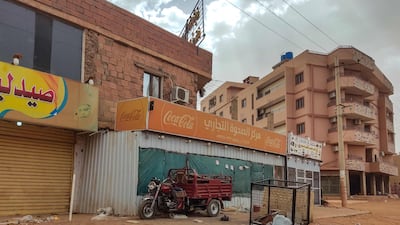
A closed pharmacy and shops in the south of Khartoum as battles rage in the capital between the army and paramilitaries. AFP -
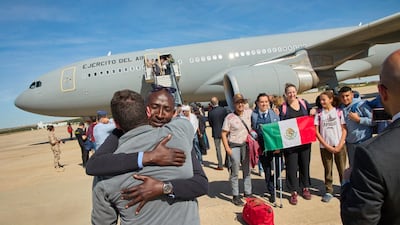
Passengers from Sudan disembark from a Spanish Air Force plane at Torrejon Airbase in Madrid. AP -
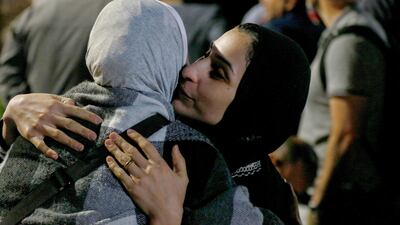
People evacuated from Sudan arrive at a military airport in Amman. AFP -
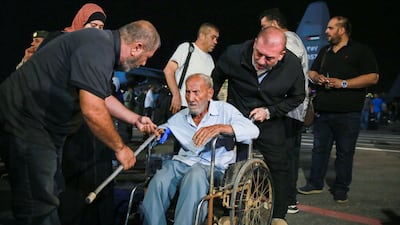
Jordan was among those countries to have rapidly flown its citizens in Sudan to safety. AFP -
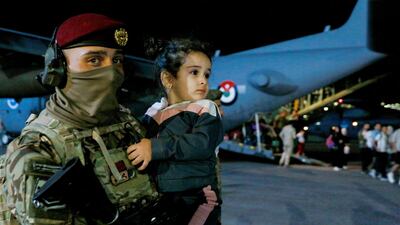
This child was one of those to have arrived safely in Amman. AFP -
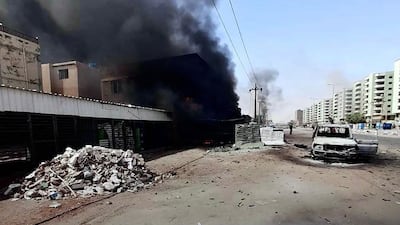
A building in Khartoum burns as violence rages in Sudan. EPA -
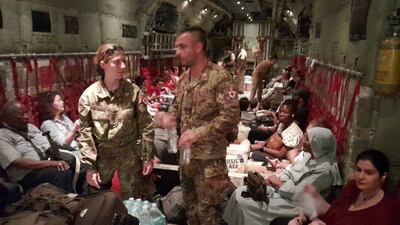
Italian citizens are flown out of the Sudanese capital on a military aircraft. Reuters -
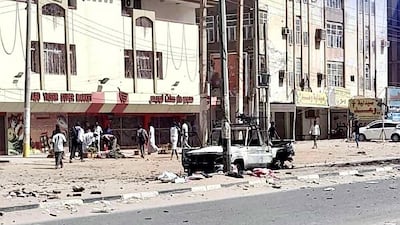
The fighting has caused heavy damage to parts of Khartoum. EPA -
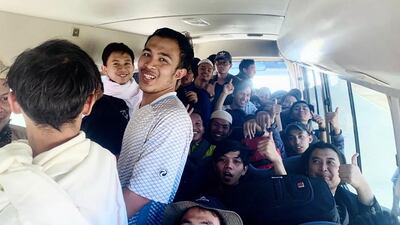
Indonesian citizens travel on a bus during an evacuation operation in Khartoum. EPA -
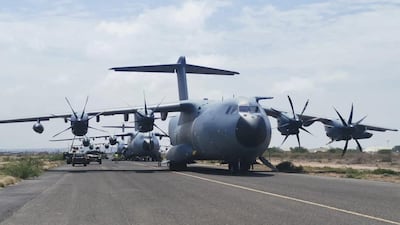
A Spanish military aircraft takes off from Khartoum as European countries rescue citizens from Sudan. Reuters -
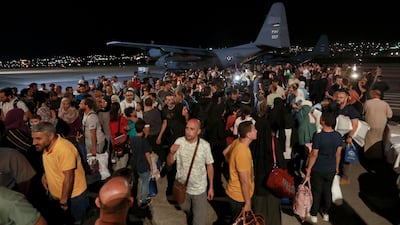
Jordanians arrive at a military airport in Amman after their evacuation from Sudan to escape the fighting. AP -

French troops arrive at an air base in Djibouti to prepare to evacuate about 100 people from Sudan. AFP -
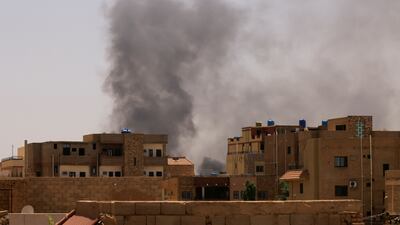
Smoke rises from buildings during clashes between the paramilitary Rapid Support Forces and the Sudanese army in Khartoum. Reuters -
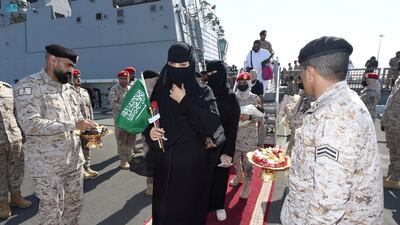
Saudis are met by Saudi Royal Navy staff as they arrive at Jeddah on the Red Sea after being evacuated from Sudan. Reuters -

The streets of southern Khartoum bear the scars of fighting between two factions of the Sudanese military. AFP -
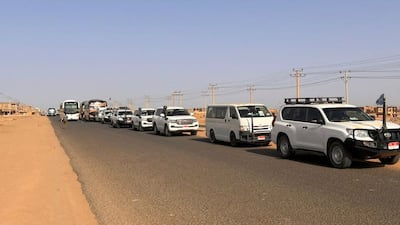
A convoy leaves Khartoum for Port Sudan as fighting between military factions in the Sudanese capital continues. AFP -

A civilian convoy leaving Khartoum for Port Sudan. AFP -

Saudi citizens and people of other nations are evacuated by the Saudi Royal Navy from Port Sudan to escape the conflict. Reuters -

A photo from October 2017 of the US embassy in Khartoum. AFP -
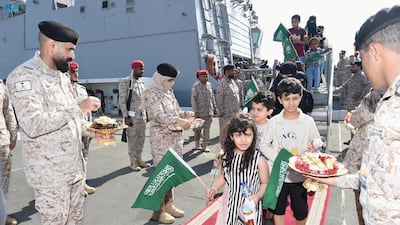
Saudi citizens are met by Saudi Royal Navy staff as they arrive at Jeddah after being evacuated from Sudan. Reuters -

Smoke hangs over Khartoum as factions belonging to the Sudanese Army and the Rapid Support Forces go back to trading gunfire after a ceasefire failed. AP


However, an unequivocal sign that the Sudanese Armed Forces or the RSF are ready to “seriously negotiate” has yet to be seen, he said.
This suggests “that both think that securing a military victory over the other is possible”, Mr Perthes said.
The special representative warned that this was a miscalculation, as Sudan could become “increasingly fragmented”, leading to a devastating impact on the region.
He accused both sides of having a “disregard for the laws and norms of war”, and committing abuses that “may amount to war crimes or crimes against humanity”.
Al-Harith Idris Al Harith, Sudan's ambassador to the UN, expressed gratitude following international efforts to try to resolve the situation but said his country would find its own way through the crisis.
“We express our appreciation for the efforts of brotherly and friendly countries and regional organisations to help calm the situation,” he said.
“This matter is an internal matter that should be left to the Sudanese to find the required solutions amongst themselves”.
Lana Nusseibeh, the UAE's ambassador to the UN, announced that the Emirates would be contributing $50 million in emergency humanitarian aid for Sudan.
She said evacuation efforts would prioritise “the most vulnerable, including women and children, the sick and the elderly during the evacuations”.
“The UAE will continue providing care and accommodation assistance to the evacuees who come to our country,” she said.
“We also remain actively involved in efforts to de escalate the situation on the ground.”
Linda Thomas-Greenfield, US ambassador to the UN, said there would be “accountability for anyone”, including military political actors, who attempt to undermine or delay Sudan's democratic progress.
“The same is true for anyone who is responsible for violations of international humanitarian law and violations or abuses of human rights,” she said.
Washington's UN envoy also called “direct and indirect fire” on its diplomatic convoy and embassy “reckless and irresponsible”.

