
The days leading up to Eid Al Adha were always electric in our home when I was growing up. The anticipation of the Eidiya, the money gifted to us by parents and relatives, the new Eid clothes, the ma’amoul and kaak pastries stuffed with dates and pistachios and dusted with sugar, the hum of a home that embraced so many loved ones, friends and families, who came over to share in the joy.
But there were also bittersweet moments. The day before Eid was the day of Arafah, where the millions of pilgrims who travelled from every corner of the world to perform the Hajj congregated on Mount Arafat near Makkah to pray for God's forgiveness. They would emerge cleansed of their sins, as though they were newborns. My mother would watch the scene on television, tears streaming down her cheeks, wishing she were there.
The emotional resonance of the Hajj, which every able-bodied Muslim must perform once in a lifetime, is unlike any other. In Egypt, where I come from, an annual lottery that determines the select few thousand pilgrims who will be sent to Saudi Arabia to perform the rites is a major event. When my uncle was selected 17 years ago, his joy could not be contained. People save for years for the opportunity to visit Makkah and Madinah.
-
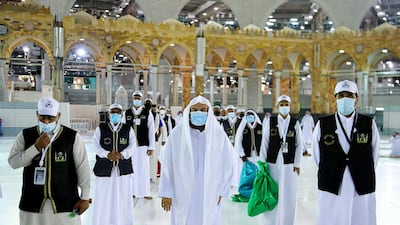
Men wearing protective face masks stand as they work on raising the Kiswa, a silk cloth covering the Holy Kaaba, before the annual pilgrimage season, at the Grand Mosque in Mecca, Saudi Arabia. REUTERS -
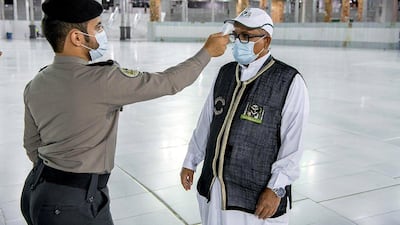
A security man checks the temperature of a worker as they work on raising the Kiswa, a silk cloth covering the Holy Kaaba, before the annual pilgrimage season, at the Grand Mosque in Mecca, Saudi Arabia. REUTERS -
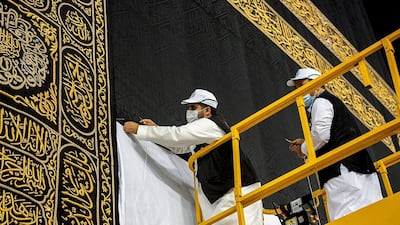
Workers wearing protective face masks work on raising the Kiswa, a silk cloth covering the Holy Kaaba, before the annual pilgrimage season, at the Grand Mosque in Mecca, Saudi Arabia. REUTERS -
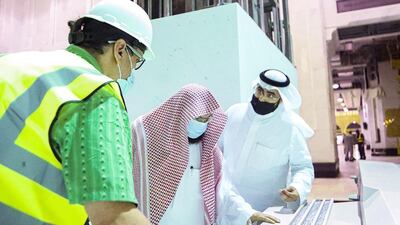
The President of the Haramain Sheikh Abdul Rehman Al Sudais inspects the King Abdulaziz Gate at the Grand Mosque. SPA -
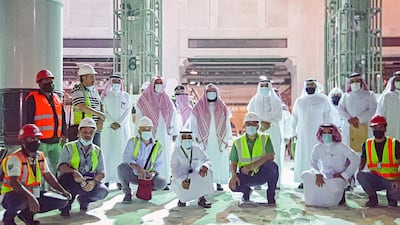
Saudi officials and workers pose for a photo after inspections ahead of Hajj. SPA -
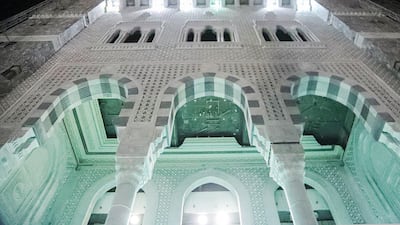
The King Abdulaziz Gate at the Grand Mosque in Makkah. SPA -
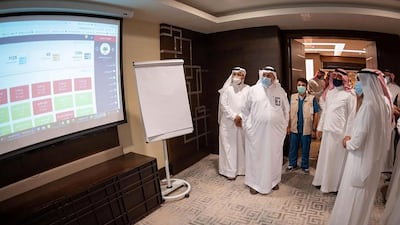
The Minister of Hajj and Umrah inspects the equipment prepared for the service of pilgrims this year -
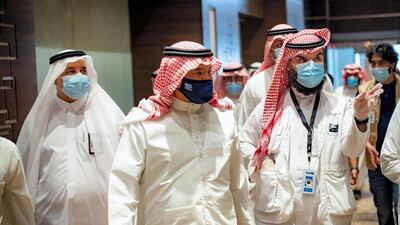
the Minister of Hajj and Umrah inspects the equipment prepared for the service of pilgrims this year -
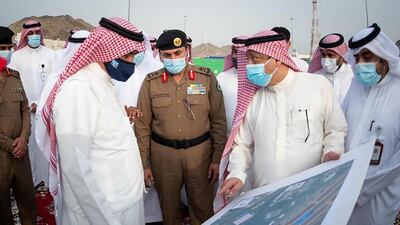
The Minister of Hajj and Umrah inspects the equipment prepared for the service of pilgrims this year -
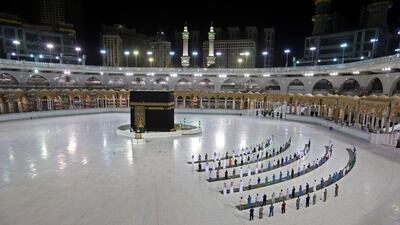
A few worshippers performing the fajr prayer at the Grand Mosque in Makkah. Saudi Arabia has announced it will hold a "very limited" Hajj this year. AFP -
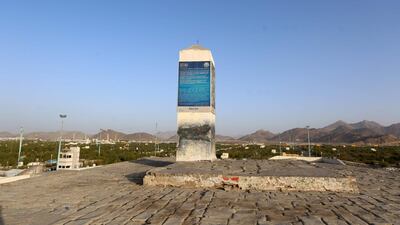
Saudi Arabia's authorities said only a limited number of people, who are already in Saudi Arabia, will be able to perform the Hajj amid a spike of cases and deaths in the kingdom. AFP -
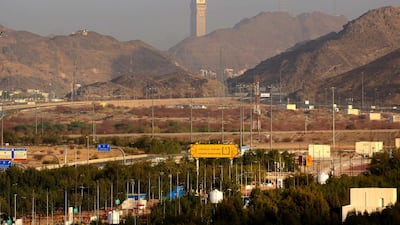
Arab countries have expressed their support for Saudi Arabia's decision to ban pilgrims from abroad attending the Hajj pilgrimage this year to stem the spread of the coronavirus pandemic. AFP -
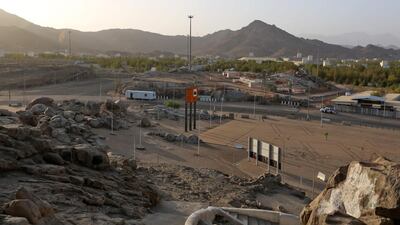
Arafat mountain in Saudi Arabia's holy city of Makkah. Egypt, home of Al Azhar, one of the Muslim world’s main centres of learning, quickly came out in support of the decision. AFP -
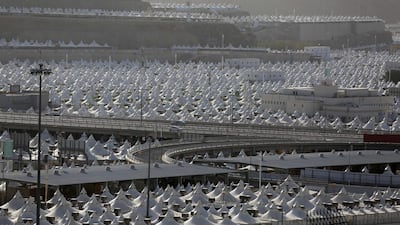
Egyptan Religious Affairs Minister Mukhtar Jumah described the downsizing as “practical” and “conforming with jurisprudence regarding the pandemic”. AFP -
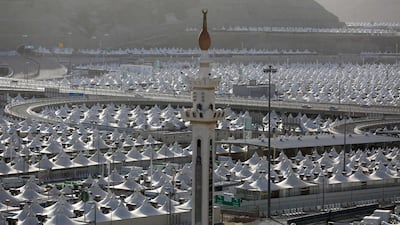
Hundreds of thousands usually perform Hajj every year. AFP -
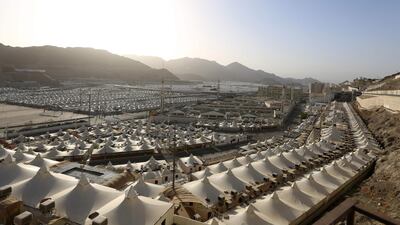
Bahraini Justice and Islamic Affairs Minister Khaled Bin Khalifa said the ban “conforms with the core values of Islam” and that Bahrain appreciates what he described as Saudi Arabia’s quest to save lives. AFP -
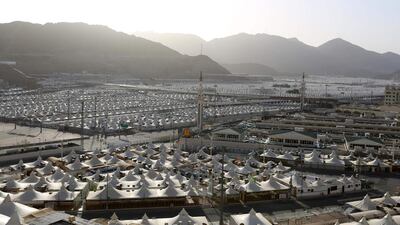
The Emirates Hajj Affairs Office said Saudi Arabia's move “preserves the health of the people and their lives, which is one of the main purposes of our honoured religion”. AFP -
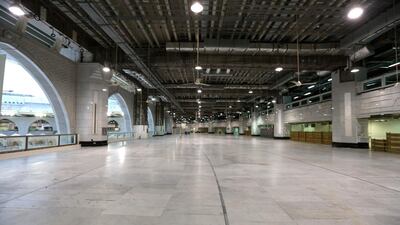
Part of the Grand Mosque complex in Saudi Arabia's holy city of Makkah. AFP


They tell you that the first prayer you make when you see the Kaaba will be answered. The electricity of that moment, though, is consuming, such that all earthly matters fade away for a moment, replaced by a sense of tranquility set against the cadence of the chant: “We answer your call, O God.”
This year, that sea of humanity has been replaced by images of a deserted Grand Mosque, the white marble of the Mataf, where Muslims circumambulate the Kaaba, shimmering in the sunlight. The Hajj has been drastically cut back this year due to the coronavirus pandemic. Only 1,000 people already living in Saudi Arabia will be able to perform the rites. It is absolutely the right thing to do, with humanity facing a plague that has yet to be brought under control. Still, the images fill me with a profound sadness.
I was fortunate enough to perform the Hajj when I was 17, a little more than a month before the American invasion of Iraq in 2003 began. I went with my father on the journey, part of a tour group travelling overland through the UAE and the Kingdom’s rugged desert landscapes to Madinah, then on to Makkah. It was an opportunity to bond with him after I had finished high school, in an environment infused with spirituality and easy smiles – even when I fell asleep in the Grand Mosque’s courtyard and got lost on my way back to the communal house we were staying at.
The rigours and sameness of daily life under the pandemic, and the fog of war enveloping the next few months, or year, of existence can make it hard to feel grateful or optimistic, weighed as we are by anxiety and worry, without much power at the individual level to influence the course of events.
But what I remember from my time at the Hajj is primarily a feeling of peaceful, weightless austerity. I am not a religious person, but I have yet to experience a serenity matching that which I felt in the Prophet’s mosque in Madinah – praying in the green-carpeted Al Rawdah Al Sharifah, which marked the path the Prophet walked from his home to the mosque for prayers, or strolling in the courtyard outside in the late evening breeze, chewing on sweet dates.
I remember the camps we stayed in at Mina, and climbing with my father along the slopes of Arafat as the sun set, and sleeping soundly on the pebbles of the plain of Muzdalifah, before hitching a ride the next morning atop a minivan to Makkah. And I remember the march around the Kaaba again as one, a diverse sea of humanity, black, white, and brown, man and woman, the cadence softening with the fading light.
-
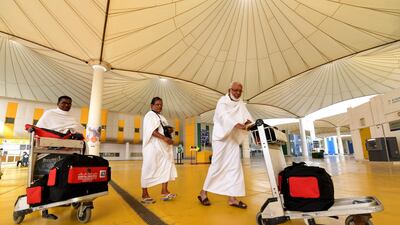
Pilgrims arrive at King Abdulaziz International Airport in JEddah, prior to the annual Hajj pilgrimage in the holy city of Mecca. The Hajj is the fifth pillar of Islam, a religious duty that must be carried out at least once in the lifetime of every able-bodied Muslim who can afford to do so. AFP -
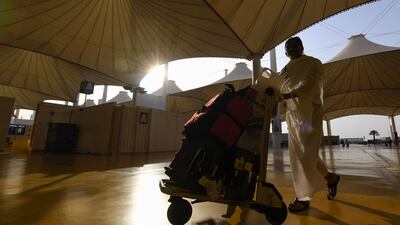
Early arrivals at Jeddah. AFP -
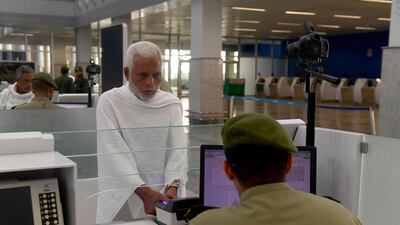
Pilgrims go through passport control. AFP -
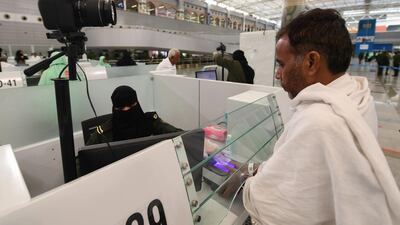
Pilgrims require a special Hajj visa to enter Saudi Arabia. AFP -
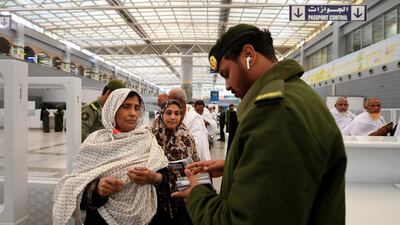
Pilgrims go through passport control. AFP -
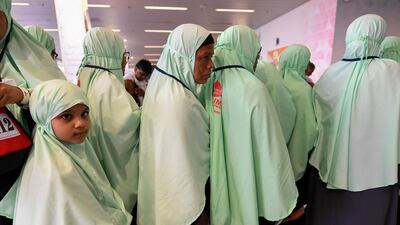
Last year about 1,535 flights carried pilgrims to Saudi airports. AFP -
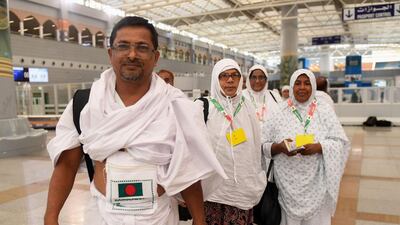
Makkah becomes one of the most densely populated areas in the world during Hajj, with an estimated two million people moving in unison to perform the rituals. -
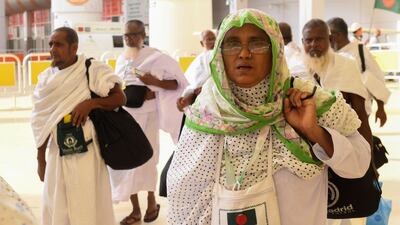
Early arrivals from Bangladesh. AFP -
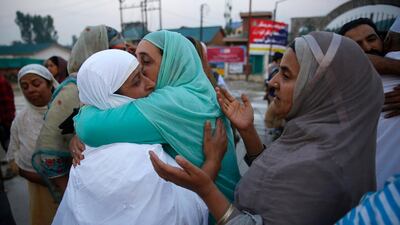
A Kashmiri Muslim pilgrim hugs her relative before leaving for the Hajj pilgrimage in Srinagar, EPA -
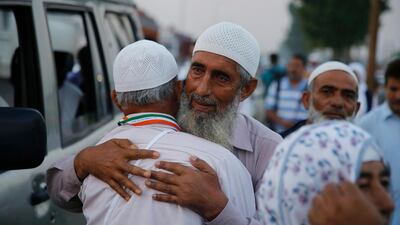
A Kashmiri man hugs his relative before beginning his Hajj pilgrimage. EPA -
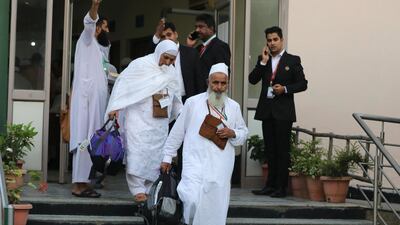
Kashmiri Muslim pilgrims leave for the annual Hajj pilgrimage. EPA -
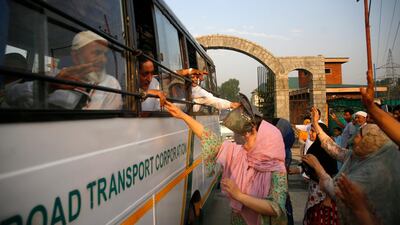
Relatives see off pilgrims heading to Makkah in Srinagar. EPA -
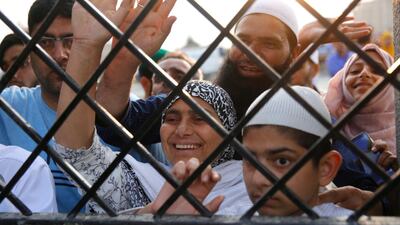
Relatives see off pilgrims heading to Makkah in Srinagar. EPA -
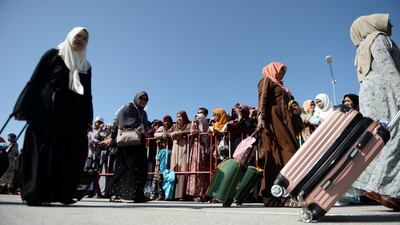
Thai Muslims board a special flight to Makkah from Narathiwat provincial airport in southern Thailand. AFP -
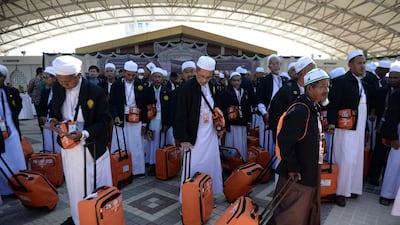
Thai Muslims board a special flight to Makkah from Narathiwat provincial airport in southern Thailand. AFP -
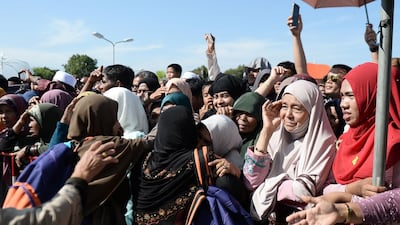
Relatives send off Thai Muslims heading to Makkah to perform Hajj. AFP


There are many paths to transcendence in daily life. That feeling of communion with a higher power can find and overwhelm you in many different ways – during prayers at a temple, church, synagogue or mosque, the first cry of your newborn, when you catch the scent of jasmine in the breeze, or that moment the sunlight breaks through and tickles your skin, or that feeling of contentment at the end of a day well lived.
I had one of those moments as I stared down at the Kaaba that first day we arrived in Makkah. The images of the empty Grand Mosque remind me that so many will be robbed of a moment they longed for. I hope they find peace and solace elsewhere this time, within themselves and their loved ones, as we labour through this pandemic summer.
Kareem Shaheen is a former Middle East correspondent based in Canada

