
Almost a year ago, Mohammad Shannan, a 15-year-old boy, came to our clinic here in Gaza. His pale, sweat-drenched face and the way he curled in pain immediately told me something was wrong. He was vomiting, barely able to move. From the moment I laid eyes on him, I suspected appendicitis, but we had no way to confirm it. The absence of basic lab tests and imaging tools here has left us helpless, forcing us to rely on clinical judgment alone.
It has been like this since almost the very start of Israel’s invasion of Gaza last October. Within hours of Hamas’s attack on Israel on October 7, Israel began targeting Gaza’s healthcare infrastructure. The Indonesian Hospital in northern Gaza was hit the very same day. Within a month, the International Eye Care Centre, the Turkish-Palestinian Friendship Hospital, Al Quds Hospital and Al Shifa Hospital were also hit, along with several of the Gazan health system’s clearly marked ambulances.
When Mohammad came to the clinic, all we could do was wait for one of these ambulances – an excruciating two-hour ordeal where I did my best to keep him stable with fluids and painkillers. His appendix could rupture at any moment, turning a treatable case into a fatal one, but there was nothing more I could do.
As I rode in the ambulance with him, clutching nothing but a bag of IV fluid and an ampule of diclofenac – a pain reliever – I found myself questioning the absurdity of it all. Why are we being deprived of basic medical supplies? Are we manufacturing nuclear weapons out of Tylenol? Could a functioning ambulance somehow be mistaken for a tank?
According to Gaza’s Health Ministry, around 60 per cent of essential medicines and more than 80 per cent of medical supplies here are depleted. Israel has full control over entry points to Gaza, and often refuses requests to bring lifesaving equipment here. The very limited aid that is able to reach us is not enough to deal with what doctors here see on the ground.
When we finally reached Al Najjar Hospital in Rafah, the scene that greeted us was pure chaos. Mohammad’s case, as urgent as it was, paled in comparison to what I saw: living people missing limbs, and deceased people missing heads. The emergency room had become a battleground for the very act of survival. I had to leave Mohammad and join colleagues in the resuscitation room, chest tubes in hand, inserting arterial lines. But the grim truth was that there was only so much we could do. The people I was treating had bled so much before reaching the hospital that saving them was almost impossible. As the adrenaline drained from my body, I felt a tug on my sleeve. Mohammad’s brother was standing there. “What about my brother?” he asked.
Mohammad had been transferred to the European Hospital, where the operating theatres were less overwhelmed. It turned out to be appendicitis, as suspected, and thankfully, he survived. But the emotional whiplash of juggling crises like his alongside cases of catastrophic injury has become a recurring part of my days here in Gaza. The fight to keep him alive wasn’t just a medical one; it was a fight against a system designed to deprive us of even the most basic tools.
-
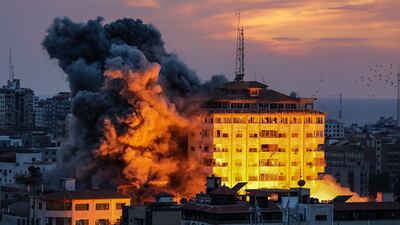
Smoke rises after Israeli air strikes targeted Palestine Tower in Gaza city on October 7, 2023. EPA -
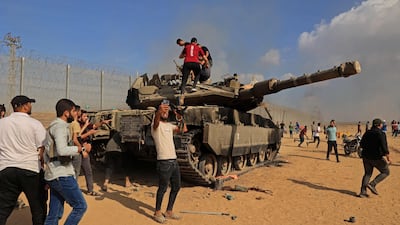
Palestinians take control of an Israeli Merkava battle tank after crossing the border fence with Israel from Khan Yunis in the southern Gaza Strip on October 7, 2023. AFP -
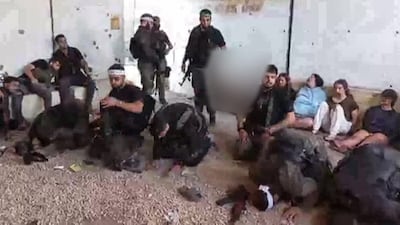
This video grab from footage released by the Israeli Hostage and Missing Families Forum campaign group on May 22 shows what the group described as Israeli female soldiers being captured by Palestinian Hamas militants during the October 7, 2023, attack on Israel. AFP -
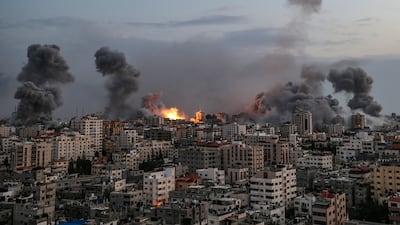
Smoke rises following an Israeli air strike in Gaza city on October 9, 2023. EPA -
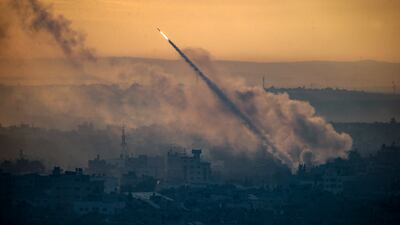
A rocket is launched from the coastal Gaza strip towards Israel by militants of the Ezz Al-Din Al Qassam militia, the military wing of Hamas movement, in Gaza city. EPA -

Israel's Iron Dome anti-missile system intercepts rockets launched from the Gaza Strip, as seen from the city of Ashkelon, Israel, on October 9, 2023. Reuters -

Lightning strikes as smoke billows following an Israeli air strike in Gaza city on October 9, 2023. AFP -
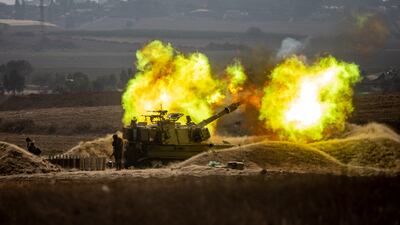
An Israeli artillery unit fires at an area along the border with Gaza, southern Israel, on October 11, 2023. EPA -

Ultra-Orthodox Jewish people carry their belongings before boarding a ship for US nationals and their immediate family members, as they leave Israel headed for Cyprus. Reuters -
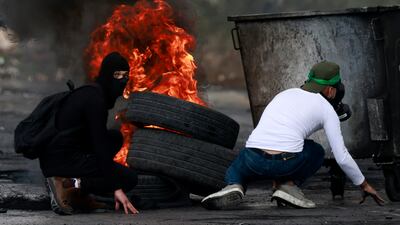
Palestinian youths take cover behind a rubbish container as they clash with Israeli forces at the northern entrance of the West Bank city of Ramallah near the Israeli settlement of Beit El on October 20, 2023. AFP -

A man mourns as he attends a funeral of Palestinians killed in Israeli strikes in Khan Younis in the southern Gaza Strip on October 24, 2023. Reuters -
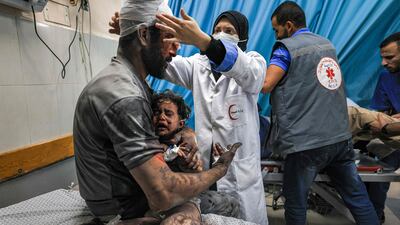
A man holds a child, survivors of Israeli bombardment, as they are treated at a trauma ward at Nasser hospital in Khan Yunis in the southern Gaza Strip on October 24, 2023. AFP -

People search for survivors and the bodies of victims through the rubble of buildings destroyed during Israeli bombardment in Khan Yunis in the southern Gaza Strip on October 26, 2023. AFP -

Anti-war protesters raise their 'bloody' hands behind US Secretary of State Antony Blinken during a Senate Appropriations Committee hearing on President Biden's $106 billion national security supplemental funding request to support Israel and Ukraine, as well as bolster border security, on Capitol Hill in Washington on October 31, 2023. Reuters -
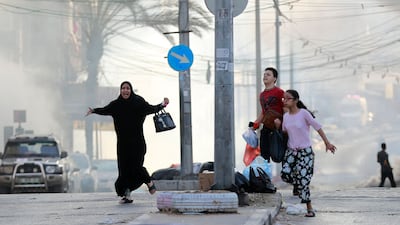
Palestinians run for cover after a strike near the Al Shifa hospital in Gaza city on November 1, 2023. AFP -
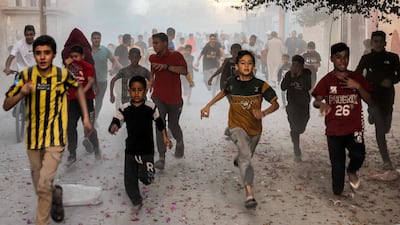
Palestinian children run as they flee from Israeli bombardment in Rafah in the southern Gaza Strip on November 6, 2023. AFP -
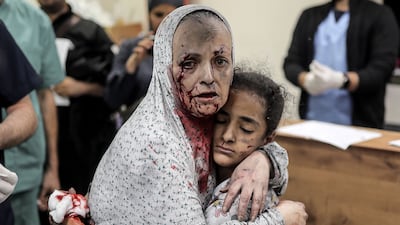
An injured Palestinian woman covered in dust and blood hugs an injured girl child at the hospital following the Israeli bombardment of Khan Yunis in the southern Gaza Strip on November 15, 2023. AFP -
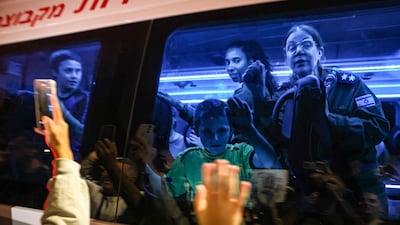
Hostages released by Hamas Gal, left, and Tal Almog-Goldstein, second left, stand in a bus transporting them to an army base in Ofakim in southern Israel after they were released by the Palestinian militant group from the Gaza Strip on November 26, 2023. AFP -
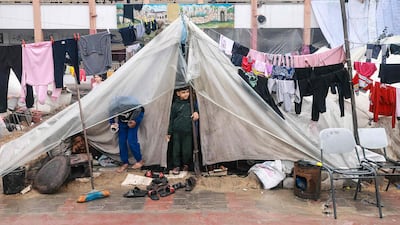
Palestinian boys stand in their makeshift tent at a camp set up on a schoolyard in Rafah in the southern Gaza Strip where most civilians have taken refuge, on December 13, 2023. AFP -
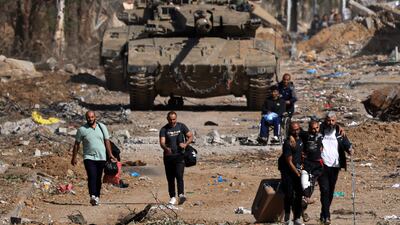
Palestinians fleeing the north through the Salaheddin road in the Zeitoun district on the southern outskirts of Gaza city, walk past Israeli army tanks on November 24, 2023. AFP -
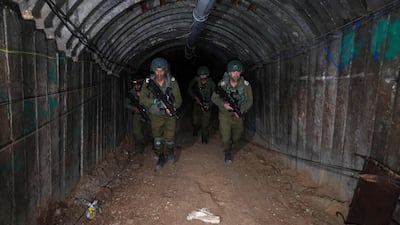
In this picture taken during a media tour organised by the Israeli military on December 15, 2023, soldiers visit a tunnel that Hamas reportedly used to attack Israel through the Erez border crossing on October 7. AFP -

Jewish protesters block the passage of aid trucks being sent to Gaza in Ashdod, Israel on February 1, 2024. Reuters -
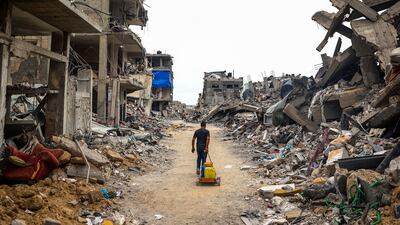
A man pulls water containers as he walks past destroyed buildings in Khan Younis on May 5, 2024. AFP -
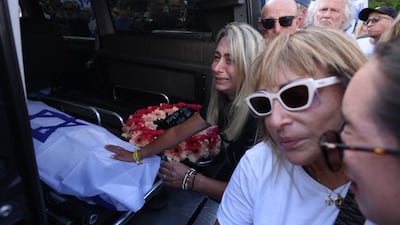
Relatives of Hanan Yablonka, one of the Israeli hostages held in the Gaza Strip since the October 7, 2023 attack by Palestinian Hamas militants, mourn during his funeral in Tel Aviv on May 26. AFP -

Humanitarian aid packages land after being dropped from a plane in Al Mawasi district of Khan Younis, on May 30, 2024. Reuters -
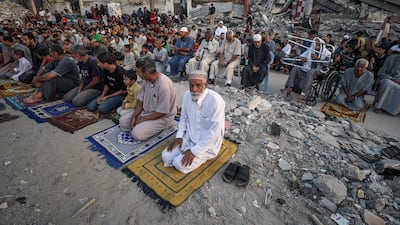
Palestinians attend Eid al-Adha prayer in Khan Younis town, southern Gaza strip, on June 16. EPA -
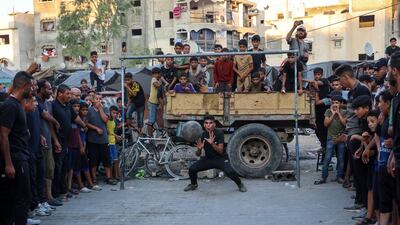
Displaced Palestinians play football in Jabalia on July 23, 2024. AFP -
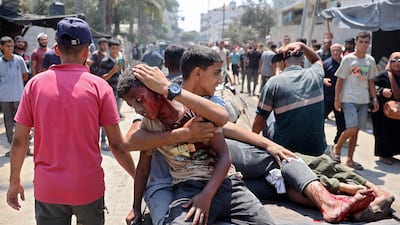
Palestinians injured in an Israeli strike on a school ride on the back of a cart in Deir Al Balah on July 27, 2024. AFP -
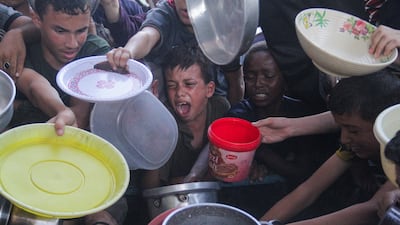
Palestinians gather to receive food cooked by a charity kitchen, amid the Israel-Hamas conflict, in the northern Gaza Strip, September 11. Reuters -

Palestinians survey the damage at the site of Israeli strikes on a displacement camp in Khan Younis on September 10, 2024. AFP -
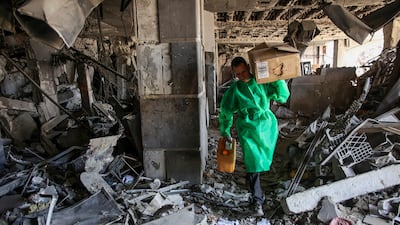
A medical staff member carries supplies through a destroyed section of Al Shifa hospital in Gaza city on September 17. AFP -
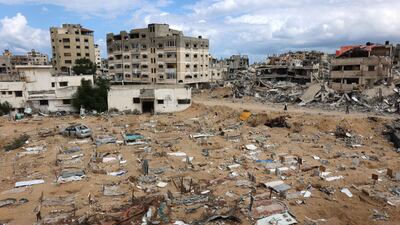
People walk past makeshift graves in Gaza city on September 17. AFP


In medical school, the more mundane procedures – cannulas, chest tubes, endotracheal intubation – were never seen as critical to me and my classmates. We thought we’d always be the least experienced, with others around us to take charge in the most crucial moments. That sense of comfort is completely gone now.
For example, on a quiet night last October, after four days at the European Hospital, I prayed for just a few hours of peace. I thought about how I never expected to be thrust into the front lines of emergency medicine like this. I had planned for my career to be more research-oriented, far removed from trauma. It was supposed to be a quieter life. Instead, I am drowning in death, trying to save lives even as my own mental health deteriorates.
The respite never came that night. A man had been rushed in, his chest riddled with shrapnel. His rib cage was bleeding, and he couldn’t breathe without a tube in his trachea.
In those moments, your muscle memory takes over. Everything you thought was trivial in medical school becomes the line between life and death. The first time I failed to get the tracheal tube in place, I froze for a split second. If this man wasn’t breathing, he would die because of me. The weight of that responsibility is something no young doctor is ever ready for. We were supposed to be learning under supervision, with senior doctors guiding us. But in Gaza, supervision has become a luxury. Doctors have been killed or abducted, or have had to flee for their lives, leaving many junior doctors to adapt quickly or else watch people die. Over the past year, I have often had to study medical procedures on my phone before practising them. Every moment is a fight against ignorance, because the crushing guilt of losing someone due to my inexperience would be unbearable.
In February, I worked in the neonatal intensive care unit of the Emirati Maternity Hospital in Rafah. Nearly every newborn from southern Gaza was brought there, along with those evacuated from the north. Many did not survive the journey – some were caught in air strikes, while others perished at checkpoints. Those who made it to Rafah faced a different kind of fight – a shortage of resources due to the war resulted in them being unable to receive the kind of medical care that could have saved them.
We watched babies die of lung collapse, a condition that could have been easily treated with a surfactant – a substance that requires refrigeration, which we no longer have. These newborns, already so fragile, suffocated to death in front of us. I remember one baby who was delivered after an air strike killed his entire family, including his mother. The doctors performed a C-section to save him. He was premature, but we thought we could keep him alive. A few days later, he succumbed to infection. His tiny body couldn’t fight off the bacteria that thrived in the unsanitary conditions.
These are not stories of medicine as I learnt it. This is not the version of doctoring most young doctors in Gaza ever expected to practise. We swore an oath to protect life, but we are working in a system where we can barely offer the most basic care. We’re not just caretakers any more. We are survivors, struggling alongside our patients in a battle that often seems impossible to win.

