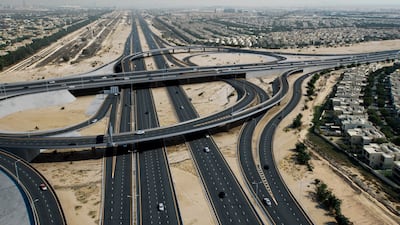
Drivers on one of Dubai's main motorways can now use new bridges and ramps that are set to ease congestion and shorten journey times.
Three bridges and two loop ramps, spanning 2,660m, have opened at the intersection of Al Qudra Road and Sheikh Zayed bin Hamdan Al Nahyan Street.
The emirate's Roads and Transport Authority has completed work on its Al Qudra Road Key Intersections Development Project.

The upgrade increases the intersection’s capacity from 7,800 vehicles per hour to 19,400 and eliminates traffic stops in all directions, saving drivers time.
The broader Al Qudra Road project will increase capacity by 33 per cent, from 12,000 vehicles per hour to 16,000 in both directions. It will also reduce travel times by 70 per cent, cutting waiting times from ten minutes to three.
The project will benefit more than 400,000 residents and visitors across residential communities and development areas, the RTA said.

How have connections been improved?
Three bridges and two loop ramps have been opened at the intersection of Al Qudra Road and Sheikh Zayed bin Hamdan Al Nahyan Street.
The first bridge is 750m long and has two lanes. It serves traffic going from Al Qudra Road to Jebel Ali through Sheikh Zayed bin Hamdan Al Nahyan Street.
The second bridge is 900m long, also with two lanes, and serves drivers heading to the city centre and Dubai International Airport.
The third bridge is 500 meters long with one lane and links nearby residential areas to Al Qudra City.
The two loop ramps, each with two lanes, provide smoother connections. One ramp, 230m long, serves traffic to Al Qudra City, while the other, stretching 280m, connects drivers to Umm Suqeim.
The project also adds about three kilometres of service roads on both sides of Sheikh Zayed bin Hamdan Al Nahyan Street to improve connections with nearby developments.
These new infrastructure comes after two main bridges at the same intersection were opened earlier, together spanning 1,400 meters and offering eight lanes in both directions.
Part of wider road development plan
Mattar Al Tayer, director general and chairman of the RTA Board, said the project is part of RTA’s plan to develop major road corridors, boost capacity and improve links between residential areas, development zones, and economic centres.
The upgrades will give drivers real benefits, such as shorter trips, better road safety, and easier access to nearby communities, Mr Al Tayer added.
Road projects are important for Dubai’s urban and economic growth, he said. They provide the capacity needed for future expansion and make residential, development, and investment areas more appealing.

Serving major residential communities
Al Qudra Road serves many new and established residential communities, including Arabian Ranches 1 and 2, Dubai Motor City, Dubai Studio City, Akoya, Mudon, Damac Hills, The Sustainable City, Town Square, Mira, and Damac Hills 2.
Other improvements have strengthened connectivity along the stretch between Emirates Road and Al Qudra Roundabout.
These improvements include adding lanes in both directions along a 3.4km section, constructing a new 4.8km road in the southern area to connect with Emirates Road, upgrading entry and exit points, and adding lanes along both sides of Emirates Road over a combined length of 4.8km.
Mr Al Tayer said the RTA would continue implementing road development projects in line with future growth requirements and the objectives of the Dubai 2040 Urban Master Plan, supporting the emirate’s competitiveness and providing a safe, seamless, and sustainable transport network.

