


A Filipina mother has hailed the UAE's visa amnesty as “a miracle” years in the making, after seizing the opportunity to legalise her residency status and provide a better future for her children.
Fathima Marbella, 37, who is among thousands of people who have lined up at immigration centres across the Emirates since the scheme launched on Sunday, said it has offered her a “clean slate” after years of turmoil.
Ms Marbella, who lives in Dubai, absconded from her employer in 2019, and her work permit expired in 2021.
A challenging situation became more complex when she became pregnant to her Indian partner in the same year, with whom she lived.
“This amnesty is a miracle I have been waiting for years,” said Ms Marbella, who has a three-year-old daughter, Fathima, and a seven-month-old son, Sachin.
She was able to clear her overstay fines and resolve her absconding case after applying for support at the Al Awir centre in Dubai on Sunday.
This newfound legal status means she can now apply for birth certificates and passports for her children.
“My slate is now clean, and I can apply for a job and sponsor both my children,” Ms Marbella said.
Ms Marbella said she had to deliver her first child at home without medical assistance because she could not access health care or legal documentation for her baby.
“I could not take my daughter to the hospital when she fell sick or apply for her birth certificate or passport. I had to literally keep her in hiding,” said Ms Marbella.
However, by the time her second child was born in January, the UAE had already implemented significant legal reforms, including the decriminalisation of consensual relationships out of wedlock with provisions for single mothers to register their children.
UAE visa amnesty – in pictures
-

Faral Ally Hamis, from Tanzania, during the second day of visa amnesty at the General Directorate of Residency and Foreigners Affairs Dubai in Al Awir area. All photos: Pawan Singh / The National -
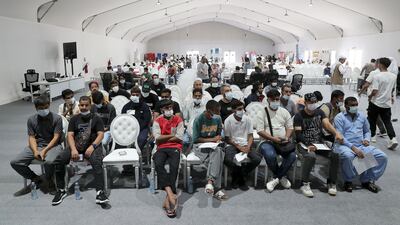
People wait to be seen at the General Directorate of Residency and Foreigners Affairs Dubai. -

Officials help direct those waiting during the second day of visa amnesty in Dubai. -
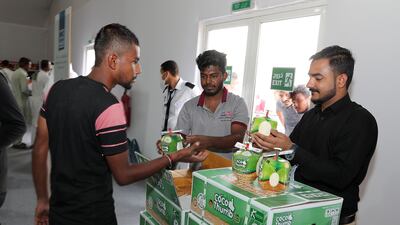
Visitors were given free coconut water at the General Directorate of Residency and Foreigners Affairs Dubai. -
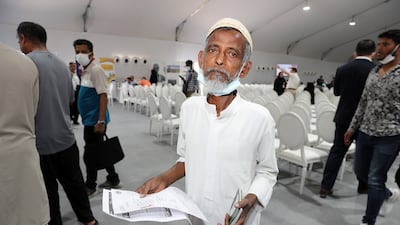
Kashem Samir Hossain, from Bangladesh, during the second day of visa amnesty at the General Directorate of Residency and Foreigners Affairs. -
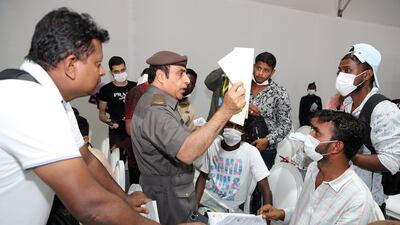
Officials help during the second day of visa amnesty at the General Directorate of Residency and Foreigners Affairs Dubai. -
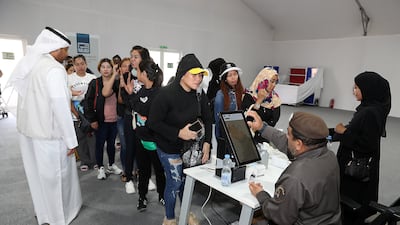
Officials deal with the queues at the visa amnesty at the General Directorate of Residency and Foreigners Affairs in Al Awir, Dubai. -

Maj Gen Obaid Muhair bin Suroor, Deputy Director General of GDRFA, centre, talking to visitors -
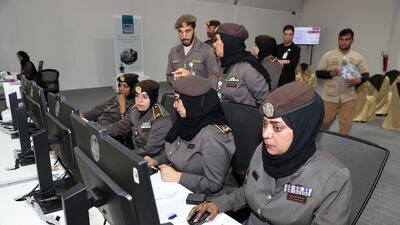
Officials in the women's section during the visa amnesty -
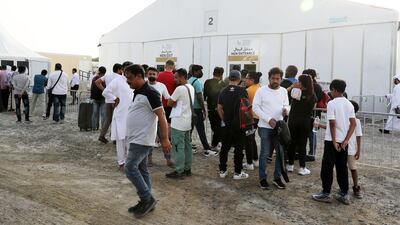
People who have overstayed their residence or visit visas will not be fined -

Venus Devera from the Philippines with her 15-month-old daughter Alvia Faith at the General Directorate in Dubai -
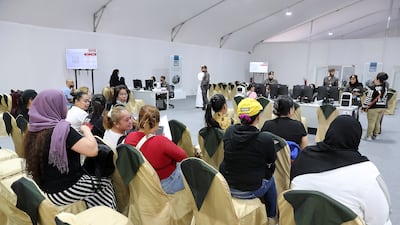
The two-month initiative is open for people with expired residency and visit visas -
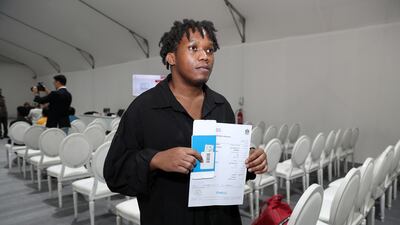
Christopher Kyeyunemr, 29, from Uganda, was one of the first people to obtain the exit pass after living illegally for two years -
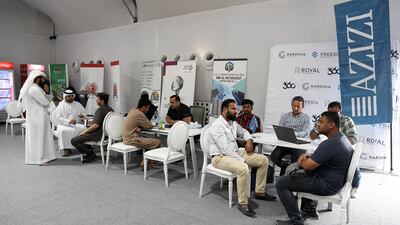
Companies set up their stands to recruit candidates during the visa amnesty -

Bachaire Polindao from the Philippines with her 10-month-old daughter Amal Mohamed Mustafa at the amnesty in Dubai -
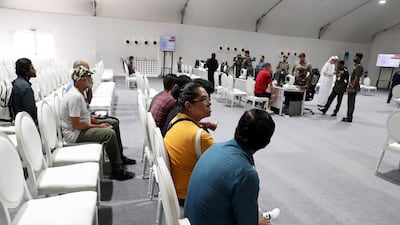
People wait to have their stay in the UAE legalised


Legislation that came into effect in January 2022 stipulates that a couple must either marry or acknowledge the child jointly or individually and provide identification papers and travel documents according to their respective national laws.
“It was easier with the second baby because I wasn’t breaking any laws,” Ms Marbella said.
Despite the legal forms, she still faced challenges in obtaining a passport or birth certificate for both her children due to her lack of a valid residency permit or Emirates ID. Without a proper job and a legal status, she relied on her partner’s income to support her children.
Ms Marbella now feels hopeful about finding a job and securing a better future for her family. “I feel we have a future in front of us now.
“My kids can go to school and lead a normal life. Like any other mother, that is my dream.”
The amnesty, which runs until October 31, offers a chance for residents who have overstayed their visit or residence visas to clear their fines, find new jobs, and legalise their status. It also applies to individuals with absconding cases but does not cover those who entered the UAE illegally.
Another Filipina mother, identified as AM, who is in a similar situation with a four-year-old daughter born out of wedlock, expressed her relief after her Dh52,000 ($14,150) in overstay fines were waived.
“It feels like a huge rock has been lifted off my chest. Now, I feel like my daughter and I can live with dignity,” said AM.
She had come to the UAE through a recruitment agent who promised her a job as a receptionist with a Dh 2,500 salary. But upon arrival in Dubai, she was had to work as a housemaid but eventually ran away from her employer.
AM continued to live in the UAE by taking odd jobs and later became pregnant. Her partner, who lost his job, returned to the Philippines, leaving her to manage alone, she said. As a single mother, she had to rely on friends for child care while she worked part-time jobs.
“I have a job offer from a cleaning company. Once I stamp my visa, my first priority is to apply for birth certificate for my child,” she said.
Bachaire Polindao, 31, also from the Philippines, came to Al Awir amnesty centre in Dubai with her 10-month old daughter, Amal Mohammed, on Sunday to apply for an exit pass.

She said that she had she had a daughter in Dubai from a relationship with an Egyptian friend.
They couple secured a birth certificate for their daughter, but could not get her a residency permit.
“My friend left for Egypt. I am here to waive the fines on my daughter and also to get exit pass so that I can join him in Egypt,” Ms Polindao told The National.
She arrived in Dubai on November 2022 on a visit visa searching for a job, and stayed illegally once that expired.
“I want to go to Egypt to reunite with him. The father will provide visa for me and my daughter to join him in Egypt. We are not married yet.”
Without this amnesty, she said, she could not have afforded to pay the fines and leave the country.

In another case, Filipino mother Virginia, said she will finally be able to get a residency permit for her son Xavier, who was born in Dubai. Virginia and her husband Maximo Bantolo could not apply for the child's residency because they brought the child back to the UAE on a visitor's visa after a quick trip to the Philippines last year.
“I could not sponsor him as my salary was only Dh1,500. Hence, I kept him here on a visit visa that expired long time ago,” said Virginia, who did not disclose her surname.
She said authorities waived Dh7,000 in overstay fines on Sunday, allowing her husband to sponsor the child.
“We have already put in the application and in less than a week my son will have a residence visa,” she said.
Additional reporting by Ali Al Shouk

