

India on Wednesday said it had struck Pakistan with missiles, nearly two weeks after 26 people were killed by armed militants in the India-administered Kashmir valley.
At least 38 deaths were reported, with Islamabad saying 26 civilians were killed by the Indian strikes and firing along the border, and New Delhi adding at least 12 dead from Pakistani shelling.
Pakistan called the early-morning attack an "unprovoked and blatant act of war."
"We strongly condemn India’s cowardly action, which is a flagrant violation of the UN Charter, international law and established norms of inter-state relations," Pakistan's Ministry of Foreign Affairs said. "India’s reckless action has brought the two nuclear-armed states closer to a major conflict."
Pakistan's air force shot down five Indian jets, the country's Defence Minister told Reuters. The Indian army said at least three civilians were killed by Pakistani artillery fire along the de facto border that divides disputed Kashmir between the two countries.
'Act of war'
Nine sites in Pakistan and Pakistan-administered Kashmir were attacked as part of Operation Sindoor, India's Defence Ministry said.
New Delhi said the attacks were “focused and non-escalatory”, and no “Pakistani military facilities were targeted”.
“A little while ago, the Indian Armed Forces launched Operation Sindoor, hitting terrorist infrastructure in Pakistan and Pakistan-occupied Jammu and Kashmir from where terrorist attacks against India have been planned and directed,” it said.
-

A child looks on after taking refuge at a school in Jammu, Indian-administered Kashmir, following an exchange of shelling and small arms fire across the border. Getty Images -
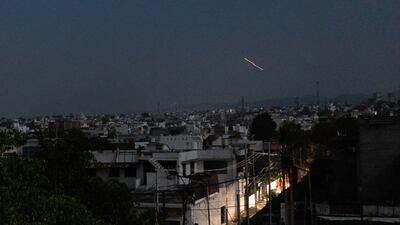
Streaks of light in the skies over the city of Jammu in Indian-administered Kashmir, during a suspected drone attack from the Pakistan side. Getty Images -
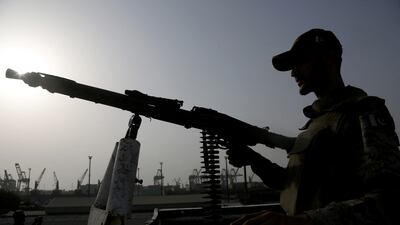
A Pakistani paramilitary trooper keeps guard at Karachi Port. Reuters -
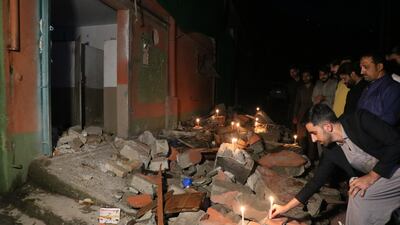
A candlelight vigil for victims of a Indian missile strike on Bilal Mosque in Muzaffarabad, Pakistani-administered Kashmir. EPA -
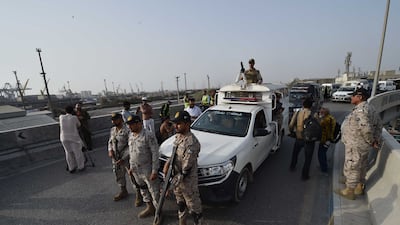
Security personnel at Karachi Port, southern Pakistan. EPA -
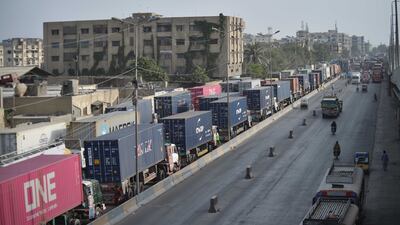
Lorries gridlocked near Pakistan's Karachi Port following the military escalation between New Delhi and Islamabad. EPA -
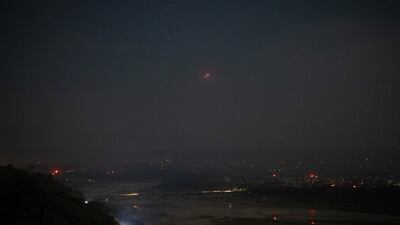
India's air defence system intercepts objects during a blackout following blasts in the city of Jammu, in Indian-administered Kashmir. Reuters -
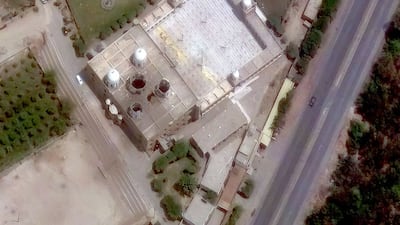
The damaged Jamia Masjid Subhan Allah compound after an Indian strike on the outskirts of Bahawalpur in Pakistan's Punjab province. AFP -
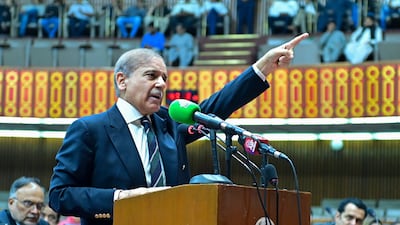
Prime Minister Shehbaz Sharif addressing the special session at the National Assembly in Islamabad. AFP -

Villagers carry their belongings as they move to safer areas after authorities evacuated residents living near the border at Jeora Farm on the outskirts of Jammu. AFP -
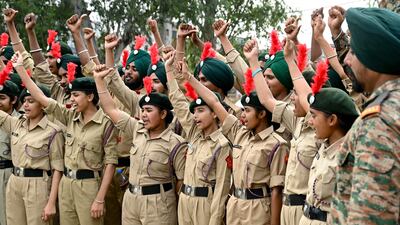
National Cadet Corps cadets shout slogans after conducting an emergency simulation drill as part of the nationwide civil defence mock drills in Amritsar. AFP -
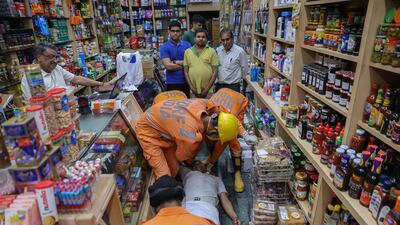
National Disaster Response Force, civil defence and fire personnel conduct an air raid drill at Khan market in New Delhi. EPA -
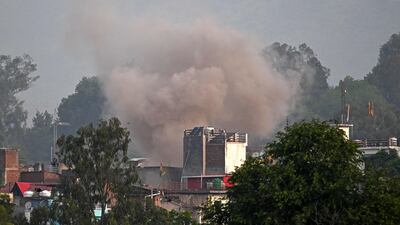
An artillery shell lands in the main town of Poonch district in India's Jammu region on Wednesday as Pakistani troops launch shells from across the Line of Control in retaliation for Indian missile strikes. AFP -
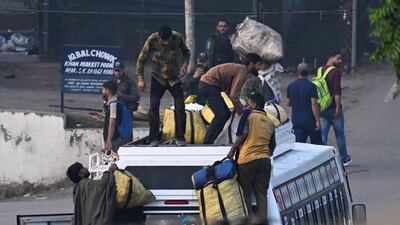
Poonch locals load their belongings on a bus as they flee the shelling. AFP -
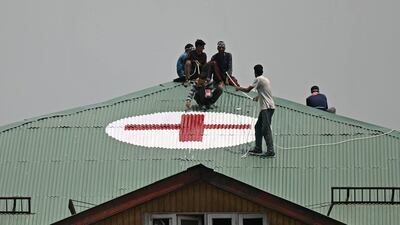
Workers paint a red cross symbol on the roof of a hospital to deter a potential attack in Srinagar, in Indian-administered Jammu and Kashmir. AFP -

Indian school pupils take part in a drill at Rajkiya Sarvodaya Vidyalaya in New Delhi. EPA -
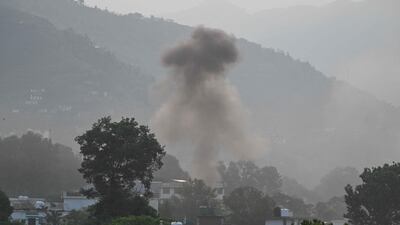
Another Pakistani shell hits Poonch. AFP -
Rescuers search for survivors after India struck a building in a government-run complex in Muridke, Pakistan, about 30km from Lahore. AFP -
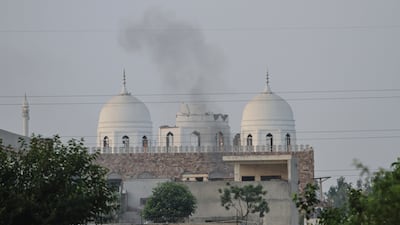
The mosque of an Islamic seminary partially damaged by an Indian missile attack, on the outskirts of Bahawalpur, Pakistan. AP -

Residents are evacuated from an area close to the site of an Indian missile attack, near Muzaffarabad. AP -
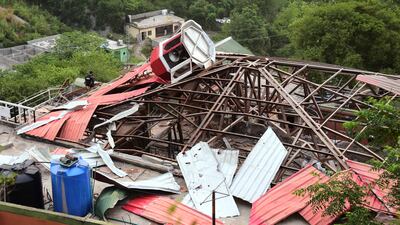
Bilal mosque lies in ruins after being struck by Indian missiles in Muzaffarabad, capital of Pakistan-administered Kashmir. AP -
Volunteers load a body into an ambulance after recovering it from the rubble of a mosque building damaged by a suspected Indian missile attack near Muzaffarabad. AP -
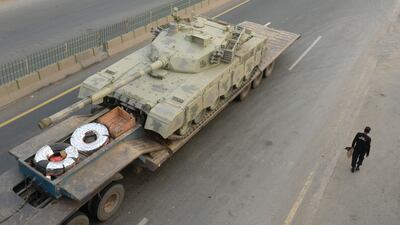
A lorry transports an army tank on a road in Muridke, about 30km from Lahore. AFP -
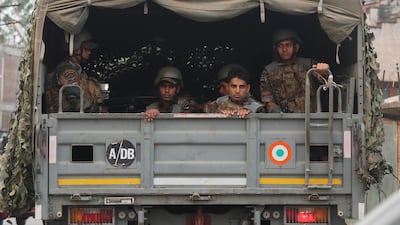
Indian Air Force personnel patrol on the outskirts of Srinagar. EPA -
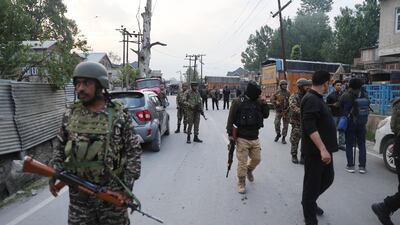
Indian troops patrol a security checkpoint on the outskirts of Srinagar. EPA -
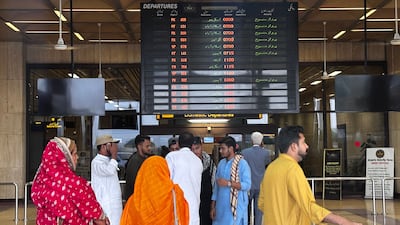
Passengers stranded at Jinnah International airport after all domestic and international flights were cancelled in Karachi. AFP -
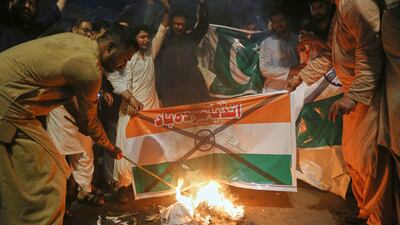
Protesters burn an Indian flag during a demonstration condemning Indian missile strikes in Hyderabad, Pakistan. AP


Pakistani Prime Minister Shehbaz Sharif said five locations had been hit in the "cowardly" attack.
"Pakistan has every right to give a befitting reply to this act of war imposed by India and a befitting reply is being given," Mr Sharif's office said.
Residents in Mendhar and Poonch along the Line of Control in Jammu district were out on the streets as loud explosions were heard in the frontier towns after India's missile attack. One person was reportedly killed in Mendhar after heavy shelling.
India and Pakistan have fought three wars, while a three-decade armed insurgency has claimed the lives of tens of thousands of people.
A Pakistani military spokesman told broadcaster Geo that two mosques were among the sites hit by India. The Pakistani defence minister told Geo that all the sites were civilian and not militant camps.
He said India's claim that it was attacking terrorist camps "is false".
The offensive came as Iran’s Foreign Minister Abbas Araghchi was in the Pakistani capital Islamabad.

Pahalgham attack
Two weeks ago, 25 tourists and a pony-ride operator died after militants opened fire in the resort area of Pahalgam, known as a "mini Switzerland", in Indian-administered Kashmir on April 22. India blamed Pakistan for the attacks but Pakistan denied any involvement.
The Resistance Front, an extremist group, claimed responsibility for the brutal attack. India accuses Pakistan of backing militant groups in Kashmir, a charge denied by Islamabad.
Jammu and Kashmir is ruled by India and Pakistan in parts but has been claimed by both in its entirety since British colonialists left the subcontinent in 1947.
Kashmir has been in the grip of an armed rebellion against New Delhi’s rule, which has killed tens of thousands of people.
After the Pahalgam attack, India suspended all visas to Pakistani citizens and put a water treaty on "abeyance", depriving Pakistan of river water crucial for its irrigation. It also banned trade.
Pakistan in retaliation closed its airspace for Indian carriers and expelled Indian diplomats.
Calls for restraint
The UN said that Secretary General Antonio Guterres is "very concerned" about the Indian military operations. Mr Guterres called for "maximum military restraint from both countries".
"The world cannot afford a military confrontation between India and Pakistan," a UN statement said.
US President Donald Trump called the attacks a "shame". Speaking at the White House in Washington, Mr Trump said that "I just hope it ends very quickly".
Indian National Security Adviser Ajit Doval briefed US Secretary of State Marco Rubio shortly after New Delhi's strikes on Pakistan, AFP quoted the Indian embassy as saying.
Sheikh Abdullah bin Zayed, UAE Deputy Prime Minister and Minister of Foreign Affairs, called on India and Pakistan to exercise restraint, de-escalate tension and avoid further escalation that could threaten regional and international peace, Wam reported.
Sheikh Abdullah also stressed the importance of heeding the voices calling for dialogue and mutual understanding to prevent military escalation, strengthen stability in South Asia and avoid further regional tensions.
UK politicians have also urged restraint, with Scotland's First Minister John Swinney and Labour MP Stella Creasy saying they were "deeply" concerned by the escalation in violence, while former Tory minister Lord Ahmad warned the "potential for war tonight is real", PA reported.
Read next: UAE and Gulf airlines cancel flights to India and Pakistan


