

An attack in the high seas on two tankers on Thursday raised fears of another escalation in regional tensions.
The reported attack on the Singapore-owned Kokuka Courageous and Norwegian-owned Front Altair pushed oil prices higher and could further raise insurance premiums for vessels operating in the Gulf.
Similar to the sabotage attacks on four oil tankers off Fujairah in May, which the UAE has refrained from directly blaming Iran for, the two ships targeted on Thursday did not belong to major western powers and in this instance carried refined fuels, not crude oil. Earlier this week, however, a drone attack by Iran-backed Houthi militia on an airport in south-west Saudi Arabia wounded 24 people.
With every attack, the potential for miscalculation rises.
A European source who had met Iranian representatives just before the initial escalation in May and did not want to be identified, came to the conclusion that “provocation from Tehran and its proxies was conceivable” given regional support for US sanctions.
Iran is under substantial economic pressure from US sanctions that have cut oil exports and contributed to a huge drop in the currency, although Tehran has long-standing ties with the world's two other major powers, China and Russia. Tehran had made economic demands on European countries to abide by the 2015 nuclear agreement, from which Washington withdrew last year. On Thursday, Iran’s supreme leader Ali Khamenei reiterated Iran’s position of not negotiating with the United States under pressure but he did not rule out talks.
According to the latest World Bank update issued in April, Iran’s economy is expected to remain riddled by slow growth and high unemployment for at least the next 12 months “as oil output continues to decline along with other mounting external economic challenges”.
The report forecast the economy to contract by more than two per cent annually between 2018 and 2020 before “a modest recovery path”. Inflation is expected to be about 30 per cent in 2018-2019 and increase the following year “as the full effect of the exchange rate depreciation is passed on”.
-
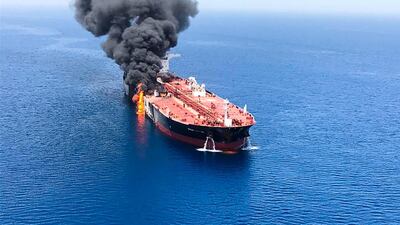
Fire and smoke billows from a tanker that attacked in the waters of the Gulf of Oman. AFP -
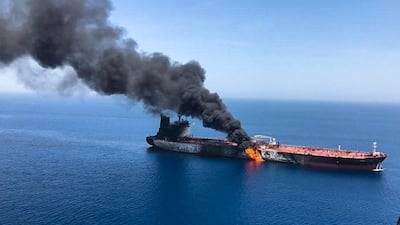
One of the tankers on fire in the Gulf of Oman. AP Photo -
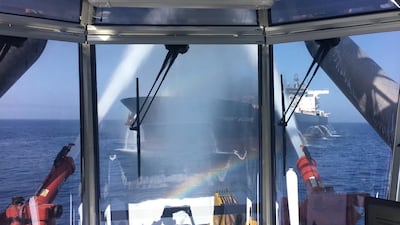
Firefighters work to entinguish the fire aboard the crude oil tanker 'Front Altair'. EPA -
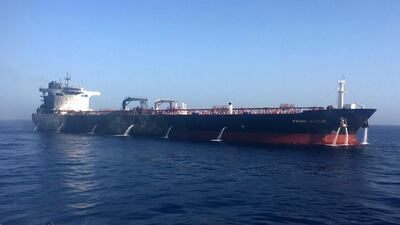
A handout photo made available by the Norwegian shipowner Frontline shows the damaged crude oil tanker 'Front Altair' in the Gulf of Oman. EPA -
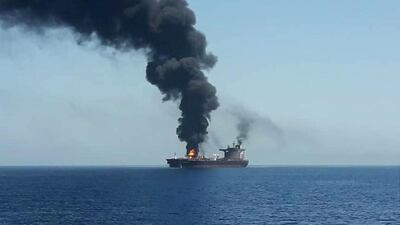
The Front Altair on fire in the Gulf of Oman. EPA -
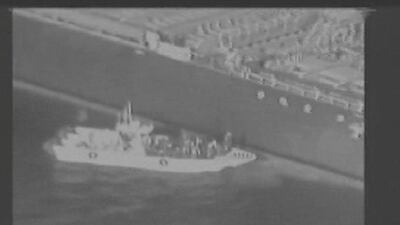
A US military handout video purports to show Iran's Revolutionary Guard (IRGC) removing an unexploded limpet mine from the side of the Kokuka Courageous Tanker. Reuters -
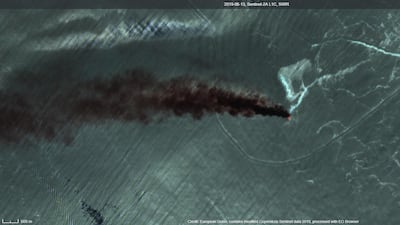
Sentinel satellite image shows a plume of smoke coming from the Front Altair tanker. Reuters -
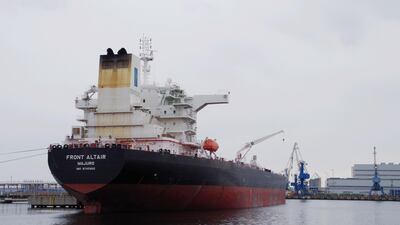
The Norwegian crude oil tanker Front Altair at the port of Muuga, Estonia, on April 29, 2018. EPA -
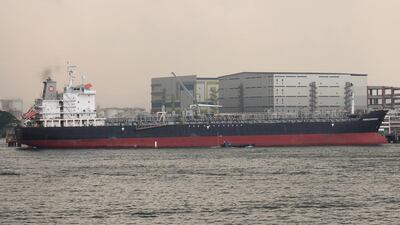
epa07645393 A picture provided by Alexander Demin shows the tanker Kokuka Courageous in Singapore. EPA -
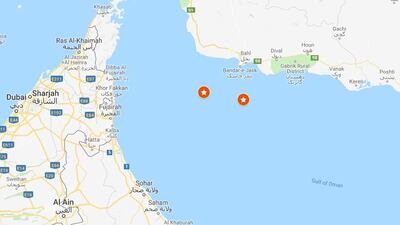
The locations of the Front Altair and Kokuka Courageous. Google Maps


Germany made it clear during a visit to Tehran last week by Foreign Minister Heiko Maas that European efforts to mitigate the effects of US sanctions will not be a cure for Iranian economic ills.
Mr Maas raised the issue of the Iranian involvement in the Syrian civil war, according to pro-Iranian political commentators. This was a departure from European norms that have refrained from criticising Iran’s role in Syria in support of Bashar Al Assad's regime, despite a flood of Syrian refugees into Turkey and Europe.
“Apparently Iran is becoming more nervous,” the European source said. Nevertheless, cool, clear heads that must prevail if further escalation is to be avoided.

