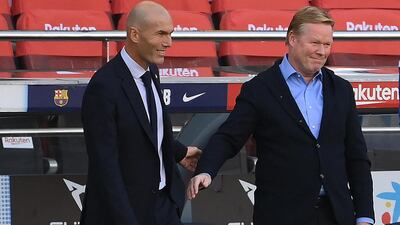

Pep Guardiola was fighting back tears. Diego Simeone could not help but giggle – two distinguished champions, nearly 2,000 kilometres apart, responding in different ways to an emotional last weekend of the domestic season.
“I don’t know why but I’m just laughing and laughing,” said Simeone, having just spent 67 of the previous 90 minutes watching his Atletico Madrid jeopardise their lead at the top of Spain’s first division, and almost ten years cultivating an image of grizzly, unsmiling toughness.
The release of tension can play all sorts of tricks. Guardiola's tears were brought on by the combination of supporters, at last, being present at the Etihad Stadium and the heartfelt goodbyes to Sergio Aguero, who had just played his last home match for Manchester City. The title already won, City's was a ceremonial last day, tears permitted.
Atletico’s D-day was about stress and suspense. In both the last two matches where they needed to win to stave off Real Madrid’s pursuit, Atletico fell behind. Twice they came back for 2-1 wins. Simeone may have been laughing, but only once the final whistle had gone at Valladolid, site of the conclusive comeback win.
It gave Atletico their second Liga title of the Simeone era. And it is an era. Nine and a half years is an extraordinarily long time for an elite coach to remain in charge of the same club. It is almost twice the time Guardiola has been at City, where he now counts as a long-term stayer. Both he and Simeone have come to define their clubs.
They are rarities for that, and will be rarer still by this time in a year, assuming they both remain in the jobs they are strongly committed to. A summer of major changes in the hottest of coaching hotseats is ahead, and the managerial merry-go-round was swinging into action within hours of the closing weekend of Europe’s top leagues.
Hansi Flick had already told Bayern Munich – the one club across the top six European leagues that retained their league title – that his 18-month, seven-trophy stint would be ending. Next onto the Bayern whirligig, their sixth coach since Guardiola left Munich in 2016, will be 33-year-old Julian Nagelsmann.
-

Atletico Madrid´s players celebrate outside the Jose Zorilla stadium in Valladolid after being crowned La Liga champions. AFP -
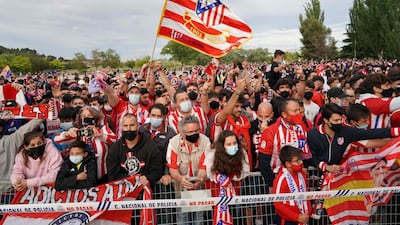
Supporters celebrate outside the Jose Zorilla stadium in Valladolid after Atletico Madrid were crowned La Liga champions for the first time since 2014. AFP -
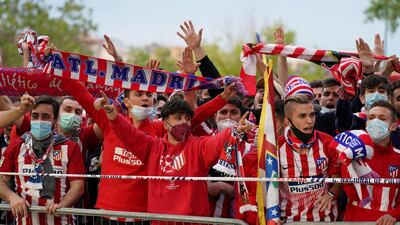
Supporters celebrate outside the Jose Zorilla stadium in Valladolid after Atletico Madrid were crowned La Liga champions for the first time since 2014. AFP -
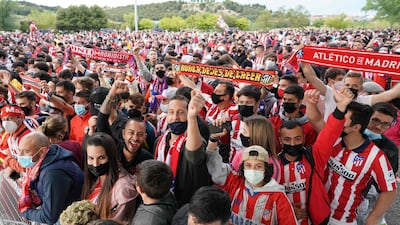
Supporters celebrate outside the Jose Zorilla stadium in Valladolid after Atletico Madrid were crowned La Liga champions for the first time since 2014. AFP -
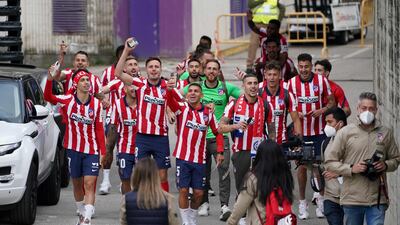
Atletico Madrid´s players celebrate outside the Jose Zorilla stadium in Valladolid after being crowned La Liga champions. AFP -
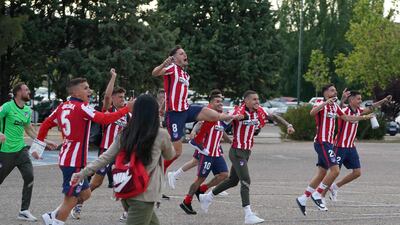
Atletico Madrid´s players celebrate outside the Jose Zorilla stadium in Valladolid after being crowned La Liga champions. AFP -
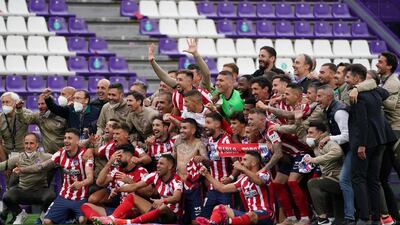
Atletico Madrid´s players celebrate after winning La Liga. AFP -
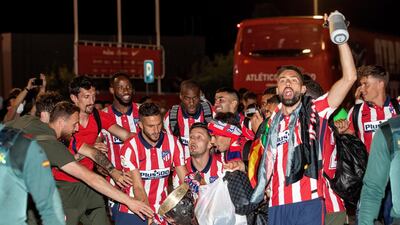
Atletico Madrid players celebrate winning La Liga with supporters at Wanda Sport City in Madrid. EPA -
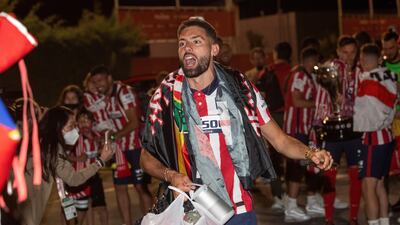
Atletico Madrid player Yannick Carrasco celebrates winning the La Liga title with supporters at Wanda Sport City. EPA -
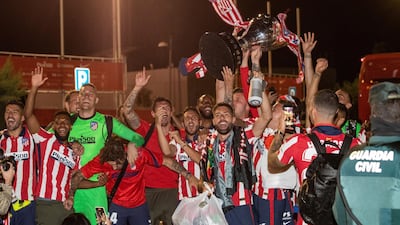
Atletico players celebrate with supporters. EPA -
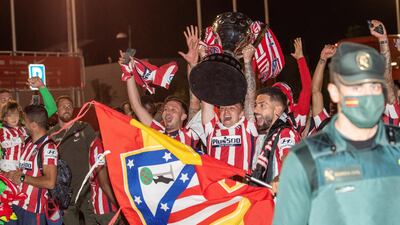
Atletico players celebrate with supporters at Wanda Sport City. EPA -
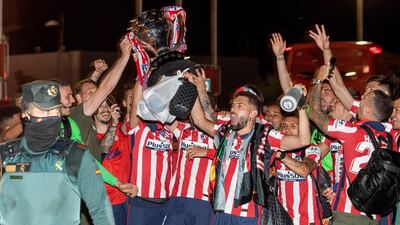
Atletico players celebrate winning La Liga title with supporters at Wanda Sport City. EPA -
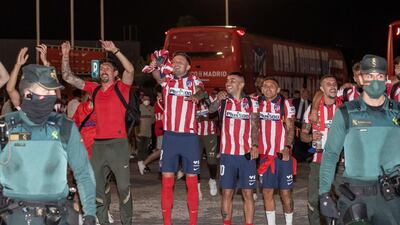
Atletico Madrid fans celebrate La Liga title with supporters. EPA -
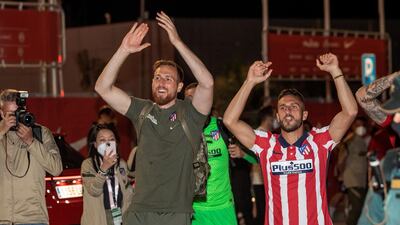
Atletico players Jan Oblak, left, and Koke celebrate winning La Liga with supporters at Wanda Sport City. EPA -
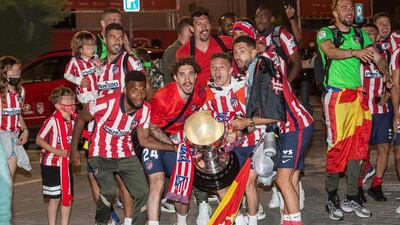
Atletico Madrid players celebrate La Liga title with supporters. EPA -

Atletico Madrid fans celebrate the La Liga title at Neptuno Fountain in downtown in Madrid. EPA -
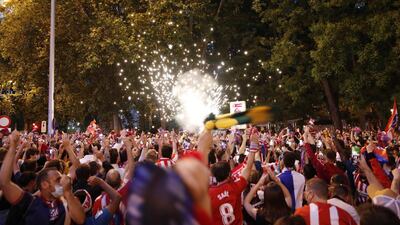
Atletico Madrid fans celebrate the La Liga title at Neptuno Fountain in downtown in Madrid. EPA -
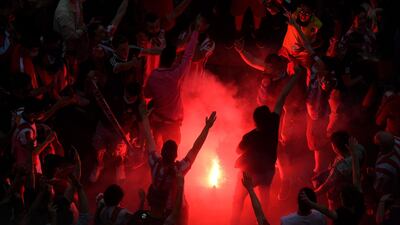
Supporters light flares after Atletico Madrid's La Liga win. AFP -
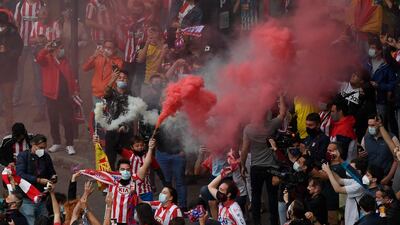
Supporters light flares after Atletico Madrid's La Liga win. AFP -
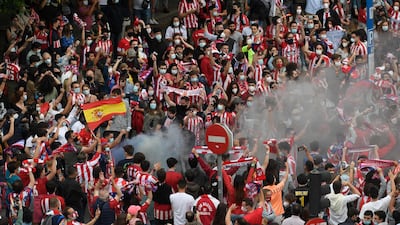
Supporters light flares after Atletico Madrid's La Liga win. AFP -
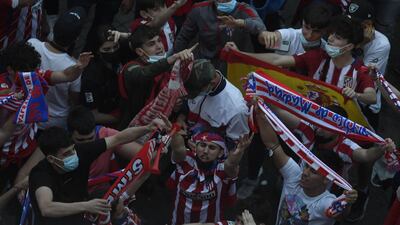
Supporters gather at Neptuno square after Atletico Madrid won the La Liga. AFP -
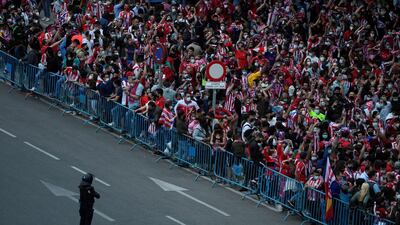
Supporters gather at Neptuno square after Atletico Madrid won the La Liga. AFP -

Supporters and policemen gather at Neptuno square. AFP -

Supporters celebrate at Neptuno square in Madrid. AFP -
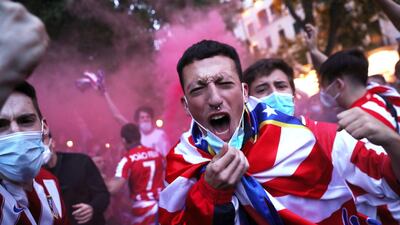
Atletico Madrid fans celebrate winning La Liga. Reuters -

Atletico Madrid fans celebrate the La Liga title at Neptuno Fountain. EPA -

Atletico Madrid fans celebrate La Liga title. EPA -

Atletico Madrid fans celebrate La Liga title at Wanda Sport City in Majadahonda, Madrid. EPA -
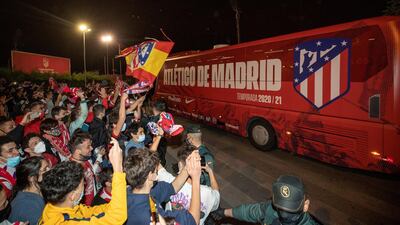
Atletico Madrid's players arrive by bus to celebrate the La Liga title, at Wanda Sport City in Majadahonda, Madrid. EPA -
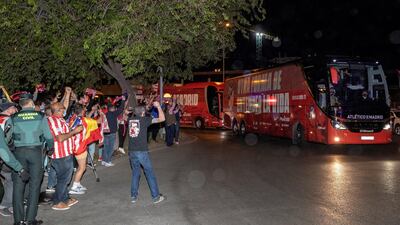
Atletico Madrid's players arrive by bus to celebrate La Liga title at Wanda Sport City in Majadahonda. EPA -
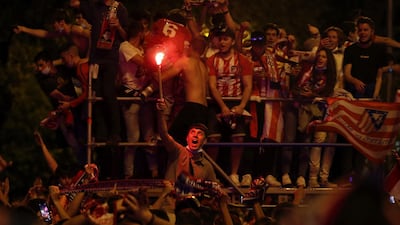
Atletico Madrid fans celebrate La Liga title of their team at Neptuno Fountain. EPA -
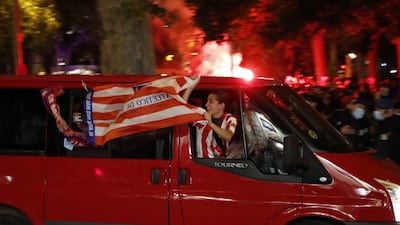
Atletico Madrid fans celebrate La Liga title of their team at Neptuno Fountain. EPA


Flick is expected to take over the Germany national squad after the European championship. But he would know this is a good time in the marketplace to be at the peak of your coaching powers, with big jobs becoming vacant.
Christophe Galtier, who on Sunday guided Lille to the French league title, ahead of serial champions Paris-Saint-Germain, knows that too. The 54-year-old, a former assistant coach of Al Ain, already has offers from wealthier French clubs than Lille.
In Spain, Real Madrid and Zinedine Zidane, who has finished a full season as coach without a trophy for the first time, are edging towards a break-up, with talks scheduled for this week. Barcelona's president and directors meanwhile contemplate whether Ronald Koeman, who won them the Copa del Rey but buckled in a tight Liga title-race, should see through the second year of his contract.
Koeman fears the signals are gloomy. “In the last part of the season I have not felt the club’s support,” said the Dutchman. There is within the boardroom a lobby in favour of the ex-Barcelona captain Xavi, under contract at Al Sadd in Qatar, his first coaching job. And also some interest in Mikel Arteta’s work at Arsenal, who finished eighth in the Premier League but whose points record over the second half of the season was bettered only by City and Manchester United.
In Italy’s Serie A, where a dramatic last day spared Juventus, the deposed champions, from the ignominy of finishing outside the top four – thanks to Napoli drawing at Verona – one head coach departed immediately.
Napoli’s Rino Gattuso knew it was coming. He now carries into his next job – and there will be offers – the bittersweet record of having missed out on Champions League football by a point with two clubs.
He did it at AC Milan in 2018 and now Napoli, who if they had held their 1-0 lead at Verona, would have stayed above Juventus, who will review Andrea Pirlo’s flawed debut season as coach amid strong doubts about Pirlo’s immediate future.
Roma, who finished seventh, said farewell to Paulo Fonseca and have installed Jose Mourinho for next season, where he will be guiding them into the inaugural Europa Conference League. The competition is unflatteringly described as Uefa’s ‘Third Division’, but is now spiced up by the prospect that, in it, Mourinho’s Roma might play Tottenham Hotspur, Mourinho’s most recent previous employer.
Who leads Spurs there is an open question. They are also seeking a new manager in a summer where the jostle to land the best will be intense.

