


He liked his little joke, did Rishi Sunak. Knowing they were desperate for the date of the next general election the Prime Minister told the assembled journalists at a press conference that it would be, wait for it … in 2024.
Of course, he never would tell them the exact day, just like that. Still, he enjoyed seeing their crestfallen faces.
While the media was disappointed, it was news, nevertheless. We now know the UK general election will not be in January 2025, the final date by which Mr Sunak is required to go to the country.
Appealing to him as it is, to remain in power for absolutely as long as possible, January would entail campaigning over Christmas and New Year, at a period when the British weather is usually grim and daylight hours short.
Some time next year, it is then. The favourite slot is the autumn, after the annual party conference. The theory is that Mr Sunak will send the activists on their way with a rousing speech, one which will reference lasting reforms to gambling, smoking, education. Migration will be in check, the economy will be growing, taxes lower, British pride will be restored.
It is his intention that this expounding of “Sunakism” will act as a springboard to victory. Or, at least if he loses, it will form his legacy.
Securing Sunakism is far from guaranteed. So far, on virtually all fronts, Mr Sunak has not made much headway.
In order for his policies to have a chance and to take hold, therefore, he requires time – hence holding a national ballot towards the end of the year.
There is another argument, that says Mr Sunak could go to the country earlier. By waiting, more people will be caught paying higher mortgages. Interest rates will still be raised as next year inflation proves stubborn to dislodge. As mortgage-holders come off fixed-rate loans, they will be hit with increased borrowing payments. Hundreds of thousands will be snared, many of them homeowning natural Tory supporters.
Mr Sunak, so this claim goes, should alight on an early date, in April or May. But in May, there are the local elections that could prove embarrassing for the Tories. One suggestion, canvassed at Westminster, is that the general and local polls are held on the same day.
In any event, whichever day Mr Sunak opts for, will not make much difference: The result is likely to be the same. If the opinion polls are correct, Keir Starmer will become UK Prime Minister in 2024.
-
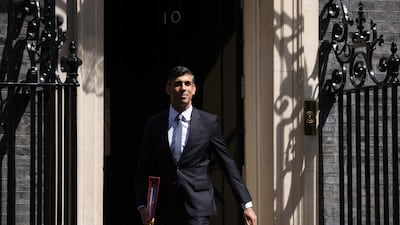
Rishi Sunak has been British Prime Minister for one year. Here The National looks back at his time in No 10 Downing Street. Getty Images -
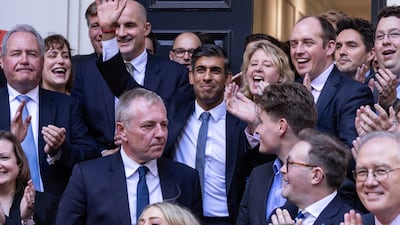
Mr Sunak after being announced as winner of the Conservative Party leadership contest on October 24. Getty Images -
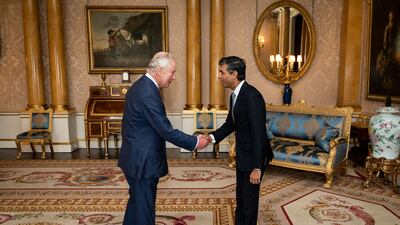
King Charles III welcomes Mr Sunak to Buckingham Palace where he invited him to become Prime Minister. Getty Images -
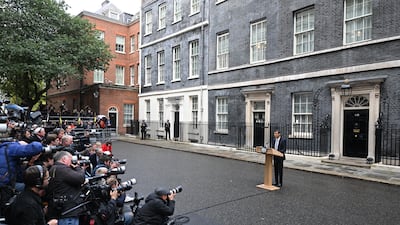
The new Prime Minister makes a speech outside No 10. Getty Images -
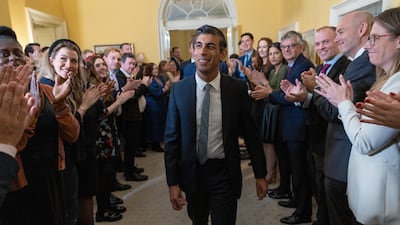
Mr Sunak arrives at No 10 for the first time as Prime Minister. Photo: Simon Walker/ No 10 Downing Street -
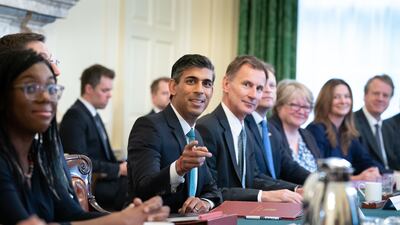
Mr Sunak holds his first cabinet meeting. Getty Images -
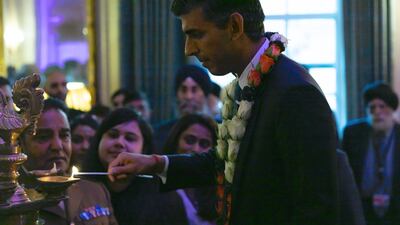
Mr Sunak hosts a reception to celebrate Diwali at No 10. Photo: Simon Walker / No 10 Downing Street -
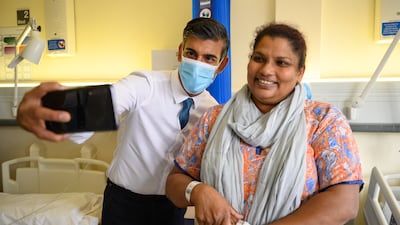
A visit to Croydon University Hospital, south London. Getty Images -
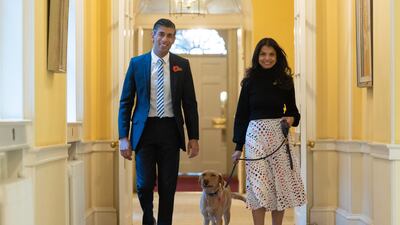
Mr Sunak and his wife Akshata Murty with Nova, their pet Labrador. Photo: Simon Walker / No 10 Downing Street -
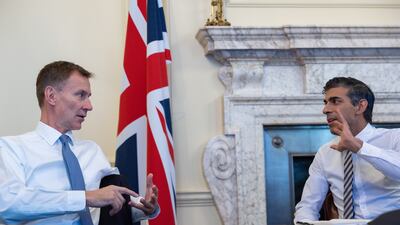
The Prime Minister with Chancellor Jeremy Hunt in the Cabinet Room at No 10. Photo: Simon Walker / No 10 Downing Street -
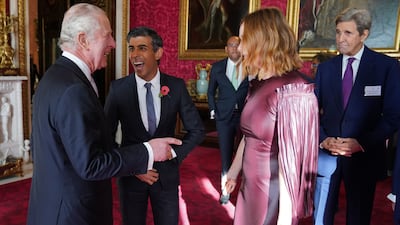
King Charles, Mr Sunak, fashion designer Stella McCartney and US climate envoy John Kerry at Buckingham Palace before Cop27. Getty Images -
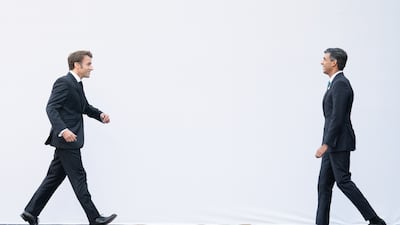
French President Emmanuel Macron and Mr Sunak at Cop27 in Sharm El Sheikh, Egypt. Getty Images -
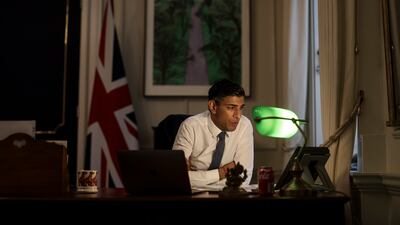
Mr Sunak during a call to Ukraine President Volodymyr Zelenskyy from his office. Photo: Simon Dawson / No 10 Downing Street -
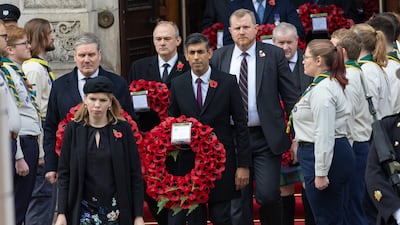
On Remembrance Sunday at the Cenotaph in London. Photo: Simon Walker / No 10 Downing Street -
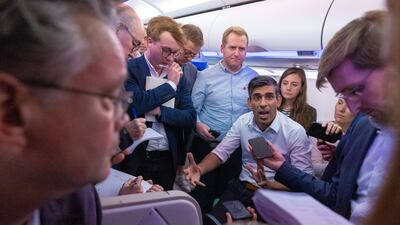
Mr Sunak with journalists on a flight to Bali for the G20 summit. Photo: Simon Walker / No 10 Downing Street -

With Saudi Arabia's Crown Prince Mohammed bin Salman during a meeting at the G20 in Nusa Dua, Indonesia. Getty Images -
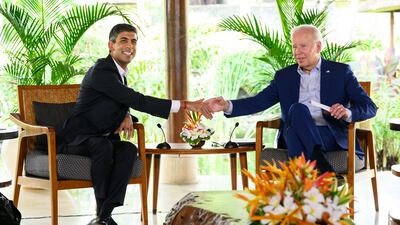
Mr Sunak with US President Joe Biden at the G20 summit. Getty Images -
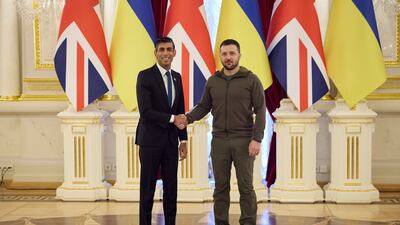
Mr Sunak and Ukrainian President Volodymyr Zelenskyy. Getty Images -
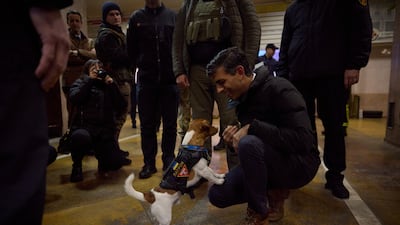
Mr Sunak meets rescue teams during his visit to Ukraine. Photo: No 10 Downing Street -
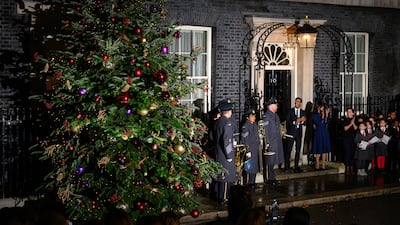
Mr Sunak and his wife outside No 10 as the Christmas lights are turned on. Getty Images -
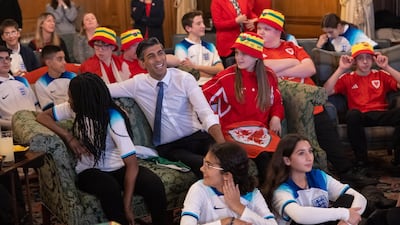
With youth footballers from Wales and England to watch the World Cup match between the two nations. Photo: Simon Walker / No 10 Downing Street -
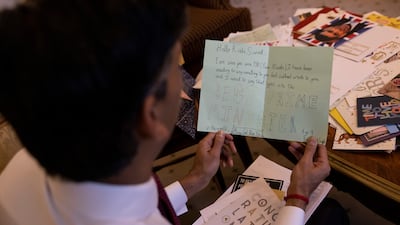
Reading congratulations cards from members of the public after being appointed. Photo: Simon Dawson / No 10 Downing Street -

At RAF Coningsby in Lincolnshire after the announcement that Britain will develop next-generation fighter jets with Italy and Japan. Getty Images -
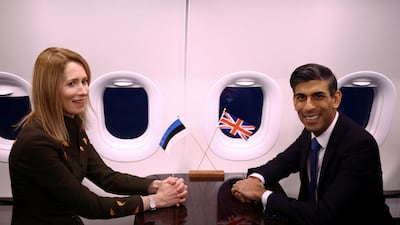
Mr Sunak and Estonian Prime Minister Kaja Kallas on a plane to Tallinn. Getty Images -
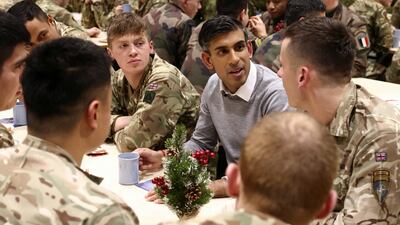
The Prime Minister with troops at the Tapa military base, Estonia. Getty Images -
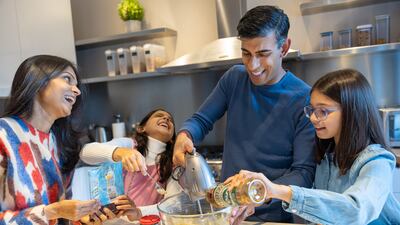
The photo on Mr Sunak's official Christmas card. Photo: Simon Walker / No 10 Downing Street -
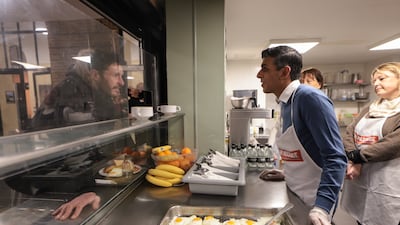
Serving breakfast on a visit to The Passage homeless shelter in London just before Christmas. Photo: Simon Dawson / No 10 Downing Street -
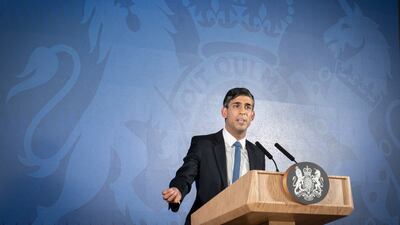
Making his first major domestic speech of the year. Getty Images -
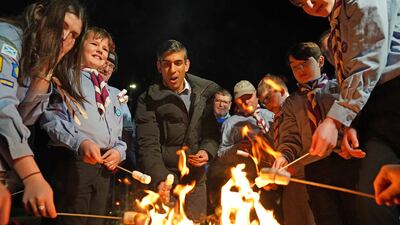
Toasting marshmallows on a visit to the Sea Scouts community group in Muirtown near Inverness. Getty Images -
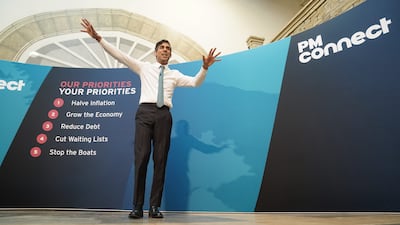
A Q&A session at The Platform in Morecambe, Lancashire, after a community visit to the Eden Project North. Getty Images -
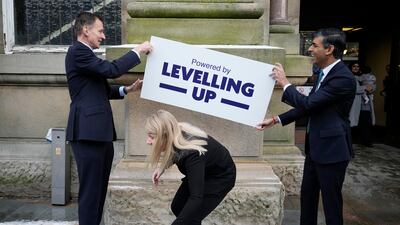
Mr Sunak and Mr Hunt at Accrington Market Hall with local MP Sara Britcliffe to announce projects under the levelling-up fund. Getty Images -
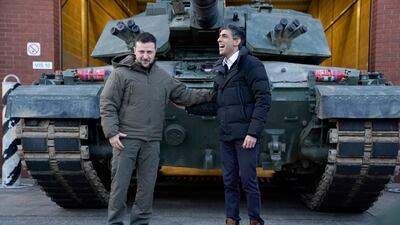
Mr Sunak and Mr Zelenskyy meet Ukrainian troops being trained to command Challenger 2 tanks at a military facility in Lulworth, Dorset. Getty Images -
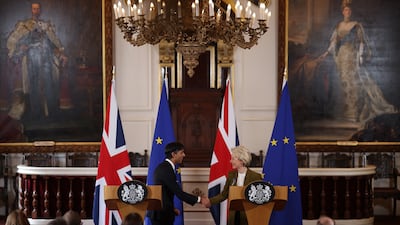
With EU Commission President Ursula von der Leyen at a press conference at Windsor Guildhall. Getty Images -
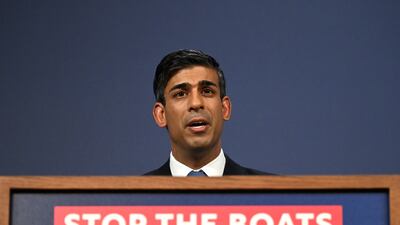
Speaking at a press conference following the launch of new legislation on migrant channel crossings at Downing Street. Getty Images -
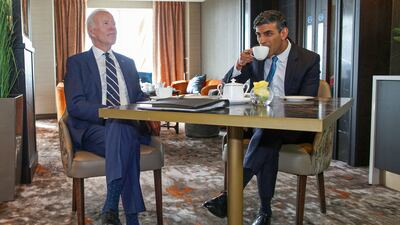
Mr Biden meets Mr Sunak during the 25th anniversary commemorations of the "Good Friday Agreement" in Belfast, Northern Ireland. Getty Images -
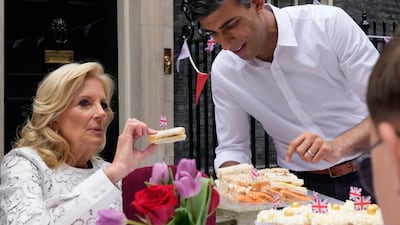
Mr Sunak holds a plate of sandwiches for US First Lady Jill Biden at Downing Street to celebrate King Charles' coronation. Getty Images -
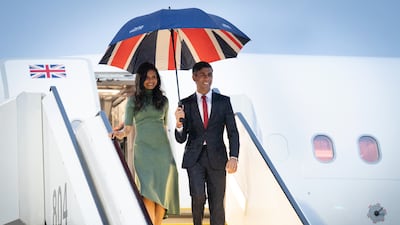
Mr Sunak and his wife Mrs Murty ahead of the G7 Summit, in Hiroshima, Japan. Getty Images -
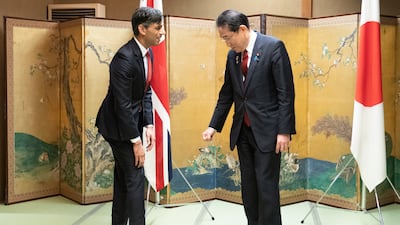
Mr Sunak with Japanese Prime Minister Fumio Kishida during their bilateral meeting in Hiroshima ahead of the G7 Summit. Getty Images -
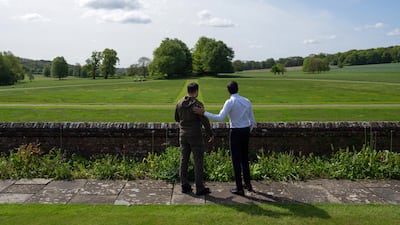
Mr Sunak and Mr Zelenskyy look out towards trees planted by Winston Churchill as they walk in the garden at Chequers. Getty Images -
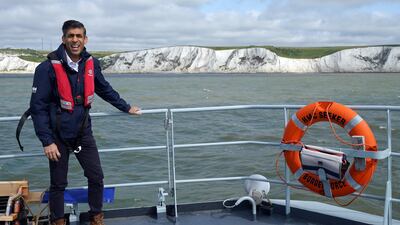
Mr Sunak onboard Border Agency cutter HMC Seeker during a visit to Dover. Getty Images -
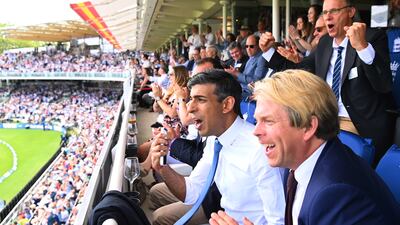
Mr Sunak cheers during the Ashes Test match between England and Australia at Lord's Cricket Ground. Getty Images -
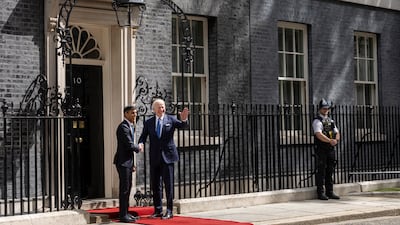
Mr Sunak welcomes Mr Biden at 10 Downing Street. Getty Images -
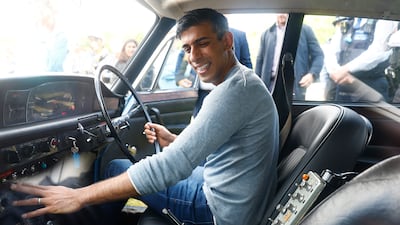
In a Special Branch police vehicle used to transport former Prime Minister, Margaret Thatcher, in Bexley. Getty Images -
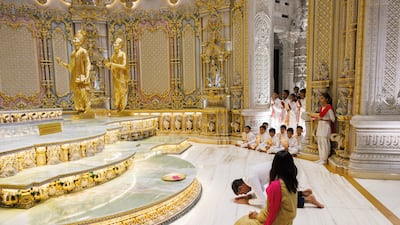
Mr Sunak and his wife Mrs Murty offer prayers as they visit the Akshardham Hindu Temple in New Delhi, India. Getty Images -

Mr Sunak meets the Prime Minister of Israel Benjamin Netanyahu. No 10 Downing Street


It has been quite an ascent for Mr Starmer; he has had to work hard at winning popular approval. Even now, substantially ahead in the ratings, he does not attract widespread acclaim – not like Tony Blair did, in 1997.
Back then, the nation was ready and willing for change. The charismatic, youthful Mr Blair was its chosen vehicle. The country wants a similar shift again, but the public have not warmed to Mr Starmer, same as they did to Mr Blair.
Latterly, though, the very traits that held Mr Starmer back – caution, solidity, boring in other words – have switched to positive. They are now seen as the very virtues desired in the next UK leader.
Years of Tory turmoil have led to a widespread craving for dependability. Step forward, reassuringly low-key Mr Starmer.
Not that the Labour leader is going to find it plain-sailing. His room for manoeuvre will be tight. There is simply not enough money available for him to pursue the sort of corrective policies he would like to.
-
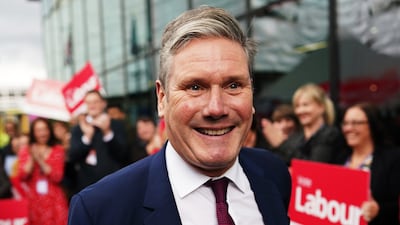
Keir Starmer has been the Labour party's leader since 2020, and is now the UK's prime minister. Here The National looks back through his political career. Getty Images -
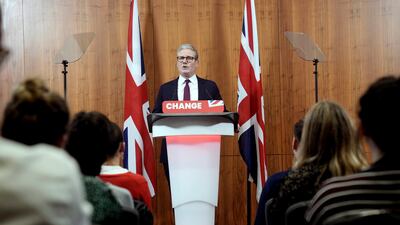
Mr Starmer speaking in Westminster, London, in May after Rishi Sunak announced the general election for July 4. AP -
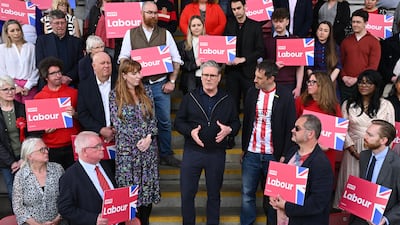
Mr Starmer speaks to Labour supporters at Harlow Town Football Club's stadium in Essex, on the eve of local elections in May. Getty Images -
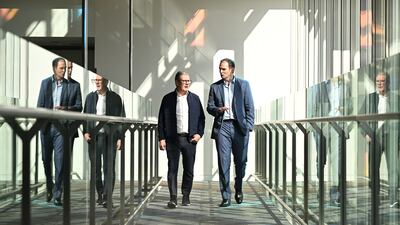
Mr Starmer talks to Dan Poulter at the Francis Crick Institute in London in April, after the MP had defected from the Conservative Party to Labour. Getty Images -

Mayor of London Sadiq Khan and Mr Starmer during the launch of Mr Khan's mayoral re-election campaign in March, which proved successful. Getty Images -
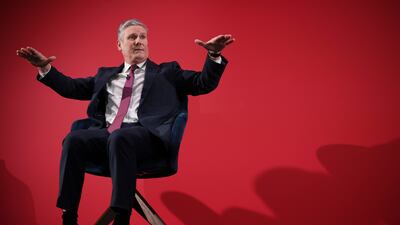
Mr Starmer addresses the Labour Business Conference in London in February. Getty Images -
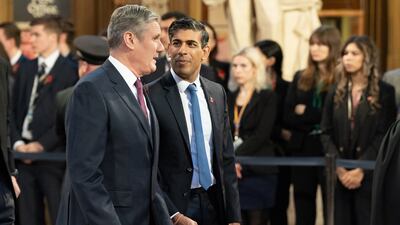
Mr Starmer and Mr Sunak at the Palace of Westminster for the State Opening of Parliament in November 2023. Getty Images -
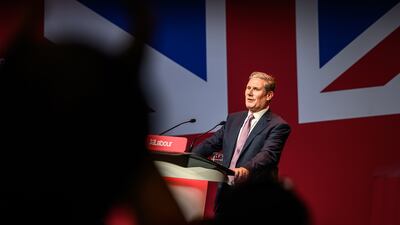
Mr Starmer addresses delegates at the National Annual Women's Conference in Liverpool in October 2023. Getty Images -
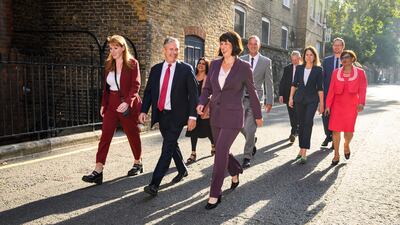
Mr Starmer with his shadow cabinet in London in September 2023. Getty Images -
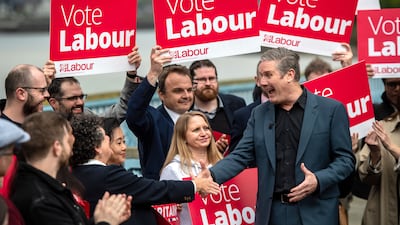
Mr Starmer speaks to supporters in Chatham after a Labour win in local elections in May 2023. Getty Images -
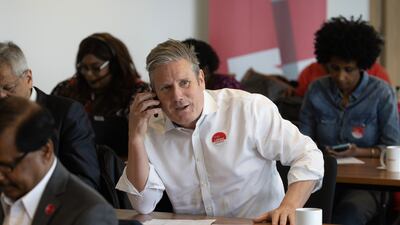
Joining party activists at a national phone bank on local elections day in London in May 2023. Getty Images -
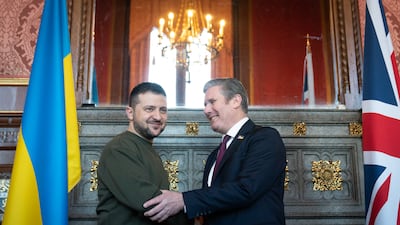
Mr Starmer meets Ukrainian President Volodymyr Zelenskyy at Speaker's House in the Palace of Westminster, London, in February 2023. Getty Images -
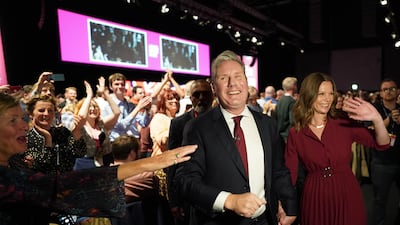
The Labour leader and his wife Victoria leave the stage after his speech at the party conference in Liverpool in September 2022. Getty Images -
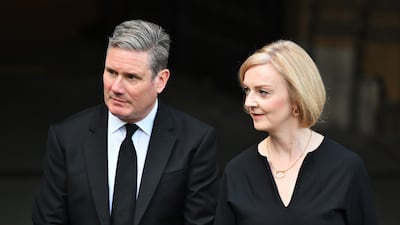
Mr Starmer and then-UK prime minister Liz Truss leave the Palace of Westminster in September 2022. Getty Images -
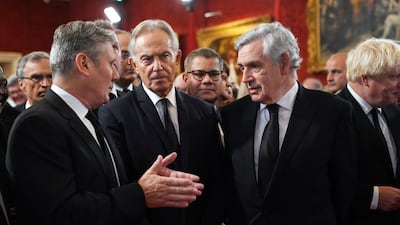
With former Labour prime ministers Tony Blair, centre, and Gordon Brown, right, at St James's Palace, London, where King Charles III was formally proclaimed monarch in September 2022. Getty Images -
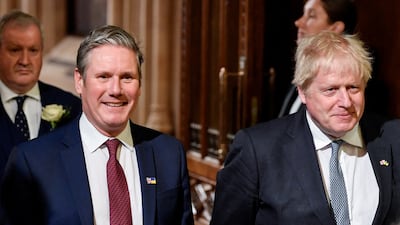
Mr Starmer and then-prime minister Boris Johnson attend the State Opening of Parliament in May 2022. Getty Images -
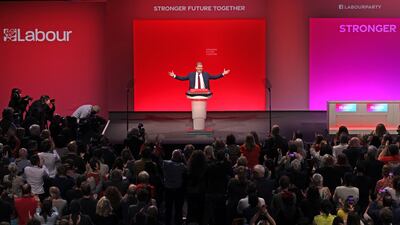
Mr Starmer makes his keynote speech to the Labour conference for the first time as party leader in September 2021 in Brighton. Getty Images -
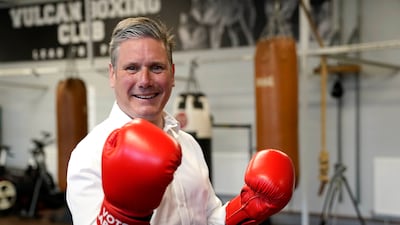
The gloves are on during a visit to the Vulcan Boxing Club in Hull, East Yorkshire, in April 2021. Getty Images -
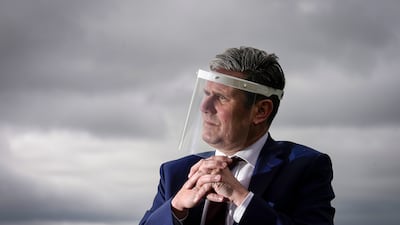
Mr Starmer in talks with care home workers and family members of residents at Cafe 1899 in Gedling Country Park during the Covid-19 pandemic in July 2020. Getty Images -
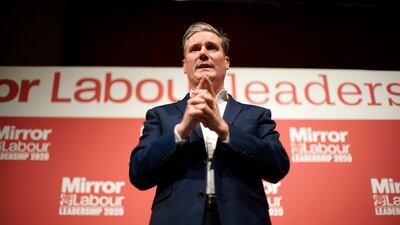
Mr Starmer, then-shadow secretary of state for exiting the EU, addresses the audience at a hustings in March 2020 in Dudley. Getty Images -
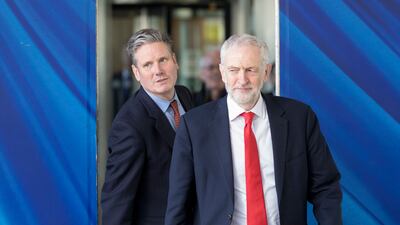
Mr Starmer and then-Labour leader Jeremy Corbyn talk to the media at the EU Commission headquarters in March 2019 in Brussels. Getty Images -
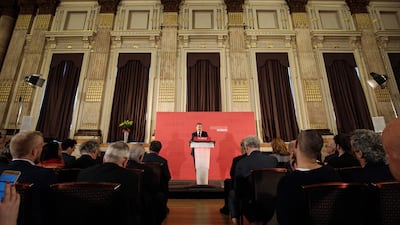
Mr Starmer delivers a speech on Labour's Brexit policy at the Institute of Civil Engineers in London in April 2017. Getty Images -

Holding a press conference as Director of Public Prosecutions to outline new guidelines on assisted suicide, in London in September 2009. Getty Images -
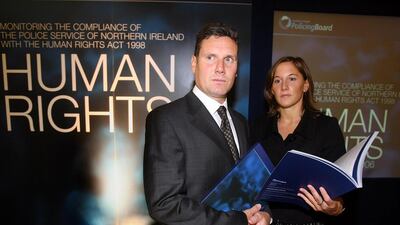
Human rights advisers Mr Starmer and Jane Gordon with the Northern Ireland Policing Board annual human rights report 2006, at the Dunadry Hotel in Co Antrim. Getty Images


He inherits an economy that is flat – unless Mr Sunak really does make some progress on the growth front, but it is hard to see that occurring, not while there is still war in Ukraine and heightened tension and volatility in the Middle East. That said, Britain is in better shape than some of its European neighbours. Its economy emerged quicker from the pandemic and proved surprisingly resilient to the outbreak.
One consequence is that talk of rejoining the EU is not as vocal as it was. It is an ever-present, but the economic woes of Germany in particular have provided pause for thought.
A new administration, not tainted by being from the party that steered Brexit, will be able to establish closer relations with the EU. It is also in the bloc’s interest to have a trusted, working, relationship with the UK – the Union is realising it is also missing the UK as much as the UK misses them.
Uncertainty internationally is set to continue. If anything it will worsen as the US holds its own election. At present, the prospect of an ageing Joe Biden or a vengeful, possibly even jailed, Donald Trump emerging victorious is almost too unpalatable to contemplate.
With Mr Biden the question will be about his grip and with that America’s authority on the world stage; with Mr Trump, it is more to do with what is in his head and the policies he plans to enact. Where, for instance, will he take the US on climate change? On relations with China?
There seems to be no alternative than a run-off between these two. Next year may well go down in history as marking the nadir of US politics.
On that note, all that remains is to say Happy New Year. But, to quote the lyrics of the song chosen by Mr Blair and his team as their rallying cry in 1997: “Things can only get better”. Here’s hoping.

