
Live updates: Follow the latest news on US-Iran war
Everyday services across the UAE are running smoothly, in no small part thanks to the crucial role being played by a resolute convoy of delivery riders, as Iranian attacks on the country persist.
They may be navigating an unusual set of challenges, like missile alerts, GPS glitches and the need to reassure family members in their home countries, but riders have told The National they feel safe on the roads, have the support of customers and are proud of the work they are doing.
At one of Careem's 'Quik' hyper-local stores in Dubai’s Barsha neighbourhood, orders have been processed and dispatched as usual since Iran's attacks on the UAE began on February 28, helping to maintain the supply of essential goods to customers during Ramadan.
The company operates a network of such outlets, all stocked with food and vital household items designed for fast delivery. Orders are directed to the closest branch before being sent out.
“If an area is unsafe, we get an alert,” said Salman Ahmad. The Careem captain from Pakistan said standard procedure for riders is to park, take shelter and wait for the all-clear.
“The customers are on our side,” he added. “They have been very supportive and co-operative.”
-
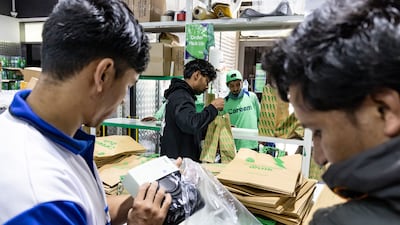
Staff pack orders at the Careem base in Al Barsha for delivery to the public. All photos: Antonie Robertson / The National -
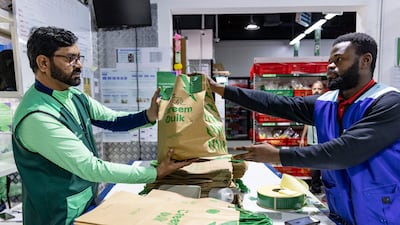
Delivery riders collect groceries ordered on the Careem app from the shop, which serves a 3km radius in Al Barsha -
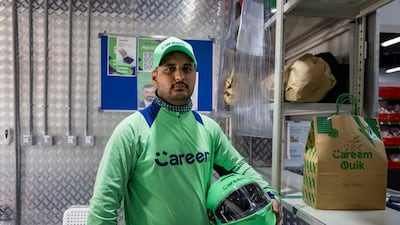
Careem ‘captain’ Hammad Khan, 23, from Pakistan, is among the longer-serving staff members at the Careem Quik shop -
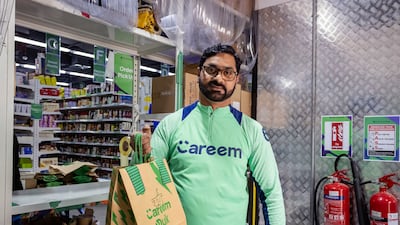
Khaja Kaleemuddin, another Careem captain, from Hyderabad in India, supports his wife, three children and extended family -
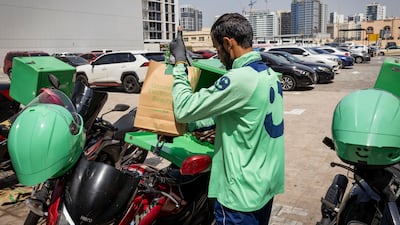
A captain prepares to head off for a delivery -
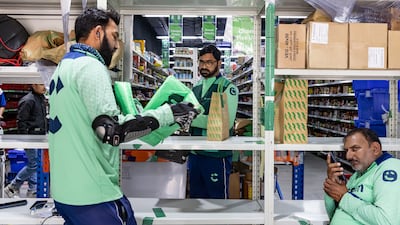
Orders are collected and packed in the warehouse -
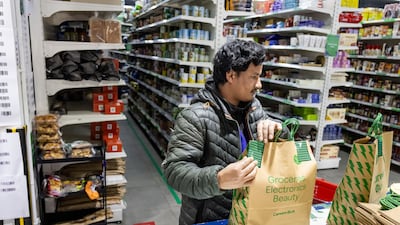
Online orders have been processed and sent as usual since the war in the Middle East began on February 28 -
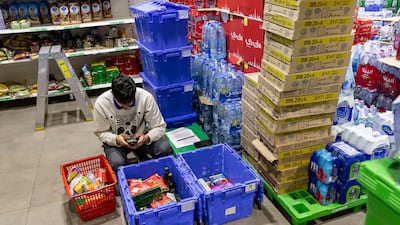
Items are placed in a basket before being collected and packed up for delivery -
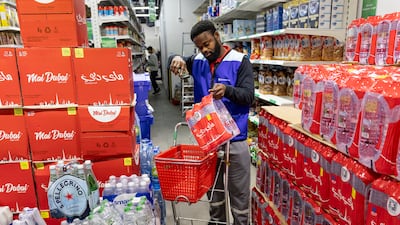
The Careem delivery system has helped to maintain the supply of essential goods throughout Ramadan


Delivering support
Hammad Khan, another Careem captain, said his daily delivery load of about 15 orders has largely stayed the same. He thinks his job has been easier than usual in recent weeks because of quiet roads during Ramadan.
“I feel proud,” he said of the role he is playing to keep services operating as normal. “And I’m also supporting my family.”
Mr Ahmad is also proud to be supporting people in the UAE as well as his parents and two brothers at home in Pakistan. “Sometimes there is fake news about safety on the roads, but I am facing it first-hand,” he said. “We are all facing it and we feel secure.”
Delivery riders are receiving alerts from authorities and through the Careem App. Dealing with GPS and satellite navigation glitches, which have been widespread across the region, have not been a major issue, they say.
Riders know the routes and most journeys are less than four kilometres. “We can also use offline maps,” added Mr Ahmad.

Most delivery riders are migrant workers, mainly from South Asia. They work 12-hour shifts and the majority of their earnings are sent back to support their family at home. Tips are important. During Ramadan, Careem is matching customer tips of Dh10 or more, across ride-hailing, food and delivery services.
Some companies in the UAE have asked employees to work from home, while online learning for schools and universities across the country has been extended by another two weeks.
The UAE death toll as a consequence of the Iranian attacks now stands at eight. Among those who have lost their lives are Pakistani, Nepali, Palestinian and Bangladeshi citizens, while the UAE ministry of defence announced that two members of the UAE Armed Forces have been martyred.
Iran's attacks have prompted worried calls from family members back home. “They keep calling me,” said Careem captain Khaja Kaleemuddin, who comes from Hyderabad. He was referring to his wife, three children and extended family in India. “I have been trying to reassure them,” he said, adding that “I get to support people [in the UAE] and feel supported”.
Safety first
At Talabat, the team only operates when it's safe to do so, a spokesperson for the delivery service said. Additionally, riders don't have to log in to work if they don't feel comfortable, with no consequences, and additional bonuses have been introduced to support riders who are working during this period, the spokesperson told The National. Talabat is also matching customer tips in most markets.
“Our services play an important role in supporting communities during difficult periods, helping people access food, groceries and essentials without needing to travel by themselves,” the Talabat spokesperson said.
“To keep drivers safe, our approach is simple: We continuously evaluate conditions and adjust operations when necessary, always in line with guidance from local authorities.
“Ultimately, our main focus is rider safety. When we can continue supporting communities without compromising that, we do so while prioritising the well-being and choice of the riders who keep these services running.”
Reducing targets
Ride-hailing app Zed, meanwhile, has decreased drivers' daily targets, making it easier for those who work solely on commission to maintain their income.
Irfan Khan, a Pakistani driver who has been supporting his three children and wife for two decades, is happy to keep working.
“I feel safe, Alhamdullilah,” he told The National. “I love Dubai too much and my company is very good. I've been working for them for 17 years.”
Ronnie Katumba, a driver from Uganda who has only been in the UAE for one year, also feels well supported. “We are very safe,” he said, adding that Zed has introduced extra precautions and training sessions to ensure the safety of drivers and clients.
Revenue has taken a slight dip, with fewer people taking taxis, but he remains upbeat, adding: “It's a good job.”

