



Jennifer Aniston
Actor and producer Jennifer Aniston has invested in Invisible Universe, an internet-first animation studio, the company announced last week.
The Friends star was part of a $12 million series A funding round led by Seven Seven Six, founded by Alexis Ohanian and Katelin Holloway. Mr Ohanian’s wife, tennis star Serena Williams, also participated in the round, along with Will Smith’s Dreamers VC and others.
The company will use the injection of funds to launch animated intellectual properties across social media and web3, expand its footprint to new platforms and further monetise its suite of franchises.
Invisible Universe develops and introduces original animated character franchises on social media, in partnership with artists and celebrities.
Its animation studio is behind Clydeo (Aniston’s furry best friend and foodie), Qai Qai (inspired by a doll belonging to the Ohanians’ daughter Alexis Olympia) and Squeaky & Roy (toys associated with influencers Charli and Dixie D’Amelio).
“It has just been so much fun to develop Clydeo with the Invisible Universe team, inspired by my own dog Clyde, who is such a character himself and has been making me and my friends laugh for almost 10 years now,” Aniston, 53, told Variety magazine.
“I am so happy his true potential has finally been tapped into for the whole world to enjoy. So much more fun is yet to come!”
Clydeo already has his own TikTok and Instagram accounts.
The size of Aniston’s investment was not disclosed. The Golden Globe and Primetime Emmy-winning actor has a net worth of $320m, according to the wealth tracking website Celebrity Net Worth.
Her principal income comes from her career in TV and films, most notably from the 10 seasons of 90s’ hit sitcom Friends. Each of the six main cast members has earned about $90m in base salary from the show, not accounting for back-end bonuses and continued royalties.
Celebrity Net Worth calculates that Aniston earns $20m per year in royalties from syndication revenue, which is thought to exceed $1 billion per year.
Aniston has endorsed brands such as Emirates airline, L'Oreal cosmetics and Aveeno skincare. She is thought to earn $10m annually from endorsements alone.
She has a $20.97m mansion in Bel Air and has previously owned homes in Beverly Hills and New York City.
In 2012, Aniston took a stake in haircare line Living Proof, but sold it to Unilever for an undisclosed amount four years later.

Selena Gomez and Serena Williams
Singer, actor and entrepreneur Selena Gomez has seen her five-month-old mental health start-up valued at $100m after a $5m early-stage funding round by Serena Williams’ Serena Ventures last week.
Williams announced the investment on Twitter. “So proud to be an investor in @letswondermind — changing the way we deal with mental health,” she said.
The start-up, Wondermind, was launched in February. Co-founded with Gomez’s mother, Mandy Teefey, and media executive Daniella Pierson, it aims to create a mental health ecosystem and promotes mental fitness routines through social media and a newsletter.
The platform is working to build a production division for mental health content, including podcasts and interviews with experts and celebrities, as well as physical products for behavioural therapies.
Participating investors in the funding round included Lightspeed Venture Partners and Sequoia Capital, Bloomberg reported.
Gomez, 30, has a net worth estimated at $85m, according to Celebrity Net Worth.
The Lose You To Love Me singer has business interests in make-up, fragrance, fashion and handbag lines, as well as high-profile endorsement contracts, including for Puma and Coach.
Serena Ventures’ investment comes days after the tennis star addressed the issue of retiring after the coming US Open in an essay for Vogue magazine. She said she would continue to prioritise investment in businesses owned by women.
Williams will be involved in Wondermind’s content and help promote its onboarding projects.
The 23-time Grand Slam winner is a self-made multimillionaire, with an estimated net worth of $260m, according to Forbes magazine. She has earned a record $94.5m from tennis, but that figure has been surpassed by her income from endorsements and investments.

Shilpa Shetty
Bollywood actress and businesswoman Shilpa Shetty recently invested an undisclosed amount in two direct-to-consumer start-ups in India.
Sports nutrition brand Fast&Up retails energy gels, hydration drinks and multivitamins, while beauty and wellness label Chicnutrix is a wellness and nutrition supplements company.
Both brands are part of Fullife Healthcare, which raised $22m in series C funding from Morgan Stanley Private Equity Asia last December. It has a presence in India and Italy and is now looking to expand to other countries in Europe and North America.
Shetty, 47, will also serve as brand ambassador to help to strengthen and promote health and self-care in India.
“Our lifestyle today is fast-paced and it is difficult to keep up with all required nutrients or vitamins that are essential on a daily basis for the body, hair, skin, energy and general well-being. Their products totally suit today’s demands,” CNBC TV 18 quoted Shetty as saying.
Previous celebrity backers in Fullife Healthcare include Indian cricketer Mayank Aggarwal and actor Varun Dhawan.
Shetty has a net worth of about 1.34bn Indian rupees ($17m).
Besides her movie and TV career, Shetty is thought to own many homes in Mumbai and the UK, together with her husband, businessman Raj Kundra.
The couple’s home in Surrey, the UK, reportedly cost £5m ($6.09m) when they bought it in 2009, according to India Today magazine. In February, the magazine reported that Kundra had transferred five apartments worth 380m rupees ($4.7m) to Shetty.
The Celebrity Big Brother actor previously invested in Indian fast-moving consumer goods start-up Mamaearth and has her own fitness app, Simple Soulful.
Shetty and Kundra jointly held an 11.7 per cent stake in Indian Premier League cricket team Rajasthan Royals between 2009 and 2015.

Katy Perry
De Soi, a line of premium non-alcoholic aperitifs co-founded by Katy Perry, has announced $4m in seed funding.
The American singer and reality TV judge established the line in January with master distiller Morgan McLachlan to offer alternatives for cocktail hour.
The global non-alcoholic drinks market was worth $820bn in 2020 and is forecast to grow at a compound annual rate of 6.8 per cent, according to Allied Analytics.
The round was led by Willow Growth, with the participation of entertainment and sports agency Creative Artists Agency.
De Soi will use the newly acquired capital to expand its retail footprint across the US.
“De Soi is all about balance — being able to enjoy the evening AND the next morning,” Perry said.
“It allows busy toddler-mums like Morgan and me, or anyone who just might want a drink without the hangover, to enjoy the social ritual of a drink with friends and still be the life of the party!”
-

Katy Perry rings in the new year at the Du Arena, Yas Island. Khushnum Bhandari / The National -

Katy Perry rings in the new year at the Du Arena, Yas Island. Khushnum Bhandari / The National -
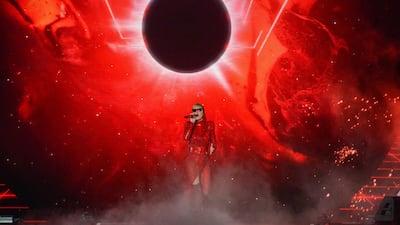
Katy Perry rings in the new year at the Du Arena, Yas Island. Khushnum Bhandari / The National -
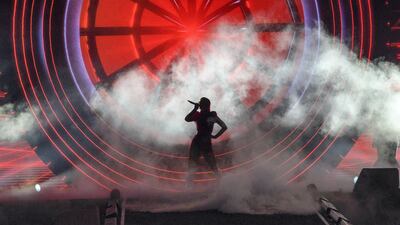
Katy Perry rings in the new year at the Du Arena, Yas Island. Khushnum Bhandari / The National -

Katy Perry rings in the new year at the Du Arena, Yas Island. Khushnum Bhandari / The National -
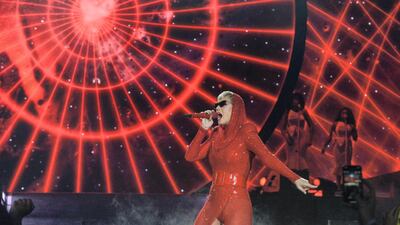
Katy Perry rings in the new year at the Du Arena, Yas Island. Khushnum Bhandari / The National -
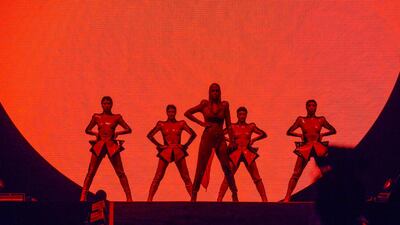
Katy Perry rings in the new year at the Du Arena, Yas Island. Khushnum Bhandari / The National -
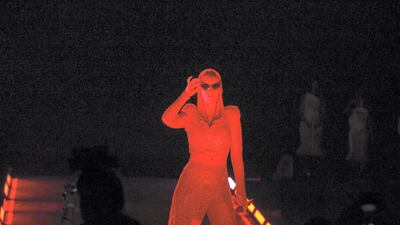
Katy Perry rings in the new year at the Du Arena, Yas Island. Khushnum Bhandari / The National -
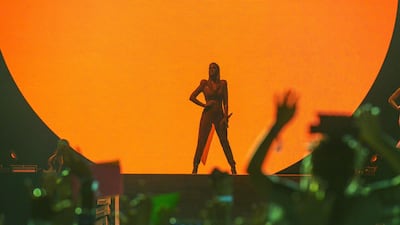
Katy Perry rings in the new year at the Du Arena, Yas Island. Khushnum Bhandari / The National -

Katy Perry rings in the new year at the Du Arena, Yas Island. Khushnum Bhandari / The National -

Katy Perry rings in the new year at the Du Arena, Yas Island. Khushnum Bhandari / The National -

Katy Perry rings in the new year at the Du Arena, Yas Island. Khushnum Bhandari / The National -
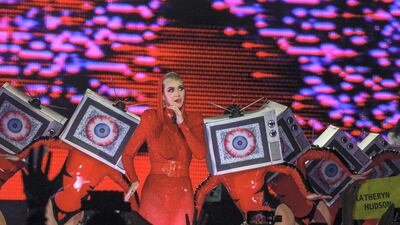
Katy Perry rings in the new year at the Du Arena, Yas Island. Khushnum Bhandari / The National -

Katy Perry rings in the new year at the Du Arena, Yas Island. Khushnum Bhandari / The National -

Katy Perry rings in the new year at the Du Arena, Yas Island. Khushnum Bhandari / The National -

Abu Dhabi, United Arab Emirates - Katy Perry, US pop star rings in the New Year at the Du Arena, Yas Island on December 31, 2017. (Khushnum Bhandari/ The National) -
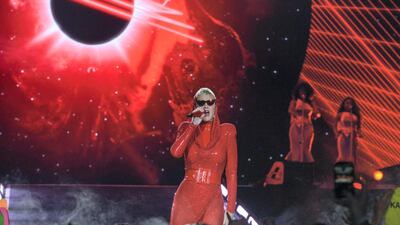
Abu Dhabi, United Arab Emirates - Katy Perry, US pop star rings in the New Year at the Du Arena, Yas Island on December 31, 2017. (Khushnum Bhandari/ The National)


Perry, 37, has a net worth estimated at $330m, according to Celebrity Net Worth. Over the past decade, her annual earnings have ranged between $30m and $135m, thanks to merchandise, album sales, touring and TV appearances.
When she signed on to judge the American Idol revival in 2018, she was paid $15m a season. The following year, that remuneration was raised to $25m a season.
Since 2017, she has bought and put up for sale four homes in Los Angeles and Beverly Hills, according to Celebrity Net Worth.
In October 2020, Perry and her fiance, actor Orlando Bloom, purchased a 3.64-hectare estate in Montecito, California, for $14.2m, next door to celebrity neighbours such as Oprah Winfrey and the Duke and Duchess of Sussex, Hello! magazine reported.

