


No unusual radiation levels have been detected in the Gulf, after the US launched strikes on nuclear sites in Iran.
A crisis department of the Gulf Co-operation Council is monitoring radiation levels after the American attacks on three sites in Iran. The department says it will publish regular updates from early warning systems in the region.
"In light of the events witnessed in the region today, no abnormal radiation levels have been detected in any of the GCC countries to date," it said. "Environmental and radiation indicators remain within safe and technically permissible levels."
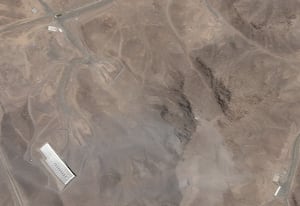
After the attacks, US President Donald Trump called the attacks a “spectacular military success”. While there have been growing concerns about radiation, experts stressed that the risk of contamination from the strikes so far remains minimal.
To date, the facilities struck have been those associated with potential weapons-related nuclear activity, said Pete Bryant, honorary professor in physics at the University of Liverpool.
This includes sites producing centrifuge components (non-nuclear materials), the Arak research reactor (under construction, no nuclear material), the Natanz uranium enrichment facility, the Isfahan site, which handles both enrichment and uranium conversion, and the Fordow enrichment plant, reportedly attacked, but with no confirmed damage.
“It’s important to begin by emphasising that a release of radiation from these enrichment facilities is highly unlikely,” he told The National. “While there may be localised internal contamination, there is no risk to the public or environment outside the facility, and certainly no current risk to neighbouring Gulf countries.”
James Acton, co-director of nuclear policy programme at the Carnegie Endowment for International Peace, also said the risks of radiological contamination from a strike on the Fordow plant are “extremely slight”.
“The uranium present in enrichments plants is barely radioactive and significant off-site spread is unlikely,” he said.
However, if Israel were to attack Iran's operational Bushehr nuclear power plant, “there would be very real risk of a radiological catastrophe”, Mr Acton added.
Since the beginning of the conflict on June 13, Israel has attacked nuclear sites inside Iran, including Natanz, Arak and Isfahan. Israel has said its attacks on Iran are aimed at preventing it from acquiring a nuclear weapon.
There was confusion this week over whether Israel attacked Bushehr, Iran's only functioning nuclear power plant. An Israeli military official said on Thursday that an earlier statement saying a strike had been carried out on Bushehr was a “mistake”.
Such an attack could have serious consequences, with the need to monitor radiation levels for several hundreds of kilometres, the UN nuclear watchdog has said.
“Countries of the region have reached out directly to me over the past few hours to express their concerns, and I want to make it absolutely and completely clear: in case of an attack on the Bushehr nuclear power plant, a direct hit could result in a very high release of radioactivity to the environment,” the International Atomic Energy Agency chief Rafael Grossi told the UN Security Council on Friday.
He warned that should Israel attack power lines supplying electricity to the plant, the consequences could be “severe” for Iran and beyond. Residents may be required to take iodine tablets and could face food and water shortages.
Andrea Stricker, deputy director and research fellow at the Foundation for Defence of Democracies, said a strike on the Bushehr plant “would cause a radiological disaster”.
“The only concern about radiation comes from a strike on the Bushehr nuclear power plant,” she explained. “There is no reason Israel will have the plant on its target list, since a strike would cause a radiological disaster.”
Authorities in Gulf states and Iraq have used monitoring systems and international data to assess radiation levels since the start of the conflict. Here is what they have said:

UAE
The UAE's Federal Authority for Nuclear Regulation said on Sunday there was no impact in the country from the strikes on nuclear facilities in Iran, state news agency Wam reported.
The authority said it was monitoring the situation in co-ordination with international partners, including the International Atomic Energy Agency (IAEA), and urged the public to rely only on official news channels.
Saudi Arabia
The kingdom’s Nuclear and Radiological Regulatory Commission said it had not detected worrying radiation levels since the conflict began.
In a post on X, it added that radiation levels across the kingdom were normal and the environment was safe.
Kuwait
Kuwait's National Guard said on Sunday morning it had not detected any increase in radiation levels in the country's airspace or waters, and that the situation was normal.
Oman
Oman is also monitoring its atmosphere and did not report any abnormal radiation levels. It is also analysing data from the early warning radiation monitoring system used across the country, as well as data issued by regional and international monitoring centres, the Oman News Agency quoted the Environment Authority as saying.
Oman has urged citizens and residents to obtain information from official sources and not to circulate rumours or unverified information.
Qatar
Qatar launched an advanced national radiation monitoring network, which operates around the clock to assess radiation levels in the country.
The network aims to provide early detection of radiation levels that exceed normal limits and ensure “the highest levels of radiation and nuclear safety at the regional and global levels”, Qatar News Agency reported last week, quoting a statement from the Ministry of Environment and Climate Change.
Radiation levels in the air and Qatari waters are currently “within normal limits”, the authorities said.
Bahrain
Bahrain also said no abnormal levels of radiation had been recorded in the kingdom and it continues to monitor the situation.
The Supreme Council for Environment said results were being updated regularly through monitoring stations and the country was maintaining “co-ordination and readiness” under emergency plans to monitor radiation levels, the Bahrain News Agency reported.
Iraq
Iraq, which shares a border with Iran, said it has not recorded an increase in radiation levels across the country, the Iraq News Agency said.
On Thursday, Prime Minister Mohammed Shia Al Sudani held a meeting to review the national plan for dealing with radiation and nuclear accidents. The talks were also to assess preparations for potential emergencies.
The Central Operations Room for Radiation and Nuclear Emergencies also confirmed response teams were ready to tackle emergency situations.

