
A wide-ranging economic reform plan prepared by the Iraqi government includes measures to stop the bleeding of resources and tackle a deficit that is hitting dangerous levels, a copy seen by The National says.
The programme – approved on Tuesday by Cabinet and sent to parliament for endorsement – recommended “urgent and necessary remedies” that would be put in place over three to five years.
It could lead to the drafting of a long-term economic strategy.
The plan aims for sustainable fiscal stability, macroeconomic reforms, infrastructure development, improved public services, and creation of an administrative and legal environment to boost growth.
-
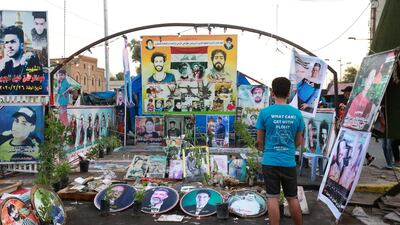
A protester stands next to the pictures of protesters who were killed in clashes with security forces during the anti-government protests at Tahrir Square in central Baghdad. EPA -
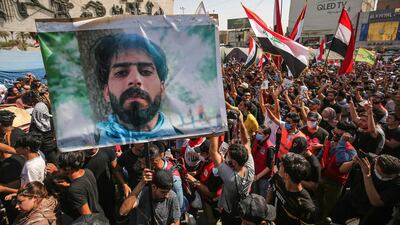
People hold up a picture of a slain protester as they gather with national flags for a demonstration in Tahrir Square in the centre of Iraq's capital Baghdad. AFP -

A demonstrator gestures during a protest to mark the first anniversary of the anti-government protests in Basra, Iraq on October 1, 2020. AP Photo -
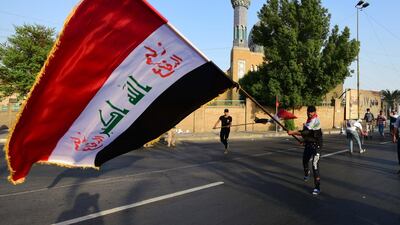
A protester waves the Iraqi national flag during a demonstration at the Al-Firdus square in central Baghdad. EPA -
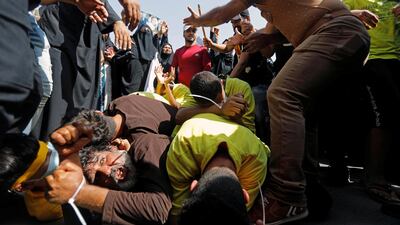
Demonstrators play the role of detainees as they gather to mark the first anniversary of the anti-government protests at Tahrir Square in Baghdad. Reuters -
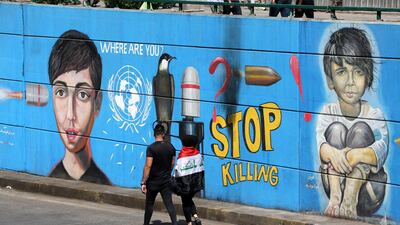
Protesters walk next to a wall with graffiti near Tahrir square in central Baghdad. EPA -
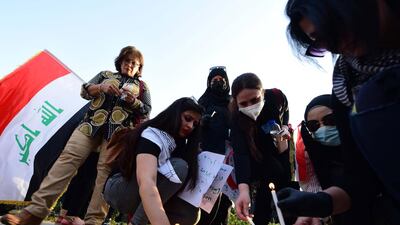
Women light candles and pray for the victims of protests at Tahrir Square in central Baghdad. EPA -
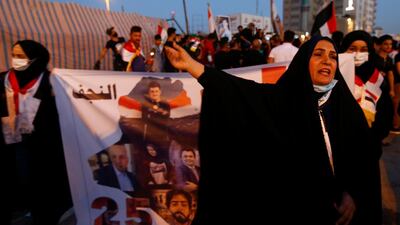
Demonstrators gather to mark the first anniversary of the anti-government protests, in Najaf, Iraq. Reuters -
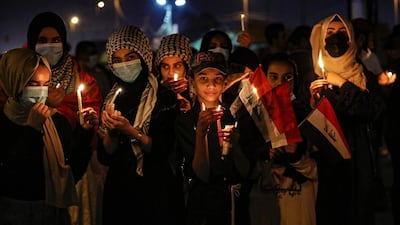
Demonstrators light candles to mark the first anniversary of the anti-government protests in Basra, Iraq. AP Photo -

A protester lights candles and prays for the victims of protests at Tahrir Square in central Baghdad. EPA -
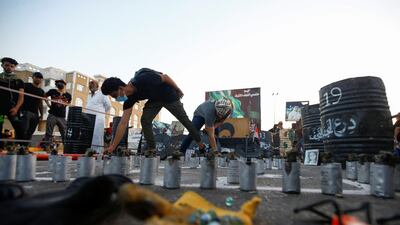
Men prepare torches as Iraqi demonstrators gather to mark the first anniversary of the anti-government protests, in Najaf. Reuters -
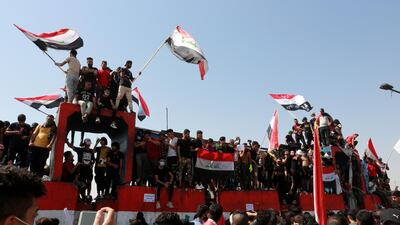
Protesters carry the Iraqi national flag as they stand on concrete blocks which are used by security forces to block the Al-Jumhuriya bridge, close to Tahrir square in central Baghdad. EPA -
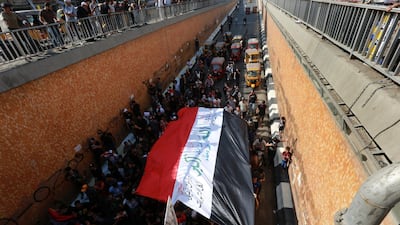
Iraqis carry the Iraqi national flag and chant slogans during a demonstration at Tahrir square in central Baghdad. EPA -
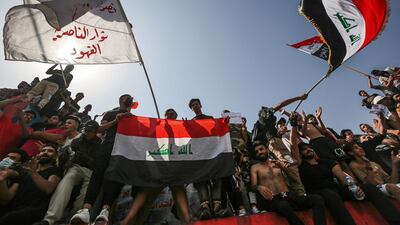
Protesters wave Iraqi national flags as they gather for a demonstration in Tahrir Square in the centre of Iraq's capital Baghdad. AFP -
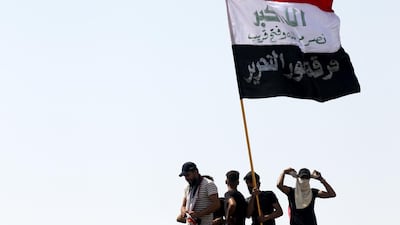
Iraqi protesters wave the national flag as they gather for a demonstration in Tahrir Square in the centre of Iraq's capital Baghdad. AFP


It said one of the main sources of waste was salaries in the public sector, where about 122 per cent of this year's forecast oil income was expected to go.
That is the highest percentage since the 88 per cent reached in 2016, the plan said.
It suggested a revision of hiring policies, salaries and allowances in the public sector.
Since its discovery in 1927, oil has been the backbone of the Iraqi economy.
That has made the government the main source for jobs, spawning a huge public sector.
Since the 2003 US-led invasion that toppled Saddam Hussein, Iraqi political parties have pressed for high compensation and social benefits for the victims of his policies.
They secured government jobs for their supporters, eating into much of the revenue.
As of 2020, the number of government employees is about 4 million, up from about 1 million in 2003, with about 2.5 million retired state workers, the government said.
That has brought the spending on salaries and pensions to about $5.62 billion a month, or about 25 per cent of gross domestic product.
This year's crash in oil prices has left the government with a monthly deficit of nearly $4bn.
Annual spending on salaries has soared by nearly 400 per cent between 2004 and 2020, making up 74 per cent of this year’s expenditure, the plan said.
It suggested a reduction in the wage bill from 25 per cent of GDP to 12.5 per cent in the next three years.
The 95-page plan also called for cutting government subsidies, mainly for electricity, and a fuel cost based on international market prices.
It proposed an increase in revenue from taxes and customs, and to cut financial support to state-owned enterprises by 30 per cent three years in a row.
To enable the private sector to grow, the plan suggested a fund financed by the government, private banks and foreign grants.
It detailed other reforms, including introducing automation and modernising customs and tariffs collection.
Most of the proposed reforms are not new. Many were suggested by previous governments or international organisations, but they were shelved because of political wrangling and public resistance.
"It's true that many of these proposals have been suggested before but the challenge is always in implementation," analyst and policy consultant Ali Al Mawlawi told The National.
"The government needs to be realistic in what it can achieve and remain focused on the task at hand.
"The next task for this government will be to generate enough political capital by securing buy-in from the parliamentary blocs so it can push through a set of prioritised reform measures in the limited time it has left."
The latest attempt was early this year, when the government introduced reforms that included pay cuts for government employees and reduced pensions.
But days later, it called off the plan because of public pressure.
The first objection to the plan came hours later from inside parliament, suggesting how difficult it will be to pass it.
“There is no difference between this plan and previous ones,” said Abdul-Hadi Mohan, a member of the parliament’s finance committee.

