Explorer Robin Hanbury-Tenison was in an induced coma

Explorer Robin Hanbury-Tenison reveals how hospital garden helped his battle with coronavirus


Simon Rushton
  • English
  • Arabic

A British explorer whose latest book warned of the dangers of a pandemic has told how he recovered from coronavirus after a 49-day battle that left him at death's door.

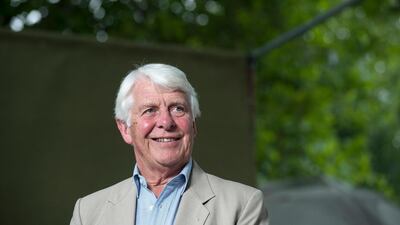
Robin Hanbury-Tenison, 83, was in an induced coma for more than a month before his recovery began when he was moved to a garden space in Derriford Hospital in Plymouth, Devon.

His latest book, Taming the Four Horsemen: Radical solutions to defeat Pandemics, War, Famine and the Death of the planet, was published on the day he first fell ill in March.

In interviews on Tuesday, he talked of the role of nature in his recovery and, pointing out he has lived in remote tribal societies, said he believes “we are poisoning ourselves without understanding how”.

Mr Hanbury-Tenison, who had no underlying conditions and was returning from a skiing holiday when he fell ill, said the coronavirus was “nasty” and “unpleasant”.

He was the first person in the England’s South West region to be admitted to hospital.

“I was in a pretty bad way, in an induced coma for five weeks and didn’t know what was going on. It’s a nasty business, very unpleasant. You are sedated and delirious,' he said.

“The remarkable thing is they kept me in this condition all this time. The big breakthrough moment was when they wheeled me down into this wonderful new thing which is an intensive care garden where you are in the open air with flowers.

“It sounds silly but it’s really extraordinary.

“The moment came for me though, I had all these tubes and four people pushing this big bed and with the sun on my face, and suddenly I came out of it.”

Reserch 'is needed'

  • Over the last two decades, indigenous tribes in Mongolia have changed their livelihoods to focus on the country’s rapidly evolving tourism industry, which has halted overnight. Courtesy Frank Schieweck / Adiyabold Namkhai
    Over the last two decades, indigenous tribes in Mongolia have changed their livelihoods to focus on the country’s rapidly evolving tourism industry, which has halted overnight. Courtesy Frank Schieweck / Adiyabold Namkhai
  • A Mongolian nomad family in their ger in the mountains of Altai. The coronavirus has not yet reached this remote region but the people are suffering from an abrupt end to tourism, the main revenue income. Courtesy Xaviar Smerdon / New Milestone Tours
    A Mongolian nomad family in their ger in the mountains of Altai. The coronavirus has not yet reached this remote region but the people are suffering from an abrupt end to tourism, the main revenue income. Courtesy Xaviar Smerdon / New Milestone Tours
  • Chile's Mapuche people have had to abandon age-old traditions in the face of Covid-19 which has reached their mountainous region in South America. Courtesy Rutas Ancestrales / National Tourism Board of Chile.
    Chile's Mapuche people have had to abandon age-old traditions in the face of Covid-19 which has reached their mountainous region in South America. Courtesy Rutas Ancestrales / National Tourism Board of Chile.
  • Randy Borman is vice president of Zabalo, a Cofan village in the Ecuadorian rainforest. Courtesy Explorer X / The Cofan Organistation
    Randy Borman is vice president of Zabalo, a Cofan village in the Ecuadorian rainforest. Courtesy Explorer X / The Cofan Organistation
  • Moath is a member of the Ammarin Bedouin tribe, life in his Bedouin village in Jordan has taken a strange turn. Courtesy Engaging Cultures Travel
    Moath is a member of the Ammarin Bedouin tribe, life in his Bedouin village in Jordan has taken a strange turn. Courtesy Engaging Cultures Travel
  • The Yanomami tribe live in the rainforest in Brazil and Venezuela, where Covid-19 has already claimed lives. Courtesy Sam Valadi / Flickr
    The Yanomami tribe live in the rainforest in Brazil and Venezuela, where Covid-19 has already claimed lives. Courtesy Sam Valadi / Flickr
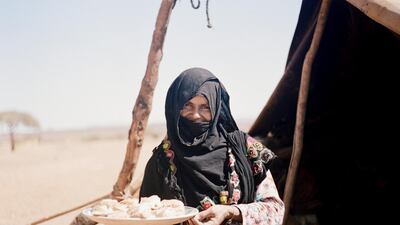
  • Adil (right) drinks tea with his cousin who is a nomad in Morocco's Sahara desert. Both are members of the Aarib tribe and face an uncertain future with no income while travel remains suspended due to the coronavirus. Courtesy Una Simone Harris / Traverse Journeys
    Adil (right) drinks tea with his cousin who is a nomad in Morocco's Sahara desert. Both are members of the Aarib tribe and face an uncertain future with no income while travel remains suspended due to the coronavirus. Courtesy Una Simone Harris / Traverse Journeys
  • Until things improve and tourists return to the Sahara, the Aarib tribe rely on the few resources they do have like dates, home-cooked bread and the few vegetables that can be grown in this desert climate.
    Until things improve and tourists return to the Sahara, the Aarib tribe rely on the few resources they do have like dates, home-cooked bread and the few vegetables that can be grown in this desert climate.
  • A woman from the Aarib tribe bakes bread in the Sahara desert. This is one of the few resources the tribe relies on now that tourism is suspended. Courtesy Traverse Journeys / Una Simone Harris
    A woman from the Aarib tribe bakes bread in the Sahara desert. This is one of the few resources the tribe relies on now that tourism is suspended. Courtesy Traverse Journeys / Una Simone Harris
  • Nomads in Morocco's Sahara have no money to buy food for their camels and little money to feed their families. Courtesy Josh Telles / Traverse Journeys
    Nomads in Morocco's Sahara have no money to buy food for their camels and little money to feed their families. Courtesy Josh Telles / Traverse Journeys
  • Canada's native tribes rely on income from tourists visiting indigenous lands. This has dried up due to coronavirus restrictions. Courtesy Indigenous Tourism Association Canada / Mike Morin
    Canada's native tribes rely on income from tourists visiting indigenous lands. This has dried up due to coronavirus restrictions. Courtesy Indigenous Tourism Association Canada / Mike Morin
  • As indigenous tourism has shutdown, no where are the effects felt more than in native communities around the world. Courtesy Indigenous Tourism Association Canada / Moccasin trails
    As indigenous tourism has shutdown, no where are the effects felt more than in native communities around the world. Courtesy Indigenous Tourism Association Canada / Moccasin trails
  • The indigenous tribes of Canada have seen job losses as tourism has halted. Courtesy Indigenous Tourism Association of Canada / Trina Mather-Simard
    The indigenous tribes of Canada have seen job losses as tourism has halted. Courtesy Indigenous Tourism Association of Canada / Trina Mather-Simard

Mr Hanbury-Tenison, a co-founder of Survival International, said that his experience with coronavirus has supported the thoughts laid out in his book.

He said the key was research, and lots of it.

“This is a very complicated story and people don’t understand how all these viruses work.

“We need much more research, we don’t understand how these things happen and the overlap between being in an induced coma and being brought out of it, that is little understood.”

The National has contacted Derriford Hospital to explain more about how the garden is being used to help coronavirus patients.


The specs

Engine: 2.0-litre 4-cylturbo

Transmission: seven-speed DSG automatic

Power: 242bhp

Torque: 370Nm

Price: Dh136,814

The burning issue

The internal combustion engine is facing a watershed moment – major manufacturer Volvo is to stop producing petroleum-powered vehicles by 2021 and countries in Europe, including the UK, have vowed to ban their sale before 2040. The National takes a look at the story of one of the most successful technologies of the last 100 years and how it has impacted life in the UAE. 

Read part four: an affection for classic cars lives on

Read part three: the age of the electric vehicle begins

Read part one: how cars came to the UAE


How to watch Ireland v Pakistan in UAE

When: The one-off Test starts on Friday, May 11
What time: Each day’s play is scheduled to start at 2pm UAE time.
TV: The match will be broadcast on OSN Sports Cricket HD. Subscribers to the channel can also stream the action live on OSN Play.

Company profile

Company name: Dharma

Date started: 2018

Founders: Charaf El Mansouri, Nisma Benani, Leah Howe

Based: Abu Dhabi

Sector: TravelTech

Funding stage: Pre-series A 

Investors: Convivialite Ventures, BY Partners, Shorooq Partners, L& Ventures, Flat6Labs

You Were Never Really Here

Director: Lynne Ramsay

Starring: Joaquim Phoenix, Ekaterina Samsonov

Four stars

The Perfect Couple

Starring: Nicole Kidman, Liev Schreiber, Jack Reynor

Creator: Jenna Lamia

Rating: 3/5

TALE OF THE TAPE

Floyd Mayweather

  • Height 
  • Weight
  • Reach
  • Record

Conor McGregor

  • Height 
  • Weight
  • Reach
  • Record
UAE currency: the story behind the money in your pockets
Thor%3A%20Love%20and%20Thunder%20
%3Cp%3E%3Cstrong%3EDirector%3A%3C%2Fstrong%3E%20Taika%20Waititi%C2%A0%3C%2Fp%3E%0A%3Cp%3E%3Cstrong%3EStars%3A%3C%2Fstrong%3E%20Chris%20Hemsworth%2C%20Natalie%20Portman%2C%20Christian%20Bale%2C%20Russell%20Crowe%2C%20Tessa%20Thompson%2C%20Taika%20Waititi%3C%2Fp%3E%0A%3Cp%3E%3Cstrong%3ERating%3A%3C%2Fstrong%3E%204%2F5%3C%2Fp%3E%0A