
Follow the latest updates on Afghanistan here
A day after US forces departed Afghanistan, leaving a wrecked airport and thousands of people who were hoping to escape, life in the capital Kabul at least seemed to have returned to relative normality.
From his central Kabul office in a building surrounded by busy traffic and market sellers, Taliban spokesman Zabiullah Mujahid said he was happy.
“After 20 years, we gained our independence, we gained our country,” Mr Mujahid said.
Outside, Taliban fighters patrolled the city, driving in pick-up trucks formerly owned by Afghan police, waving their flags. They bear weapons and white headbands, with the Islamic Emirate’s name inscribed.
Street-working children navigate through the crowds, selling smaller versions of the same banners.
They say they feel safer than before, in an era so far without magnetic bombs and targeted killings, but they admit to an unknown future.
“Inshallah, it will be better,” a young boy selling flags said. Cautious optimism and scepticism, but also fear, are widespread.
The streets are quieter than usual, although not empty. While many shops and businesses closed when the militants entered the capital on August 15, they have been carefully opened again, even removing security barriers and armed guards.
“It’s safer now,” said an employee working at Finest Supermarket, with the shop’s doors wide open.
-

Taliban guards stand outside the Ministry of Information in Kabul. Stefanie Glinski / The National -

A taliban guard sits in Hairatan, at the northern border with Uzbekistan. Stefanie Glinski / The National -
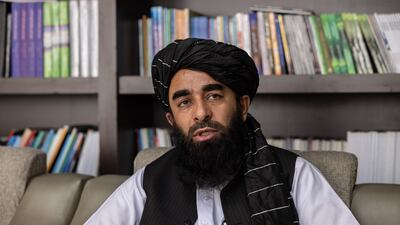
Taliban spokesperson Zabiullah Mujahid. Stefanie Glinski / The National -

Women queue outside Western Union for a chance to access cash as banks remain closed. Stefanie Glinski / The National -
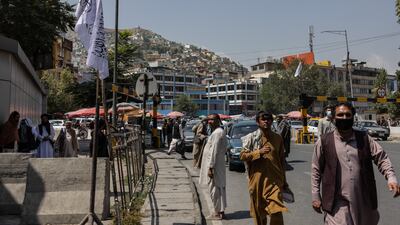
The streets of Kabul one day after the US fully withdrew. Stefanie Glinski / The National -
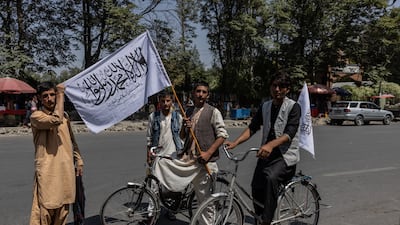
People mark the dawn of a new era in Kabul. Stefanie Glinski / The National -
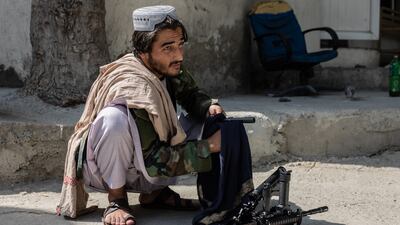
A Taliban member cleans his weapons in Kabul. Stefanie Glinski / The National -

Taliban guards stand outside the Ministry of Information in Kabul. Stefanie Glinski / The National -

At Shar-e-Naw Park in Kabul, around 200 families still live in the tents they pitched weeks ago. Most parents have taken to begging. Stefanie Glinski / The National -
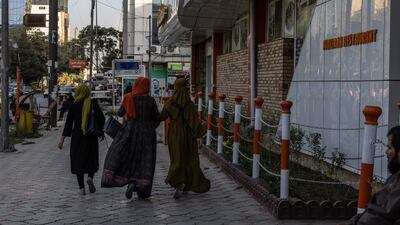
Kabul streets a day after the US forces left. Stefanie Glinski / The National -

A quiet, empty street in the once-bustling city of Kabul. Stefanie Glinski / The National -

Families from the northern provinces of Kunduz, Badakhshan and Takhar now live in tents at Shar-e-Naw Park. Stefanie Glinski / The National -
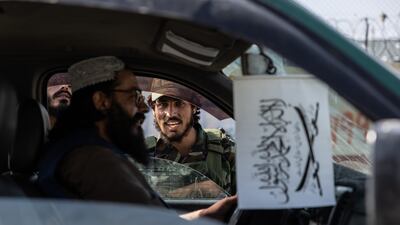
Taliban guards patrol Kabul's roads. Stefanie Glinski / The National -
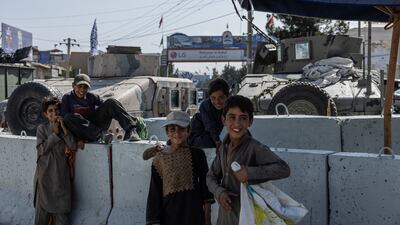
Life on Kabul's streets after US troops left Afghanistan. Stefanie Glinski / The National -
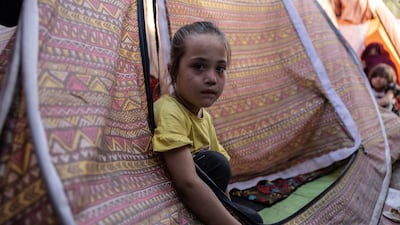
At Shar-e-Naw park, one of the city centre’s main recreational areas, children watch as their parents beg for food. Stefanie Glinski / The National -
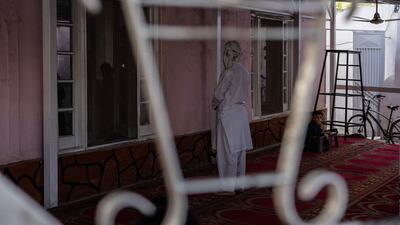
The Taliban are preparing to set out their new Islamic government imminently. Stefanie Glinski / The National -
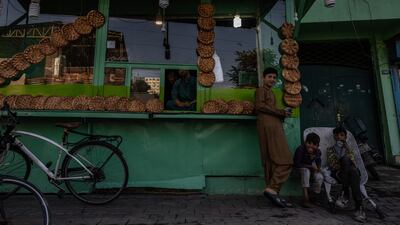
Afghans have been struggling with a surge in food prices and malnutrition – a situation made worse by the US stopping funds. Stefanie Glinski / The National -
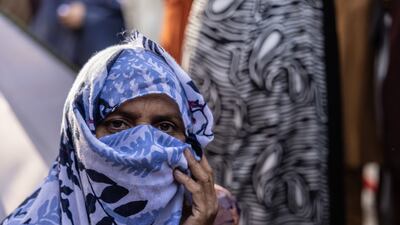
'We want to return, but we don’t have the money to do so,' explains Gul Shirin, a mother of five from Kunduz. Stefanie Glinski / The National -

Basic services like electricity are now under threat. Stefanie Glinski / The National -

Growing humanitarian and economic crises have forced Afghans to flee. Stefanie Glinski / The National -
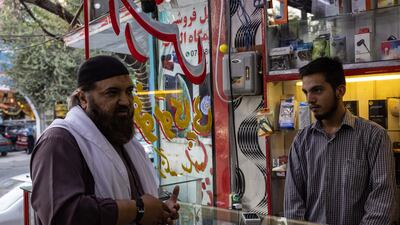
Street vendors struggle to make a living. Stefanie Glinski / The National -
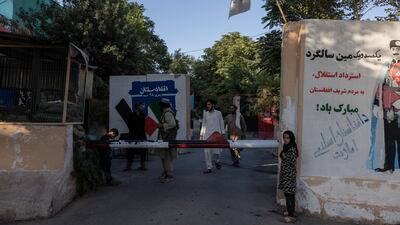
The city's streets are now largely deserted. Stefanie Glinski / The National -

Unemployment rates have risen dramatically as businesses close. Stefanie Glinski / The National -
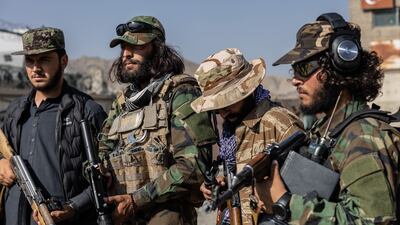
Taliban guards patrol the streets of Kabul. Stefanie Glinski / The National -
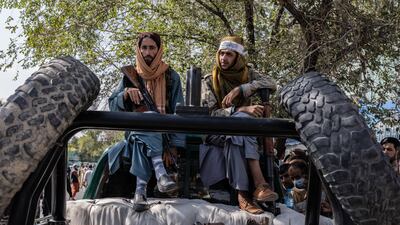
Taliban members make their presence felt throughout the city. Stefanie Glinski / The National -
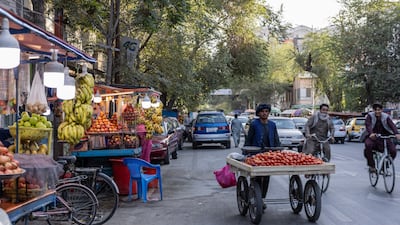
Reports suggest the capital is facing a deep poverty crisis. Stefanie Glinski / The National -
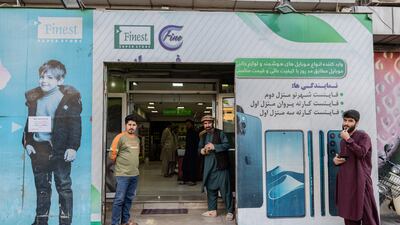
Working women have been told to stay at home. Stefanie Glinski / The National -
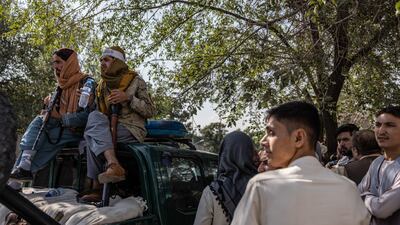
The Taliban have claimed they would recognise women’s rights. Stefanie Glinski / The National -
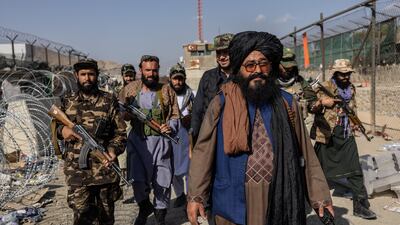
Yet, very few women can be seen in public. Stefanie Glinski / The National -
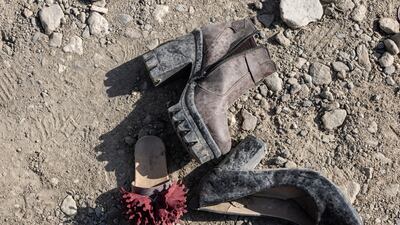
People's belongings left behind at Kabul airport serve as a reminder of what was a frantic struggle for many to flee Afghanistan. Stefanie Glinski / The National


Kabul's cashflow problem
But many businesses remain closed, with their owners having fled the country or living in fear of what the future of the new regime might bring.
Many admit to still living in hiding, afraid that their affiliation with the former government or their job could endanger them.
Access to cash remains an issue for most. With banks shut and wiring services such as Western Union only partly operational, hundreds have queued outside cash machines, hoping to withdraw at least enough money to buy food.
“We will solve these problems,” Mr Mujahid said on Wednesday, suggesting that a new government would soon be announced.
Holding up just a few blue Afghani bills, each worth about $7, a young man working for an international aid organisation said he was struggling.
“We’ve only been receiving 30 per cent of our salaries," he said. "They want to pay us fully but there’s just no money.
“The money I have now barely feeds my family and certainly doesn’t pay rent."
At Shar-e-Naw park, one of the city centre’s main recreational areas, about 200 families, most of them from the northern provinces of Kunduz, Badakhshan and Takhar, still live in the tents they pitched here weeks ago.
Children amuse themselves at the nearby playground. Most of their parents have taken to begging.
“We want to return but we don’t have the money to do so,” said Gul Shirin, a mother of five, from Kunduz.
Having fled initial fighting in her home, she left for Kabul with her husband and five children, seeking safety in the capital.
Ms Shirin said returning would cost the family a total of 10,000 Afghani (about $120), which they could not afford.
“We fled because we were afraid of the Taliban and the war,” she said. “But here in Kabul, we neither have food nor a house. We live in complete poverty.
"Our relatives tell us the situation at home has calmed down, that it is safe to return. We want to go back.”
Travelling to Kunduz could take the family as many as 10 hours, through at least a dozen Taliban checkpoints, although travellers report no problems throughout the journey.
On the northern edge of the city, the roads leading up to Hamid Karzai International Airport are void of people.
Closer to its doors, damaged blast walls stand as a reminder of last week’s explosion, claimed by ISIS, that killed about 200 people and injured hundreds more.
Empty bottles, soiled nappies and used clothes still litter the paths leading to the airport’s doors, as do more personal items: family photographs, a pink princess dress, a lost passport.
The Taliban said that cleaning operations were under way, raising hopes for the airport to be functional for commercial air travel.
At a small photography print shop, Eltaf Hamiri, 18, says his family’s biggest problem now was the deteriorating economy, with a falling currency, little business and no access to cash.
“We’ve been trying to keep the shop open but we will decide next week if its survival is possible,” Mr Hamiri said from behind the store’s counter, the walls decorated with photographs mostly of married couples in fancy dresses smiling into the camera.
“We took the pictures down when the Taliban first arrived but they are now back up.”
A customer enters. Like Mr Hamiri, and many people in Kabul, he’s in a mood of melancholy, confusion, maybe hope, definitely uncertainty.
“The Americans lied to us,” said Ehsan Omar, 46. “They played a joke on us but they didn’t help us.
"I don’t know what the future will bring, but one thing is certain: Afghanistan needs change.”

