
The US believes the “ball is in Iran’s court” regarding the resumption of the nuclear deal, at a time when prospects seem less positive than just a few months ago.
Speaking to The National in New York, where she participated in the US delegation to the UN General Assembly’s High Level Week, assistant secretary of state for Near Eastern affairs Barbara Leaf said the US “was not looking for fights” with Iran.
While there continues to be a diplomatic push to revive Joint Comprehensive Plan of Action with Iran, several Arab and western diplomats who spoke to The National in New York appeared less optimistic that an agreement could be reached.
Ms Leaf said she was “not going to speculate” over what options were available if the deal did not come through, but said “the package that's on the table is a sound one”.
She said the talks were “stuck because Iranian leaders haven't made the decision to go back in, but they also have brought in extraneous issues. And it's not just we who view them as extraneous, the collective group views them as extraneous”.
Among those demands are additional safeguards that the US would not pull out of the deal in the future and from the list of terrorist organisations.
Ms Leaf said: “We've done everything that we needed to do at this point. The ball is really in Iran's court.”
Iran's nuclear programme — in pictures
-
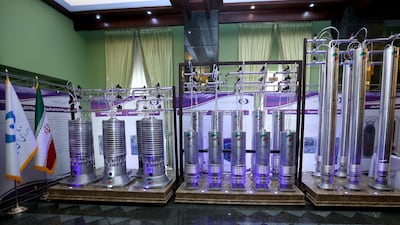
New generation Iranian centrifuges on display for Iran's National Nuclear Energy Day in Tehran, in April 2021. Iranian Presidency Office / Wana -

President Ebrahim Raisi, second right, is accompanied by Atomic Energy Organisation of Iran chief Mohammad Eslami, at Nuclear Technology Day in Tehran in April 2022. Iranian presidency / AFP -
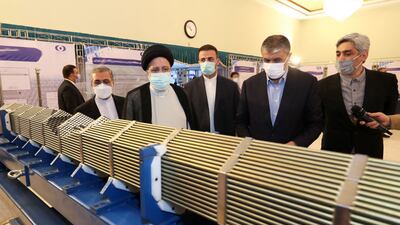
Mr Raisi and Mr Eslami at the April 2022 event. Iranian presidency / AFP -
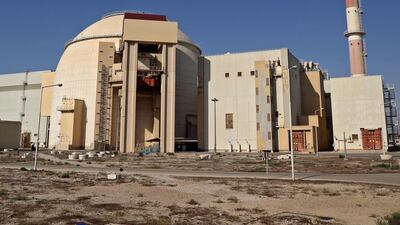
The Bushehr Nuclear Power Plant during a visit by Mr Raisi in October 2021. Iranian Presidency / AFP -
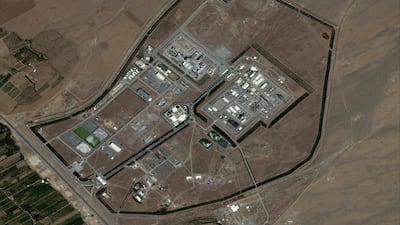
Iran's Arak Heavy Water Reactor complex, south of the capital Tehran in January 2020. Maxar Technologies / AFP -
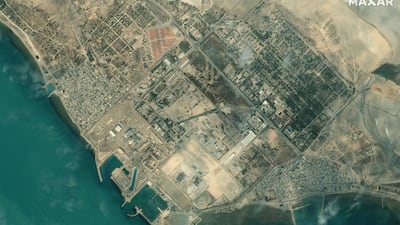
A satellite image of Iran's Bushehr Nuclear Power Plant in January 2020. Maxar Technologies / AFP -
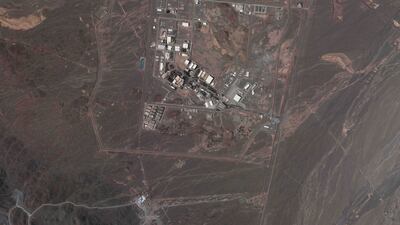
A satellite image of Iran's underground Natanz nuclear site in May 2022. Planet Labs PBC / AP -
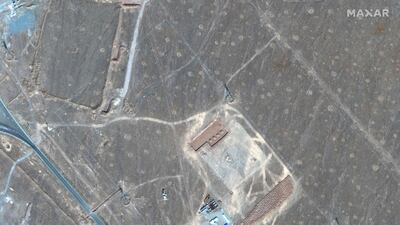
A satellite image in January 2020 of Iran's Fordow Fuel Enrichment Plant, north-east of the city of Qom. Maxar Technologies / AFP -
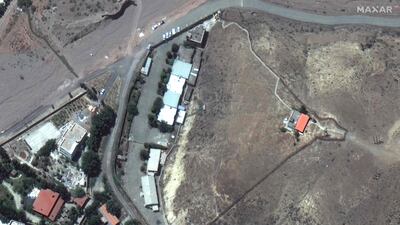
The Sanjarian nuclear centre, east of Tehran, in May 2021. Maxar Technologies / AFP


As to whether the protests in Iran over the killing of Mahsa Amini will make it harder for politicians to decide to rejoin the JCPOA, Ms Leaf said: “They were having trouble making the decision before it appeared.”
On the protests, she said: “The brutal killing of this young woman was so shocking and it’s just unleashed this titanic wave of anger in Iran that is really quite striking.
“I've talked to Iranian women over the past few years and they're really sick of being told what to do, about their appearance [and] how to live their lives. And clearly, a lot of lot of Iranian men feel the same way.”
However, she did not see the two issues as related. “I don't know if it affects how they think about the deal. The deal has its own logic.”
As the deal flounders, there are increased questions over whether Israel may move to strike Iran’s nuclear facilities, as happened in Iraq in 1981.
Ms Leaf would not comment directly as to what her country’s position would be if that happened, however she said: “We share a common objective, that you've heard the president elaborate many times very clearly, that it was unthinkable and really untenable to have Iran acquire a nuclear weapon.”
Ms Leaf said that American and Israeli leaders have discussed the nuclear file many times and “we've had our differences over the course of the year-and-a-half”.
“They have a clear understanding where we are, and the president's been clear that as long as we see non-proliferation benefits accruing from that agreement, we are ready to go back in,” she said.
She said: “Israel has a set of concerns and indeed, these are concerns shared more broadly, which go to not just the nuclear programme, but a host of regional activities that Iran is very much involved in.”
Among those concerns are “fostering proxy militias and non-state actors that are very destructive, but then equipping them with advanced weaponry and threatening Israel actively from different directions”.
Barbara Leaf — in pictures
-
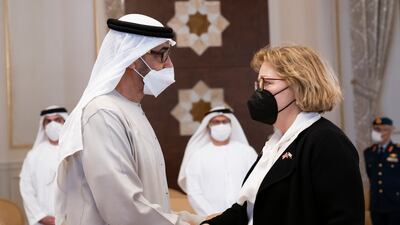
Barbara Leaf, who previously served as US ambassador to the UAE, expresses her condolences to President Sheikh Mohamed after the death of Sheikh Khalifa. Photo: MOPA -
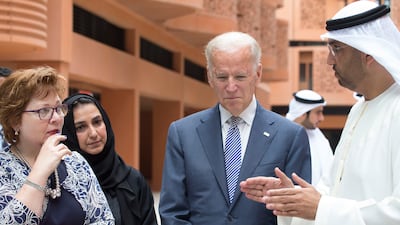
Ms Leaf with then-vice president Joe Biden on a 2016 tour of Masdar City with Dr Sultan Al Jaber, now Minister of Industry and Advanced Technology. Photo: Crown Prince Court - Abu Dhabi -

Ms Leaf previously served as the US ambassador to the UAE. Photo: Crown Prince Court - Abu Dhabi -
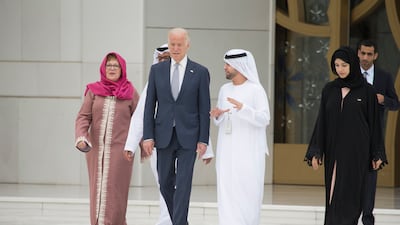
Ms Leaf with Mr Biden at the Sheikh Zayed Grand Mosque. Photo: Crown Prince Court - Abu Dhabi -
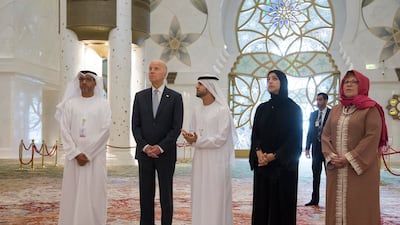
Ms Leaf visits Sheikh Zayed Grand Mosque in March 2016 alongside Mr Biden. Photo: Crown Prince Court - Abu Dhabi -
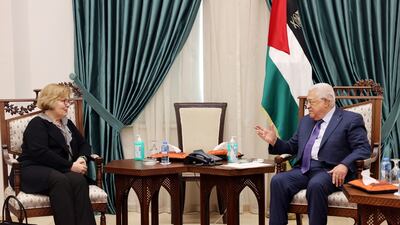
Ms Leaf meets Palestinian President Mahmoud Abbas in Ramallah, in the Israeli-occupied West Bank on June 11, 2022. Reuters -
Ms Leaf currently serves as the US assistant secretary of state for Near Eastern affairs. Antonie Robertson / The National -
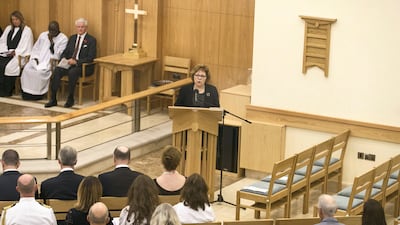
She was the US ambassador to the UAE from 2014 to 2018. Reem Mohammed / The National -
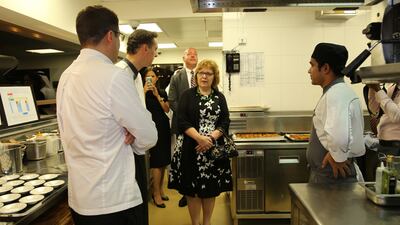
Ms Leaf visits the kitchen at Ray's Grill, Abu Dhabi. Photo: US Embassy -
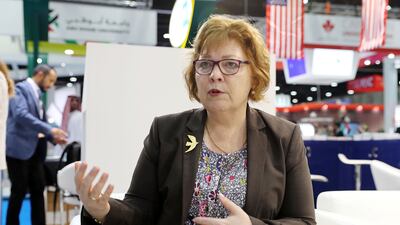
Ms Leaf at the 2017 Najah Education Fair at Adnec in Abu Dhabi. Pawan Singh / The National -
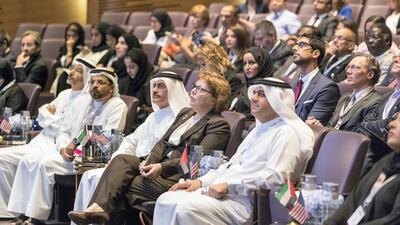
Ms Leaf attends the USA Healthcare Symposium and Showcase in October 2017 at the Mohammed bin Rashid Academic Medical Centre in Dubai. Antonie Robertson / The National -
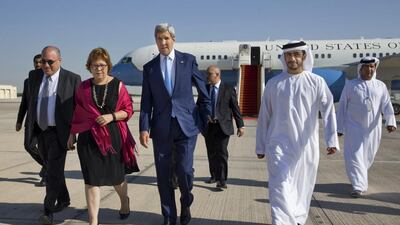
Ms Leaf welcomes John Kerry, the US secretary of state at the time, to Abu Dhabi during her time as ambassador to the UAE. AP -
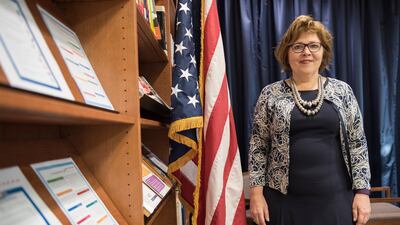
Ms Leaf was confirmed as the head the US State Department’s Middle East bureau earlier this year. Vidhyaa Chandramohan / The National


While Ms Leaf said she could not speak to what the Israelis would do, she reiterated the American position.
“We have been very clear that we will look out for Israeli security even as we move forward on this deal,” she said.
Another key component of American regional policy is maintaining strong ties with the Gulf states.
Ms Leaf said relations with the states were “deeply collaborative”.
“We're working across a range of issues, and not just the traditional security domain, but a very affirmative agenda that you see reflected in things like I2U2 (Israel, India, UAE and US grouping) and the Negev forum, as well as bilaterally.”
Ms Leaf expressed the US administration's understanding that “the anxiety that these countries feel on the rim of Iran is acute [and] has grown over time”.
She said Iranian actions included “not just establishing resourcing and training proxies, like you see in Iraq, but proffering this advanced weaponry so that a group like the Houthis can, at will, target Saudi Arabia or the UAE … with UAVs and missiles”.
She said there was not one single answer to this dilemma, but stressed that the US was “committed to their security, being committed partners to them”.
Ms Leaf said: “We have a lot of activities that don't make it into the public eye on the security front. And those will go forward regardless of the tempo of things on JCPOA.”
Among the discussions that happen behind the scenes is collaboration on a number of security issues, including the deal brokered by the Saudi Crown Prince Mohammed bin Salman to secure the release of foreign fighters detained by Russia in Ukraine, including American citizens.
Ms Leaf said: “We're very grateful for the efforts of the Crown Prince and his government to do this.”
“When my fellow citizens were picked up and detained, it was very unclear how we would get them back.”
Ukraine war prisoners released after Saudi mediation — in pictures
-
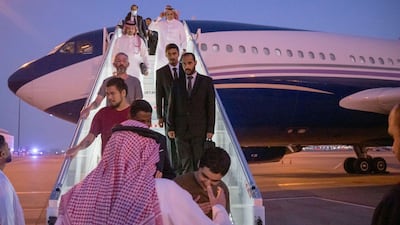
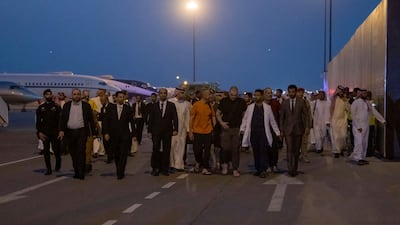
Ten prisoners of war released by Russia arrive at King Khalid International Airport, in Riyadh, Saudi Arabia. Reuters -
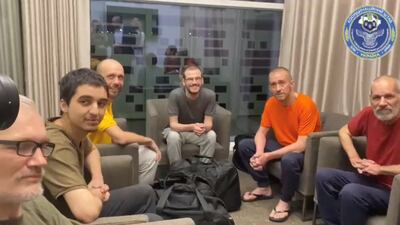
The five British citizens, one Moroccan, one Swede, one Croat and two Americans on Saudi soil. Reuters -
Foreign prisoners of war freed by Russia in Riyadh. Reuters -
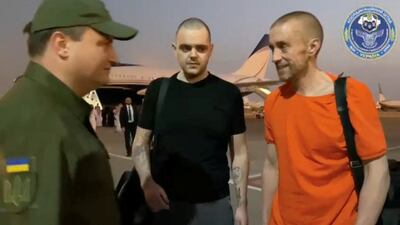
Foreign prisoners of war freed by Russia in Riyadh. Reuters -
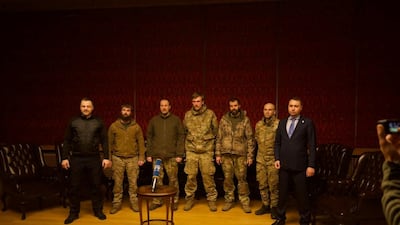
Commanders of forces who defended Ukraine's Azovstal Iron and Steel Works in Mariupol speak with Ukrainian President Volodymyr Zelenskyy by video link. Reuters -
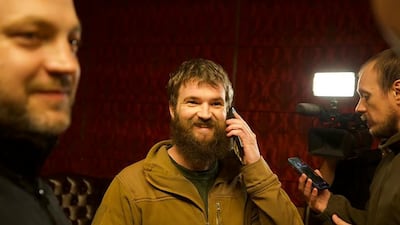
The Ukrainian prisoners of war were freed after Turkey mediated another swap involving 200 'hostages'. AP -
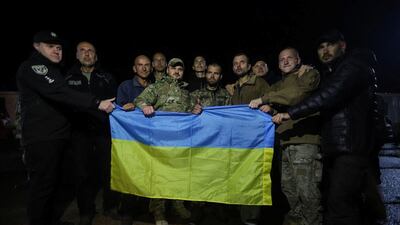
Some of the Ukrainian prisoners of war pose for a picture with their country's flag. Reuters -
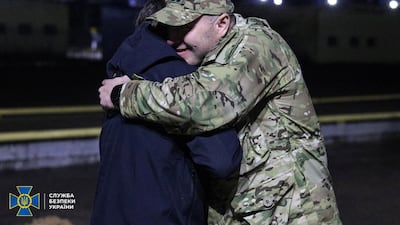
The head of Ukraine's State Security Service Vasyl Maliuk embraces a freed Ukrainian. Reuters -
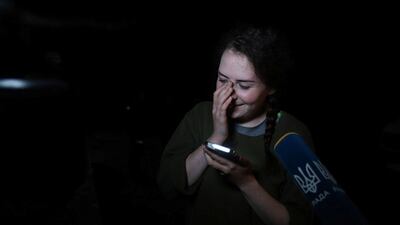
Kateryna Polishchuk was one of the freed Azovstal defenders. Reuters -
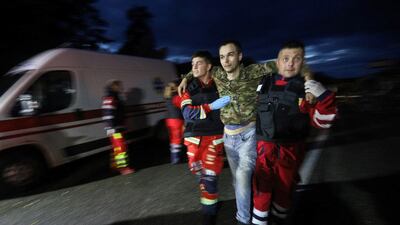
Paramedics help one of the freed Ukrainians. Reuters -
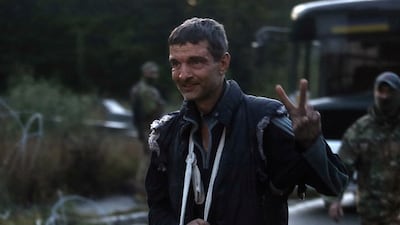
Freed Ukrainian soldier Mukhailo Dianov gives a victory sign. Reuters -
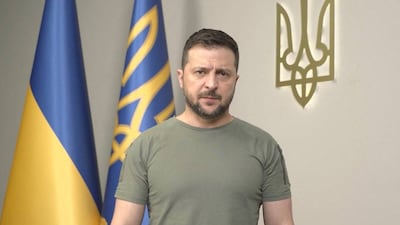
President Volodymyr Zelenskyy tells Ukrainians about the prisoner of war swap. Reuters -
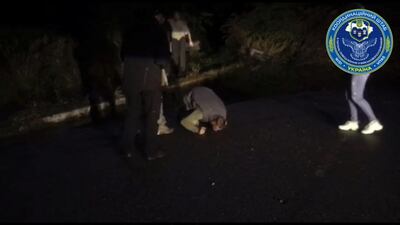
A Ukrainian prisoner of war kisses the ground after he was released in a swap with Russia. Reuters


Building on strong relations with the Gulf and seeking to resume the nuclear deal with Iran are part of a wider US approach under the Biden administration for more stability and reduced tension in the Middle East.
Ms Leaf said: “When we came into office last year, we looked at this really fragile state of the region, a region that has just been buffeted continuously by conflicts, and then more recently, by black swan events”, like the Covid-19 pandemic and the effects of climate change.
Ms Leaf, who initially worked at the White House and then moved to her current position in the State Department, said that when the administration first came into office in 2021, the focus was “working to de-escalate”.
She added that the region “felt very congested with pressure”.
She said: “A lot of that was Iran … the origin of the pressure. But there were also all the rifts in the region within the Gulf family, between Gulf states and Turkey, Turkey and Egypt.”
The priority became de-escalation, which included specific measures like “signalling very clearly to the Iraqis that we would not use Iraq as a battleground with Iran, that our policy towards Iraq was oriented on Iraq, and what we hoped would be Iraq's rising role in the region”.
Another measure was “messaging through various parties to the Iranians, that we're not looking for fights and above all, not in Iraq”.
It also included “re-engaging and re-entering the JCPOA on mutually acceptable terms”.
After coming into office in January 2021, the administration began looking for ways to resolve specific conflicts.
Ms Leaf described Yemen as “a top priority … but close behind it was Libya”.
Another key element of the policy was to “rebuild relations with the Palestinians, with the Palestinian Authority and the Palestinian people, and then working to generate growth or normalisation between the Israelis and Palestinians”.

She said: “Conditions aren't there for a resumption of a political process. But we have begun that work to create the conditions that would allow an eventual political process.”
Asked when a political process could start, Ms Leaf said there were several steps taken to prepare for that process, including a “great deal of work last year to regenerate relations with the Palestinians”.
Meanwhile, Ms Leaf saw that the formation of the last Israeli government in June offered a starting point for fostering relations with the Palestinians “beyond the security track where they had been more or less resilient, but there were virtually no other types of touch points” on an official level.
Ms Leaf said the Bennett government was a commitment to trying a different approach towards Gaza in particular, and “really leaning into economic measures that would have a regenerative quality for the Palestinian economy in both territories”.
The idea was that these measure would provide “a calming and easing of conditions” after the last Gaza war. Ms Leaf added it was not a replacement of a political process.
The Palestinian internal dynamic continues to be concerning and the Palestinian Authority is under a lot of pressure, according to Ms Leaf.
“Some of that has to do with their own governance, some of that has to do with a wide public perspective that there's deep corruption, failure to provide services and so forth,” she said.
“And then there are Israeli actions that have contributed as well. Those are well known unilateral measures, demolitions, evictions, settlement activity, settler violence.”
Officials from the Palestinian Authority have threatened that it could collapse, but for Ms Leaf the real threat is an “unravelling of the security conditions in the West Bank”.
“That is really what has the focus of both Israeli and Palestinian officials and our focus as well,” she said.
Ms Leaf said it’s “absolutely possible” for the US to conclude a deal between Israel and Lebanon before October 31, when elections are due in both countries.
“I think our mediator Amos Hochstein has brought things very close. It requires a unified position on the part of the Lebanese government,” she said.
The US official lamented all the time that has been wasted by Lebanon during the past decade of intermittent negotiations, during which Beirut rejected several offers.
“They’ve got to come forward with a good final unified position, but I think it's absolutely possible,” Ms Leaf said.
Lebanese Foreign Minister Abdullah Bou Habib told The National on Friday that Lebanon wants an agreement before October 31. That date refers to the last day of President Michel Aoun's term in office.
The maritime dispute involves an 860-square-kilometre section of what is thought to be a gas and oil rich area in the Eastern Mediterranean.

A resolution would delineate the maritime border between Lebanon and its southern neighbour for the first time since Israel was established in 1948.
When it comes to the wider region’s relations with Israel, Ms Leaf said the Abraham Accords had “provided a breakthrough, but it was also a reflection of dynamics that were under way in the region”.
She added that the US works to “capitalise on that work with the partner countries”, through measures like the Negev Forum earlier this summer.
She said “we hope, eventually, to bring the Palestinians into that” and that “our ambition is to eventually associate other countries, even if they have not yet gone in the direction of formal diplomatic relations”, without elaborating on which countries could be included.
However, Ms Leaf said that with the 20th anniversary of the Arab Peace Initiative, Saudi Arabia had proposed full normalisation of ties with Israel in return for a Palestinian state on the 1967 borders, and there were a number of countries still very much committed to that.
One breakthrough that the region witnessed this year was the truce in Yemen. And while it is tenuous, there has been a reduction in violence.
However, there are concerns that it will not be renewed next month. Ms Leaf made it clear “the Houthis have not lived up to their commitments”.
“There's great will on the side of the Yemeni government [and] obviously, regional partners in the Arabian Peninsula, to see that truce extended,” she said.
“There's great will in the public to see that truce really widened.”
She added that the Houthis’ failure to live up to their commitments “is a major bone of contention right now … they've continued to stall on discussions for reopening the roads around Taez and that's really critical”.
Ms Leaf said “there's no question that the wider good will be an extension and expansion of the truce”, stating that they will continue to work on Yemen.
Ms Leaf spent several days in Iraq earlier this month. She said: “My takeaway was that Iraqi politicians still view themselves in Iraq as not ready for a real government-and-opposition kind of arrangement. So everybody's got to be in the big tent, everybody.”
She said: “That's a very unwieldy kind of government. It's not responsive. It often just means everybody wants their seat at the table for their share of the pie without really being serious about the services and commitments to the public.”
Ms Leaf said the Iraqi public “is unsettled and really unhappy with the way things have gone”, adding that the risk of mass protests like those in 2019 is still prevalent.
Her message to Iraqi politicians is that if the country “went into another spasm of violence, who knew where it would go”.
As a way out of the political impasse and since the political class all wants to be in the government, “then you better get on with sitting around a table, and make sure everybody's around the table and do the compromises that will get to government formation”.
Ms Leaf said: “I didn't go out there to advocate for any particular formation, any particular people or parties, but to lay out the precipice that they were taking the country to … and that the requirement to find a way forward was through dialogue, but through inclusive dialogue, otherwise it won't be stable.”
On a more hopeful note, Ms Leaf said the fact that Cop27 was happening in Egypt, followed by Cop28 in the UAE, was “hugely important”.
“It is significant that two countries in a row in the Middle East are hosting Cop. It's a tribute to the seriousness of the commitment of the region itself to lead the way,” she said.

