


The UAE is cutting its water consumption, building more efficient desalination plants and ending reliance on groundwater as part of its plans to conserve resources, a minister said.
Suhail Al Mazrouei, Minister of Energy and Infrastructure, said the UAE needed to recycle every drop of water because of its arid climate and limited rainfall.
Speaking to mark World Water Day at Expo 2020 Dubai on Tuesday, Mr Al Mazrouei said the UAE was ready to share its expertise on conservation with nations facing water scarcity.
Minister of Energy and Infrastructure
“No matter who you are and where you are – if you are an individual or company or government, you need to think of sustainability,” Mr Al Mazrouei said.
“Sustainability will make Planet Earth survive longer and will allow us all to live an easier life. We are privileged with the resources we have today. But we need to ensure that the next generation and the generations to come will also have something left.”
Several reports over the years have highlighted the pressure on the UAE's water reserves.
In 2019, the UAE was named as one of more than a dozen countries facing extreme pressure on its resources with groundwater reserves depleted though overuse.
Authorities in 2017 launched the Water Security Strategy 2036 to address the issue.
It set out how the UAE would reduce total demand on water resources by 21 per cent; increase the reuse of treated water to 95 per cent; reduce average consumption by each person by half, and develop a storage capacity for more than 45 days in extreme emergencies.

It has also run awareness campaigns for consumers and farmers among others to promote sustainable practices.
Mr Al Mazrouei said the country was well on track to achieving these goals.
“The strategy came out of necessity as we have limited rainfall in the UAE and we had to look at our resources to ensure access to clean, adequate and affordable water for years to come,” he said.
“For us living in this arid environment, we have to work harder,” he said.
The UAE relies on desalination – the process of converting seawater – for drinking water and regularly uses cloud seeding to encourage rainfall as it only receives about 100 millimetres a year.
Mr Al Mazrouei said the country was moving away from relying on groundwater and energy intensive methods of desalination – a process that removes salt from seawater.
The UAE also plans to build more reverse osmosis desalination plants. Reverse osmosis is a low energy way to purify water using membrane technology. Renewable energy systems are also being used in these plants, creating greater efficiencies.
Mr Al Mazrouei said the aim was to help and inspire other countries that face scarcity.
“We need to recycle every drop of water we have,” he said. “We need to change the way our children perceive consumption.
“They think water will be available forever, but water is a scarce resource.”
Separately, Mariam Al Mheiri, UAE Climate Change and Environment minister, said the country's "unsustainable water habits" were "placing great pressure on our finite water resources".
“Simple steps to cut down on water consumption can go a long way when taken collectively creating a kind of domino effect and slashing our community’s water use.”
"So we are really striving to manage the community’s water demand,” she said speaking at a separate event at the Expo on Tuesday.
The UAE meets 42 per cent of its drinking water needs through desalination, the minister said, and agriculture accounts for 60 per cent of the total fresh water consumption.
Safe drinking water, meanwhile, is recognised by the United Nations as a basic human right and the UAE is committed to ensuring access to vulnerable communities in developing nations.
The UAE Water Aid established by the Mohammed Bin Rashid Al Maktoum Global Initiatives foundation has funded more than 1,000 projects in 37 countries providing clean water to more than 13 million people.
World Water Day around the world – in pictures
-
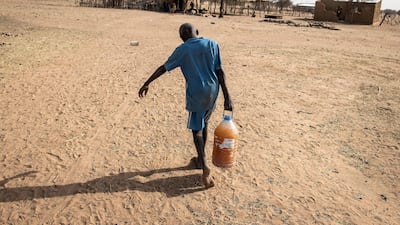
A boy carries a bottle of drinking water to his home in the village of Madina Torobe, in the Matam region of Senegal. Maintaining access to drinking water in the country's north-west is a constant concern. Through the months of November to August no rain will fall, and rivers and natural lakes dry up. Not all areas have drinking wells and flowing taps. Where they di exist, the water is sometimes dirty or used specifically for animals. Fulani pastoralists and families living in these remote villages sometimes resort to digging large holes in dried river beds in search of cleaner drinking water from themselves and their animals. AFP -
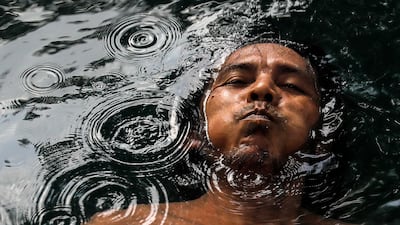
A man holds his breath while he swims in a hot spring near Kuala Lumpur, Malaysia. World Water Day, marked annually on March 22, raises awareness of the 2.2 billion people living without access to safe water. EPA -
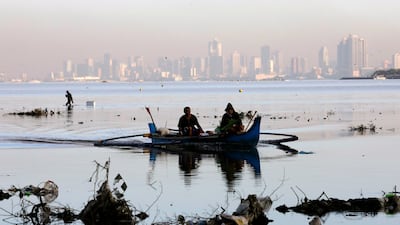
Fishermen steer a boat through debris off the shore of Manila, Philippines. The archipelago is surrounded by vast body of water, but finding potable sources is a challenge for many. EPA -
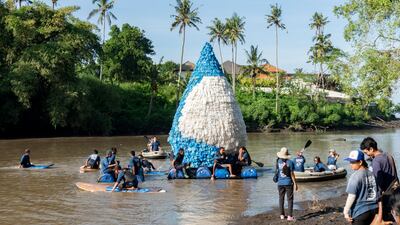
Environmental activists in Bali, Indonesia, float a sculpture made of waste plastic and depicting a droplet to mark World Water Day. The day is used to advocate the sustainable management of freshwater resources. EPA -
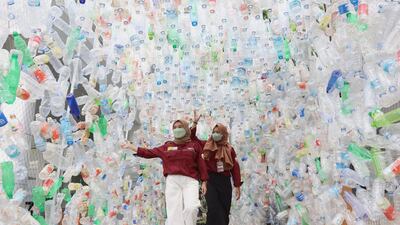
People walk through an art installation made of plastic water bottles as part of an awareness drive in Malang, East Java. AFP -
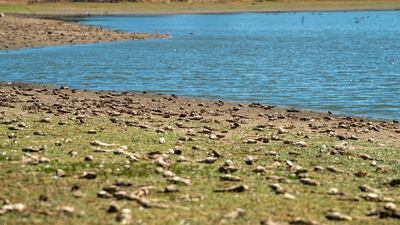
Dead carp fish lie on the dried lakebed of the Peñuelas Lake, a reservoir in Chile's Valparaiso Region. The reservoir, which supplies drinking water to Valparaiso and Viña del Mar, accumulates 0.2 per cent of its total water capacity. The central zone of Chile is facing one of the most extensive droughts documented. Despite its total capacity of 95 million cubic metres, the lake holds only 170 thousand cubic metres today. AFP -

Bikram Shah, 18, digs about six metres underground to build a well in Kathmandu, Nepal. On the backdrop of rapid urban population growth, industrialisation and uncertainties caused by climate change, the city becomes short of water in the winter and spring seasons. The theme of this year’s World Water Day is Groundwater – Making the Invisible Visible. EPA -
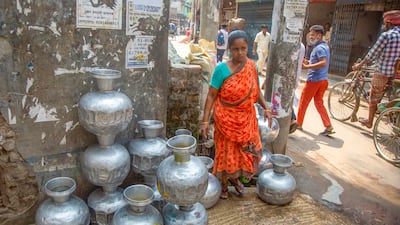
A woman collects drinking water from the city corporation water tap, on the occasion of World Water Day in Dhaka, Bangladesh. World Water Day is observed annually on 22 March to call attention and raise efforts for global access to clean water. This year's theme is Groundwater - Making the Invisible Visibible. EPA -
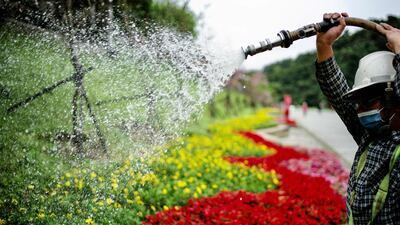
Flowers are watered in Bitan, a tourist hot spot in New Taipei City, Taiwan. AFP -
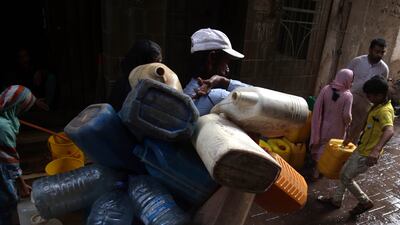
A man carries jerrycans to be filled with water in Karachi, Pakistan. EPA -
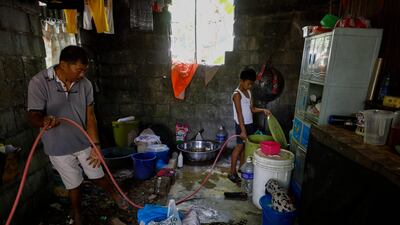
Eduardo Capillan and his son, Neo, control a hose that is funnelling water from a pump outside into their house in Sitio Bakal along the outskirts of Quezon City, Metro Manila, Philippines. With assistance from government and non-government agencies, an emergency water disinfection and filtration system is providing clean drinking water to the remote community. EPA -
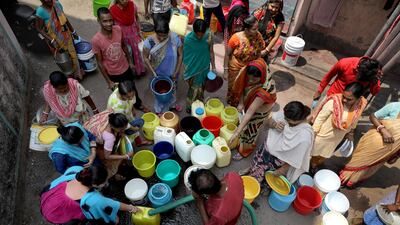
People in a slum in Kolkata, India, collect drinking water from a municipal container tank. EPA -
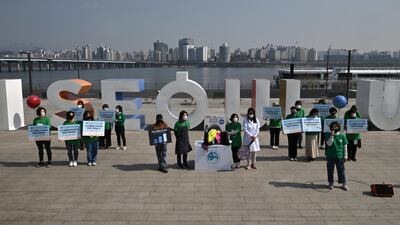
South Korean environmental activists hold placards reading ‘I will protect the sea from microplastics’ during a campaign to mark World Water Day at a park along the Han River in Seoul. AFP -
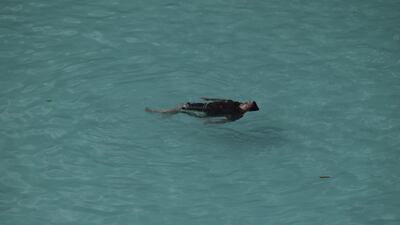
A man bathes in ‘Los Chorros’ pools formed by a natural spring of water, in Colón, El Salvador. AFP -
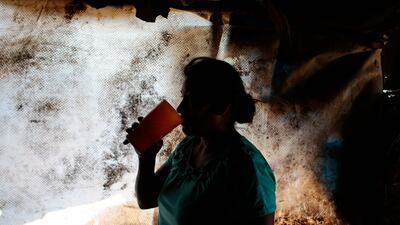
A woman drinks water distributed by a tanker to El Crucero, a town on the outskirts of Managua, Nicaragua. AFP



