Abu Dhabi professor tells of pride at receiving UAE citizenship under new scheme


Ramola Talwar Badam
  • English
  • Arabic

A university professor told of his pride in receiving UAE citizenship for his significant contribution to the country.

Hassan Arafat, director of the Centre for Membranes and Advanced Water Technology at Khalifa University, Abu Dhabi, was among the first residents to secure citizenship as part of a new process announced by the country this year.

Sheikh Mohammed bin Rashid, Vice President and Ruler of Dubai, outlined the decision in January to nominate leading figures, including engineers, doctors and scientists, for citizenship in recognition of their outstanding work.

A top chemical engineer, Prof Arafat, 47, from Amman, Jordan, received an Emirati passport in March, a few weeks after he received a phone call to say he was nominated based on his scientific achievements.

It is an honour that has really humbled me. Suddenly I'm feeling part of something much bigger than my career

"I actually get very emotional thinking about it and there is a feeling of joy," he told The National.

"It is an honour that has really humbled me.

“It’s like magic, like a switch you turn on. Suddenly I’m feeling part of something much bigger than my career."

His new status has had a positive effect on his work, too.

“It’s quite strange, my mindset even when I come to work has suddenly become different. I’m no longer thinking of what I want to achieve that day, I’m thinking about how what I do affects my university and the UAE,” Prof Arafat said.

“This is integrated in all my planning and work on a daily basis.”

Under the scheme, people will retain their original nationality, allowing for dual citizenship.

Five key roles in the citizenship drive

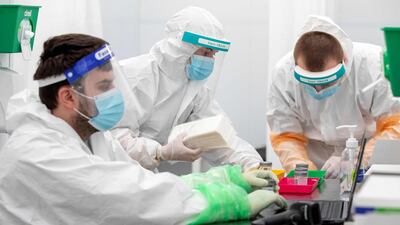
  • The role that medical researchers and scientists play has also been thrust into the spotlight during the pandemic, while the countries with highly-developed R&D industries have also fared particularly well. Paul Faith / Paul Faith
    The role that medical researchers and scientists play has also been thrust into the spotlight during the pandemic, while the countries with highly-developed R&D industries have also fared particularly well. Paul Faith / Paul Faith
  • Egyptian-American author Dina Elabd reads her latest children's book at the Dubai literature festival in 2019. Authors are also eligible for Emirati citizenship under the new rules. Leslie Pableo for The National
    Egyptian-American author Dina Elabd reads her latest children's book at the Dubai literature festival in 2019. Authors are also eligible for Emirati citizenship under the new rules. Leslie Pableo for The National
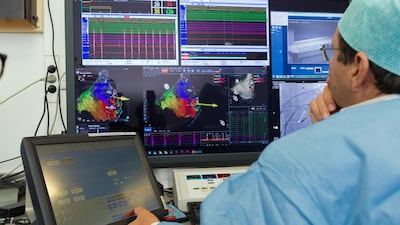
  • A doctor examines the results of a heart scan. The pandemic and the much-praised response from frontline workers has elevated an already esteemed medical profession. Getty
    A doctor examines the results of a heart scan. The pandemic and the much-praised response from frontline workers has elevated an already esteemed medical profession. Getty
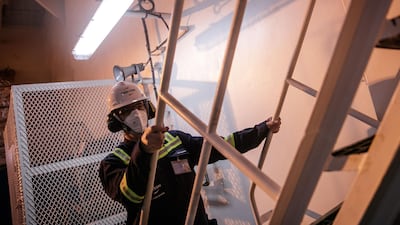
  • Engineering is already a highly regarded profession in the Middle East, where oil and gas, construction and technology form the backbone of economies. The latest news will enhance that further. AFP
    Engineering is already a highly regarded profession in the Middle East, where oil and gas, construction and technology form the backbone of economies. The latest news will enhance that further. AFP
  • In addition to skilled medical and science roles, the Emirates is also keen to attract the best talent in various fields across the arts. AFP
    In addition to skilled medical and science roles, the Emirates is also keen to attract the best talent in various fields across the arts. AFP

“It’s like suddenly having two families you belong to,” Prof Arafat said.

“Just like when you get married you are part of two families and you are very happy to have that.

"The UAE recognises that people have very strong sentimental attachment to their place of birth and place of original citizenship. The fact that they didn't want people to go through the pain of giving that up is amazing."

Prof Arafat has been working in the UAE since 2010 and lives with his wife and four children who are thrilled they can plan a long-term future in the country they call home.

“We are going through a phase where two children are finishing high school this year and they were uncertain about where they would go to university,” Prof Arafat said.

“We were considering all kinds of options and now it is quite obvious. This is your country, you go to school here.”

Prof Arafat is grateful for the seamless naturalisation procedure in which residents are nominated and do not need to apply.

“When you apply for citizenship to other countries you have to go through a lot of processes, you have a lot of documents to submit. Here the government has done the thinking and due diligence.

“That’s the exciting part. The time they invested in taking the initiative is remarkable.

“They didn’t need me to prepare a dossier and say this is what I have achieved.

“I don’t know of many governments that take the initiative to select who [they] want.”

Looking ahead, the professor has big plans for increased industry tie-ups for his research team, which works to create affordable and environmentally friendly water desalination solutions.

The centre he leads studies techniques to tackle water scarcity challenges with home-grown ideas that are energy efficient.

Prof Arafat is working to design nanomaterials that reduce the amount of energy and chemicals needed in the process to make seawater drinkable.

Desalination plants often use chemicals that pollute the environment and the research could have a global impact.

Our two children are finishing high school this year and were uncertain of where to go to university. Now it is quite obvious - this is your country, you go to school here

“These chemicals end up coming out in wastewater, which most of the time finds its way back into the oceans. So we don't want that, we want to reduce, cut the use of chemicals as much as possible,” he said.

Prof Arafat's work has won several awards, including the Khalifa Award for Education in 2017. The same year he was conferred with the Mohammed bin Rashid Medal for Scientific Excellence.

His international awards include the US Department of Energy Secretary Honour Award and the Mondialogo Engineering Award by Daimler AG and Unesco.

Prof Arafat wrote a book on achieving water and food security titled Desalination Sustainability: A Technical, Socioeconomic and Environmental Approach.

He was among the first group of 20 academics who shared a stage with Sheikh Mohammed when they were awarded golden residency visas in 2019.


Prof Hassan Arafat teaches chemical engineering at Khalifa University in Abu Dhabi since 2010. Courtesy: Prof Hassan Arafat
Key facilities
  • Olympic-size swimming pool with a split bulkhead for multi-use configurations, including water polo and 50m/25m training lanes
  • Premier League-standard football pitch
  • 400m Olympic running track
  • NBA-spec basketball court with auditorium
  • 600-seat auditorium
  • Spaces for historical and cultural exploration
  • An elevated football field that doubles as a helipad
  • Specialist robotics and science laboratories
  • AR and VR-enabled learning centres
  • Disruption Lab and Research Centre for developing entrepreneurial skills
Living in...

This article is part of a guide on where to live in the UAE. Our reporters will profile some of the country’s most desirable districts, provide an estimate of rental prices and introduce you to some of the residents who call each area home.

How to apply for a drone permit
  • Individuals must register on UAE Drone app or website using their UAE Pass
  • Add all their personal details, including name, nationality, passport number, Emiratis ID, email and phone number
  • Upload the training certificate from a centre accredited by the GCAA
  • Submit their request
What are the regulations?
  • Fly it within visual line of sight
  • Never over populated areas
  • Ensure maximum flying height of 400 feet (122 metres) above ground level is not crossed
  • Users must avoid flying over restricted areas listed on the UAE Drone app
  • Only fly the drone during the day, and never at night
  • Should have a live feed of the drone flight
  • Drones must weigh 5 kg or less
Ten tax points to be aware of in 2026

1. Domestic VAT refund amendments: request your refund within five years

If a business does not apply for the refund on time, they lose their credit.

2. E-invoicing in the UAE

Businesses should continue preparing for the implementation of e-invoicing in the UAE, with 2026 a preparation and transition period ahead of phased mandatory adoption. 

3. More tax audits

Tax authorities are increasingly using data already available across multiple filings to identify audit risks. 

4. More beneficial VAT and excise tax penalty regime

Tax disputes are expected to become more frequent and more structured, with clearer administrative objection and appeal processes. The UAE has adopted a new penalty regime for VAT and excise disputes, which now mirrors the penalty regime for corporate tax.

5. Greater emphasis on statutory audit

There is a greater need for the accuracy of financial statements. The International Financial Reporting Standards standards need to be strictly adhered to and, as a result, the quality of the audits will need to increase.

6. Further transfer pricing enforcement

Transfer pricing enforcement, which refers to the practice of establishing prices for internal transactions between related entities, is expected to broaden in scope. The UAE will shortly open the possibility to negotiate advance pricing agreements, or essentially rulings for transfer pricing purposes. 

7. Limited time periods for audits

Recent amendments also introduce a default five-year limitation period for tax audits and assessments, subject to specific statutory exceptions. While the standard audit and assessment period is five years, this may be extended to up to 15 years in cases involving fraud or tax evasion. 

8. Pillar 2 implementation 

Many multinational groups will begin to feel the practical effect of the Domestic Minimum Top-Up Tax (DMTT), the UAE's implementation of the OECD’s global minimum tax under Pillar 2. While the rules apply for financial years starting on or after January 1, 2025, it is 2026 that marks the transition to an operational phase.

9. Reduced compliance obligations for imported goods and services

Businesses that apply the reverse-charge mechanism for VAT purposes in the UAE may benefit from reduced compliance obligations. 

10. Substance and CbC reporting focus

Tax authorities are expected to continue strengthening the enforcement of economic substance and Country-by-Country (CbC) reporting frameworks. In the UAE, these regimes are increasingly being used as risk-assessment tools, providing tax authorities with a comprehensive view of multinational groups’ global footprints and enabling them to assess whether profits are aligned with real economic activity. 

Contributed by Thomas Vanhee and Hend Rashwan, Aurifer

All%20The%20Light%20We%20Cannot%20See%20
%3Cp%3E%3Cstrong%3ECreator%3A%20%3C%2Fstrong%3ESteven%20Knight%3C%2Fp%3E%0A%3Cp%3E%3Cstrong%3EStars%3A%C2%A0%3C%2Fstrong%3EMark%20Ruffalo%2C%20Hugh%20Laurie%2C%20Aria%20Mia%20Loberti%3C%2Fp%3E%0A%3Cp%3E%3Cstrong%3ERating%3A%20%3C%2Fstrong%3E1%2F5%C2%A0%3C%2Fp%3E%0A