
46 years. That’s how long the world had to wait between the first UN water conference, in the Argentine city of Mar del Plata in 1977, and the second, in New York in 2023. The gap between the second and third conferences will be considerably narrower, at three years, with Abu Dhabi hosting the convening early next month. The subsequent edition is slated to be held in Dushanbe, Tajikistan – just two years later.
The apparent lack of a fixed schedule highlights how little priority the international community has traditionally given to the sustainable management of water, even though it is one of our planet’s most precious and finite resources.
That is about to change after the UN General Assembly adopted a resolution by consensus on Monday to hold the conference every three years, from 2031. Sponsored by the UAE and Senegal, joint hosts of the Abu Dhabi meeting, the resolution might seem procedural, but it could be one of the most consequential decisions on water in a generation. It was also not easy to come by – with months of negotiations highlighting how contentious the politics around water can be.
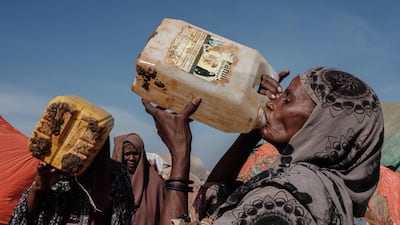
The next water conference couldn’t come sooner. About 2.1 billion people worldwide, or a quarter of the global population, still lack access to safely managed drinking water. A UN report released in January states that we have entered the era of “global water bankruptcy”. Mounting pressures, including climate change, population growth, pollution and competing demands, threaten water security across continents. What’s more, water scarcity – usually regarded as an environmental concern – has become a developmental, economic, humanitarian and geopolitical challenge.
The benefits of meeting on a regular basis are many.
A three-year cycle would help sustain much-needed political momentum. Too often, water issues gain international attention during a crisis before they recede in the face of other, often equally urgent, priorities. A predictable conference schedule would keep water firmly on the global agenda but also reinforces the need for long-term national strategies.
It would strengthen accountability. Governments have made commitments under the UN Sustainable Development Goal 6, which seeks universal access to safe and affordable water, as well as equitable sanitation and hygiene, by 2030. But commitments have little value if they are not measured against outcomes. Regular meetings would provide opportunities for stakeholders to assess progress, identify drawbacks, share lessons and renew pledges.
The resolution also carries financial significance. Water infrastructure requires substantial capital and long-term investments, and recurring summits would provide governments, development banks and private investors with reliable timelines to plan projects as well as raise and mobilise capital.
The timing is equally important. With the 2030 deadline for the Sustainable Development Goals approaching, the international community must plan for what comes next. Following the Abu Dhabi and Dushanbe conferences, a three-year framework could ensure that global water governance continues uninterrupted beyond the current development agenda.
It’s high time that water be recognised as a cross-sector priority – given its centrality in a range of issues, from food security and public health to economic resilience and climate adaptation. As former Bhutanese prime minister Jigmi Thinley wrote in these pages, “whether through prolonged drought, devastating floods or increasingly unpredictable rainfall, its effects reach directly into people’s lives, threatening food production, livelihoods, public health and economic security”.
All of this necessitates creating a framework for international co-operation on one of humanity’s most fundamental needs. But as the outcome of Cop31 demonstrated this week, unless participating member states are able to reach a consensus, simply holding regular summits won’t solve the world’s most urgent problems – and that includes an issue as basic and essential as a human right to water.
Abu Dhabi is once again offering a platform for finding common ground on a pressing global challenge and committing to do the hard work it takes to come to an agreeement.