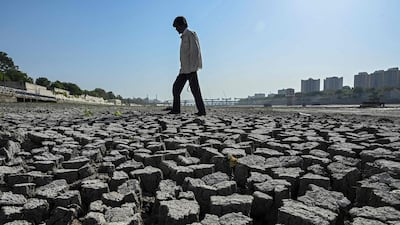
The world is approaching the 2030 deadline for the UN’s Sustainable Development Goals on water security still off-track. About 5.5 billion globally people still lack safely managed drinking water or sanitation. Water-related risks are intensifying across regions, driven by climate variability, rising demand and environmental degradation. Droughts, floods and water stress are placing growing pressure on food security, public health systems and economic resilience. The scale of the challenge is well understood. Progress in addressing it has yet to match its urgency.
This gap between recognition and delivery defines global water governance today. It also frames the significance of the UN Water Conference that the UAE and Senegal will co-host in Abu Dhabi later this year. Its importance will not be measured by the number of commitments announced but by whether it strengthens the mechanisms that convert political agreement into sustained implementation.
Water is integral to nearly every major global policy agenda. It underpins agriculture, energy systems, urban development and ecosystem stability. At the same time, it influences health outcomes and economic resilience. Yet governance of water remains fragmented across institutions and policy tracks. Climate, food security, biodiversity, infrastructure and disaster risk reduction each address water indirectly, often without co-ordination across mandates or financing systems. The result is a structural imbalance. Water is universally essential, but institutionally dispersed.
This fragmentation reflects a broader structural gap in global governance. Water benefits from extensive international engagement, but it lacks an integrated governance architecture capable of aligning policy, finance and implementation across sectors. Investment flows remain uneven, data systems are inconsistent and accountability for progress on Sustainable Development Goals remains weak across many regions. The result is a system that generates commitments faster than it generates delivery.
-

A boy untangles a net as he stands fishing in an almost dried-up stream in Mishkhab, in Najaf province, Iraq, where years of drought have depleted the fauna and flora. All photos: AFP -

Ducks gather and a water buffalo cools down in a stream in Mishkhab, Iraq -

Waterways in Mishkhab are more thoroughfares than sources of vital supplies as poor winter rains fail to replenish groundwater -

Children continued to play in the streams and rivers of Mishkhab despite nature's inability to provide them with adequate water -

As children who live by the rivers and streams of Mishkhab grow, so their natural heritage is depleted -

An almost dried-up stream flows between fields in Mishkhab, in Najaf province -

Water buffalo cool down in a stream in Mishkhab


The 2023 UN Water Conference, the first in 46 years, was a renewed moment of political attention. It produced more than 700 voluntary commitments under the Water Action Agenda and restored water to the centre of multilateral discussion. Since then, institutional development has begun to evolve. The UN introduced a System-wide Strategy for Water and Sanitation to improve co-ordination across agencies and appointed a Special Envoy on Water to provide sustained political visibility. These steps remain early elements of a governance system that is still under construction.
This year’s conference enters this context with a design intended to move beyond episodic attention. The preparatory process led by the UAE and Senegal has brought together governments, international organisations, development banks, civil society, academia and the private sector.
Last July, member states adopted by consensus six Interactive Dialogue themes covering Water for People, Water for Prosperity, Water for Planet, Water for Co-operation, Water in Multilateral Processes and Investments for Water. These themes reflect an effort to structure discussions around outcomes rather than policy silos, shaping a framework intended to guide deliberations in Abu Dhabi.
The challenge now is continuity. Without mechanisms that extend beyond conference cycles, commitments risk losing momentum once diplomatic focus shifts elsewhere with accountability weakened in practice over time.
This is where the question of implementation becomes central. Implementation does not refer only to project delivery. It includes financing systems capable of scaling investment, governance structures that connect water policy across sectors and monitoring frameworks that track progress consistently across regions. It also requires stronger alignment between national planning and international support mechanisms, particularly in countries facing acute water stress.
Financing remains one of the most significant constraints. Meeting global water and sanitation needs will require a substantial increase in annual investment, particularly in infrastructure, maintenance and service delivery systems. Current flows remain insufficient and unevenly distributed. Bridging this gap will require stronger pipelines of investable projects, deeper engagement from development finance institutions and structured participation from private capital under clear risk-sharing arrangements.
Water governance is also increasingly inseparable from climate policy. Adaptation strategies depend heavily on water systems, from flood protection and drought resilience to agricultural planning and urban infrastructure. Yet institutional co-ordination between water and climate regimes remains limited. Aligning these agendas more effectively would improve the coherence of adaptation planning and strengthen the delivery of both climate and water objectives.
The UAE brings a practical perspective shaped by experience in one of the world’s most water-scarce regions. Over several decades, it has developed an integrated approach combining desalination, wastewater reuse, demand management and infrastructure resilience. Its Water Security Strategy 2036 links water policy to national development planning and risk preparedness. The relevance of this experience is not in its replicability, but in what it demonstrates. Water insecurity can be addressed through sustained investment, institutional co-ordination and innovation aligned with long-term planning.
The broader implication is that water governance succeeds when it is treated as a structural policy priority rather than a secondary environmental concern. This applies equally at the international level. This year’s UN Water Conference therefore represents a critical opportunity and a test of institutional intent. Its success should be measured against whether it strengthens institutional co-ordination across fragmented systems, improves the quality and scale of financing for water-related investments, embeds water more effectively within climate and development planning and establishes more durable mechanisms for tracking progress on Sustainable Development Goal 6 beyond the conference cycle.
If it achieves these outcomes, the conference will mark a shift in global water governance. It will move the system closer to sustained implementation. That shift, more than any declaration, will determine whether the world can close the widening gap between water ambition and water reality.
Moustafa Bayoumi is a climate research fellow at the Anwar Gargash Diplomatic Academy and the Centre for Climate Diplomacy
Ahmed Al Ghardaqa is a UAE diplomat and climate negotiator, and heads climate diplomacy and sustainability affairs at the UAE Ministry of Foreign Affairs