
The decision to hold the UN Water Conference every three years has been welcomed by experts as a sign that the international community is finally recognising the scale of the global water crisis.
Next month’s conference in Abu Dhabi will be only the third such event in half a century, despite growing concerns over water scarcity and warnings from the UN this year that the world is entering an era of “water bankruptcy”.
The UN General Assembly on Monday adopted a resolution to make the conference a regular fixture, a move described as “a historic step forward” by Abdulla Balalaa, the UAE’s Assistant Minister of Foreign Affairs for Energy and Sustainability.

Experts said the decision reflects the growing urgency of addressing the crisis but warned that the success of future conferences would depend on whether international commitments were put into action.
“Having a commitment to have it every three years shows there is a growing international recognition of the importance of water,” said Fouad Saba, a principal at consultancy Arthur D Little in Dubai who advises on water and sustainability.
“However, what’s really important to get out of this, other than sharing experiences and learning between countries, is trying to do our best to translate commitments that come out into actual policies, action plans that can benefit the water sectors.”
Water bankruptcy
Mr Saba said it was particularly important to bring together players from different nations when discussing water, given that many bodies of water are not confined by national boundaries.
“International conferences are extremely important, especially as the topic of water is not really a national topic. It has far more wide-reaching impacts,” he said.
“Water affects climate change, it affects food security, it affects energy, the economy … Collaboration between governments and countries on this topic is important.”
The decision to make the conference a regular event comes as the world’s water supplies come under ever-greater pressure because of population growth and climate change.
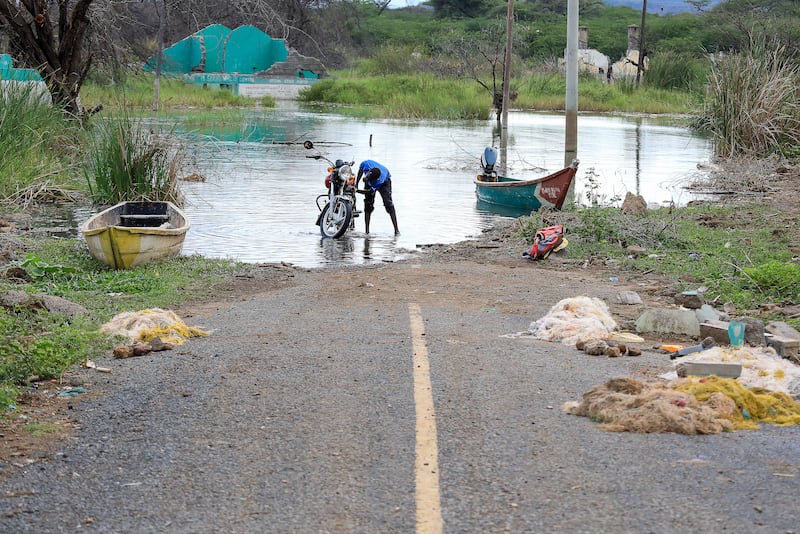
In January, the UN University Institute for Water, Environment and Health (UNU) warned in a report that the world was approaching “water bankruptcy”.
Droughts and pollution are major contributors, according to the UNU, which said water use must be governed by strict limits, with better protection for water in aquifers, rivers, glaciers, wetlands and soils.
Next month’s conference, hosted jointly by the UAE and Senegal at Adnec from December 8-10, aims to speed progress towards goal number six of the UN’s 17 sustainable development goals.
Relating to clean water and sanitation, this goal aims to ensure the “availability and sustainable management of water and sanitation for all”.
A priority at the forthcoming conference must be “mobilising finance and delivering the infrastructure needed”, Frontier 25, a UAE-based climate change advisory organisation, said, especially in water-scarce parts of the world. It will be important, the organisation said, to “turn intentions into tangible results”.
Increasing access to safe water
Among the main priorities, according to Frontier 25, will be securing commitments to increase the number of people who have access to safely managed drinking water by 350 million people a year, and to increase the number of people with access to good sanitation facilities by 570 million a year.
Commitments to nature-based solutions – freshwater restoration is vital to this – and an initiative to galvanise public and private finance to support water projects, particularly in developing countries, should also be priorities, the organisation indicated.
A conference in 2028 had already been agreed, but the new resolution means the event will happen every three years from 2031 onwards. The first UN Water Conference took place in Argentina in 1977, but it was not until 2023 that a second took place in New York.
Dr Nicholas Howarth, Frontier 25’s director of strategy and programmes, said the agreement to hold the conference every three years was “a significant achievement, especially in today’s increasingly fragmented world”.
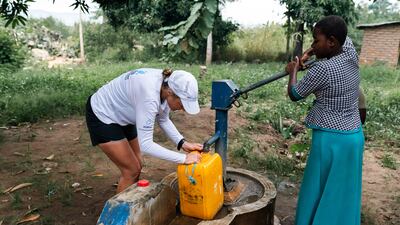
“The announcement is an early win for the joint UAE–Senegal presidency and sets a positive tone going into the conference in Abu Dhabi,” he said. “2.1 billion people – around one in four globally – still lack access to safely managed drinking water.
“The experience of Cop31 [the UN climate change conference, which ended without a final agreement] reminds us that even preserving previously agreed international commitments cannot be taken for granted."
'Their time is coming'
Prof Muhammad Wakil Shahzad, of Northumbria University in the UK, was a delegate at a UN Water Conference preparatory meeting in Dakar, the Senegalese capital, at the end of January.
While welcoming the move to make the main UN Water Conference a regular event, he suggested it was worth considering holding it even more frequently given the scale of the challenge.
“I think three years is maybe a little bit long in the sense that we can see the scale of water scarcity and the impact on different industries and human health. We can see changes happening very fast,” he said.
Prof Shahzad highlighted other regular water conferences, including the International Desalination and Reuse Association World Congress (RAWC).
Running every two years, the RAWC was last held in December 2024 in Abu Dhabi, with the next edition scheduled for Riyadh in January, themed around “driving global water sustainability through innovation”.
Issues related to water scarcity are likely to become more critical as time goes on, Prof Shahzad indicated.
“Different countries have different impacts from water scarcity,” he said. “Some countries are less affected, but their time is coming.”