


Iran was in talks with the US over its nuclear programme last month when Israel launched a war against it, joined by Washington shortly thereafter. With hostilities now on pause, the spectre of negotiations has returned.
We are likely to soon see another round of negotiations between the two countries, once again led by Iranian Foreign Minister Abbas Araghchi and US Middle East envoy Steve Witkoff. According to Axios, talks might take place in Oslo this time.
Israel’s attacks, followed by US strikes on Iran’s nuclear facilities, just ahead of the sixth round of talks were scheduled in Muscat. The global consensus before the assault had been that US President Donald Trump was determined to take the diplomatic route to resolve the question mark over Iran’s nuclear programme. Following the strikes, however, many Iranians are wary of returning to the talks, worried that the US or Israel might attack again even as the negotiations are under way. Some believe Tehran should secure a guarantee that no military hostilities will take place while the talks are on.
Iran’s initial reaction to the attacks was to withdraw from its talks with the US. Mr Araghchi and other Iranian officials have since spoken dismissively of the possibility of a return to diplomacy. But knowing full well that there is no alternative to engagement, if it wants to avoid another war, Tehran is trying to find a way back to the negotiating table. Washington, meanwhile, has issued new sanctions against Iranian oil exports – another reminder from Mr Trump that he is ready to tighten the screws again.
There is a narrative war on who wants the next round of talks to take place. On Monday, after having dinner at the White House with Israeli Prime Minister Benjamin Netanyahu, Mr Trump said Iran was the party seeking negotiations. “They want to talk,” he said. “They want to work something out. They are very different now than they were two weeks ago.”
The following day, Tehran denied it had reached out to Washington for talks. Iranian Foreign Ministry spokesman Esmaeil Baghaei said no such request had been sent. On the same day, Iran’s semi-official Mehr News Agency cited “credible sources” in Tehran claiming that it was the US that sought a return to negotiations and that Iran was mulling over its response.
Iran is understandably wary of confirming Mr Trump’s narrative that it has been weakened so considerably by the war that it now sees no way out other than to talk. But look more closely and it’s clear that Tehran is indeed eager to engage again.
Iranian President Masoud Pezeshkian recently gave a much-discussed interview to the prominent American journalist Tucker Carlson.
Carlson is a favourite of Mr Trump, but his vociferous opposition to any Iran-US conflict has led to rebukes from the President. Mr Pezeshkian used Carlson’s prominent platform to portray his government’s stated emphasis on peace and diplomacy, saying that Tehran would have “no problem” in restarting the diplomatic process.
The Iranian President also appears to have attempted to drive a wedge between Mr Trump and Mr Netanyahu, suggesting that it was the latter who had dragged the US into the conflict and that Mr Trump now has a chance of breaking from him.
Mr Pezeshkian has since come under attack from hardliners in Tehran for being too soft on the US during the interview. But many others in the country have defended him.
Mr Araghchi himself took a similar line in an opinion article for the Financial Times. Blaming Israel for its “sabotage” of the diplomatic process, he expressed doubts over Washington’s intentions but also left the door open for talks to resume. By attacking the previous US administration under Joe Biden while at the same time lauding his talks with Mr Witkoff, he also attempted to echo Mr Trump’s favourite themes and curry favour with him. It’s a strategy that might increase the chances of diplomatic success.
For his part, Mr Trump is once again enticing Iran back to the negotiating table with promises to lift sanctions that have crippled their economy. “I would love to be able to, at the right time, take those sanctions off,” he said recently.
-
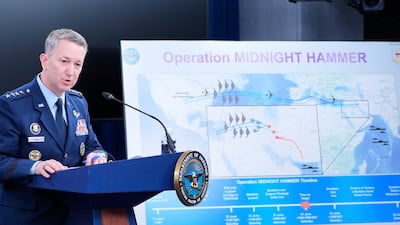
Gen Dan Caine, Chairman of the Joint Chiefs of Staff, holds a press conference at the Pentagon after the US military struck three sites in Iran. AP -
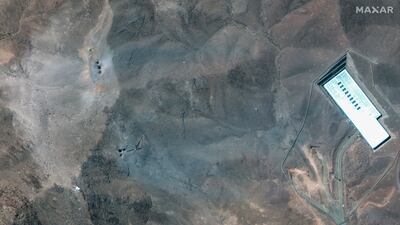
A handout satellite image made available by Maxar Technologies shows craters and ash on a ridge at the Fordow underground uranium enrichment following US air strikes. EPA -
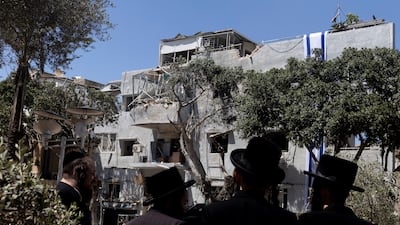
Ultra-Orthodox Jewish men look in shock at a building ruined in an Iranian missile strike in Haifa, Israel. Getty Images -
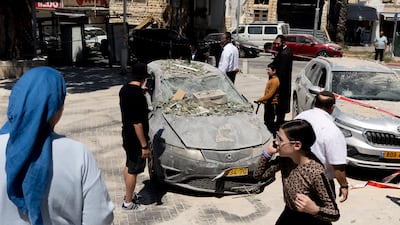
Cars damaged in Haifa. Getty Images -
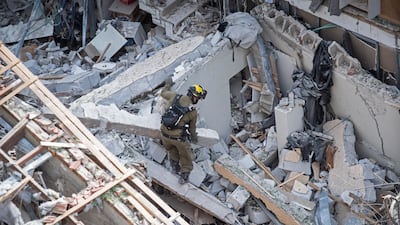
Debris in Tel Aviv. Israel was hit by a wave of aerial attacks from Iran after the US entered the war overnight and bombed several Iranian nuclear sites. Getty Images -
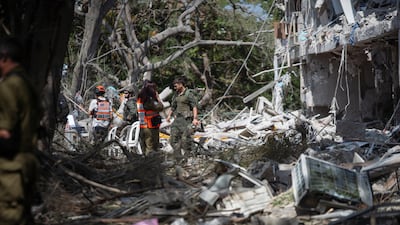
Emergency workers search for survivors in the Ramat Aviv neighbourhood of Tel Aviv, after it was bombed. Getty Images -
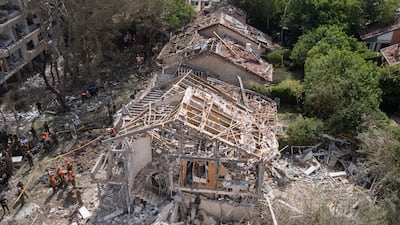
Residential buildings destroyed at the site of an Iranian air strike in Ramat Aviv. Getty Images -
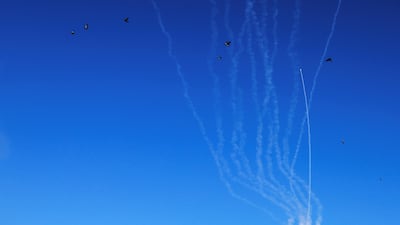
Missiles launched from Iran are intercepted over Tel Aviv. Reuters -
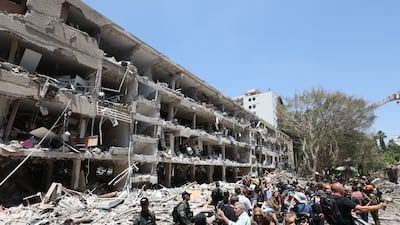
Israeli emergency teams at the site of an Iranian missile strike on a residential complex in Tel Aviv. EPA -
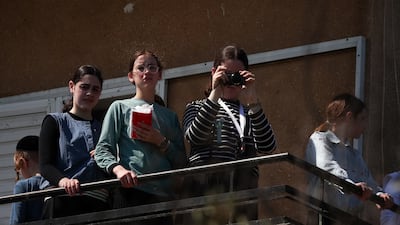
People look at a site bombed in Haifa. Reuters -
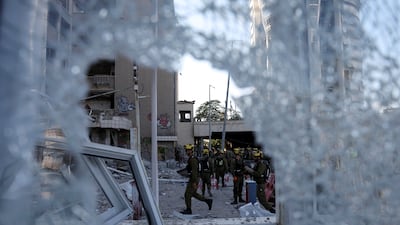
Israeli emergency personnel at a building hit by an Iranian missile strike, in Haifa. Reuters -
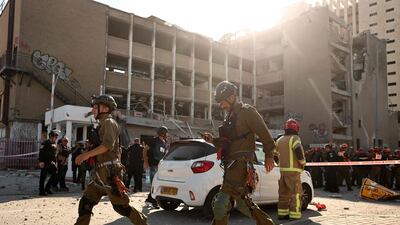
Israeli emergency personnel at a building hit by an Iranian missile strike, in Haifa. AFP -
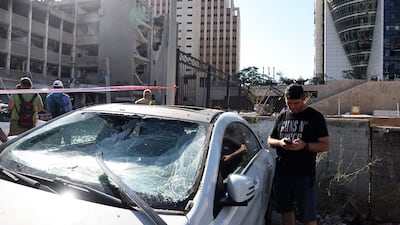
A car hit by a missile launched from Iran, in Haifa. AFP -

Israeli emergency personnel at a building hit by an Iranian missile strike, in Haifa. AFP -
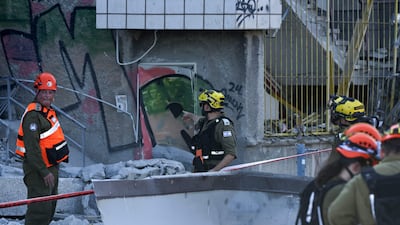
Israeli emergency personnel at a building hit by an Iranian missile strike, in Haifa. AFP -
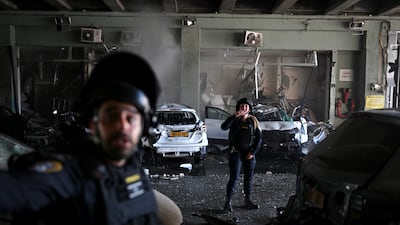
Israeli emergency personnel at a building hit by an Iranian missile strike, in Haifa. AFP -
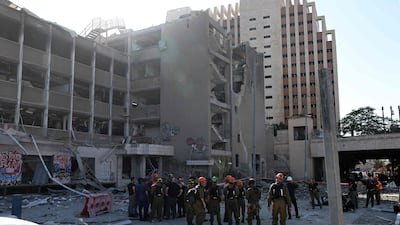
Israeli emergency personnel at a building hit by an Iranian missile strike, in Haifa. AFP -
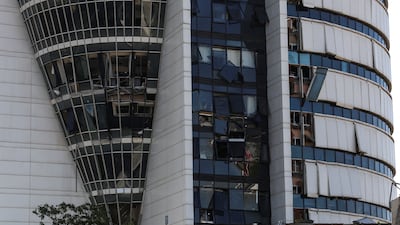
People gather outside a damaged building in Haifa. Reuters -
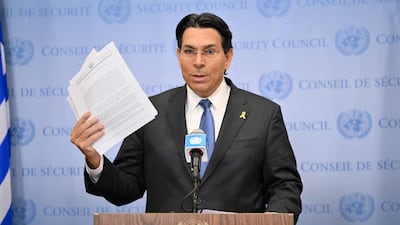
Israeli ambassador to the UN in Geneva addresses and emergency session. AFP -
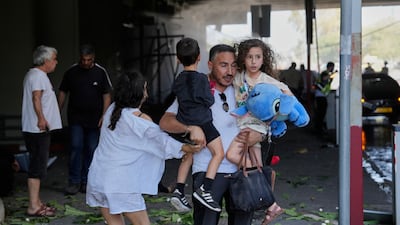
Israelis flee an Iranian missile strike in the port city of Haifa. AP Photo -
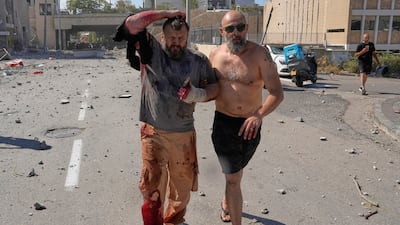
An injured man is helped after an Iranian missile strike in Haifa. AP Photo -
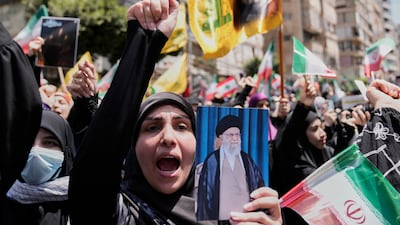
A protester holds up a portrait of Iran's supreme leader Ayatollah Ali Khamenei at a demonstration against Israeli attacks on Iran, in Beirut, Lebanon. AP Photo -
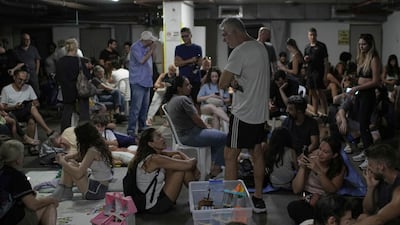
People take shelter as air raid sirens warn of incoming Iranian strikes in Tel Aviv. AP Photo -
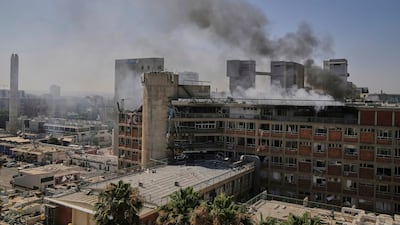
Smokes rises from Soroka Medical Centre, in Beersheba, southern Israel, after it was hit by an Iranian missile. AP -
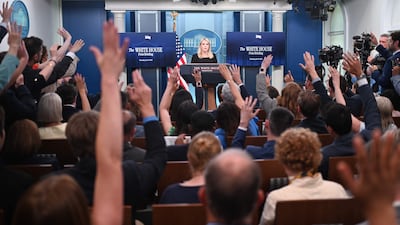
White House press secretary Karoline Leavitt takes questions from reporters. She said President Donald Trump would decide whether the US would join Israel’s war on Iran 'in the next two weeks'. AFP -
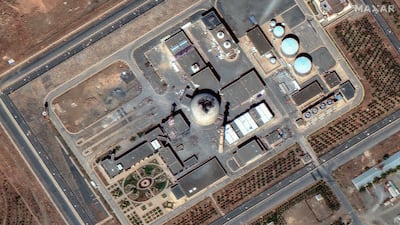
Iran's Arak heavy water reactor, in central Iran, after Israeli air strikes. Reuters -
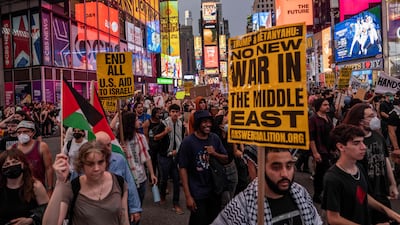
People march in Times Square, New York, to call on President Trump not to go to war with Iran. AFP -
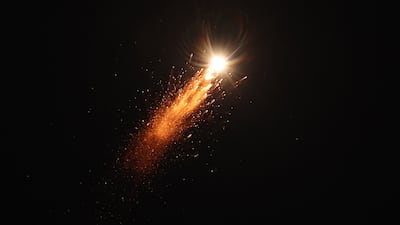
Israel's Iron Dome air defence system intercepts missiles fired from Iran over Tel Aviv. EPA -
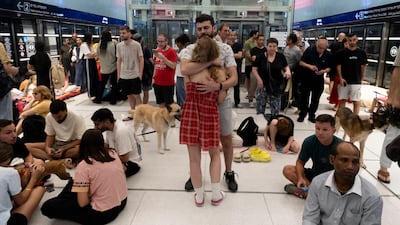
Israelis shelter in an underground train station in Ramat Gan after a missile warning. Getty Images -
Israeli special forces check the remains of a suspected Iranian ballistic missile in northern Israel. Reuters -
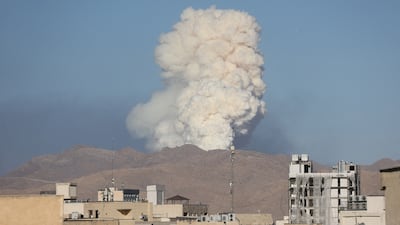
Smoke rises after an Israeli attack in the Iranian capital, Tehran. Reuters -
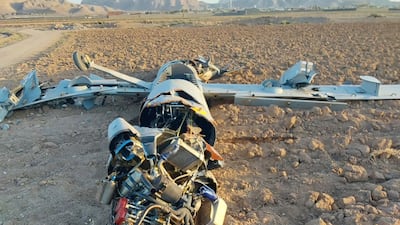
A picture released by Iran's armed forces claims to show an Israeli drone shot down outside the central city of Isfahan. AP -

People take cover inside a cable car tunnel in Haifa after an Iranian missile attack. Reuters -
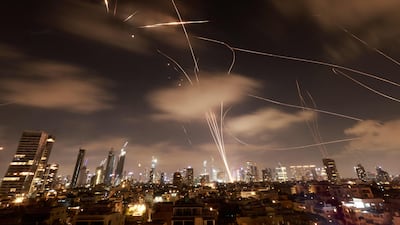
Israeli air defence systems fire at Iranian missiles over Tel Aviv. AFP -
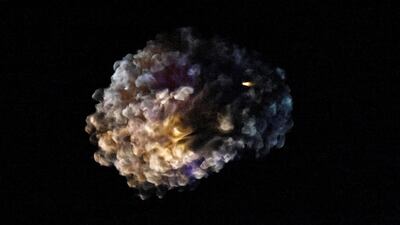
Missiles are intercepted above Ashkelon, Israel. Reuters -
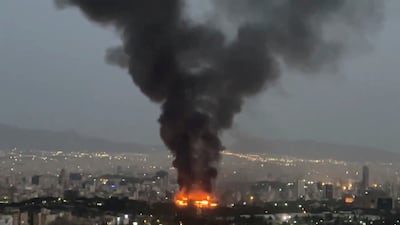
Smoke rises in Tehran. Reuters -
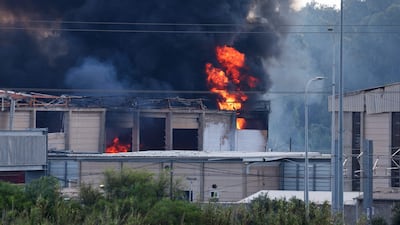
A building burns after strikes on the Israeli city of Herzliya, near Tel Aviv. AFP -
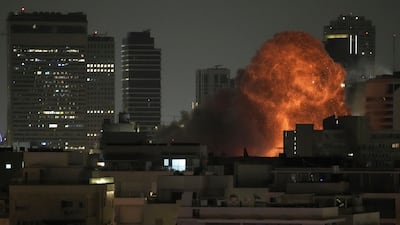
An Iranian missile causes an explosion in Tel Aviv. AP -
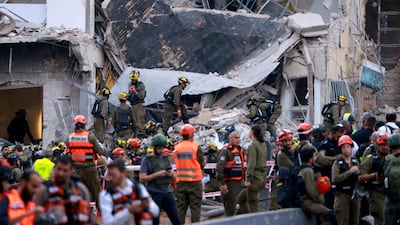
Rescuers sift through the remains of a damaged building in Tel Aviv after a barrage of Iranian rockets. AFP -

A wounded man is treated after an explosion in Tehran. AP


In a recent post on Truth Social, the US President also said that he had been working to lift some of the sanctions but changed his mind because of a speech by supreme leader Ayatollah Ali Khamenei in which he claimed “victory” in the war with Israel. Such economic carrots from Mr Trump would surely help return Tehran to the table. Iran’s leadership will have noticed how swiftly Mr Trump acted to lift sanctions on Syria. The US President could be serious about doing the same with Iran.
The alternatives to negotiations are all too clear. Israel’s Minister of Strategic Affairs, Ron Dermer, was in Washington last week, reportedly seeking US support for Israel to launch attacks on Iran again.
Tehran, meanwhile, has taken disconcerting steps on its nuclear programme. It has suspended co-operation with the UN’s nuclear watchdog, the International Atomic Energy Agency, which led to inspectors leaving the country. Iran also continues to take a harsh line against IAEA director general Rafael Grossi. When Mr Grossi asked to visit the nuclear sites bombed by Israel and the US, his request was met with a defiant response from Mr Araghchi who called the Argentine diplomat’s request “meaningless and possibly even malign in intent”.
Iran’s ushering out of IAEA inspectors could herald a new era of so-called “nuclear ambiguity” in which Tehran works on its programme covertly. This would almost certainly spark another round of military hostilities involving Israel and the US. Both Iran and the US, therefore, have real incentives to want diplomacy to succeed.
However, it remains to be seen if they can find a deal that is acceptable to both parties as well as to Israel. In Mr Araghchi’s narrative, Iran and the US were on the verge of a historic deal when Israel disrupted the talks. But Israel would argue that there were major stumbling blocks in the negotiations that justified its military action. Most importantly, Iran continues to insist on enriching uranium on its own soil, while the US has often treated this condition as a red line that it won’t cross.
Be that as it may, Iranian diplomats are likely to use any future talks with the US to offer enough incentives to get a deal with Mr Trump. Like many others around the world, they too are trying to understand how the US President thinks and respond appropriately.

