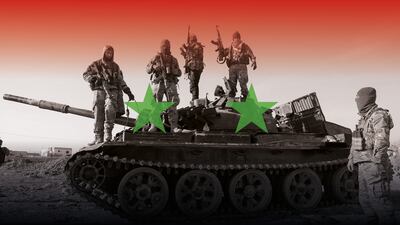
The Middle East is a region ignored at one’s peril. Just as the Palestine-Israel conflict was relegated to forgotten status by much of the international community until the horrors of October 7, 2023 happened, so was the Syrian conflict for the past four years until late November, when Syrian rebel armed groups began advancing from the northwest, taking Aleppo and continuing to push south.
The trajectory of the military developments in Syria does not bode well for Iran’s presence in the country. Iran sees itself as the main pillar that has rescued the government of Syria, and it regards the Astana agreement as having helped secure government control over most of Syria.
But the rebel advance is challenging this, causing the territorial control map of Syria to change by the day. The Astana agreement between Turkey, Russia and Iran had resulted in the de facto division of Syria into zones controlled by different sides. Two thirds of Syria was under the control of the Syrian government of President Bashar Al Assad, the northeast under the control of the Syrian Democratic Forces, and the northwest under the control of various rebel factions mostly backed by Turkey. None of those sides was able to overwhelm the others militarily but Iran was satisfied with the status quo because it regarded itself as having guaranteed long-term influence as a reward for its support of Mr Al Assad’s government.
The perception of conflict stagnation was shared by the international community, bolstered by a decline in the intensity of the fighting in Syria over the past four years. After almost a decade of fierce battles between government forces and the rebels, the violence lessened but never stopped. Russian and Syrian air strikes on Idlib, the heartland of opposition-held areas, continued to kill sometimes up to 200 people a month, including in attacks on civilians areas. The world’s attention, however, was elsewhere.
Less attention to Syria from the international community and the media, as well as Iran’s confidence in its own position in the country, meant that the current rebel-led military campaign against government forces and Iran-backed groups inside Syria took Iran and the international community by surprise. But this campaign was not planned overnight.
Rebel groups were seeing Iran-backed militants make increasing gains in Syria. For example, one of the key weapons production sites in Aleppo, called the Syrian Scientific Studies and Research Centre, came into the service of the Lebanese armed group Hezbollah, which used it to manufacture weapons to strengthen its arsenal. With the majority of Syrian rebel groups being Sunni, they saw Iran’s and its proxies’ deepening presence in Syria as an effort to increase Shiite influence and revolutionary ideology. This was not a scenario the rebel groups considered acceptable in the long term.
Iran’s perception of the status quo in Syria was also indirectly influenced by the US’s, UN’s and others’ proscribing of a number of rebel groups in the northwest like Hayat Tahrir Al Sham as terrorists. This excluded these groups from the diplomatic talks on political transition in Syria, namely the UN-led peace process. Iran assumed this curtailed these groups’ political influence indefinitely. The current rebel military campaign aims to push the international community to reconsider the proscriptions and to carve out space for those groups at the table in context of negotiations over political transition in Syria.
This is not a new goal for these rebels. Although some of the groups began life as extremist religious militants, they evolved to have greater political ambition at the national level.
The current developments in Syria show that no status quo can be taken for granted as indefinite for as long as there is an underlying unresolved conflict within it
Hayat Tahrir Al Sham has transformed from an affiliate of Al Qaeda engaged in competition with ISIS over who is the true representative of the path of Osama bin Laden into a group embracing much political and military pragmatism. HTS came to form a de facto authority that rules Idlib, called the Salvation Government. Although none of this succeeded in shifting the international community’s skepticism about the legitimacy of HTS as one of the political representatives of the Syrian people, the group has not given up on its goal of pursuing international recognition.
Regional shifts over the past year, in which Iran’s influence in the Middle East has come to be weakened due to the confrontation with Israel, created an opportunity for the Syrian rebels to try to shift the balance of power in Syria to their benefit. Their military gains have been partly the result of Iran and Hezbollah’s reduced capacity to send reinforcements into Syria.
All this reminds us the Syrian conflict was never as stagnant as it may have appeared to outside observers and to Iran. It also illustrates how the stalling of the UN-led peace process, which Iran had seen as beneficial because it meant continuation of Mr Al Assad’s rule, ended up creating an opportunity for the rebels to strengthen their military capacity. Coupled with the Syrian army’s degraded fighting capacity, domestic and regional factors are not going in Iran’s favour.
The current developments in Syria show that no status quo can be taken for granted as indefinite for as long as there is an underlying unresolved conflict within it. While Iran will not give up on its influence in Syria easily, it will eventually be faced with a changed reality on the ground that Tehran itself played a role in creating.

UAE currency: the story behind the money in your pockets
Founders: Abdulmajeed Alsukhan, Turki Bin Zarah and Abdulmohsen Albabtain.
Based: Riyadh
Offices: UAE, Vietnam and Germany
Founded: September, 2020
Number of employees: 70
Sector: FinTech, online payment solutions
Funding to date: $116m in two funding rounds
Investors: Checkout.com, Impact46, Vision Ventures, Wealth Well, Seedra, Khwarizmi, Hala Ventures, Nama Ventures and family offices
UAE Falcons
Carly Lewis (captain), Emily Fensome, Kelly Loy, Isabel Affley, Jessica Cronin, Jemma Eley, Jenna Guy, Kate Lewis, Megan Polley, Charlie Preston, Becki Quigley and Sophie Siffre. Deb Jones and Lucia Sdao – coach and assistant coach.
Abu Dhabi GP schedule
Friday: First practice - 1pm; Second practice - 5pm
Saturday: Final practice - 2pm; Qualifying - 5pm
Sunday: Etihad Airways Abu Dhabi Grand Prix (55 laps) - 5.10pm
Kanguva
Director: Siva
Stars: Suriya, Bobby Deol, Disha Patani, Yogi Babu, Redin Kingsley
From Europe to the Middle East, economic success brings wealth - and lifestyle diseases
A rise in obesity figures and the need for more public spending is a familiar trend in the developing world as western lifestyles are adopted.
One in five deaths around the world is now caused by bad diet, with obesity the fastest growing global risk. A high body mass index is also the top cause of metabolic diseases relating to death and disability in Kuwait, Qatar and Oman – and second on the list in Bahrain.
In Britain, heart disease, lung cancer and Alzheimer’s remain among the leading causes of death, and people there are spending more time suffering from health problems.
The UK is expected to spend $421.4 billion on healthcare by 2040, up from $239.3 billion in 2014.
And development assistance for health is talking about the financial aid given to governments to support social, environmental development of developing countries.
The biog
From: Upper Egypt
Age: 78
Family: a daughter in Egypt; a son in Dubai and his wife, Nabila
Favourite Abu Dhabi activity: walking near to Emirates Palace
Favourite building in Abu Dhabi: Emirates Palace
Mercer, the investment consulting arm of US services company Marsh & McLennan, expects its wealth division to at least double its assets under management (AUM) in the Middle East as wealth in the region continues to grow despite economic headwinds, a company official said.
Mercer Wealth, which globally has $160 billion in AUM, plans to boost its AUM in the region to $2-$3bn in the next 2-3 years from the present $1bn, said Yasir AbuShaban, a Dubai-based principal with Mercer Wealth.
“Within the next two to three years, we are looking at reaching $2 to $3 billion as a conservative estimate and we do see an opportunity to do so,” said Mr AbuShaban.
Mercer does not directly make investments, but allocates clients’ money they have discretion to, to professional asset managers. They also provide advice to clients.
“We have buying power. We can negotiate on their (client’s) behalf with asset managers to provide them lower fees than they otherwise would have to get on their own,” he added.
Mercer Wealth’s clients include sovereign wealth funds, family offices, and insurance companies among others.
From its office in Dubai, Mercer also looks after Africa, India and Turkey, where they also see opportunity for growth.
Wealth creation in Middle East and Africa (MEA) grew 8.5 per cent to $8.1 trillion last year from $7.5tn in 2015, higher than last year’s global average of 6 per cent and the second-highest growth in a region after Asia-Pacific which grew 9.9 per cent, according to consultancy Boston Consulting Group (BCG). In the region, where wealth grew just 1.9 per cent in 2015 compared with 2014, a pickup in oil prices has helped in wealth generation.
BCG is forecasting MEA wealth will rise to $12tn by 2021, growing at an annual average of 8 per cent.
Drivers of wealth generation in the region will be split evenly between new wealth creation and growth of performance of existing assets, according to BCG.
Another general trend in the region is clients’ looking for a comprehensive approach to investing, according to Mr AbuShaban.
“Institutional investors or some of the families are seeing a slowdown in the available capital they have to invest and in that sense they are looking at optimizing the way they manage their portfolios and making sure they are not investing haphazardly and different parts of their investment are working together,” said Mr AbuShaban.
Some clients also have a higher appetite for risk, given the low interest-rate environment that does not provide enough yield for some institutional investors. These clients are keen to invest in illiquid assets, such as private equity and infrastructure.
“What we have seen is a desire for higher returns in what has been a low-return environment specifically in various fixed income or bonds,” he said.
“In this environment, we have seen a de facto increase in the risk that clients are taking in things like illiquid investments, private equity investments, infrastructure and private debt, those kind of investments were higher illiquidity results in incrementally higher returns.”
The Abu Dhabi Investment Authority, one of the largest sovereign wealth funds, said in its 2016 report that has gradually increased its exposure in direct private equity and private credit transactions, mainly in Asian markets and especially in China and India. The authority’s private equity department focused on structured equities owing to “their defensive characteristics.”
The specs
Engine: 77.4kW all-wheel-drive dual motor
Power: 320bhp
Torque: 605Nm
Transmission: Single-speed automatic
Price: From Dh219,000
On sale: Now
The Details
Kabir Singh
Produced by: Cinestaan Studios, T-Series
Directed by: Sandeep Reddy Vanga
Starring: Shahid Kapoor, Kiara Advani, Suresh Oberoi, Soham Majumdar, Arjun Pahwa
Rating: 2.5/5
