

The reported rape of a pregnant 19-year-old student in Sudan has caused outrage and led to an open-ended protest at a university dormitory where the victim says the crime took place.
The reported incident just outside Khartoum led protesters to demand more accountability after such crimes and started a conversation around the narrative on sexual violence in the crisis-hit country of 43 million.
Dozens of students from various universities have staged a six-day sit-in at the Hajjar dormitory in Omdurman, a city adjacent to the capital.
They are demanding justice, safety and decent living conditions in the complex. The site, made up of three seven-floor buildings guarded by just three watchmen, is home to nearly 1,000 women from across Sudan who have come to study in the country’s top universities.
medical student
According to the crime report seen by The National, the victim, who is from Khartoum, said the assailant entered the dormitory through a loose and broken gate at 4am on January 25, held her at knifepoint and proceeded to carry out the attack.
The woman, who is two months pregnant, reported that the assailant hit her with the hilt of a knife and that she was scared to shout because he had threatened to kill her.
Several dormitory students told The National that they have been terrified since the incident and some say they can now sleep only if they have a knife under their pillow.

“This is our cause and it could happen to any one of us. I myself, like many others, can only sleep now with a knife under my pillow. The key locks are of very poor quality and any criminal can easily break-in,” Baraa Mohammed, 20, a medical student who lives in the dormitory, told The National.
“We are still in disbelief. How did he dare to attack a sleeping woman and rape her? This crime is just a manifestation of something very bad going on in Sudan," she said.
Dormitory resident Tarteel Al Khatib, 19, says that the protesters want justice and accountability.
“The victim is brave enough to tell us all about her traumatising experience. Up to 700 students gathered in the dormitory as a show of support and solidarity,” said Ms Al Khatib, a medical student at Ahfad University.
“We don’t want the authorities to turn this incident into a public relations opportunity. We simply want justice and to feel secure in our country.”
The Interior Ministry said that it had sent policemen to the dormitory after a public outcry to reassure residents and said it would gather security camera footage and other evidence as part of an investigation.
Directors of local universities have also sent campus guards to help ensure the dormitory is secure.
An official involved in managing the dormitory did not respond to The National’s request for comment.
Outrage at sexual violence
The reported attack has sparked a national conversation on social media.
Many activists and social media accounts that mainly discuss the ongoing political crisis in the country sparked by the military dismissing the civilian administration in October have taken to discussing the incident and the aftermath.
“It’s a heinous crime, not just against the victim but against every Sudanese and human being. This is the least we can do for our sisters and the victim and their calls for justice and safety,” Mosab Abdallah, a graphic designer, civil society activist and advocate for women’s rights, told The National.
As well as the police officers and the university security guards, Mr Abdallah said the self-styled Resistance Committees, a pro-democracy group, had asked volunteer security staff to spend the night on the dormitory premises.
Ms Al Khatib said that the arrival of volunteers from the Resistance Committees was welcomed by residents.
"We were happy when the Committees sent guards to us, they represent us and we support them in their uphill struggle against military rule," she said.
The Committees are a group of neighbourhood-based activists and volunteers who help to organise anti-coup marches. They played a crucial role in bringing an end to the regime of Omar Al Bashir in 2019, and say the army generals must get out of governance and politics.
-
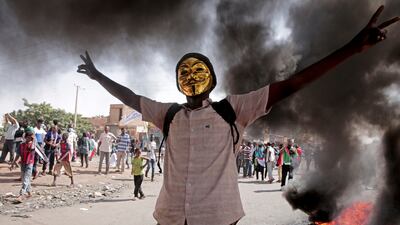
A man flashes the victory sign during a protest in Khartoum to denounce the October 2021 military coup in Sudan. AP -
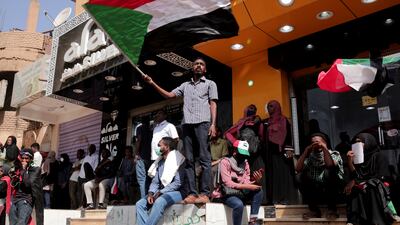
The UN said it would hold talks in Sudan to try to set the country's transition to democracy back on track. AP -
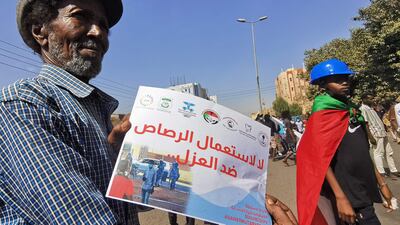
A Sudanese man , in the capital Khartoum holds a poster that reads in Arabic: ‘No to the use of live bullets against the unarmed’ during a protest against the October 2021 military coup. AFP -
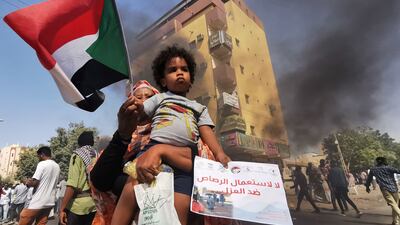
A Sudanese woman carries a child during a protest against the October 2021 military coup. AFP -
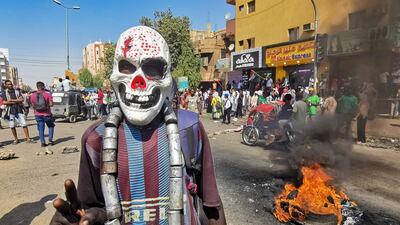
The coup on October 25, led by army chief General Abdel Fattah Al Burhan, derailed a power-sharing transition between the military and civilians that had been painstakingly established after longtime dictator Omar Al Bashir was removed in 2019. AFP -
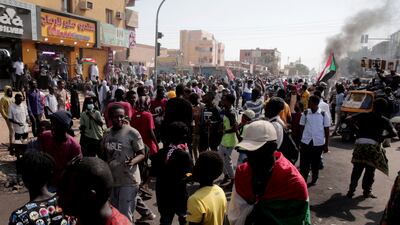
People chant slogans during a protest to denounce the coup. AP -
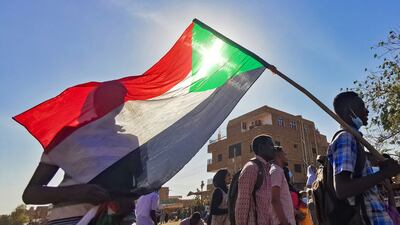
A Sudanese man carries the national flag during an anti-coup demonstration. AFP -
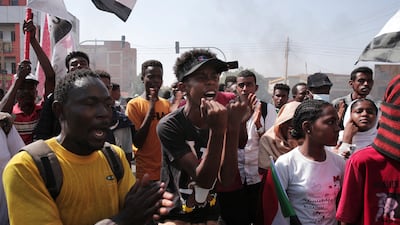
People chant slogans during a protest to denounce the military takeover. AP -
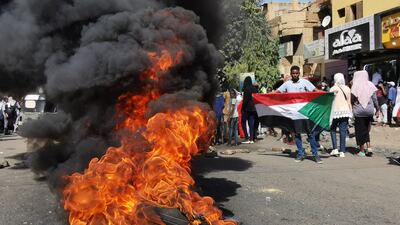
Sudanese protesters walk past burning tyres during a rally. AFP -
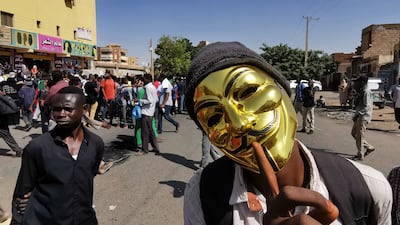
A mask-clad Sudanese protester attends a demonstration. AFP


“The students, like the overwhelming majority of the Sudanese people, are demanding basic rights. Crime rates have soared in the past two years, poverty is widespread and living conditions, whether here at the dormitory or many areas across the country, have become appalling. We are being oppressed inside our country,” Mr Abdallah said.
Students shared images of broken down or badly maintained lifts and leaking water tanks in the accommodation, they also complained about power cuts. Each student pays about $12 a month, a high sum in a country where hyperinflation is pushing more and more people into poverty.
There is no data available on the extent of sexual violence and cases of such assault in Sudan, in part attributed to what the UN Women organisation said was a lack of reporting because of the shame and stigmatisation in a patriarchal society. However, it said that rape and sexual violence was rife in Sudan's conflict areas.

