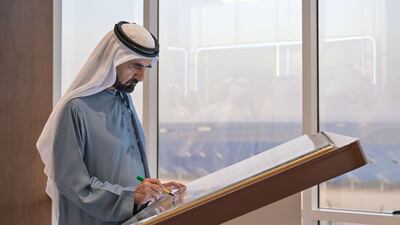
President Sheikh Mohamed announced the UAEs Year of Sustainability will continue in 2024. Chris Whiteoak / The National

President Sheikh Mohamed extends UAE's Year of Sustainability for 2024


  • English
  • Arabic

President Sheikh Mohamed marked the 27th National Environment Day on Sunday by declaring that the UAE's Year of Sustainability will continue throughout 2024.

The UAE leader said the decision underlined the country's efforts to “protect and preserve the environment for the benefit of future generations”.

Sheikh Mohamed announced the themed Year of Sustainability on January 20 last year.

It proved to be a pivotal 12 months in an international drive to protect the planet and turn back the tide on the climate change crisis.

The UAE successfully hosted the Cop28 climate conference from November 30 to December 12, in which crucial progress was made in developing an action plan for a greener future.

“On the occasion of National Environment Day, we announce that the Year of Sustainability is extended into 2024, reflecting our ongoing collective commitment to protect and preserve the environment for the benefit of future generations,” Sheikh Mohamed wrote on X.

“Building on the UAE Consensus achieved at Cop28, we will continue to work hand in hand with the global community to pursue a more sustainable future for all.”

The world came together at the summit to sign up for the UAE Consensus, which called for nations to start cutting back on fossil fuels to achieve net-zero goals by 2050.

The agreement was adopted after about two weeks of talks and built on early success that gave the summit initial momentum, such as the launch of the loss and damage fund on November 30, and the galvanising of more than $80 billion in climate finance.

UAE on road to sustainability

In 2021, the UAE unveiled its Net Zero 2050 Strategic Initiative, a Dh600 billion ($163.37 billion) plan to invest in clean and renewable energy sources over the next three decades.

It was the first Gulf country to commit to net-zero emissions by 2050.

The Emirates is also investing heavily in the transition to clean energy through several major infrastructure projects.

The fourth and final unit of the Barakah Nuclear Energy Plant completed the process of loading fuel assemblies in December.

The next step for the reactor unit will be the start-up phase, followed by connection to the national grid. and the commencement of full commercial operations.

Once ready, Unit 4 will generate 25 per cent of the country’s electricity needs for the next 60 years, according to state news agency Wam.

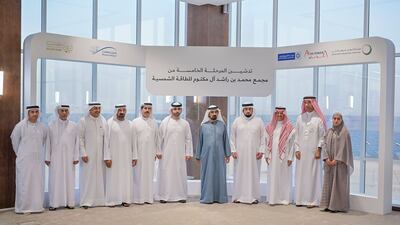
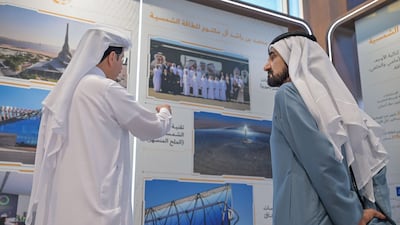
In December, Sheikh Mohammed bin Rashid, Vice President and Ruler of Dubai, inaugurated the world's largest concentrated solar park project in Dubai.

The project is part of the Dh15.78 billion fourth phase of the Mohammed bin Rashid Al Maktoum Solar Park, which covers an area of 44 square kilometres and has a capacity of 950 megawatts.

The fourth phase will provide about 320,000 houses with clean energy and reduce carbon emissions by about 1.6 million tonnes annually.


UAE tour of Zimbabwe

All matches in Bulawayo
Friday, Sept 26 – UAE won by 36 runs
Sunday, Sept 28 – Second ODI
Tuesday, Sept 30 – Third ODI
Thursday, Oct 2 – Fourth ODI
Sunday, Oct 5 – First T20I
Monday, Oct 6 – Second T20I

Mercer, the investment consulting arm of US services company Marsh & McLennan, expects its wealth division to at least double its assets under management (AUM) in the Middle East as wealth in the region continues to grow despite economic headwinds, a company official said.

Mercer Wealth, which globally has $160 billion in AUM, plans to boost its AUM in the region to $2-$3bn in the next 2-3 years from the present $1bn, said Yasir AbuShaban, a Dubai-based principal with Mercer Wealth.

Within the next two to three years, we are looking at reaching $2 to $3 billion as a conservative estimate and we do see an opportunity to do so,” said Mr AbuShaban.

Mercer does not directly make investments, but allocates clients’ money they have discretion to, to professional asset managers. They also provide advice to clients.

“We have buying power. We can negotiate on their (client’s) behalf with asset managers to provide them lower fees than they otherwise would have to get on their own,” he added.

Mercer Wealth’s clients include sovereign wealth funds, family offices, and insurance companies among others.

From its office in Dubai, Mercer also looks after Africa, India and Turkey, where they also see opportunity for growth.

Wealth creation in Middle East and Africa (MEA) grew 8.5 per cent to $8.1 trillion last year from $7.5tn in 2015, higher than last year’s global average of 6 per cent and the second-highest growth in a region after Asia-Pacific which grew 9.9 per cent, according to consultancy Boston Consulting Group (BCG). In the region, where wealth grew just 1.9 per cent in 2015 compared with 2014, a pickup in oil prices has helped in wealth generation.

BCG is forecasting MEA wealth will rise to $12tn by 2021, growing at an annual average of 8 per cent.

Drivers of wealth generation in the region will be split evenly between new wealth creation and growth of performance of existing assets, according to BCG.

Another general trend in the region is clients’ looking for a comprehensive approach to investing, according to Mr AbuShaban.

“Institutional investors or some of the families are seeing a slowdown in the available capital they have to invest and in that sense they are looking at optimizing the way they manage their portfolios and making sure they are not investing haphazardly and different parts of their investment are working together,” said Mr AbuShaban.

Some clients also have a higher appetite for risk, given the low interest-rate environment that does not provide enough yield for some institutional investors. These clients are keen to invest in illiquid assets, such as private equity and infrastructure.

“What we have seen is a desire for higher returns in what has been a low-return environment specifically in various fixed income or bonds,” he said.

“In this environment, we have seen a de facto increase in the risk that clients are taking in things like illiquid investments, private equity investments, infrastructure and private debt, those kind of investments were higher illiquidity results in incrementally higher returns.”

The Abu Dhabi Investment Authority, one of the largest sovereign wealth funds, said in its 2016 report that has gradually increased its exposure in direct private equity and private credit transactions, mainly in Asian markets and especially in China and India. The authority’s private equity department focused on structured equities owing to “their defensive characteristics.”

Who's who in Yemen conflict

Houthis: Iran-backed rebels who occupy Sanaa and run unrecognised government

Yemeni government: Exiled government in Aden led by eight-member Presidential Leadership Council

Southern Transitional Council: Faction in Yemeni government that seeks autonomy for the south

Habrish 'rebels': Tribal-backed forces feuding with STC over control of oil in government territory

Reading List

Practitioners of mindful eating recommend the following books to get you started:

Savor: Mindful Eating, Mindful Life by Thich Nhat Hanh and Dr Lilian Cheung

How to Eat by Thich Nhat Hanh

The Mindful Diet by Dr Ruth Wolever

Mindful Eating by Dr Jan Bays

How to Raise a Mindful Eaterby Maryann Jacobsen

UAE currency: the story behind the money in your pockets
The more serious side of specialty coffee

While the taste of beans and freshness of roast is paramount to the specialty coffee scene, so is sustainability and workers’ rights.

The bulk of genuine specialty coffee companies aim to improve on these elements in every stage of production via direct relationships with farmers. For instance, Mokha 1450 on Al Wasl Road strives to work predominantly with women-owned and -operated coffee organisations, including female farmers in the Sabree mountains of Yemen.

Because, as the boutique’s owner, Garfield Kerr, points out: “women represent over 90 per cent of the coffee value chain, but are woefully underrepresented in less than 10 per cent of ownership and management throughout the global coffee industry.”

One of the UAE’s largest suppliers of green (meaning not-yet-roasted) beans, Raw Coffee, is a founding member of the Partnership of Gender Equity, which aims to empower female coffee farmers and harvesters.

Also, globally, many companies have found the perfect way to recycle old coffee grounds: they create the perfect fertile soil in which to grow mushrooms. 

Why are asylum seekers being housed in hotels?

The number of asylum applications in the UK has reached a new record high, driven by those illegally entering the country in small boats crossing the English Channel.

A total of 111,084 people applied for asylum in the UK in the year to June 2025, the highest number for any 12-month period since current records began in 2001.

Asylum seekers and their families can be housed in temporary accommodation while their claim is assessed.

The Home Office provides the accommodation, meaning asylum seekers cannot choose where they live.

When there is not enough housing, the Home Office can move people to hotels or large sites like former military bases.

Scoreline

Arsenal 3
Aubameyang (28'), Welbeck (38', 81')
Red cards: El Neny (90' 3)

Southampton 2
Long (17'), Austin (73')
Red cards: Stephens (90' 2)

Updated: February 05, 2024, 10:23 AM