

Apple is working on a software update for the iPhone 14 Pro and Pro Max aimed at fixing a bug that makes the rear camera on the device physically shake when used with some third-party apps.
The update will be released next week, according to the company, signalling it has already identified a solution. The software fix would mark at least the second so far for the iPhone 14. On launch day, users were asked to update to iOS 16.0.1 to address a problem related to activating FaceTime.
The latest iPhones went on sale last Friday, and some users complained on social media about the camera bug.
The issue, which also can cause rattling noises, is the result of the optical image stabilisation hardware malfunctioning in some cases with third-party apps. The stabilisation technology is designed to shift the camera system to compensate for the iPhone moving, helping to prevent a blurry picture.
Users have complained about the bug hindering camera features in social media apps like Snapchat, TikTok, Instagram and Facebook, but it doesn’t appear to affect Apple’s pre-installed camera capabilities.
Snap, the maker of Snapchat, said on Monday that it was “working directly with Apple” to address the issue after getting reports from users. TikTok and Meta Platforms, the owner of Instagram and Facebook, did not immediately respond to requests for comment.
The new camera system on the iPhone 14 Pro, which includes a 48-megapixel sensor for the main lens for the first time, is one of the main upgrades for this year’s device.
The phone also has a software interface at the top of the device known as the Dynamic Island, which works with an updated camera cut-out to show information such as map directions or AirPods status.
So far, the iPhone 14 Pro and iPhone 14 Pro Max appear to be biggest hits in the line-up. Shoppers queued at Apple retail stores in search of the devices at the weekend, and they sold out in many places.
Consumers looking to buy the models through Apple’s website will have to wait until at least October for deliveries.
-

The iPhone through the ages: Former Apple CEO Steve Jobs introduces the iPhone to the world in San Francisco, California, on January 9, 2007. It had a 3.5-inch screen and 2MP camera. Reuters -

The iPhone 3G was launched in 2008 with a faster 3G connection. It also added location services. Reuters -
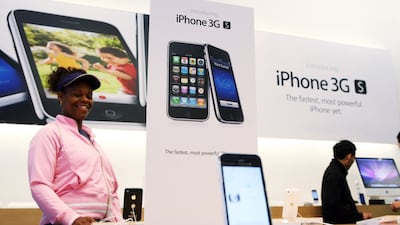
The iPhone 3GS was released on June 19, 2009. It was twice as fast as its previous version. AFP -

The iPhone 4 was released on June 24, 2010. It featured FaceTime for the first occasion as well as a retina screen. Reuters -

A later release, this time on October 14, 2011, the iPhone 4S had a new dual-core processor. Reuters -

Apple CEO Tim Cook takes to the stage following the reveal of the iPhone 5 in San Francisco, California, on September 12, 2012. This was the first 4-inch screen and the phone was faster and slimmer. Reuters -
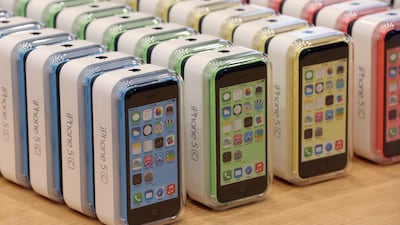
The iPhone 5C arrived on September 20, 2013 and was less expensive and very similar to the iPhone 5 except it came with colourful casing. Getty Images -
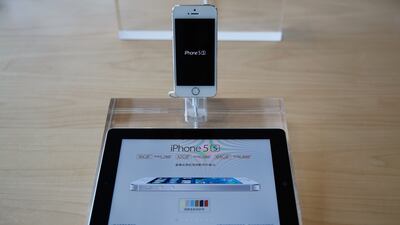
The iPhone 5s came at the same time as the 5C and introduced touch ID and a motion data processor as health and fitness apps started to come to the fore. Getty Images -
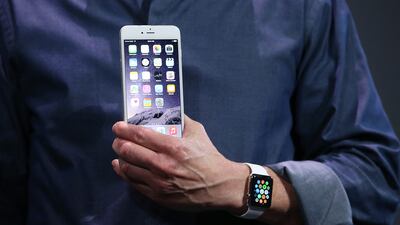
The iPhone 6 marked another double launch when unveiled on September 9, 2014. The 6 had a 4.7-inch screen, faster processor and improved camera. AFP -

The iPhone 6 Plus had a 5.5-inch screen and was $100 more expensive. Reuters -
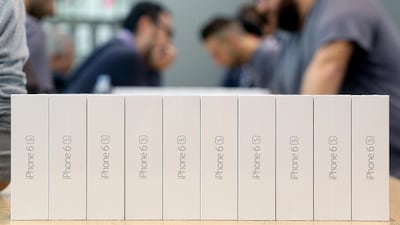
The iPhone 6s came on September 25, 2015 with 3D touch and a camera that could shoot 4K video. EPA -

The iPhone 6s Plus is displayed at Tokyo's flagship store on September 25, 2015. Both new phones came in a new colour - rose gold. AFP -
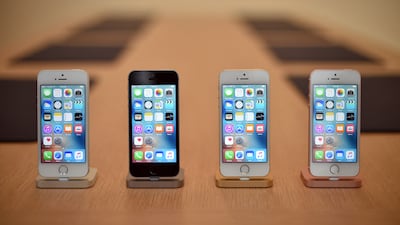
Unveiled on March 21, 2016, the iPhone SE had the same design as the iPhone 5 and saw a return to the 4-inch screen which was preferred by some users. It was more affordable and hence lacked features such as Touch ID. AFP -

The iPhone 7 announced on September 7, 2016, said somewhat controversially goodbye to the audio jack. Reuters -
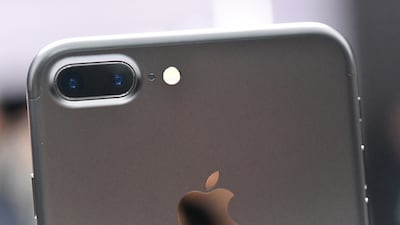
The iPhone 7 Plus had a dual camera added. AFP -

The iPhone 8 was released on September 22, 2017 and had a new glass and aluminium design, retina HD screen. Reuters -
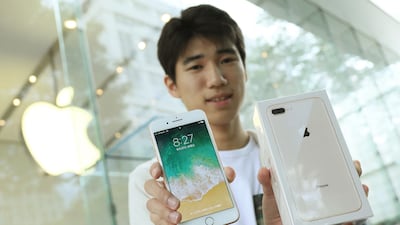
A customer gets his hands on an iPhone 8 Plus on launch day in Tokyo on September 22, 2017. The launches also saw speakers that were 25% louder and the most powerful and smartest chip in a smartphone (according to Apple). AFP -

The iPhone X marked a decade of iPhones on September 12, 2017. It's main changes were an edge-to-edge super retina screen. Touch ID was removed with Face ID introduced. Reuters -

The iPhone XS was released on September 21, 2018 and had a Super Retina OLED screen with improved scratch and water resistance. Face ID was faster. Reuters -

The iPhone XS Max had the largest iPhone screen to date at 6.5 inches. It could handle 3 million pixels. Reuters -
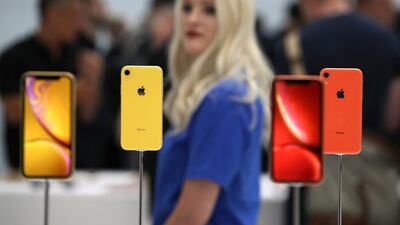
The iPhone XR was slightly cheaper than the XS and came with a 6.1-inch screen. AFP -
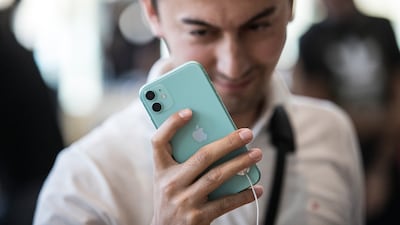
A customer looks at the iPhone 11 at an Apple store in Dubai Mall on September 20, 2019. EPA -
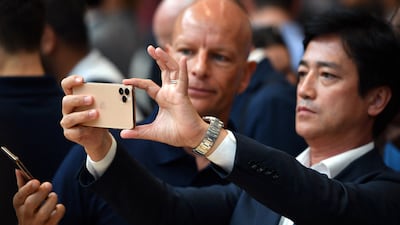
A man tries out the iPhone 11 Pro in Cupertino, California, on September 10, 2019. AFP -

Midnight Green was introduced for the iPhone 11 Pro Max, while there was also a new three-camera system. Reuters -
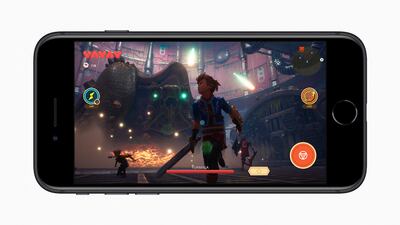
Arriving on April 15, 2020, the iPhone SE was for budget-minded customers and was pretty much a replica of the iPhone 8. Its 4.7-inch screen felt rather on the small side compared to the big screens of its big brothers. Apple Inc. / AFP -
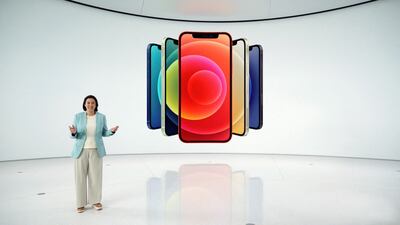
The iPhone 12 on October 13, 2020 introduced a new processor and a screen that offered four times better protection if dropped. Apple / AFP -

The iPhone 12 mini offered a 5.4-inch screen. Getty Images -
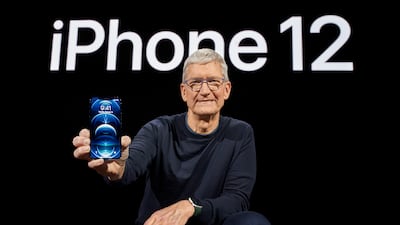
Mr Cook showcases the iPhone 12 Pro during an event at Apple Park in Cupertino, California, on October 13, 2020. This upgrade saw a faster chip, 5G speed, a "camera system that’s killer in low light. A LiDAR Scanner for more realistic AR. And two great sizes to choose from — including our largest display ever". Apple / EPA -

The iPhone 12 Pro Max was categorised as a 'legacy phone'. Reuters -
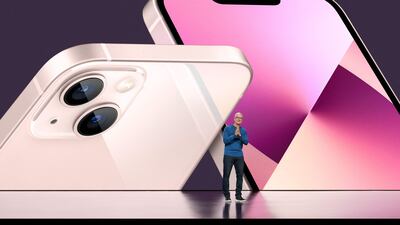
The new iPhone 13 was unveiled on September 14, 2021. It has a smart data mode which helps battery life, more 5G bands and antenna lines that use material made from recycled plastic water bottles. AFP -
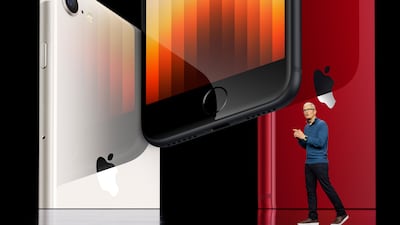
Apple CEO Tim Cook showcasing the third generation iPhone SE featuring 5G and the A15 Bionic chip on March 8, 2022. EPA -
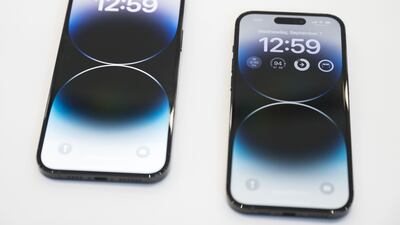
The Apple iPhone 14, 14 Plus, Pro Max and the Apple iPhone 14 Pro were unveiled during an event on September 7, 2022. It didn’t raise its US prices during one of the worst years for inflation in decades. The biggest addition was emergency calling after a car crash. Bloomberg



