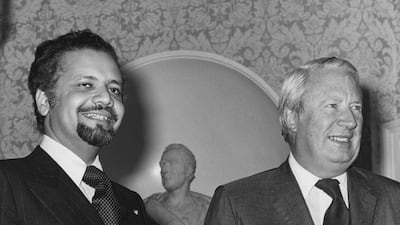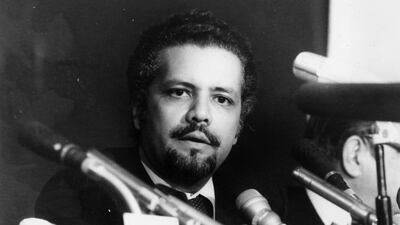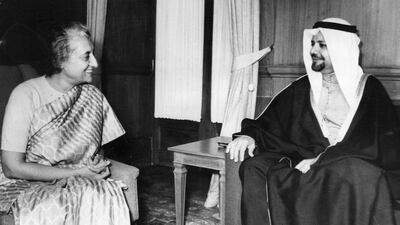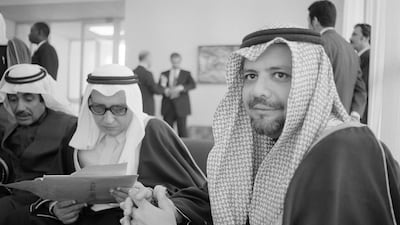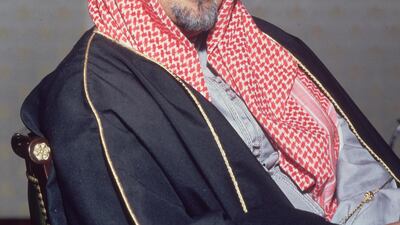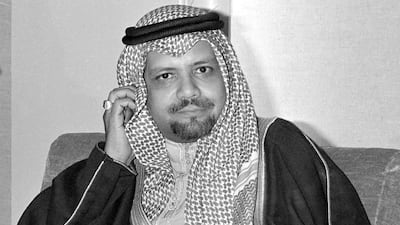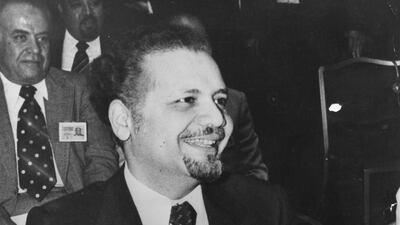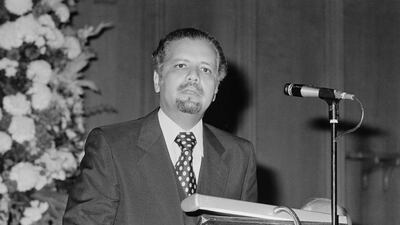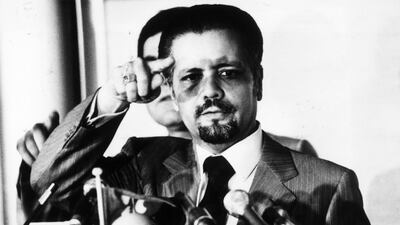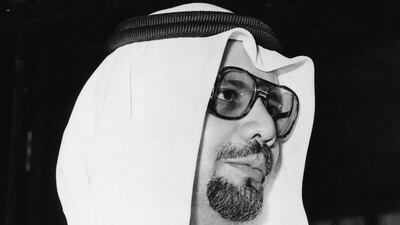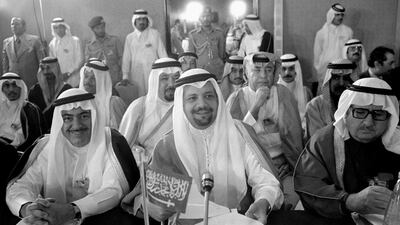
Sheikh Ahmed Zaki Yamani served as Saudi Arabia's energy minister for about 25 years. Getty Images

How Sheikh Ahmed Zaki Yamani shaped the Middle East’s oil industry


Robin Mills
  • English
  • Arabic

The death of Saudi Arabia's former oil minister Sheikh Ahmed Zaki Yamani removes from the stage one of the most consequential figures, other than heads of government, in the post-war world.

People have written about his personality and life. But it is important also to understand his achievements – in front of the camera at Opec press conferences and, more quietly, in Saudi Arabia – that left an enduring impression on the global energy business and the economy.

The sheer length of Sheikh Yamani’s tenure was remarkable: 25 years in the top job through the most turbulent times in the oil market’s history.

By an odd coincidence, he was aged 90 when he died – the same age as close associate and former Opec secretary general Fadhil Chalabi of Iraq who died in 2019 and Venezuela’s Alirio Parra, one of the key figures at the formation of the bloc in 1960, who died in 2018.

These men and their colleagues played a pivotal role at a time when control of the global oil business passed from the “Seven Sisters” – large western oil companies – to resource-holding countries.

The 1960s were a difficult time for oil producers, characterised by political volatility, low prices and a scramble for market share as global oil demand grew quickly while potential output rose at an even faster pace.

Sheikh Yamani replaced Abdullah Tariki, Saudi Arabia’s first oil minister, in 1962. Tariki, the vocal and confrontational “Red Sheikh”, had been a guiding spirit behind the formation of Opec after western oil companies decided to cut the official “posted prices”, which were used to determine their tax liability, to 1949 levels.

His successor negotiated hard in private to raise the kingdom’s share of taxes. However, both men recognised then that they could not push too hard and were wary after the US-inspired overthrow of Iran’s Mohammad Mossadeq in 1953 after he nationalised the country’s oil sector.

In 1962, the kingdom’s oil production – at 1.64 million barrels per day – was less than Kuwait’s and a fifth of US production.

By 1976, it had overtaken the US as it churned out 8.58 million bpd, and only the Soviet Union produced more.

Not even America’s shale boom over the past decade compares in speed and scope with this expansion.

Along with the peak of American oil output in 1970, Middle East expansion passed the baton to the Opec states. Iran and Libya kicked off a round of price rises in 1971, which Saudi Arabia was glad to benefit from.

The changing market dynamic and political developments brought Sheikh Yamani to the centre of global affairs. The attempted oil embargo by Arab states around the 1967 Arab-Israeli war was foiled due to ample spare production capacity elsewhere. By contrast, the decision of King Faisal and others to launch a boycott after the October War of 1973 triggered panic among buyers and prices almost doubled overnight.

Sheikh Yamani, along with Chalabi and a few others, was far-sighted in perceiving the dangers of extremely high prices. He feared that making oil uncompetitive would damage the world economy and encourage competitors – exactly the problems another Saudi oil minister, Ali Al Naimi, would confront in the 21st century. He argued for moderate price rises.

However unpleasant the consequences for the industrialised countries, the accessible and charming Sheikh Yamani was a welcome change from the self-serving preachy attitude of the Shah of Iran or the hostile rhetoric of Colonel Muammar Qaddafi.

While Henry Kissinger inspired the formation of the International Energy Agency in 1974 as an explicit counterweight to Opec and mused in threatening fashion at press conferences about American “countermeasures” to the crisis, constructive dialogue was essential.

Opec’s records from this period are a fascinating testament to Sheikh Yamani’s diplomatic skills and his ability to find tactics to steer the fractious Opec gatherings through uncharted waters while focusing on long-term strategy in conditions wholly alien to all oil-market participants.

In the early 1980s, his warnings came true. Prices were high after the 1979 Iranian revolution, resulting in a slump in demand. Sheikh Yamani faced an impossible task as the kingdom attempted to defend prices alone.

In 1986, he made the right decision to raise output and accept a price cut but this led to his own exit from the role he had done so much to define: the central banker of global oil.

Yet too often, Sheikh Yamani’s career is seen only through the prism of Opec. That is understandable for western audiences, given his visibility as the most prominent interlocutor for the oil producers during the energy crises.

But his domestic role was also incredibly important, perhaps even more enduring. He laid the groundwork in the 1970s for large-scale refining and petrochemical ventures in the kingdom, including the 1976 formation of Saudi Basic Industries Corporation, or Sabic, and measures to diversify exports and constructively use associated gas from oil production, ending the flaring that still blights Iraq and Iran.

He also managed the state’s gradual acquisition of Aramco, formerly a consortium of the four large American oil companies, acquiring 25 per cent in 1973, another 35 per cent in 1974 and the remainder in 1976. Operations were eventually handed over by 1988.

This steady process avoided the chaotic nationalisation of post-revolutionary Iran, the hostile takeover in Qaddafi’s Libya or the overtly nationalistic expulsion in Iraq.

The renamed Saudi Aramco retained its technical skills, management structures and apolitical approach, vital for the efficient management of the world’s largest oil reservoirs and for the credibility of its eventual initial public offering in 2019.

The oil world is barely recognisable from 1962 but the dilemmas of 1986 seem familiar. Sheikh Yamani’s tenure spanned that transformation. His modern counterparts in the big oil producers can learn much from his approach as they face the next great shift in global energy.

Robin Mills is chief executive of Qamar Energy and author of The Myth of the Oil Crisis

Roll of honour

Who has won what so far in the West Asia Premiership season?

Western Clubs Champions League - Winners: Abu Dhabi Harlequins; Runners up: Bahrain

Dubai Rugby Sevens - Winners: Dubai Exiles; Runners up: Jebel Ali Dragons

West Asia Premiership - Winners: Jebel Ali Dragons; Runners up: Abu Dhabi Harlequins

UAE Premiership Cup - Winners: Abu Dhabi Harlequins; Runners up: Dubai Exiles

West Asia Cup - Winners: Bahrain; Runners up: Dubai Exiles

West Asia Trophy - Winners: Dubai Hurricanes; Runners up: DSC Eagles

Final West Asia Premiership standings - 1. Jebel Ali Dragons; 2. Abu Dhabi Harlequins; 3. Bahrain; 4. Dubai Exiles; 5. Dubai Hurricanes; 6. DSC Eagles; 7. Abu Dhabi Saracens

Fixture (UAE Premiership final) - Friday, April 13, Al Ain – Dubai Exiles v Abu Dhabi Harlequins

MOUNTAINHEAD REVIEW

Starring: Ramy Youssef, Steve Carell, Jason Schwartzman

Director: Jesse Armstrong

Rating: 3.5/5

'The%20Alchemist's%20Euphoria'
%3Cp%3E%3Cstrong%3EArtist%3A%3C%2Fstrong%3E%20Kasabian%3Cbr%3E%3Cstrong%3ELabel%3A%20%3C%2Fstrong%3EColumbia%3Cbr%3E%3Cstrong%3ERating%3A%3C%2Fstrong%3E%203%2F5%3C%2Fp%3E%0A
Dubai World Cup Carnival Card:

6.30pm: Handicap US$135,000 (Turf) 1,200m
7.05pm: Handicap $135,000 (Dirt) 1,200m​​​​​​​
7.40pm: Zabeel Turf Listed $175,000 (T) 2,000m​​​​​​​
8.15pm: Cape Verdi Group Two $250,000 (T) 1,600m​​​​​​​
8.50pm: Handicap $135,000 (D) 1,600m​​​​​​​
9.25pm: Handicap $175,000 (T) 1,600m

THE SPECS

Engine: 3.6-litre V6

Transmission: eight-speed automatic

Power: 285bhp

Torque: 353Nm

Price: TBA

On sale: Q2, 2020

Temple numbers

Expected completion: 2022

Height: 24 meters

Ground floor banquet hall: 370 square metres to accommodate about 750 people

Ground floor multipurpose hall: 92 square metres for up to 200 people

First floor main Prayer Hall: 465 square metres to hold 1,500 people at a time

First floor terrace areas: 2,30 square metres  

Temple will be spread over 6,900 square metres

Structure includes two basements, ground and first floor 

Info

What: 11th edition of the Mubadala World Tennis Championship

When: December 27-29, 2018

Confirmed: men: Novak Djokovic, Rafael Nadal, Kevin Anderson, Dominic Thiem, Hyeon Chung, Karen Khachanov; women: Venus Williams

Tickets: www.ticketmaster.ae, Virgin megastores or call 800 86 823

Teaching your child to save

Pre-school (three - five years)

You can’t yet talk about investing or borrowing, but introduce a “classic” money bank and start putting gifts and allowances away. When the child wants a specific toy, have them save for it and help them track their progress.

Early childhood (six - eight years)

Replace the money bank with three jars labelled ‘saving’, ‘spending’ and ‘sharing’. Have the child divide their allowance into the three jars each week and explain their choices in splitting their pocket money. A guide could be 25 per cent saving, 50 per cent spending, 25 per cent for charity and gift-giving.

Middle childhood (nine - 11 years)

Open a bank savings account and help your child establish a budget and set a savings goal. Introduce the notion of ‘paying yourself first’ by putting away savings as soon as your allowance is paid.

Young teens (12 - 14 years)

Change your child’s allowance from weekly to monthly and help them pinpoint long-range goals such as a trip, so they can start longer-term saving and find new ways to increase their saving.

Teenage (15 - 18 years)

Discuss mutual expectations about university costs and identify what they can help fund and set goals. Don’t pay for everything, so they can experience the pride of contributing.

Young adulthood (19 - 22 years)

Discuss post-graduation plans and future life goals, quantify expenses such as first apartment, work wardrobe, holidays and help them continue to save towards these goals.

* JP Morgan Private Bank 

STAGE 4 RESULTS

1 Sam Bennett (IRL) Deceuninck-QuickStep - 4:51:51

2 David Dekker (NED) Team Jumbo-Visma

3 Caleb Ewan (AUS) Lotto Soudal 

4 Elia Viviani (ITA) Cofidis

5 Matteo Moschetti (ITA) Trek-Segafredo

General Classification

1 Tadej Pogacar (SLO) UAE Team Emirates - 12:50:21

2 Adam Yates (GBR) Teamn Ineos Grenadiers - 0:00:43

3 Joao Almeida (POR) Deceuninck-QuickStep - 0:01:03

4 Chris Harper (AUS) Jumbo-Visma - 0:01:43

5 Neilson Powless (USA) EF Education-Nippo - 0:01:45

FIGHT CARD

Sara El Bakkali v Anisha Kadka (Lightweight, female)
Mohammed Adil Al Debi v Moaz Abdelgawad (Bantamweight)
Amir Boureslan v Mahmoud Zanouny (Welterweight)
Abrorbek Madaminbekov v Mohammed Al Katheeri (Featherweight)
Ibrahem Bilal v Emad Arafa (Super featherweight)
Ahmed Abdolaziz v Imad Essassi (Middleweight)
Milena Martinou v Ilham Bourakkadi (Bantamweight, female)
Noureddine El Agouti v Mohamed Mardi (Welterweight)
Nabil Ouach v Ymad Atrous (Middleweight)
Nouredin Samir v Zainalabid Dadachev (Lightweight)
Marlon Ribeiro v Mehdi Oubahammou (Welterweight)
Brad Stanton v Mohamed El Boukhari (Super welterweight

Recent winners

2002 Giselle Khoury (Colombia)

2004 Nathalie Nasralla (France)

2005 Catherine Abboud (Oceania)

2007 Grace Bijjani  (Mexico)

2008 Carina El-Keddissi (Brazil)

2009 Sara Mansour (Brazil)

2010 Daniella Rahme (Australia)

2011 Maria Farah (Canada)

2012 Cynthia Moukarzel (Kuwait)

2013 Layla Yarak (Australia)              

2014 Lia Saad  (UAE)

2015 Cynthia Farah (Australia)

2016 Yosmely Massaad (Venezuela)

2017 Dima Safi (Ivory Coast)

2018 Rachel Younan (Australia)

The five pillars of Islam

1. Fasting 

2. Prayer 

3. Hajj 

4. Shahada 

5. Zakat 

MATCH INFO

Sheffield United 2 Bournemouth 1
United: Sharp (45 2'), Lundstram (84')
Bournemouth: C Wilson (13')

Man of the Match: Jack O’Connell (Sheffield United)

Three ways to get a gratitude glow

By committing to at least one of these daily, you can bring more gratitude into your life, says Ong.

  • During your morning skincare routine, name five things you are thankful for about yourself.
  • As you finish your skincare routine, look yourself in the eye and speak an affirmation, such as: “I am grateful for every part of me, including my ability to take care of my skin.”
  • In the evening, take some deep breaths, notice how your skin feels, and listen for what your skin is grateful for.

Not Dark Yet

Shelby Lynne and Allison Moorer

Four stars

THREE
%3Cp%3EDirector%3A%20Nayla%20Al%20Khaja%3C%2Fp%3E%0A%3Cp%3EStarring%3A%20Jefferson%20Hall%2C%20Faten%20Ahmed%2C%20Noura%20Alabed%2C%20Saud%20Alzarooni%3C%2Fp%3E%0A%3Cp%3ERating%3A%203.5%2F5%3C%2Fp%3E%0A
AUSTRALIA SQUADS

ODI squad: Aaron Finch (captain), Ashton Agar, Alex Carey, Pat Cummins, Josh Hazlewood, Marnus Labuschagne, Mitchell Marsh, Glenn Maxwell, Kane Richardson, Steve Smith, Mitchell Starc, Matthew Wade, David Warner, Adam Zampa

Twenty20 squad: Aaron Finch (captain), Sean Abbott, Ashton Agar, Alex Carey, Pat Cummins, Mitchell Marsh, Glenn Maxwell, Jhye Richardson, Kane Richardson, Steve Smith, Mitchell Starc, Matthew Wade, David Warner, Adam Zampa

PREMIER LEAGUE FIXTURES

Saturday (UAE kick-off times)

Watford v Leicester City (3.30pm)

Brighton v Arsenal (6pm)

West Ham v Wolves (8.30pm)

Bournemouth v Crystal Palace (10.45pm)

Sunday

Newcastle United v Sheffield United (5pm)

Aston Villa v Chelsea (7.15pm)

Everton v Liverpool (10pm)

Monday

Manchester City v Burnley (11pm)

UAE currency: the story behind the money in your pockets
Boston%20Strangler
%3Cp%3E%3Cstrong%3EDirector%3A%3C%2Fstrong%3E%20Matt%20Ruskin%3Cbr%3E%3Cstrong%3EStarring%3A%20%3C%2Fstrong%3EKeira%20Knightley%2C%20Carrie%20Coon%2C%20Alessandro%20Nivola%3Cbr%3E%3Cstrong%3ERating%3A%3C%2Fstrong%3E%203%2F5%3Cbr%3E%3C%2Fp%3E%0A
The National's picks

4.35pm: Tilal Al Khalediah
5.10pm: Continous
5.45pm: Raging Torrent
6.20pm: West Acre
7pm: Flood Zone
7.40pm: Straight No Chaser
8.15pm: Romantic Warrior
8.50pm: Calandogan
9.30pm: Forever Young

The bio

Favourite book: Peter Rabbit. I used to read it to my three children and still read it myself. If I am feeling down it brings back good memories.

Best thing about your job: Getting to help people. My mum always told me never to pass up an opportunity to do a good deed.

Best part of life in the UAE: The weather. The constant sunshine is amazing and there is always something to do, you have so many options when it comes to how to spend your day.

Favourite holiday destination: Malaysia. I went there for my honeymoon and ended up volunteering to teach local children for a few hours each day. It is such a special place and I plan to retire there one day.

Tiger%20Stripes%20
%3Cp%3E%3Cstrong%3EDirector%3A%3C%2Fstrong%3E%20Amanda%20Nell%20Eu%C2%A0%3C%2Fp%3E%0A%3Cp%3E%3Cstrong%3EStars%3A%3C%2Fstrong%3E%20Zafreen%20Zairizal%2C%20Deena%20Ezral%20and%20Piqa%3C%2Fp%3E%0A%3Cp%3E%3Cstrong%3ERating%3A%3C%2Fstrong%3E%204.5%3C%2Fp%3E%0A
Timeline

2012-2015

The company offers payments/bribes to win key contracts in the Middle East

May 2017

The UK SFO officially opens investigation into Petrofac’s use of agents, corruption, and potential bribery to secure contracts

September 2021

Petrofac pleads guilty to seven counts of failing to prevent bribery under the UK Bribery Act

October 2021

Court fines Petrofac £77 million for bribery. Former executive receives a two-year suspended sentence 

December 2024

Petrofac enters into comprehensive restructuring to strengthen the financial position of the group

May 2025

The High Court of England and Wales approves the company’s restructuring plan

July 2025

The Court of Appeal issues a judgment challenging parts of the restructuring plan

August 2025

Petrofac issues a business update to execute the restructuring and confirms it will appeal the Court of Appeal decision

October 2025

Petrofac loses a major TenneT offshore wind contract worth €13 billion. Holding company files for administration in the UK. Petrofac delisted from the London Stock Exchange

November 2025

180 Petrofac employees laid off in the UAE

The President's Cake

Director: Hasan Hadi

Starring: Baneen Ahmad Nayyef, Waheed Thabet Khreibat, Sajad Mohamad Qasem 

Rating: 4/5

Company%20profile
%3Cp%3E%3Cstrong%3ECompany%20name%3A%3C%2Fstrong%3E%20Fasset%0D%3Cbr%3E%3Cstrong%3EStarted%3A%20%3C%2Fstrong%3E2019%0D%3Cbr%3E%3Cstrong%3EFounders%3A%3C%2Fstrong%3E%20Mohammad%20Raafi%20Hossain%2C%20Daniel%20Ahmed%0D%3Cbr%3E%3Cstrong%3EBased%3A%3C%2Fstrong%3E%20Dubai%0D%3Cbr%3E%3Cstrong%3ESector%3A%20%3C%2Fstrong%3EFinTech%0D%3Cbr%3E%3Cstrong%3EInitial%20investment%3A%3C%2Fstrong%3E%20%242.45%20million%0D%3Cbr%3E%3Cstrong%3ECurrent%20number%20of%20staff%3A%3C%2Fstrong%3E%2086%0D%3Cbr%3E%3Cstrong%3EInvestment%20stage%3A%3C%2Fstrong%3E%20Pre-series%20B%0D%3Cbr%3E%3Cstrong%3EInvestors%3A%3C%2Fstrong%3E%20Investcorp%2C%20Liberty%20City%20Ventures%2C%20Fatima%20Gobi%20Ventures%2C%20Primal%20Capital%2C%20Wealthwell%20Ventures%2C%20FHS%20Capital%2C%20VN2%20Capital%2C%20local%20family%20offices%3C%2Fp%3E%0A