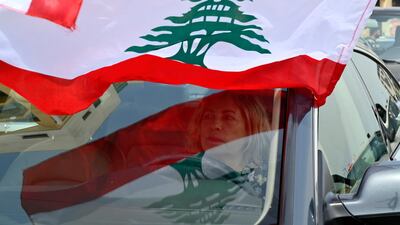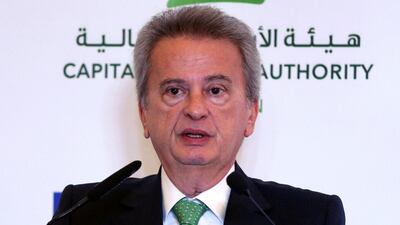
Lebanese Central Bank Governor Riad Salameh. Reuters

Lebanon’s central bank governor: saviour or scapegoat?


Massoud A Derhally
  • English
  • Arabic

When times were good it was rare for anyone to complain about Riad Salameh, Lebanon’s central bank governor of 27 years.

As the country emerged from a 15-year civil war in 1990 and dealt with a series of major events, including the assassination of former Lebanese prime minister Rafik Hariri in 2005, conflict with Israel in 2006, domestic strife in 2008 and the global financial crisis that same year, Mr Salameh was hailed as a hero for maintaining the stability of the economy and the peg of the Lebanese pound to the dollar.

The softly spoken governor was recognised by Euromoney in 2006 as the best central bank governor in the world after being acknowledged the previous year as the top regulator in the Middle East.

The picture is very different today. The country faces its worst economic crisis in three decades and politicians have been slow to act. The country borrowed heavily to finance the cost of reconstruction after the civil war and various governments have pledged to cut spending, increase revenue, privatise state-owned enterprises and reduce the national debt.

But these structural reforms never materialised, largely because Lebanon’s power-sharing system obstructed the passage of meaningful legislation. Instead, the country suffers from daily electricity blackouts and rising unemployment. Lebanon’s debt has ballooned to $92 billion (Dh338bn), placing it among countries with the highest debt-to-GDP ratios globally.

Though the power-sharing system is the glue that has held the country together since the civil war, it is also the Achilles heel that has kept it from moving forward. Marred by long-running political disputes, the central bank stepped in to fill the void, taking on policies that are customarily left to a finance ministry, such as subsidised loans.

“Within this empty space, the central bank of Lebanon was doing what the government was supposed to be doing, providing subsidies to everybody,” said a prominent financier, who spoke on condition of anonymity. “The central bank started dipping into the deposits available to cover the deficits in the government budgets.”

Policymakers also assumed that as long the economy grew at a faster pace than the public debt, the situation would be manageable.

The withdrawal of Syria from Lebanon in 2005, following Hariri’s killing, coupled with high interest rates on deposits attracted billions of dollars - which increased further after interest rates abroad plummeted to zero during the 2008 global financial crisis -  making Lebanese banks more attractive.

Fast forward to 2011 when the conflict in neighbouring Syria unravelled, leading to the influx of more than a million refugees, which magnified the structural imbalances in Lebanon’s economy, that have only got worse in the intervening years.

Deposit flows have dried up, credit is frozen, the pound has lost more than half of its value and the economy is set to contract 12 per cent this year, according to the International Monetary Fund.

Mr Salameh, who turns 70 this July, and was reappointed by the government for a fifth time in 2017 for another six-year term, has been blamed by many, at times undeservedly, for the economy’s fragile state.

As the regulator, Mr Salameh bears some of the blame for the central bank overstepping its mandate, according to Dan Azzi, a critic and former chief executive of Standard Chartered bank in Lebanon, but there is, he said, “enough blame to go around.”

“One must not forget the mitigating factors — that a large portion of the depleted deposits was used to subsidise the exchange rate,” he said.

“The central bank relied on banks to continue to entice a fresh flow of funds by new depositors to pay old ones,” Mr Azzi added.

“Thus, bank CEOs and their boards have a huge part of the blame, because they invested in an institution that they knew, or should have known, cannot possibly pay them back, unless it was bailed out by the government.”

For distraught citizens, Mr Salameh and the banking industry are viewed as an extension of a political system marred by corruption, greed and nepotism.

To some Mr Salameh, a 20-year veteran of Merrill Lynch, and former private banker to the late Mr Hariri, is a casualty of Lebanon’s fractious political landscape. Fringe elements of the far left, who want to nationalise banks, and supporters of Hezbollah who control the state today, see him as an easy target.

On Friday, Lebanon’s Hezbollah-backed prime minister Hassan Diab launched a scathing attack on the governor, prompting some to speculate Mr Salameh might get fired.

The chances of that happening, however are slim. Lebanon’s laws stipulate a governor can only be removed from office if medically incapacitated or is proven to have committed illegal acts.

On Sunday, Maronite Patriarch Bechara Boutros Al-Rai, Lebanon’s top Christian religious authority, rejected criticism of Salameh. “We ask: who benefits from the destabilisation of the central bank governorship? The beneficiary himself knows,” said Rai, as reported by Reuters. “We know the dire outcome, which is eliminating the confidence of the Lebanese people and [foreign] states in the constitutional foundations of the state.”

According to Lebanon's power sharing arrangement the governor of the central bank is a Maronite Christian and four vice governors are a Shiite, a Sunni, a Druze and an Armenian.

Mr Salameh has traditionally remained above the fray and has never expressed any political ambitions.

“The entire banking system has been the target of a systematic campaign since last November to shift the blame of the financial crisis away from entrenched political parties and vested interests,” said Nassib Ghobril, chief economist at Byblos Bank.

“So, it is not surprising to see governor Salameh under attack. This campaign escalated three weeks ago when the government issued its financial plan that effectively forces the banking sector to pay the entire cost of the crisis. We are in a double crisis of confidence and of liquidity. It is not clear how defaming governor Salameh will help solve these crises.”

As the clock ticks, Lebanon may be running out of options.

“Today we need help that should come from beyond Lebanon,” said the Lebanese financier, adding “all roads lead to Washington DC. To the IMF.


Why your domicile status is important

Your UK residence status is assessed using the statutory residence test. While your residence status – ie where you live - is assessed every year, your domicile status is assessed over your lifetime.

Your domicile of origin generally comes from your parents and if your parents were not married, then it is decided by your father. Your domicile is generally the country your father considered his permanent home when you were born. 

UK residents who have their permanent home ("domicile") outside the UK may not have to pay UK tax on foreign income. For example, they do not pay tax on foreign income or gains if they are less than £2,000 in the tax year and do not transfer that gain to a UK bank account.

A UK-domiciled person, however, is liable for UK tax on their worldwide income and gains when they are resident in the UK.

What are NFTs?

Are non-fungible tokens a currency, asset, or a licensing instrument? Arnab Das, global market strategist EMEA at Invesco, says they are mix of all of three.

You can buy, hold and use NFTs just like US dollars and Bitcoins. “They can appreciate in value and even produce cash flows.”

However, while money is fungible, NFTs are not. “One Bitcoin, dollar, euro or dirham is largely indistinguishable from the next. Nothing ties a dollar bill to a particular owner, for example. Nor does it tie you to to any goods, services or assets you bought with that currency. In contrast, NFTs confer specific ownership,” Mr Das says.

This makes NFTs closer to a piece of intellectual property such as a work of art or licence, as you can claim royalties or profit by exchanging it at a higher value later, Mr Das says. “They could provide a sustainable income stream.”

This income will depend on future demand and use, which makes NFTs difficult to value. “However, there is a credible use case for many forms of intellectual property, notably art, songs, videos,” Mr Das says.

Mountain%20Boy
%3Cp%3E%3Cstrong%3EDirector%3A%3C%2Fstrong%3E%20Zainab%20Shaheen%3C%2Fp%3E%0A%3Cp%3E%3Cstrong%3EStarring%3A%3C%2Fstrong%3E%20Naser%20Al%20Messabi%3C%2Fp%3E%0A%3Cp%3E%3Cstrong%3ERating%3C%2Fstrong%3E%3A%203%2F5%3C%2Fp%3E%0A
Who's who in Yemen conflict

Houthis: Iran-backed rebels who occupy Sanaa and run unrecognised government

Yemeni government: Exiled government in Aden led by eight-member Presidential Leadership Council

Southern Transitional Council: Faction in Yemeni government that seeks autonomy for the south

Habrish 'rebels': Tribal-backed forces feuding with STC over control of oil in government territory

Benefits of first-time home buyers' scheme
  • Priority access to new homes from participating developers
  • Discounts on sales price of off-plan units
  • Flexible payment plans from developers
  • Mortgages with better interest rates, faster approval times and reduced fees
  • DLD registration fee can be paid through banks or credit cards at zero interest rates
EA Sports FC 24
MATCH INFO

Barcelona v Real Madrid, 11pm UAE

Match is on BeIN Sports

How to watch Ireland v Pakistan in UAE

When: The one-off Test starts on Friday, May 11
What time: Each day’s play is scheduled to start at 2pm UAE time.
TV: The match will be broadcast on OSN Sports Cricket HD. Subscribers to the channel can also stream the action live on OSN Play.

Four-day collections of TOH

Day             Indian Rs (Dh)        

Thursday    500.75 million (25.23m)

Friday         280.25m (14.12m)

Saturday     220.75m (11.21m)

Sunday       170.25m (8.58m)

Total            1.19bn (59.15m)

(Figures in millions, approximate)

COMPANY%20PROFILE
%3Cp%3E%3Cstrong%3ECompany%20name%3A%3C%2Fstrong%3E%20Sav%3Cbr%3E%3Cstrong%3EStarted%3A%3C%2Fstrong%3E%202021%3Cbr%3E%3Cstrong%3EFounder%3A%3C%2Fstrong%3E%20Purvi%20Munot%3Cbr%3E%3Cstrong%3EBased%3A%3C%2Fstrong%3E%20Dubai%3Cbr%3E%3Cstrong%3EIndustry%3A%3C%2Fstrong%3E%20FinTech%3Cbr%3E%3Cstrong%3EFunding%3A%3C%2Fstrong%3E%20%24750%2C000%20as%20of%20March%202023%3Cbr%3E%3Cstrong%3EInvestors%3A%3C%2Fstrong%3E%20Angel%20investors%3C%2Fp%3E%0A
COMPANY%20PROFILE
%3Cp%3E%3Cstrong%3EName%3A%20%3C%2Fstrong%3EQureos%0D%3Cbr%3E%3Cstrong%3EBased%3A%20%3C%2Fstrong%3EUAE%0D%3Cbr%3E%3Cstrong%3ELaunch%20year%3A%20%3C%2Fstrong%3E2021%0D%3Cbr%3E%3Cstrong%3ENumber%20of%20employees%3A%20%3C%2Fstrong%3E33%0D%3Cbr%3E%3Cstrong%3ESector%3A%20%3C%2Fstrong%3ESoftware%20and%20technology%0D%3Cbr%3E%3Cstrong%3EFunding%3A%20%3C%2Fstrong%3E%243%20million%0D%3Cbr%3E%3C%2Fp%3E%0A

THE SPECS

2020 Toyota Corolla Hybrid LE

Engine: 1.8 litre combined with 16-volt electric motors

Transmission: Automatic with manual shifting mode

Power: 121hp

Torque: 142Nm

Price: Dh95,900

Mercer, the investment consulting arm of US services company Marsh & McLennan, expects its wealth division to at least double its assets under management (AUM) in the Middle East as wealth in the region continues to grow despite economic headwinds, a company official said.

Mercer Wealth, which globally has $160 billion in AUM, plans to boost its AUM in the region to $2-$3bn in the next 2-3 years from the present $1bn, said Yasir AbuShaban, a Dubai-based principal with Mercer Wealth.

Within the next two to three years, we are looking at reaching $2 to $3 billion as a conservative estimate and we do see an opportunity to do so,” said Mr AbuShaban.

Mercer does not directly make investments, but allocates clients’ money they have discretion to, to professional asset managers. They also provide advice to clients.

“We have buying power. We can negotiate on their (client’s) behalf with asset managers to provide them lower fees than they otherwise would have to get on their own,” he added.

Mercer Wealth’s clients include sovereign wealth funds, family offices, and insurance companies among others.

From its office in Dubai, Mercer also looks after Africa, India and Turkey, where they also see opportunity for growth.

Wealth creation in Middle East and Africa (MEA) grew 8.5 per cent to $8.1 trillion last year from $7.5tn in 2015, higher than last year’s global average of 6 per cent and the second-highest growth in a region after Asia-Pacific which grew 9.9 per cent, according to consultancy Boston Consulting Group (BCG). In the region, where wealth grew just 1.9 per cent in 2015 compared with 2014, a pickup in oil prices has helped in wealth generation.

BCG is forecasting MEA wealth will rise to $12tn by 2021, growing at an annual average of 8 per cent.

Drivers of wealth generation in the region will be split evenly between new wealth creation and growth of performance of existing assets, according to BCG.

Another general trend in the region is clients’ looking for a comprehensive approach to investing, according to Mr AbuShaban.

“Institutional investors or some of the families are seeing a slowdown in the available capital they have to invest and in that sense they are looking at optimizing the way they manage their portfolios and making sure they are not investing haphazardly and different parts of their investment are working together,” said Mr AbuShaban.

Some clients also have a higher appetite for risk, given the low interest-rate environment that does not provide enough yield for some institutional investors. These clients are keen to invest in illiquid assets, such as private equity and infrastructure.

“What we have seen is a desire for higher returns in what has been a low-return environment specifically in various fixed income or bonds,” he said.

“In this environment, we have seen a de facto increase in the risk that clients are taking in things like illiquid investments, private equity investments, infrastructure and private debt, those kind of investments were higher illiquidity results in incrementally higher returns.”

The Abu Dhabi Investment Authority, one of the largest sovereign wealth funds, said in its 2016 report that has gradually increased its exposure in direct private equity and private credit transactions, mainly in Asian markets and especially in China and India. The authority’s private equity department focused on structured equities owing to “their defensive characteristics.”

THE SPECS

Jaguar F-Pace SVR

Engine: 5-litre supercharged V8​​​​​​​

Transmission: 8-speed automatic

Power: 542bhp​​​​​​​

Torque: 680Nm​​​​​​​

Price: Dh465,071

The%20Boy%20and%20the%20Heron
%3Cp%3E%3Cstrong%3EDirector%3A%C2%A0%3C%2Fstrong%3EHayao%20Miyazaki%3C%2Fp%3E%0A%3Cp%3E%3Cstrong%3EStarring%3A%3C%2Fstrong%3E%C2%A0Soma%20Santoki%2C%20Masaki%20Suda%2C%20Ko%20Shibasaki%3C%2Fp%3E%0A%3Cp%3E%3Cstrong%3ERating%3A%20%3C%2Fstrong%3E5%2F5%3C%2Fp%3E%0A
The biog

Name: Shamsa Hassan Safar

Nationality: Emirati

Education: Degree in emergency medical services at Higher Colleges of Technology

Favourite book: Between two hearts- Arabic novels

Favourite music: Mohammed Abdu and modern Arabic songs

Favourite way to spend time off: Family visits and spending time with friends

The%20specs
%3Cp%3E%3Cstrong%3EEngine%3A%20%3C%2Fstrong%3E4.0-litre%20twin-turbo%20V8%0D%3Cbr%3E%3Cstrong%3EPower%3A%20%3C%2Fstrong%3E640hp%20at%206%2C000rpm%0D%3Cbr%3E%3Cstrong%3ETorque%3A%20%3C%2Fstrong%3E850Nm%20from%202%2C300-4%2C500rpm%0D%3Cbr%3E%3Cstrong%3ETransmission%3A%20%3C%2Fstrong%3E8-speed%20auto%0D%3Cbr%3E%3Cstrong%3EFuel%20consumption%3A%20%3C%2Fstrong%3E11.9L%2F100km%0D%3Cbr%3E%3Cstrong%3EPrice%3A%20%3C%2Fstrong%3EDh749%2C800%0D%3Cbr%3E%3Cstrong%3EOn%20sale%3A%20%3C%2Fstrong%3Enow%3C%2Fp%3E%0A
Our legal consultant

Name: Hassan Mohsen Elhais

Position: legal consultant with Al Rowaad Advocates and Legal Consultants.