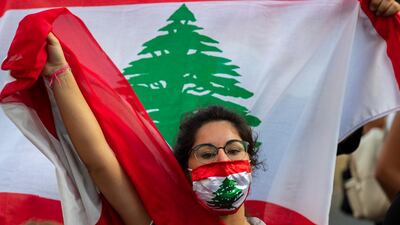
S&P lowered its ratings on several Lebanon government bonds, as the country's economy teeters on collapse and the government struggles to meet debt obligations.
The credit rating agency slashed the issue rating to 'D' from 'CC' on bonds which had their coupon payments due in May and June, S&P said on Sunday. The 10 bonds ranged $250 million (Dh917.5m) to $1 billion in size, with different maturities from 2022 to 2035.
On June 19 the Lebanese government missed the principal payment on a $600m eurobond, following its first default on March 9 on a $1.2bn issue. The government has also missed interest payments on several other bonds in May and June. In March Lebanon's government said it would stop paying all its commercial foreign currency debt obligations of about $31bn.
“The Lebanese government, under prime minister Hasan Diab and with the support of external advisors, has thus far made only limited progress in engaging creditors on debt restructuring negotiations,” S&P analysts Zahabia Gupta and Trevor Cullinan wrote in the report.
“In the absence of a comprehensive restructuring plan backed by all key political institutions and parties, and external support, we continue to expect the negotiation process will be drawn out beyond 2020.”
The ratings agency affirmed Lebanon's long- and short-term foreign currency sovereign credit ratings at selective default. It also affirmed Lebanon’s long- and short-term local currency ratings at 'CC/C' with negative outlook.
The negative outlook reflects the government’s likely decision to restructure its local currency debt as part of a broader restructuring program, S&P said.
Lebanon’s woes are compounded by the Covid-19 pandemic, which has dealt a further blow to an already weak economy and severe external, fiscal, and financial constraints.
The country’s private sector economy continued to contract in June, albeit at a softer pace, as weak demand and a sharp fall in output worsened business conditions. The Blom Lebanon PMI index, improved to 43.2 in June but remained well below 50 a reading above which indicates economic expansion.
The country, which has suffered months of protests and political upheaval, faces its worst financial crisis in three decades. Lebanon’s public debt is projected to climb to 161.8 per cent of gross domestic product in 2020 from an estimated 155 per cent last year, according to International Monetary Fund. That is the third-highest debt-to-GDP ratio in the world after Japan and Greece.
Lebanon faces a foreign currency shortage and the pound's peg to the US dollar has weakened. The pound has lost as much as 80 per cent of its value against the greenback in the black market.
S&P said a restructuring programme, when agreed, is likely to be accompanied by an official currency devaluation.
“We understand the government has yet to announce any restructuring of its local currency debt obligations, which represent about 110 per cent of GDP (63 per cent of total debt),”according to S&P analysts. “Our 'CC' and 'C' ratings on Lebanon's local currency debt reflect our expectation that domestic debt restructuring is highly likely if the country is to set its public debt on a sustainable footing.”
In May, Lebanon asked the IMF for a $10bn loan, but it has yet to make progress on the emergency funding arrangement and is cyrrently in discussions with the fund. The IMF forecasts Lebanon's economy to contract 12 per cent this year.

TECH%20SPECS%3A%20APPLE%20IPHONE%2014%20PLUS
%3Cp%3E%3Cstrong%3EDisplay%3A%3C%2Fstrong%3E%206.1%22%20Super%20Retina%20XDR%20OLED%2C%202778%20x%201284%2C%20458ppi%2C%20HDR%2C%20True%20Tone%2C%20P3%2C%201200%20nits%3C%2Fp%3E%0A%3Cp%3E%3Cstrong%3EProcessor%3A%3C%2Fstrong%3E%20A15%20Bionic%2C%206-core%20CPU%2C%205-core%20GPU%2C%2016-core%20Neural%20Engine%C2%A0%3C%2Fp%3E%0A%3Cp%3E%3Cstrong%3EMemory%3A%3C%2Fstrong%3E%206GB%3C%2Fp%3E%0A%3Cp%3E%3Cstrong%3ECapacity%3A%3C%2Fstrong%3E%20128%2F256%2F512GB%3C%2Fp%3E%0A%3Cp%3E%3Cstrong%3EPlatform%3A%3C%2Fstrong%3E%20iOS%2016%3C%2Fp%3E%0A%3Cp%3E%3Cstrong%3EMain%20camera%3A%3C%2Fstrong%3E%20Dual%2012MP%20main%20(f%2F1.5)%20%2B%2012MP%20ultra-wide%20(f%2F2.4)%3B%202x%20optical%2C%205x%20digital%3B%20Photonic%20Engine%2C%20Deep%20Fusion%2C%20Smart%20HDR%204%2C%20Portrait%20Lighting%3C%2Fp%3E%0A%3Cp%3E%3Cstrong%3EMain%20camera%20video%3A%3C%2Fstrong%3E%204K%20%40%2024%2F25%2F3060fps%2C%20full-HD%20%40%2025%2F30%2F60fps%2C%20HD%20%40%2030fps%3B%20HD%20slo-mo%20%40%20120%2F240fps%3B%20night%2C%20time%20lapse%2C%20cinematic%2C%20action%20modes%3B%20Dolby%20Vision%2C%204K%20HDR%3C%2Fp%3E%0A%3Cp%3E%3Cstrong%3EFront%20camera%3A%3C%2Fstrong%3E%2012MP%20TrueDepth%20(f%2F1.9)%2C%20Photonic%20Engine%2C%20Deep%20Fusion%2C%20Smart%20HDR%204%3B%20Animoji%2C%20Memoji%3B%20Portrait%20Lighting%3C%2Fp%3E%0A%3Cp%3E%3Cstrong%3EFront%20camera%20video%3A%3C%2Fstrong%3E%204K%20%40%2024%2F25%2F3060fps%2C%20full-HD%20%40%2025%2F30%2F60fps%2C%20HD%20slo-mo%20%40%20120fps%3B%20night%2C%20time%20lapse%2C%20cinematic%2C%20action%20modes%3B%20Dolby%20Vision%2C%204K%20HDR%3C%2Fp%3E%0A%3Cp%3E%3Cstrong%3EBattery%3A%3C%2Fstrong%3E%204323%20mAh%2C%20up%20to%2026h%20video%2C%2020h%20streaming%20video%2C%20100h%20audio%3B%20fast%20charge%20to%2050%25%20in%2030m%3B%20MagSafe%2C%20Qi%20wireless%20charging%3C%2Fp%3E%0A%3Cp%3E%3Cstrong%3EConnectivity%3A%3C%2Fstrong%3E%20Wi-Fi%2C%20Bluetooth%205.3%2C%20NFC%20(Apple%20Pay)%3C%2Fp%3E%0A%3Cp%3E%3Cstrong%3EBiometrics%3A%3C%2Fstrong%3E%20Face%20ID%3C%2Fp%3E%0A%3Cp%3E%3Cstrong%3EI%2FO%3A%3C%2Fstrong%3E%20Lightning%3C%2Fp%3E%0A%3Cp%3E%3Cstrong%3ECards%3A%3C%2Fstrong%3E%20Dual%20eSIM%20%2F%20eSIM%20%2B%20SIM%20(US%20models%20use%20eSIMs%20only)%3C%2Fp%3E%0A%3Cp%3E%3Cstrong%3EColours%3A%3C%2Fstrong%3E%20Blue%2C%20midnight%2C%20purple%2C%20starlight%2C%20Product%20Red%3C%2Fp%3E%0A%3Cp%3E%3Cstrong%3EIn%20the%20box%3A%3C%2Fstrong%3E%20iPhone%2014%2C%20USB-C-to-Lightning%20cable%2C%20one%20Apple%20sticker%3C%2Fp%3E%0A%3Cp%3E%3Cstrong%3EPrice%3A%3C%2Fstrong%3E%20Dh3%2C799%20%2F%20Dh4%2C199%20%2F%20Dh5%2C049%3C%2Fp%3E%0A
Museum of the Future in numbers
- 78 metres is the height of the museum
- 30,000 square metres is its total area
- 17,000 square metres is the length of the stainless steel facade
- 14 kilometres is the length of LED lights used on the facade
- 1,024 individual pieces make up the exterior
- 7 floors in all, with one for administrative offices
- 2,400 diagonally intersecting steel members frame the torus shape
- 100 species of trees and plants dot the gardens
- Dh145 is the price of a ticket
French business
France has organised a delegation of leading businesses to travel to Syria. The group was led by French shipping giant CMA CGM, which struck a 30-year contract in May with the Syrian government to develop and run Latakia port. Also present were water and waste management company Suez, defence multinational Thales, and Ellipse Group, which is currently looking into rehabilitating Syrian hospitals.
Mercer, the investment consulting arm of US services company Marsh & McLennan, expects its wealth division to at least double its assets under management (AUM) in the Middle East as wealth in the region continues to grow despite economic headwinds, a company official said.
Mercer Wealth, which globally has $160 billion in AUM, plans to boost its AUM in the region to $2-$3bn in the next 2-3 years from the present $1bn, said Yasir AbuShaban, a Dubai-based principal with Mercer Wealth.
“Within the next two to three years, we are looking at reaching $2 to $3 billion as a conservative estimate and we do see an opportunity to do so,” said Mr AbuShaban.
Mercer does not directly make investments, but allocates clients’ money they have discretion to, to professional asset managers. They also provide advice to clients.
“We have buying power. We can negotiate on their (client’s) behalf with asset managers to provide them lower fees than they otherwise would have to get on their own,” he added.
Mercer Wealth’s clients include sovereign wealth funds, family offices, and insurance companies among others.
From its office in Dubai, Mercer also looks after Africa, India and Turkey, where they also see opportunity for growth.
Wealth creation in Middle East and Africa (MEA) grew 8.5 per cent to $8.1 trillion last year from $7.5tn in 2015, higher than last year’s global average of 6 per cent and the second-highest growth in a region after Asia-Pacific which grew 9.9 per cent, according to consultancy Boston Consulting Group (BCG). In the region, where wealth grew just 1.9 per cent in 2015 compared with 2014, a pickup in oil prices has helped in wealth generation.
BCG is forecasting MEA wealth will rise to $12tn by 2021, growing at an annual average of 8 per cent.
Drivers of wealth generation in the region will be split evenly between new wealth creation and growth of performance of existing assets, according to BCG.
Another general trend in the region is clients’ looking for a comprehensive approach to investing, according to Mr AbuShaban.
“Institutional investors or some of the families are seeing a slowdown in the available capital they have to invest and in that sense they are looking at optimizing the way they manage their portfolios and making sure they are not investing haphazardly and different parts of their investment are working together,” said Mr AbuShaban.
Some clients also have a higher appetite for risk, given the low interest-rate environment that does not provide enough yield for some institutional investors. These clients are keen to invest in illiquid assets, such as private equity and infrastructure.
“What we have seen is a desire for higher returns in what has been a low-return environment specifically in various fixed income or bonds,” he said.
“In this environment, we have seen a de facto increase in the risk that clients are taking in things like illiquid investments, private equity investments, infrastructure and private debt, those kind of investments were higher illiquidity results in incrementally higher returns.”
The Abu Dhabi Investment Authority, one of the largest sovereign wealth funds, said in its 2016 report that has gradually increased its exposure in direct private equity and private credit transactions, mainly in Asian markets and especially in China and India. The authority’s private equity department focused on structured equities owing to “their defensive characteristics.”
What vitamins do we know are beneficial for living in the UAE
Vitamin D: Highly relevant in the UAE due to limited sun exposure; supports bone health, immunity and mood.
Vitamin B12: Important for nerve health and energy production, especially for vegetarians, vegans and individuals with absorption issues.
Iron: Useful only when deficiency or anaemia is confirmed; helps reduce fatigue and support immunity.
Omega-3 (EPA/DHA): Supports heart health and reduces inflammation, especially for those who consume little fish.
Who's who in Yemen conflict
Houthis: Iran-backed rebels who occupy Sanaa and run unrecognised government
Yemeni government: Exiled government in Aden led by eight-member Presidential Leadership Council
Southern Transitional Council: Faction in Yemeni government that seeks autonomy for the south
Habrish 'rebels': Tribal-backed forces feuding with STC over control of oil in government territory
Some of Darwish's last words
"They see their tomorrows slipping out of their reach. And though it seems to them that everything outside this reality is heaven, yet they do not want to go to that heaven. They stay, because they are afflicted with hope." - Mahmoud Darwish, to attendees of the Palestine Festival of Literature, 2008
His life in brief: Born in a village near Galilee, he lived in exile for most of his life and started writing poetry after high school. He was arrested several times by Israel for what were deemed to be inciteful poems. Most of his work focused on the love and yearning for his homeland, and he was regarded the Palestinian poet of resistance. Over the course of his life, he published more than 30 poetry collections and books of prose, with his work translated into more than 20 languages. Many of his poems were set to music by Arab composers, most significantly Marcel Khalife. Darwish died on August 9, 2008 after undergoing heart surgery in the United States. He was later buried in Ramallah where a shrine was erected in his honour.
Milestones on the road to union
1970
October 26: Bahrain withdraws from a proposal to create a federation of nine with the seven Trucial States and Qatar.
December: Ahmed Al Suwaidi visits New York to discuss potential UN membership.
1971
March 1: Alex Douglas Hume, Conservative foreign secretary confirms that Britain will leave the Gulf and “strongly supports” the creation of a Union of Arab Emirates.
July 12: Historic meeting at which Sheikh Zayed and Sheikh Rashid make a binding agreement to create what will become the UAE.
July 18: It is announced that the UAE will be formed from six emirates, with a proposed constitution signed. RAK is not yet part of the agreement.
August 6: The fifth anniversary of Sheikh Zayed becoming Ruler of Abu Dhabi, with official celebrations deferred until later in the year.
August 15: Bahrain becomes independent.
September 3: Qatar becomes independent.
November 23-25: Meeting with Sheikh Zayed and Sheikh Rashid and senior British officials to fix December 2 as date of creation of the UAE.
November 29: At 5.30pm Iranian forces seize the Greater and Lesser Tunbs by force.
November 30: Despite a power sharing agreement, Tehran takes full control of Abu Musa.
November 31: UK officials visit all six participating Emirates to formally end the Trucial States treaties
December 2: 11am, Dubai. New Supreme Council formally elects Sheikh Zayed as President. Treaty of Friendship signed with the UK. 11.30am. Flag raising ceremony at Union House and Al Manhal Palace in Abu Dhabi witnessed by Sheikh Khalifa, then Crown Prince of Abu Dhabi.
December 6: Arab League formally admits the UAE. The first British Ambassador presents his credentials to Sheikh Zayed.
December 9: UAE joins the United Nations.
Dhadak 2
Director: Shazia Iqbal
Starring: Siddhant Chaturvedi, Triptii Dimri
Rating: 1/5
The biog
Name: Shamsa Hassan Safar
Nationality: Emirati
Education: Degree in emergency medical services at Higher Colleges of Technology
Favourite book: Between two hearts- Arabic novels
Favourite music: Mohammed Abdu and modern Arabic songs
Favourite way to spend time off: Family visits and spending time with friends
