

The UAE and Morocco have finalised the terms of a Comprehensive Economic Partnership Agreement, which will boost bilateral trade and investment ties and help the UAE achieve its non-oil foreign trade target of Dh4 trillion ($1 trillion).
The bilateral trade deal will allow the free flow of goods and services by lowering or removing tariffs, eliminating unnecessary trade barriers, and improving market access for services, state news agency Wam reported on Saturday.
It will also establish platforms for investment and private-sector collaboration in priority sectors such as renewable energy, tourism, infrastructure, mining, food security, transport, logistics as well as information and communications technology.
“Our two brotherly nations already enjoy strong bilateral economic relations, and this agreement will enable us to further develop areas of mutual benefit, particularly in sectors such as tourism, energy, manufacturing and agriculture,” said Dr Thani Al Zeyoudi, Minister of State for Foreign Trade.

The two countries shared $1.3 billion in non-oil trade last year, an increase of 30 per cent from 2022. The UAE is the largest Arab investor in Morocco with more than $15 billion invested in a broad range of strategic projects.
“The agreement, which strengthens the legal arsenal between the two countries, aims to support the development of trade and investment, by opening new opportunities to upgrade the level of joint co-operation in economic and commercial fields,” said Ryad Mezzour, Morocco's Minister of Industry and Trade.
Gross domestic product of Morocco, the sixth largest economy on the African continent, is projected to grow by 3.5 per cent this year, after expanding 3.1 per cent last year, according to the International Monetary Fund.
While agriculture remains the largest employer, the services sector is the largest contributor to GDP, accounting for 54 per cent, with the industrial sector contributing 23 per cent.
The IMF last year approved a $1.3 billion financing package for Morocco, after a 6.8-magnitude earthquake hit the North African country on September 8 – its deadliest in more than 60 years, killing about 3,000 people.
-
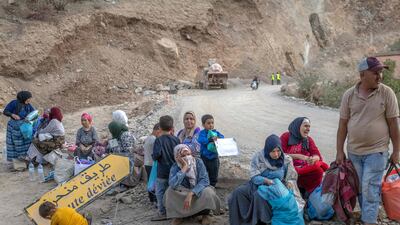
People displaced by the earthquake sit with their belongings by the side of the road between Marrakesh and Taroudant in the Atlas mountains. AFP -
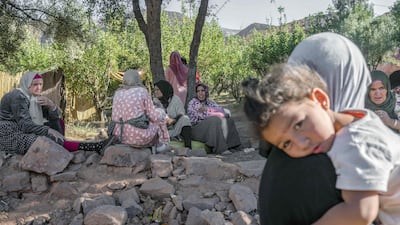
A makeshift camp is set up in the open. AFP -
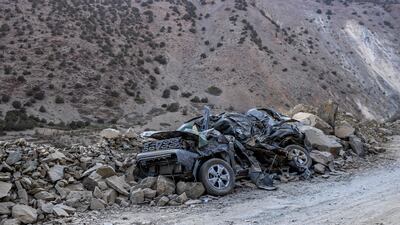
A car is crushed by rubble in the aftermath of the earthquake. AFP -
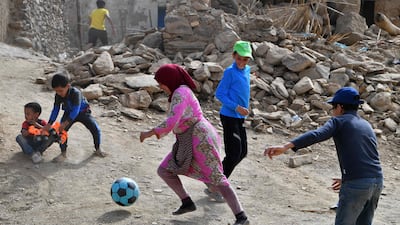
Children play football beside the rubble of collapsed homes in the village of Afella Igir in the Amizmiz region of Morocco. AFP -
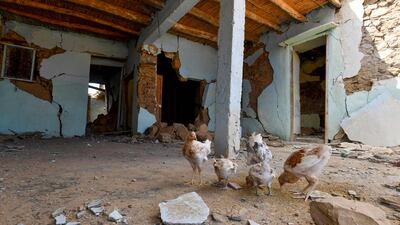
Chickens peck for food at an abandoned home in Afella Igir. AFP -

Not much sign of life in Afella Igir. AFP -

The Moroccan Army on hand in the village of Talat N'Yaaqoub, south of Marrakesh, as the search for victims goes on. EPA -
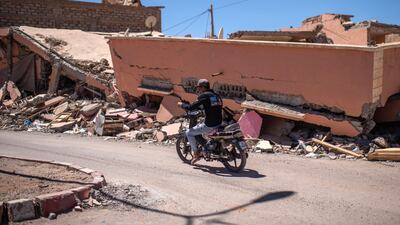
Ruins in the earthquake-hit village of Talat N'Yaaqoub. EPA -
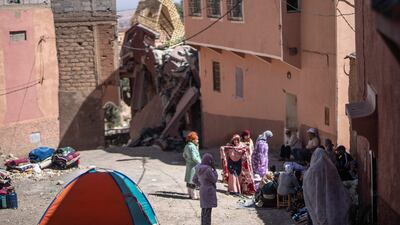
Tents have become homes for people in Moulay Brahim village, whose lives have been turned upside-down by the earthquake. AP -
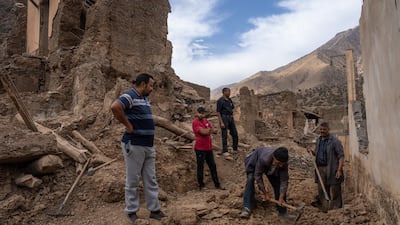
Men clear the rubble of houses that collapsed in Imgdal. Getty Images -
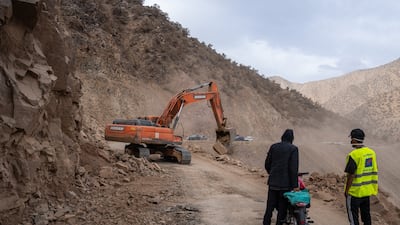
A digger clears a mountain road in Talat N'Yaaqoub. Getty Images -

A badly damaged building leans over in Talat N'Yaaqoub. Getty Images -
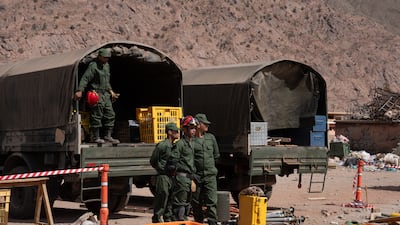
Lorries carrying aid and equipment to be used by rescuers in Talat N'Yaaqoub. Getty Images -
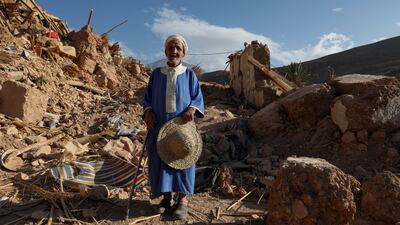
An elderly man is surrounded by rubble in Tikht village, Morocco, days after the quake struck. Reuters -
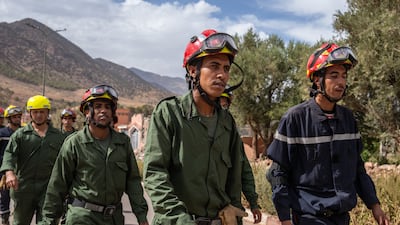
Rescue workers in Talat N'Yaaqoub prepare to search for survivors. Getty Images -
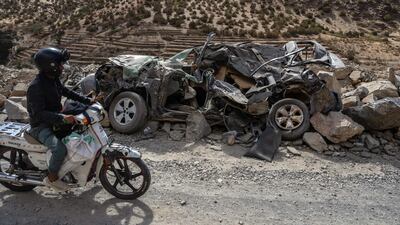
Another crushed car on a mountain road in Talat N'Yaaqoub. Getty Images -
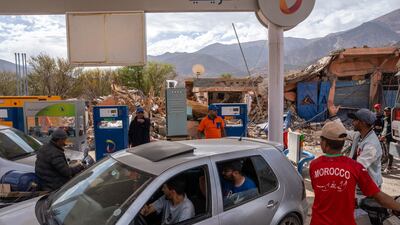
Motorists queue for fuel at one of the few filling stations still open in Talat N'Yaaqoub. Getty Images -
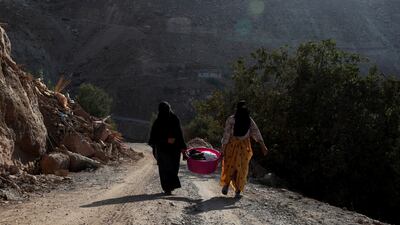
Carrying belongings outside the village of Tikht. Reuters -
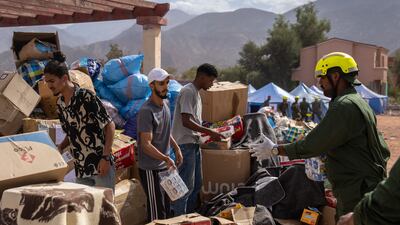
Aid workers distribute relief supplies in Talat N'Yaaqoub. Getty Images -
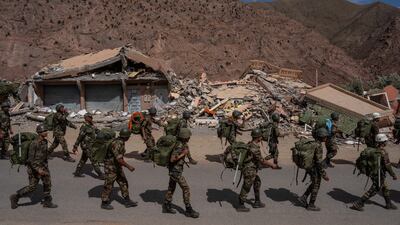
Moroccan troops prepare to embark on relief missions in the mountains near Talat N'Yaaqoub. Getty Images -
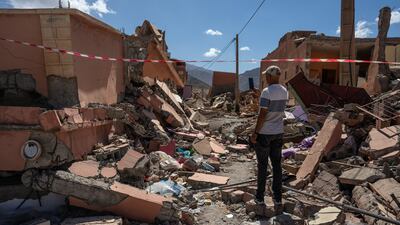
A man films the ruins of collapsed buildings in Talat N'Yaaqoub. Getty Images


The 18-month funding arrangement will “help Morocco address climate vulnerabilities, bolster its resilience against climate change and seize the opportunities from decarbonisation”, the Washington-based lender said at the time.
Morocco is the latest African nation to conclude Cepa terms with the UAE, following Mauritius, Kenya and Congo-Brazzaville.
The Emirates' Cepa programme is expected to grow the country's exports by 33 per cent and contribute more than Dh153 billion to GDP by 2031.
Last year, the UAE's non-oil foreign trade of goods and services reached a high of $710 billion, a 12.6 per cent increase on 2022.
To further grow its trade, the UAE aims to sign 26 Cepas. While deals have been signed with India, Turkey, Israel, Indonesia, Cambodia and Georgia, talks are under way with Serbia, Vietnam, the Philippines, New Zealand and Ecuador.

