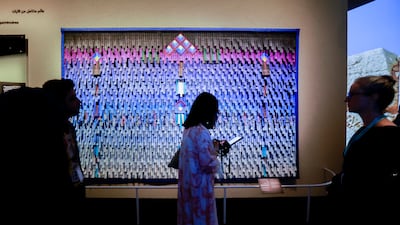
The UAE's art season continues with a diverse programme of exhibitions across Abu Dhabi, Dubai and Al Ain, spanning contemporary art, cultural heritage and interactive experiences.
Highlights include Living Legacies: Protecting Heritage, Building Hope at Louvre Abu Dhabi, which reveals the human effort involved in rescuing cultural treasures threatened by conflict and natural disasters; Aflaj – The Life-giving Veins of the Oasis at Al Ain Museum, tracing 3,000 years of irrigation engineering and community life; and The Days Go On at Ayyam Gallery in Dubai, celebrating two decades of artistic production across the Arab world.
Elsewhere, exhibitions explore memory, migration, identity and environmental change, from Shaikha Al Mazrou's sculptural experiments at Cultural Foundation to contemporary painting, photography and installations at galleries across Dubai. Interactive exhibitions and public art projects also invite visitors to engage with art beyond traditional gallery settings.

Here are 23 exhibitions to see across the UAE.
1. Aflaj – The Life-Giving Veins of the Oasis at Al Ain Museum
Al Ain Museum traces nearly 3,000 years of irrigation engineering and community life in Aflaj – The Life-Giving Veins of the Oasis. Bringing together archaeological discoveries, traditional tools, archival documents and personal accounts, the exhibition explores how underground water systems made agriculture and permanent settlement possible in the desert.
Visitors follow the journey of water from mother wells through gravity-fed underground channels to the oasis fields. Displays of chisels, digging tools and palm-frond containers reveal the labour involved in constructing and maintaining these traditional systems, while immersive galleries recreate the experience of moving from underground passages into the oasis landscape.
The exhibition also examines the social traditions that developed around water distribution, including the use of shadows and stars to determine irrigation times. A section dedicated to UAE Founding Father, the late Sheikh Zayed bin Sultan Al Nahyan, highlights his efforts to preserve the aflaj, featuring an August 1972 newspaper containing his drawing of an irrigation route. The exhibition considers the relevance of these ancient systems to contemporary questions of water conservation and shared responsibility.
From November 27; Al Ain
2. In/Tangible Intimacies: Woven Archives, Woven Witnesses at ICD Brookfield Place
Bringing together five female artists, In/Tangible Intimacies: Woven Archives, Woven Witnesses explores the relationship between material, memory and identity. Curated by Malak Abu Qaoud, the exhibition at ICD Brookfield Place considers how physical materials can carry traces of personal experiences, inherited traditions and spiritual beliefs.
The exhibition features works by Emirati artists Afra Al Dhaheri, Aisha Alhammadi and Zainab M AlHashmi, alongside Lebanese-British artist Nour Hage and Lebanese artist Chafa Ghaddar. Their practices span textiles, sculpture and installation, drawing on techniques such as weaving, embroidery and stone carving.
Through materials including fabric, rope and marble, the artists examine the connections between physical creation and emotional experience. Hage's practice draws on West Asian folklore and ancestral knowledge, while Alhammadi explores spirituality through Islamic geometry. Together, the works consider how the physical processes of making art can preserve memories, express grief and make otherwise intangible experiences perceptible.
Throughout November; Dubai
3. Children's Biennale: How the World Feels at Umm Al Emarat Park

Abu Dhabi's Umm Al Emarat Park has been transformed into an outdoor art exhibition designed around the ways children experience the world. Presented by Abu Dhabi Festival and curated by Dana Almazrouei, the Children's Biennale brings together eight interactive installations that encourage young visitors to explore art through touch, movement, sound and play.
Highlights include Egyptian artist Hana El-Sagini's Common Thread, Common Ground, featuring sculptures that children can alter by weaving and tying ropes, and Emirati artist Moza Almatrooshi's The Agriculture School – The Pollinators Play Museum, which explores the world of bees through colourful structures and sensory activities. Palestinian-American artist Sarah Afaneh invites visitors to contribute to woven tapestries inspired by the sun, land and sea.
Other installations include Where Wishes Grow by Nada Almosa and UT-R Studio, which invites children to share memories and hopes for public spaces, alongside a lantern installation by Indonesian artist Eko Nugroho. The month-long programme also features workshops, guided tours and family activities, encouraging children to become active participants in the artworks.
Until December 6; Abu Dhabi
4. Daniele Genadry and Faycal Baghriche at Taymour Grahne Projects
Taymour Grahne Projects brings together Lebanese-American artist Daniele Genadry and French-Algerian artist Faycal Baghriche in a two-person exhibition exploring the instability of images and the relationship between perception and representation.
Genadry presents atmospheric paintings that investigate light, colour and the ways images appear to dissolve or shift before the viewer. Works such as Lake Line (Dream V) and Afterimage (Glowing Trees) use layered surfaces and subtle variations in tone to explore the limits of visual perception.
Baghriche approaches similar questions through ceramic sculptures, creating distorted figures and objects that challenge familiar ideas of beauty and representation. His works include Le Fantome (The Ghost) and L'Ange (The Angel), both produced in 2026. Bringing the two practices together, the exhibition considers the expressive possibilities of imperfect and unstable imagery.
Until December 12; Dubai
5. Bodies that Make, Bodies that Grieve at NYU Abu Dhabi Project Space
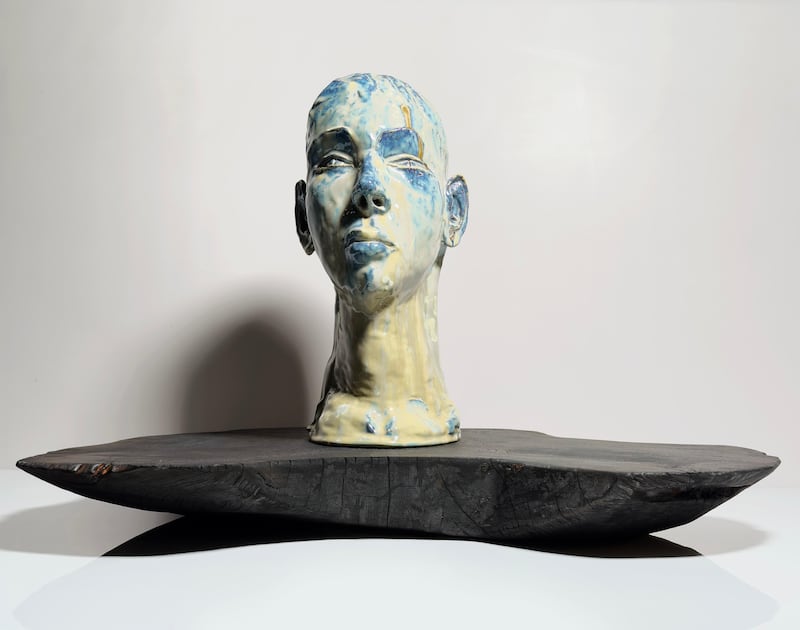
Bodies that Make, Bodies that Grieve brings together eight UAE-based female artists whose practices are rooted in the Global South, exploring how ceramics can give physical form to emotions and experiences that are difficult to express through words. Curated by Shafeena Yusuff Ali, founder and executive director of Rizq Art Initiative, the exhibition examines the relationship between the body, clay and emotional expression.
The exhibition features sculptures by Nujoom Alghanem, Mirna Bamieh, Moza Al Falasi, Malavika, Parneet Pahwa, Zahra Shafie, Laiba Sherin and Haseena Suresh. Working on an intimate, domestic scale, the artists use processes of pressing, building, breaking and firing clay to explore memory, grief and lived experience.
Presented at NYU Abu Dhabi Art Gallery's Project Space, the exhibition also considers the long-standing relationship between ceramics, women's labour and practices of care. By focusing on the physical act of making, it positions clay as a medium through which personal experiences and emotions can take shape.
Until December 13; Abu Dhabi
6. The Sky Held It, The Earth Remembered at Ishara Art Foundation
The exhibition brings together works by Shahana Rajani, Rohini Devasher and Sarker Protick to explore how land, water and the cosmos can act as archives of memory and history. Through photography, moving image and installation, the exhibition considers how ecological change and human intervention leave traces on the environment that can persist across generations.
Rajani’s three-channel film Lines That World a River focuses on communities displaced from the Indus Delta, where paintings and murals reconstruct villages submerged following the construction of dams and barrages. Devasher turns towards the cosmos with Latent Fields, monumental silk panels inspired by sunspots and other solar phenomena, while Protick’s Dhaka 1217 documents 15 years of transformation around the neighbourhood in Dhaka where he was born and continues to live.
Drawing together perspectives from Pakistan, India and Bangladesh, the exhibition considers ecological decline across national borders and the ways landscapes can preserve histories of displacement, destruction and resilience.
Until December 15; Dubai
7. The Days Go On: 20 Years of Ayyam Gallery
Ayyam Gallery celebrates its 20th anniversary with The Days Go On, a group exhibition reflecting on two decades of artistic production and cultural exchange across the Arab world. Established in Damascus in 2006, the gallery has played a significant role in promoting artists from the region through exhibitions, publications and international art fairs.
Curated by Maya Samawi, the exhibition brings together works by more than 50 artists who have contributed to the gallery's development, including Safwan Dahoul, Samia Halaby and Tammam Azzam. Spanning painting, photography, sculpture and mixed media, the presentation traces the diversity of artistic practices that have shaped its programme.
Archival material accompanies the artworks, documenting the gallery's history and its relationships with artists over two decades. The exhibition also considers the changing conditions in which artists from the region have worked, including experiences of displacement, political upheaval and cultural transformation.
Until January 1, 2027; Dubai
8. Centrifugal Time at Green Art Gallery
Italian artist Rossella Biscotti explores the relationship between time, memory and human experience in Centrifugal Time, her first solo exhibition at Green Art Gallery in Dubai. Bringing together sculpture, installation, video and neon, the exhibition examines how materials and personal histories can reveal wider social and political relationships.
Highlights include Centrifugal Gravity, an installation of spherical sculptures made with textiles and concrete. Reconfigured for the Dubai exhibition, the spheres contain garments collected through exchanges and conversations, connecting the physical properties of the materials with the experiences of their former owners.
The exhibition also features The Man Who Walks Backwards (2026), the video portrait Cesar (2001) and Lucy (2026), a neon work commissioned for the Gwangju Biennale. Together, the works reflect Biscotti's interest in the ways individual lives intersect with broader historical events and systems of power.
Until January 2, 2027; Dubai
9. Everybody Changes Underwater at Aisha Alabbar Gallery
Emirati artist Faris Alshafar explores transformation, identity and the ways people adapt to their surroundings in Everybody Changes Underwater, his first solo exhibition at the Aisha Alabbar Gallery. Bringing together new oil paintings, the exhibition marks a shift in the artist's practice from monochrome compositions towards a wider use of colour.
Drawing inspiration from music, video games and everyday experiences, Alshafar creates paintings that examine the ways people change their appearance and behaviour in response to internal desires and external expectations. His compositions feature fragmented forms, recurring symbols and shifting colour palettes, creating environments that appear suspended between familiar and imagined worlds.
The exhibition also considers the relationship between physical and virtual experiences, particularly the ways digital environments can provide a sense of continuity amid changes in everyday life. Through these references, Alshafar explores identity as something continually shaped by memory, perception and circumstance.
Until January 6, 2027; Dubai
10. Revelation at 421 Arts Campus
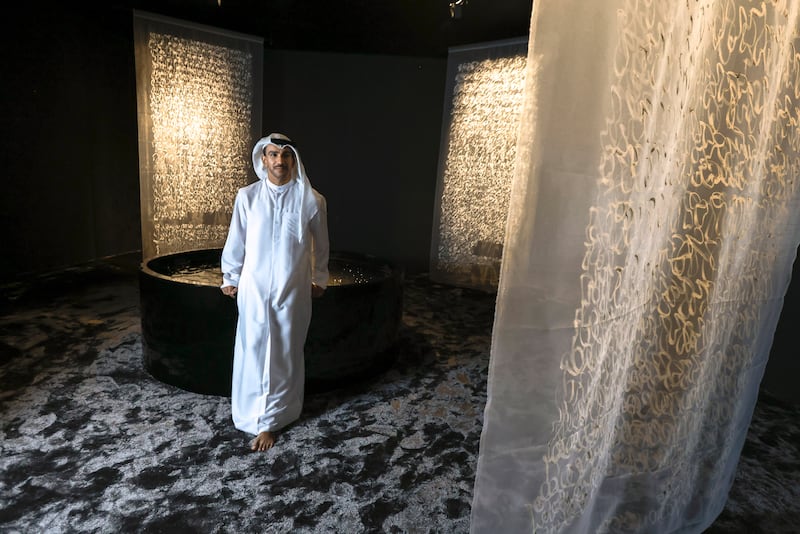
Emirati artist Juma Al Haj explores seclusion, reflection and personal transformation in Revelation, his first institutional solo exhibition.
Developed through 421 Arts Campus's Artistic Development Programme, the project brings together painting, engraved glass, text, light, shadow and installation to consider how moments of uncertainty can lead to greater self-understanding.
The exhibition unfolds as a physical journey, beginning with Balaa, a painting concerned with trials and the ways people measure their lives, and Traces, a series of engraved glass panels whose inscriptions shift with light and shadow. It culminates in Hijr, a darkened, carpeted space centred on a water feature, where visitors remove their shoes and are encouraged to slow down and contemplate.
Al Haj's approach draws on journaling, philosophy and spiritual texts, extending the layered marks of his paintings into an environment visitors can move through.
Rather than presenting revelation as a final answer, the exhibition treats it as one stage in an continuing process of reflection and discovery.
Until January 10, 2027; Abu Dhabi
11. What We Left In The Sandbox at Rizq Art Gallery

Emirati artist Reem Al Mubarak explores childhood memories, play and the emotional significance of everyday objects in What We Left In The Sandbox, her solo exhibition at Rizq Art Gallery on Abu Dhabi's Reem Island. Curated by Emirati architect and researcher Azza Aboualam, the exhibition invites visitors to reconsider their own experiences through interactive artworks made from familiar materials.
The exhibition features bubble wrap, sand, plastic chairs and objects associated with childhood games. Highlights include a sandcastle built to the exaggerated proportions of a child's memory, requiring adults to stoop to enter, and a metal sliding puzzle made from a photograph that can be rearranged but never fully restored.
Developed partly through Al Mubarak's six-month residency at Abu Dhabi's Cultural Foundation, the exhibition also draws on conversations and memories shared by others. By encouraging visitors to touch, move and interact with the works, it considers the unreliable nature of memory and the ways shared experiences can create lasting connections between people.
Until January 10, 2027; Abu Dhabi
12. Where the Tide Flows, and the Dunes Gather at Efie Gallery
Ghanaian artist Yaw Owusu examines the relationship between material, currency and social value in Where the Tide Flows, and the Dunes Gather, his second solo exhibition at Efie Gallery. Presented during the gallery's fifth anniversary year, the exhibition brings together textured canvases, mixed-media sculptures and a new series of works on paper.
Owusu's practice explores the ways societies assign and exchange value, particularly through materials associated with money and commerce. His sculptures reconsider the physical properties of these materials, drawing attention to the labour, resources and social relationships that underpin economic systems.
The exhibition also introduces works on paper made from remnants of the processes used to create his sculptures. By giving new significance to discarded materials, Owusu questions conventional ideas of worth and considers the relationship between material transformation, economic activity and human experience.
Until January 10, 2027; Dubai
13. The Trees Now Stand Unpruned and Wild at Gallery Isabelle
Brazilian artist Tatiana Chalhoub presents her first exhibition in the UAE at Gallery Isabelle, bringing together paintings, glazed ceramics and ceramic collages that explore nature, memory and transformation. Drawing inspiration from the tropical vegetation of her native Rio de Janeiro and the desert landscapes of the UAE, her works combine botanical imagery with animals and abstract forms.
Highlights include the large-scale paintings Green Tree and Rock Tree, alongside smaller ceramic compositions such as Two Crowns and Windy Forest. Working with oil and acrylic paint, clay, ceramic fragments and glazes, Chalhoub builds layered compositions through processes of cutting, breaking and reassembling materials.
Trees are a recurring motif, connected to a childhood memory involving the artist's grandmother. Some works incorporate fragments of glass from her grandmother's belongings, introducing personal history into compositions concerned with growth, change and the relationship between the natural world and human experience.
Until January 12, 2027; Dubai
14. The Territory Dreams Back at Nika Project Space
The Territory Dreams Back brings together five artists whose works explore the relationship between people, landscapes and the histories that shape them. Hosted at the Nika Project Space in Dubai's Al Quoz district, the exhibition considers how geography is influenced by memory, mythology, migration and political power.
Featuring newly commissioned and recent works by Rajni Perera, Sancintya Mohini Simpson, Soma Surovi Jannat, Karan Shrestha and Rain Wu, the exhibition spans painting, sculpture, video and installation. Each artist approaches the idea of territory differently, examining how personal experiences, cultural beliefs and systems of power influence the ways places are understood and inhabited.
The exhibition also considers the relationship between natural environments and human intervention, from the histories carried by land and water to the ways maps, borders and infrastructure reshape landscapes. Together, the works challenge the idea of geography as something fixed, presenting places as environments continually transformed by human activity and collective memory.
The opening reception takes place on November 21, from 5pm to 10pm, with a performance by Wu at 7pm.
Until January 15, 2027; Dubai
15. Paul Guiragossian: 100 Years of Art at Bassam Freiha Art Foundation
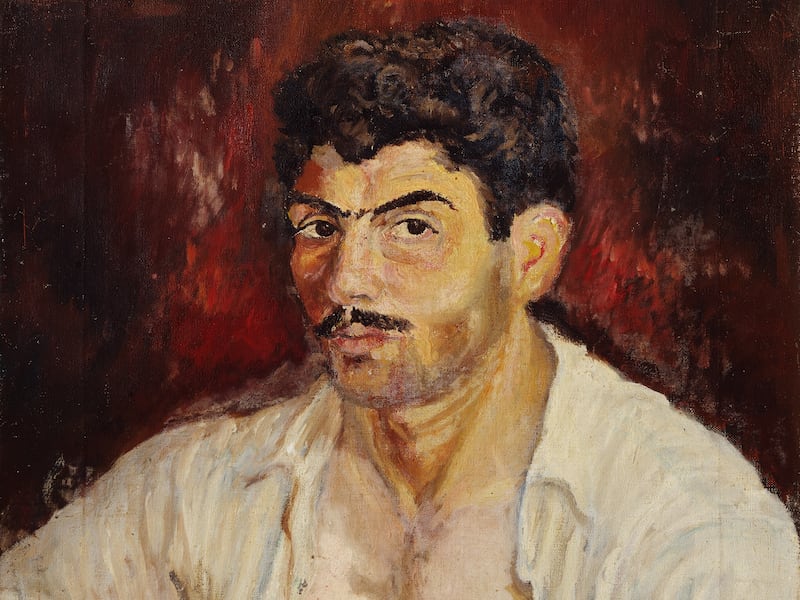
Paul Guiragossian: 100 Years of Art celebrates the centenary of the Lebanese artist's birth, bringing together significant works from his estate at Bassam Freiha Art Foundation in Abu Dhabi.
Developed in collaboration with the Paul Guiragossian Foundation, the exhibition offers an overview of the life and legacy of one of the leading figures of modern Lebanese and Middle Eastern art.
Known for his expressive use of colour and distinctive depictions of the human figure, Guiragossian (1926–1993) developed a visual language concerned with family, identity and the human condition. His paintings frequently explored themes of displacement, belonging and everyday life, reflecting both personal experiences and the wider history of the region.
Drawing primarily on works from the artist's estate, the exhibition traces the development of his practice and considers his enduring influence on modern Arab art.
Until January 17, 2027; Abu Dhabi
16. Spices and Wonders: Sailing the Indian Ocean at Louvre Abu Dhabi
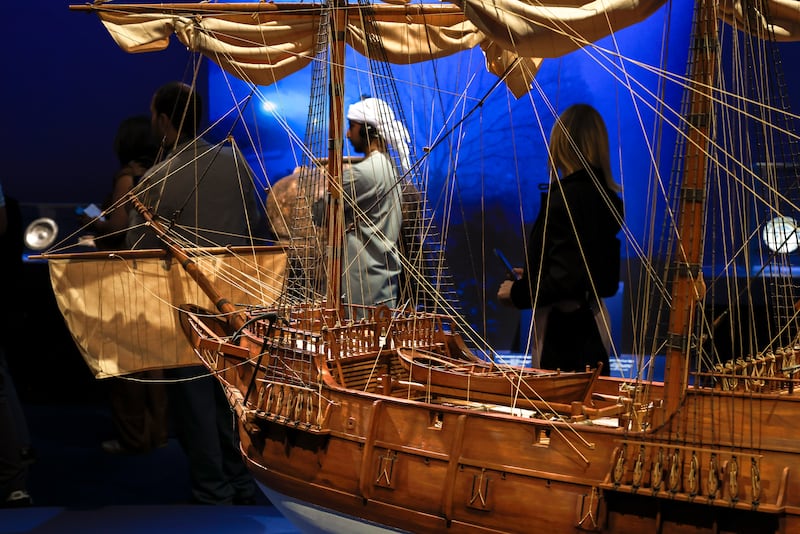
Spices and Wonders: Sailing the Indian Ocean explores 1,000 years of maritime trade and cultural exchange, tracing the routes that connected communities across East Africa, the Arabian Peninsula, India, China and South-East Asia. Organised in partnership with the Guimet National Museum of Asian Arts in Paris, the exhibition brings together about 240 artworks and historical objects from 24 lenders.
The exhibition places the Arabian Gulf at the centre of its narrative, examining the region's pearl trade and the movement of spices, precious stones, textiles and religious artefacts. Highlights include six detailed models of historic vessels, objects recovered from shipwrecks, ancient navigational instruments and a third-century Buddha sculpture from present-day Pakistan.
Through specially created maps and immersive displays, the exhibition examines how sailors navigated using stars and coastal landmarks, while merchants and pilgrims carried goods, beliefs and artistic traditions among distant societies. Its historical narrative concludes in the 17th century, drawing attention to the extensive trading networks that existed before European powers came to dominate Indian Ocean commerce.
Until February 14, 2027; Abu Dhabi
17. Public Art Abu Dhabi Biennial: Home – A Glossary for a Communal Sense of Place
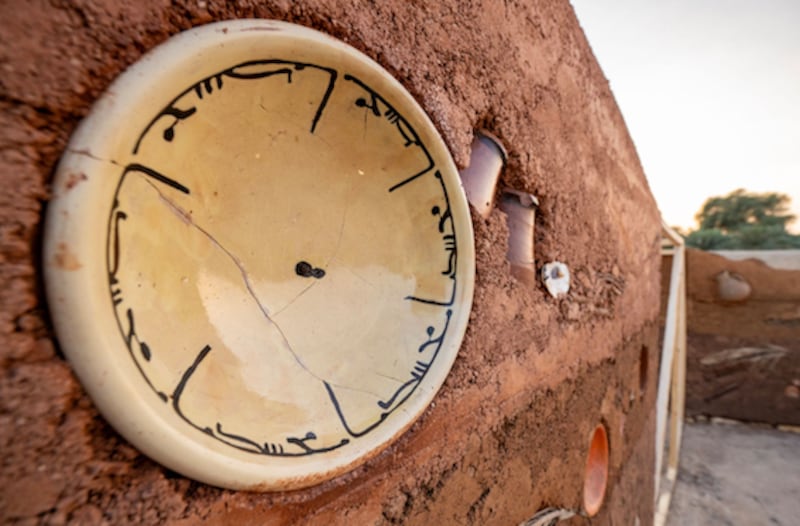
The second Public Art Abu Dhabi Biennial explores ideas of home, belonging and community through installations presented across public spaces in Al Ain and Abu Dhabi. Led by artistic director Elvira Dyangani Ose, the exhibition brings together 21 artists and collectives whose works respond to the environments and communities in which they are situated.
Titled Home: A Glossary for a Communal Sense of Place, the biennial considers the different ways people understand and experience home, from physical surroundings and personal memories to shared histories and cultural traditions.
The exhibition opened in Al Ain on October 23 and expands to Abu Dhabi on November 15, with installations at locations including Mina Zayed, Souq Al Mina and Saadiyat Cultural District. Participating artists include Ibrahim Mahama, Akram Zaatari, Nari Ward and Laure Prouvost, whose practices span sculpture, installation and socially engaged art.
Until February 15, 2027; Al Ain and Abu Dhabi
18. Art Here 2026: Confluences at Louvre Abu Dhabi

Art Here 2026 brings together six artists from India, Saudi Arabia, the UAE and Malaysia to explore migration, memory and centuries of cultural exchange across the Indian Ocean. Curated by Kamini Sawhney, the exhibition unfolds beneath Louvre Abu Dhabi's dome, with installations examining the personal experiences and shared histories connecting communities across the region.
Highlights include Indian artist Reena Kallat's Shorelines of Longing, which draws on letters and recorded messages exchanged between families separated by migration to the Gulf, and Ravikumar Kashi's Meghadutam, featuring cloud-like textiles patterned with correspondence. Emirati artist Almaha Jaralla's Daria Dawlat uses traditional sailors' garments to evoke the region's maritime history, while Vivek Vilasini's Dreamings of Arabia explores the UAE's linguistic diversity through monumental ceramic vessels.
The exhibition also features works by Saudi artist Ahaad Alamoudi and Malaysian artist Muhammad Shamin Sahrum, whose installations examine transformation and belonging. Presented alongside the Richard Mille Art Prize, the exhibition extends the historical narrative of Louvre Abu Dhabi's Spices and Wonders: Sailing the Indian Ocean into the present.
Until February 28, 2027; Abu Dhabi
19. The Matter of Light at Dom Art Projects
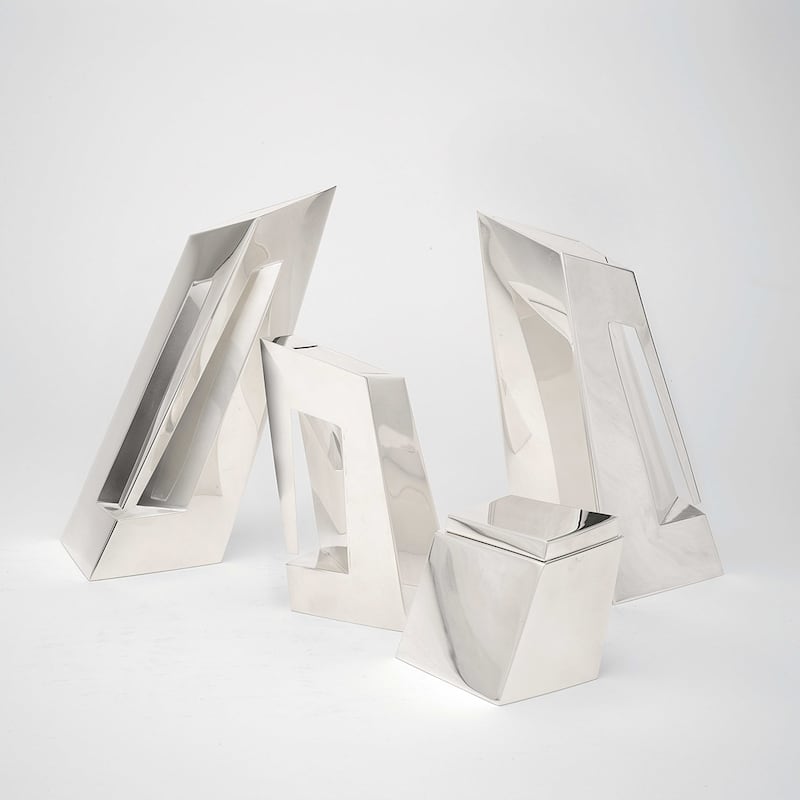
The Matter of Light brings together 22 artists and collectives from Eastern Europe and the Arab world to explore the role of light in shaping perception, space and artistic expression. Curated by Eugenia Kikodze, the exhibition considers light as both a physical phenomenon and a subject that artists have approached through different materials and disciplines.
Participating artists include Kamal Boullata, Zaha Hadid, Susan Hefuna and Zoulikha Bouabdellah. Their works examine the relationship between light, form and the environments people inhabit, bringing together approaches informed by architecture, abstraction and contemporary visual culture.
Featuring loans from collections including the Barjeel Art Foundation and Art Jameel, the exhibition creates connections between artists working across different regions and generations.
Until March 10, 2027; Dubai
20. Salah Elmur: Just as the Heart of a Mango is a Stone at Jameel Arts Centre
Sudanese artist Salah Elmur examines family histories, memory and collective experience in Just as the Heart of a Mango is a Stone, a solo exhibition at Jameel Arts Centre. Bringing together paintings, sketches, archival photographs and other materials, the exhibition focuses on works produced since 2018.
Curated by Zain Al Saie and Qutouf Elobaid, the exhibition unfolds across three chapters exploring relationships between family, land, labour and grief. Elmur's distinctive figurative paintings draw on everyday encounters and personal recollections, often combining familiar subjects with unusual compositions and expressive colour.
The exhibition considers the relationship between individual memory and wider social histories, reflecting the artist's long-standing engagement with Sudanese life and culture.
Until March 14, 2027; Dubai
21. A Board Game Adventure at Louvre Abu Dhabi
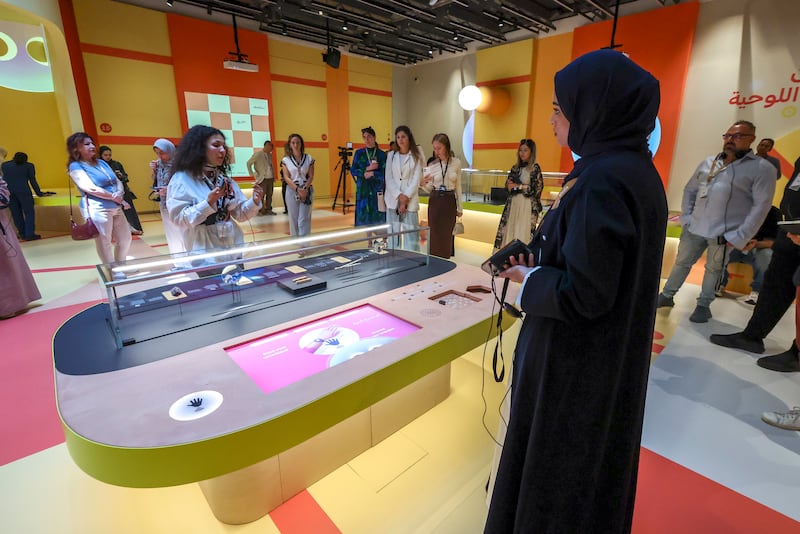
A Board Game Adventure transforms Louvre Abu Dhabi into a giant playground, using some of the world's oldest games to explore how people have connected across cultures for thousands of years. Designed for children but engaging for all ages, the exhibition traces the journey of games including chess, Mancala, Ludo and Carrom as they travelled between ancient civilisations and evolved into the games still played today.
The exhibition combines immersive installations with rare artefacts borrowed from international museums, including some of the earliest known board game objects from ancient Egypt, Mesopotamia, Iran and India. Highlights include centuries-old chess pieces carved from ivory and rock crystal, engraved backgammon pieces, ancient six-sided dice and one of the earliest known predecessors of Ludo.
Interactive displays encourage visitors to solve puzzles, challenge artificial intelligence, play on oversized game boards and discover how strategy, chance and storytelling have always been part of human play. Throughout the exhibition, historical figures including Queen Nefertari, Achilles and the samurai Hatakeyama Shigetada are reimagined through playful “player profiles”, linking games to the personalities and cultures that shaped them.
Rather than presenting games as simple entertainment, A Board Game Adventure reveals them as cultural objects that have crossed borders, adapted to societies and brought people together for millennia.
Until April 25, 2027
22. Living Legacies: Protecting Heritage, Building Hope at Louvre Abu Dhabi

Louvre Abu Dhabi explores the work involved in rescuing and preserving endangered cultural heritage in Living Legacies: Protecting Heritage, Building Hope. Organised in partnership with the International Alliance for the Protection of Heritage (Aliph), the exhibition brings together about 50 works from eight countries, including archaeological objects, manuscripts, ceremonial costumes and contemporary art.
Unfolding across seven sections, the exhibition examines the threats posed by conflict, natural disasters and climate change, alongside the expertise required to protect cultural treasures. Highlights include ancient glassware damaged during the 2020 Beirut port explosion, manuscripts restored from Djenne in Mali and an augmented reality experience developed by Snap that reconstructs the monumental Lamassu sculptures destroyed at Mosul Museum in Iraq in 2015.
Photographs, conservation tools and personal testimonies reveal the work often carried out behind the scenes at museums and archaeological sites. The exhibition also considers the role of local communities in protecting their heritage and the difficult decisions involved in restoring damaged objects and monuments.
Until April 25, 2027; Abu Dhabi
23. Shaikha Al Mazrou: Two Horizons at Cultural Foundation

Emirati artist Shaikha Al Mazrou explores the relationship between material, perception and the natural world in Two Horizons, a major solo exhibition at Abu Dhabi's Cultural Foundation. Bringing together existing works and new commissions, the exhibition examines how industrial materials can be transformed into forms that challenge expectations of weight, balance and permanence.
Curated by Reem Fadda, with Noor AlMehairbi, Paz Monge and Afra Saif Almazrouei, the exhibition unfolds across four chapters in the Cultural Foundation's atrium and inner galleries. Working with materials including steel, marble, glass, resin and copper, Al Mazrou creates sculptures that explore the tension between rigid structures and seemingly fluid or delicate forms.
Highlights include Fragmented Horizons, a new commission, alongside Water Was Never Blue and A Throw of the Dice Will Never Abolish Chance. The exhibition also introduces works in marble, extending the artist's experimentation with materials and their physical properties. Using the horizon as a recurring reference, Al Mazrou considers ideas of distance, longing and the shifting relationship between people and their surroundings.
Until July 18, 2027; Abu Dhabi

