


UN Secretary General Antonio Guterres warned on Monday that tension between major powers and the risk of conflict due to “misadventure or miscalculation” are at a “historic high”.
Speaking at a ministerial-level open debate on multilateralism and the UN Charter, the Secretary General urged the 15-member Security Council to “co-operate” and stop the “slide towards chaos and conflict” worldwide.
“Members of this council, particularly those that enjoy the privilege of serving permanently, have a particular responsibility to make multilateralism work, rather than contribute to its dismemberment,” he said.
“Tensions between major powers are at a historic high. So are the risks of conflict, through misadventure or miscalculation.”
He added: “We face unprecedented and interlocking crises, but the multilateral system is under greater strain than at any time since the creation of the United Nations.”
Mr Guterres urged member states to recommit to their obligations under the UN Charter, “putting human rights and dignity first, and prioritising the prevention of conflict and crises”.
The Secretary General also denounced the “devastation” and the “massive suffering” Russia’s invasion of Ukraine has caused, noting it is “in violation of the UN Charter and international law”.
-
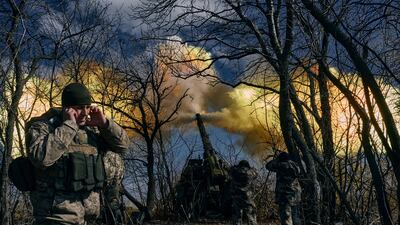
Ukrainian soldiers fire a howitzer towards Russian positions, near Bakhmut in Ukraine. AP -
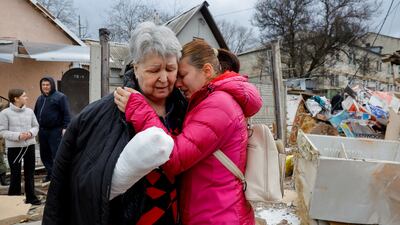
Resident Svetlana Boiko, 66, who was wounded in recent shelling, is comforted near her destroyed house in Donetsk. Reuters -
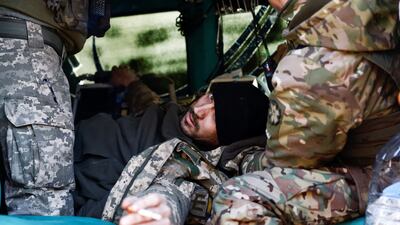
A wounded Ukrainian soldier is treated in a front-line stabilisation ambulance, near Kreminna. Reuters -
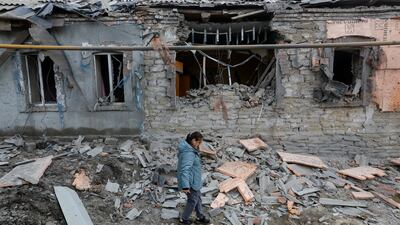
A house in Donetsk destroyed in recent shelling. Reuters -
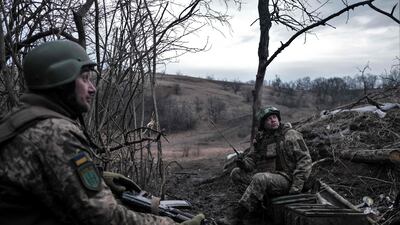
Ukrainian volunteer soldiers hold their positions at the front line near Bakhmut. AFP -
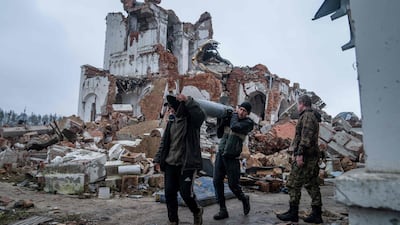
Volunteers carry the remains of a Uragan rocket as they clear the area around the Sviatohirsk Cave Monastery in Dolyna. AFP -
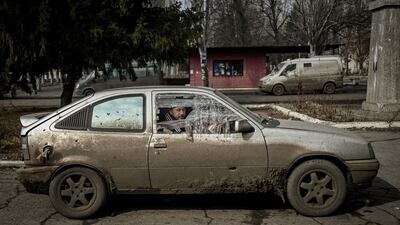
A man sits inside a damaged car in the village of Chasiv Yar. AFP -
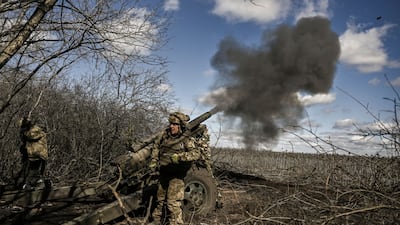
Ukrainian servicemen fire at Russian positions in the region of Donbas. AFP -
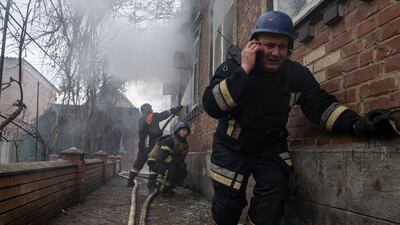
Rescue workers put out a fire in a house shelled by Russian forces in Kostiantynivka. AP -
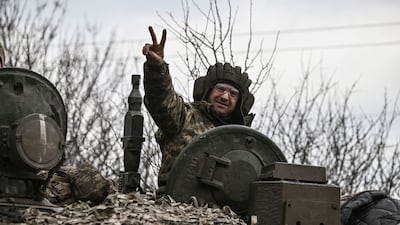
A Ukrainian serviceman moves towards the frontline city of Bakhmut. AFP -
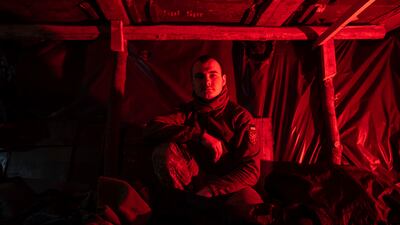
Vladyslav, a Ukrainian paratrooper of the 80 Air Assault brigade, rests in a dugout at the front line near Bakhmut. AP -
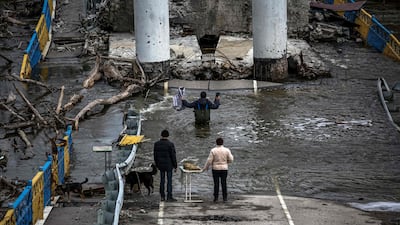
Residents of the village of Bohorodychne cross the Seversky Donets river to retrieve bread from the other bank. AFP


Russia took on the Security Council's rotating presidency this month and Foreign Minister Sergey Lavrov led Monday's debate.
He told council members “as was the case in the Cold War, we have reached a dangerous, possibly even more dangerous threshold”.
"The situation has been worsened by the loss of and faith in multilateralism," he said.
Before the debate, the EU's ambassador to the UN, Olof Skoog, questioned Russia’s rationale for convening the event, referring to the Kremlin’s intentions as “cynical”.
“By organising this debate, Russia is trying to portray itself as a defender of the UN Charter and multilateralism,” said Mr Skoog.
He pointed out that if Russia was truly interested in the topic on the agenda, it would stop “abusing its veto power to cover up its consistent rule-breaking”, he told reporters.
The US ambassador to the UN, Linda Thomas-Greenfield, accused Russia of violating “universal human rights” and called for the UN to be reformed.
To support and maintain its fundamental principles, she said, the UN “must evolve to meet the 21st century”.
“We must find credible, sensible and politically viable paths to this end. And while we work to forge those paths, those of us on the Security Council have a duty to do more,” she said.
Five members of the council — China, the US, France, UK and Russia — have the power of veto, which some member states feel is unfair and frequently abused.
Khalifa Shaheen Almarar, UAE Minister of State, expressed concerns about international rules being imposed on the world by a minority of states and noted that the multilateral system should be inclusive.
“Some member states have always had a disproportionate influence over the multilateral system, including how these systems were set up and whether or not they function in the interest of all,” he said.
“It is the same member states that can prevent or realise the reforms necessary to make multilateralism more effective.”

