



Some of Taylor Swift’s fans want you to know three things: They are not still 16; they have careers and resources; and right now, they are angry.
That is a powerful political motivator, researchers say.
Look at what Ticketmaster made them do.
It started on November 15, when millions crowded early online sales for Swift’s long-awaited Eras Tour, resulting in systems crashes, prolonged waits and frantic purchases.
By Thursday, Ticketmaster had cancelled the general sale, saying there were insufficient remaining tickets.
That sparked a firestorm of outrage from fans. Swift herself said the ordeal really made her mad.
Ticketmaster apologised but the bad blood had already been sowed. And now fans — and politicians — have started acting on it.
US Representative Alexandria Ocasio-Cortez directed "Swifties" to where they could make complaints to the US Department of Justice.
State attorneys general — including in Pennsylvania and Tennessee, key states in Swift’s origin story — have announced investigations.
Stephanie Aly, a New York professional who has worked on community organising for progressive politics, for years has thought mobilising fans for social progress could be beneficial.
“Fandoms are natural organisers,” said Ms Aly, 33, a Swiftie. “If you find the right issues and you activate them and engage them then you can effect real change.”
In 2020, for instance, K-pop fans organised to back the Black Lives Matter movement and sought to inflate registration for a Donald Trump rally.
Ms Aly and fans from different industries — law, public relations, cyber security and more — have joined forces to form Vigilante Legal.
The group is lobbying to create policy change around Ticketmaster and organise the Swifties, while creating email templates to petition attorneys general and providing antitrust information.
Thousands have expressed interest in helping or learning more.
“The level of anger that you’ve just seen in the country around this issue is astounding,” said Jean Sinzdak, associate director for the Centre for American Women and Politics at Rutgers University.
“People are really sharing their feelings about that and building a movement about that online.
"Whether it lasts is hard to say, but it certainly feels like a real opportunity.”
And a demographic that is seldom courted by politicians during election season is getting recognised.
“Nobody goes out and thinks, ‘Let’s target young women',” said Gwen Nisbett, a University of North Texas professor who researches the intersection of political engagement and pop culture.
“Be it about abortion or student loans, that age group is super mobilised and young women are super mobilised.”
-
-
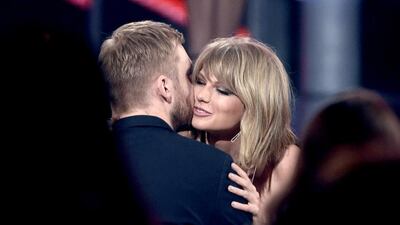
Taylor Swift, right, hugs Calvin Harris after winning the award for top billboard 200 album for 1989. AP -
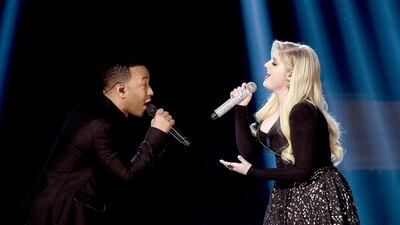
John Legend and Meghan Trainor perform onstage during the 2015 Billboard Music Awards at MGM Grand Garden Arena on May 17, 2015 in Las Vegas, Nevada. Ethan Miller / Getty Images / AFP -
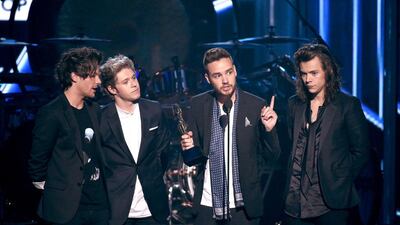
Recording artists Louis Tomlinson, Niall Horan, Liam Payne and Harry Styles of One Direction accept the Top Duo/Group award onstage. Ethan Miller / Getty Images / AFP -
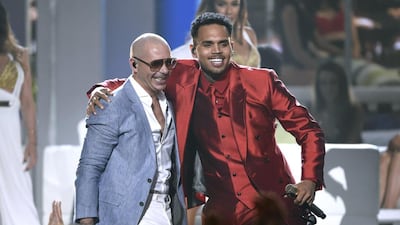
Pitbull, left, and Chris Brown perform at the Billboard Music Awards at the MGM Grand Garden Arena on Sunday, May 17, 2015. Chris Pizzello / Invision / AP -
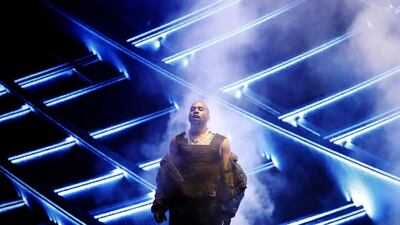
Kanye West performs All Day during the 2015 Billboard Music Awards. Reuters -
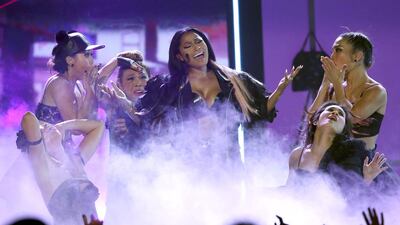
Nicki Minaj performs The Night is Still Young. Reuters -

Ed Sheeran performs Bloodsteam during the 2015 Billboard Music Awards in Las Vegas, Nevada May 17, 2015. Reuters -

Mariah Carey performs. AP -
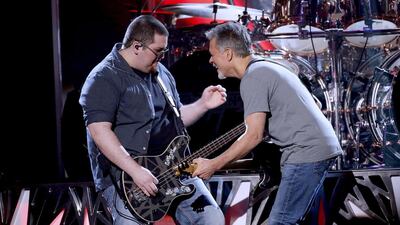
Wolfgang Van Halen performs Panama with his father Eddie Valen Halen. Reuters -

Sam Smith is seen on screen accepting the award for top male artist. AP -
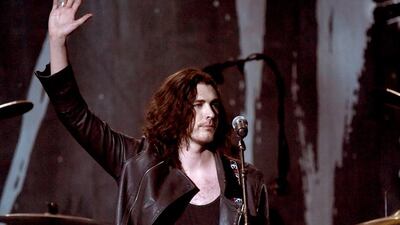
Recording artist Hozier performs onstage. AFP -
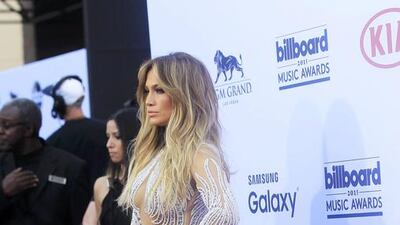
Singer Jennifer Lopez arrives. Reuters -

Musician Iggy Azalea and musician Britney Spears. AFP


Fan culture and community has boosted that tendency towards mobilisation.
Ms Nisbett was studying parasocial relationships, when fans have strong one-way relationships with celebrities, in 2018, when the previously apolitical Swift posted an endorsement of Democratic candidates to social media.
Ms Nisbett found that while such posts may not determine fans’ votes, they still led to the increased likelihood that fans would look for more information about voting, and actually vote.
AP VoteCast, an extensive survey of the US electorate, showed about a third of Tennessee voters in 2018 said they had a favourable opinion of Swift, and among them, about 70 per cent backed Democrat Phil Bredesen in the Senate contest.
That was in clear contrast to about a third of voters who had an unfavourable opinion of Swift and overwhelmingly backed Republican Marsha Blackburn.
This is not the first time a fandom or an artist has attacked Ticketmaster. Pearl Jam took aim at the company in 1994, although the Justice Department ultimately declined to bring a case.
“It’s not just about getting vengeance for Swifties. It’s not about getting an extra million Taylor Swift fans tickets, or all of us going to a secret session,” said Jordan Burger who is using his law background to help the cause.
“It’s about fundamental equality. And when you have a monopolist like that, it’s just so representative of the class structure of a society where there isn’t equality any more, there isn’t fairness.”

