


Follow the latest news from the Sudan crisis here
The UK “can't just focus on Sudan” when it comes to taking in refugees, Foreign Secretary James Cleverly said on Tuesday after Britain ended its evacuation flights from the country.
British troops handed the Wadi Saeedna airfield back to local authorities after helping more than 2,000 people escape the fighting in Sudan.
The evacuees included Sudanese doctors working in the National Health Service but Mr Cleverly played down the prospect of further refugees joining family members in Britain.
The UN has said that more than 800,000 people could flee Sudan because of the violence between rival military factions.
“Sudan is not the only live conflict in the world. Sadly, there are many millions of people who are living in countries that have a conflict,” Mr Cleverly told BBC Radio 4's Today programme.
“The nature and scale of the support that we give to refugees has to be done in the round. We can't just focus on Sudan.”
He said a controversial migration bill currently before MPs would commit the government to providing “safe and legal routes” to Britain.
The UK described its airlift from Sudan as the longest and largest by a western nation during the crisis, with at least 2,197 people rescued.
The flights carried some citizens of other nations, including the US, Ireland, the Netherlands, Canada, Germany and Australia.
“As the focus turns to humanitarian and diplomatic efforts, we will continue do all we can to press for a long-term ceasefire and an immediate end to the violence in Sudan,” Mr Cleverly said.
The government said it was no longer running evacuation flights from Wadi Saeedna airfield because of a significant decline in the number of British citizens coming forward and an increasingly volatile situation on the ground.
The latest from the crisis in Sudan - in pictures
-

Evacuees disembark from Saudi ship Amanah after it docked in Jeddah. AP Photo -
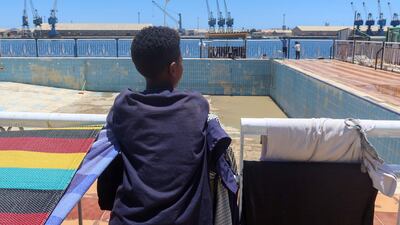
A boy waits with his family's luggage before being processed for evacuation in Port Sudan. Reuters -

Smoke billows during fighting in Khartoum. AFP -
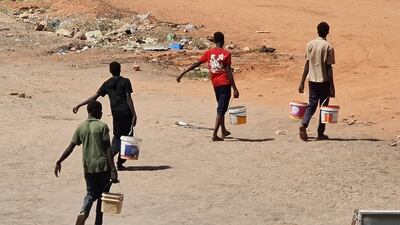
Youths carry buckets of water in the Sudanese capital. AFP -
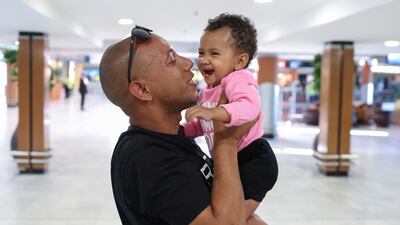
South African evacuee Muzzammil Raubenheimer greets his one-year old daughter Amana after arriving home at Cape Town airport. Reuters -
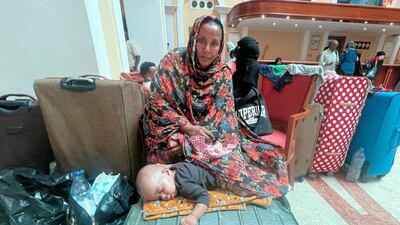
Sudanese citizens wait at a makeshift evacuation centre in Port Sudan amid the fighting in Khartoum. Reuters -
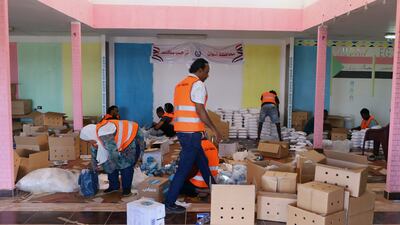
Volunteers prepare aid packages for people who fled the fighting in Sudan, at Wadi Karkar bus station in Aswan, Egypt. EPA -
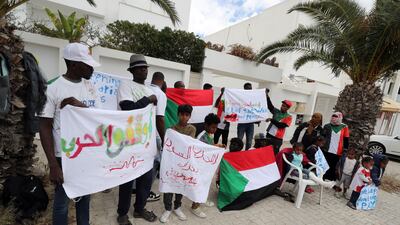
Sudanese call for the end of the war as they protest in front of their country's embassy in Tunis, Tunisia. EPA -
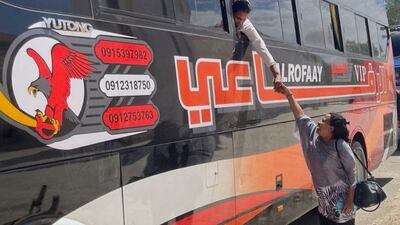
A Sudanese woman with UK citizenship leaves on a bus before being processed for evacuation. Reuters -

Smoke rises above buildings after an aerial bombardment in Khartoum. Reuters -

People walk on an almost empty street in southern Khartoum. AFP -
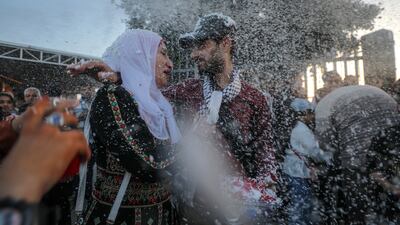
Palestinians evacuated from Sudan arrive at the Rafah crossing, between Egypt and the southern Gaza Strip. EPA -
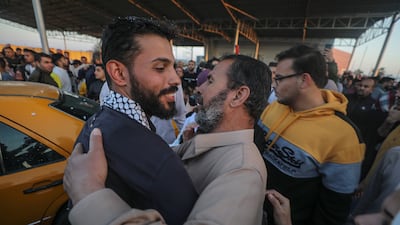
Palestinians greet each other at the Rafah crossing, after fleeing Sudan. EPA -
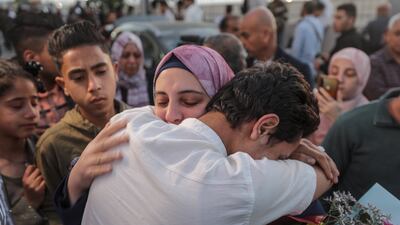
The Palestinian evacuees crossed into Egypt first as they fled the fighting in Sudan. EPA -
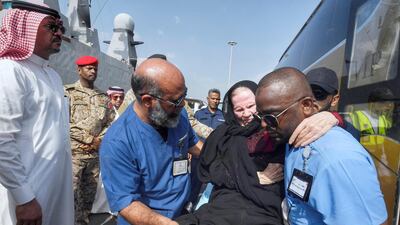
Civilians of different nationalities arrive at Jeddah Sea Port after being evacuated by Saudi Arabia from Sudan. Reuters -
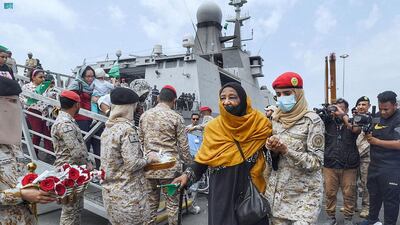
Civilians of different nationalities arrive at Jeddah Sea Port after being evacuated by Saudi Arabia from Sudan. Reuters -
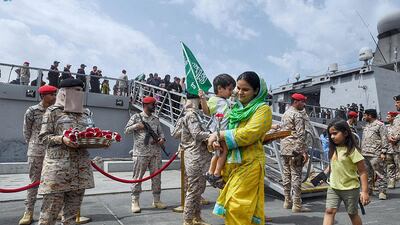
Civilians of different nationalities arrive at Jeddah Sea Port after being evacuated by Saudi Arabia from Sudan. Reuters -
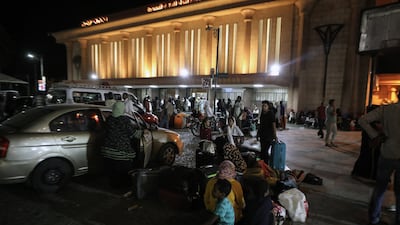
Passengers fleeing from Sudan wait outside the railway station in Aswan, Egypt. EPA -
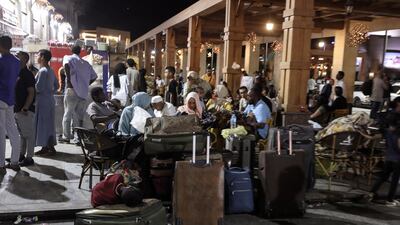
Passengers fleeing from Sudan wait outside the railway station in Aswan, Egypt. EPA -

Zimbabwean evacuees from Sudan are seen upon arrival at Robert Mugabe International airport in Harare, Zimbabwe. AP Photo -
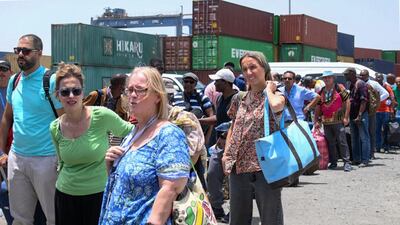
People fleeing war-torn Sudan queue to board a boat from Port Sudan. AFP -
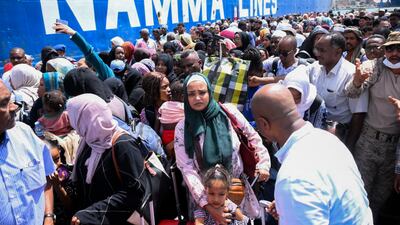
People fleeing war-torn Sudan queue to board a boat from Port Sudan. AFP


A UK team is now set up at Port Sudan to provide consular assistance, including to British citizens leaving by commercial routes.
The Royal Navy's HMS Lancaster is supporting evacuation efforts from Sudan.
“Yet again, the men and women of our armed forces have led the way,” Defence Secretary Ben Wallace said.
“In one week, the RAF have flown more than 20 flights, deployed over a thousand personnel, evacuated over 2,000 civilians and helped citizens from more than 20 countries to get home.
“HMS Lancaster will remain at Port Sudan and her crew will continue to help provide support.”
International Development Minister Andrew Mitchell was in Nairobi at the weekend, meeting Kenyan President William Samoei Ruto and African Union chairman Moussa Faki Mahamat to discuss the conflict in Sudan.
The UK ambassador to Sudan was sent to Addis Ababa last week to support the UK’s diplomatic regional response from the British embassy in Ethiopia.
London says it is also exploring options to provide effective humanitarian assistance to people in Sudan, in co-ordination with international partners, the UN and NGOs.
The UK, which has historic links to Sudan, has allocated more than £250 million ($312 million) to humanitarian aid in the last five years.
The government is urging all British citizens in Sudan to follow travel advice, warning the situation remains volatile and that evacuation plans could change at short notice.

