
Oman's Sultan Haitham bin Tariq has set up a national committee to counter the impact on the economy from the coronavirus pandemic, the official news agency reported on Sunday as the death toll passed 100.
"The committee shall deal with the economic effects resulting from the pandemic by setting an appropriate mechanism to ensure the speedy return of economic activities and ensure accelerated economic growth rates," the Oman News Agency (ONA) said.
The ministry of health on Sunday reported 1,404 new coronavirus infections taking Oman's case total to 23,481. The death toll from Covid-19 rose to 104 people, while a total of 7,530 people have recovered from the virus, the ministry said.
-
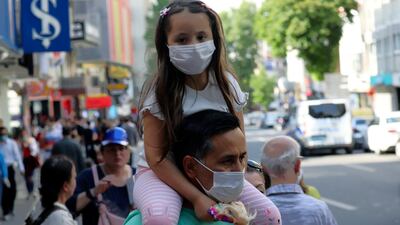
A man carries a young girl on his shoulders, in Ankara, Turkey. AP Photo -
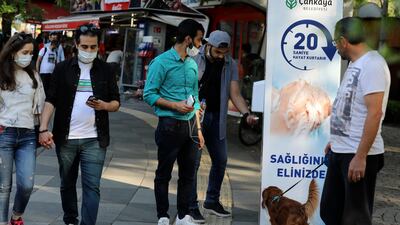
People use disinfectant at the entrance of a public garden, in Ankara, Turkey. AP Photo -
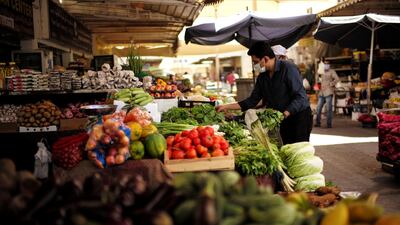
A man purchases vegetables at a wholesale market in Manama, Bahrain. Reuters -
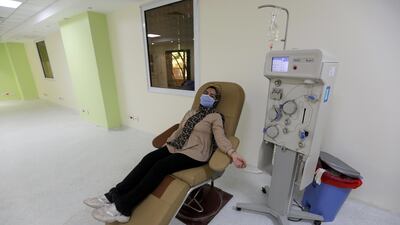
A patient who has recovered from the coronavirus disease donates her plasma for research purposes at the National Blood Transfusion Service in Cairo, Egypt. Reuters -
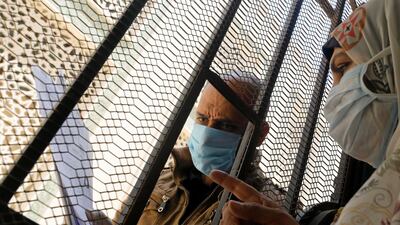
A man receives medicine at a medical centre in Cairo, Egypt. Reuters -
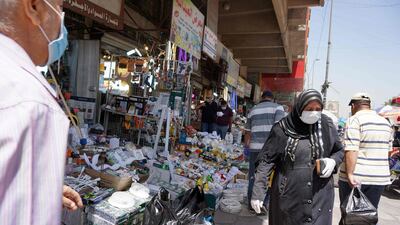
Iraqis walk along a street in the capital Baghdad. AFP -
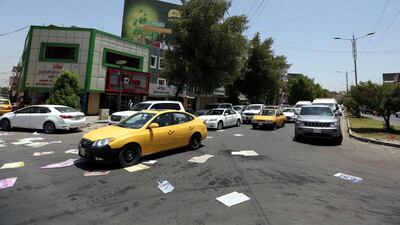
Vehicles stuck in traffic along al-Sa'adun street in Baghdad, Iraq. EPA -
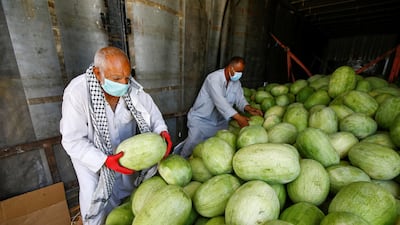
Iraqi men sell watermelons at a market in the city of Najaf, Iraq. Reuters -
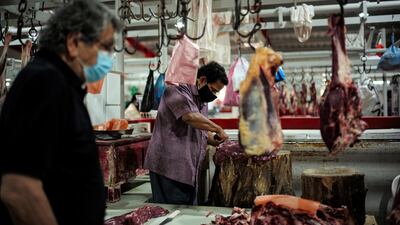
A butcher cuts meat at his stand, in Manama, Bahrain. Reuters -

A woman shops at a supermarket in Riyadh, Saudi Arabia. Reuters -

A worker sterilises tables at a restaurant in Riyadh, Saudi Arabia. Reuters -
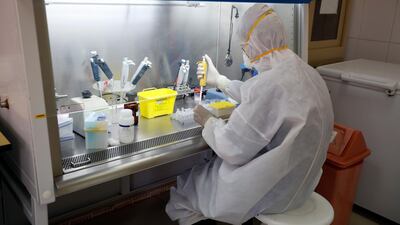
Lab technicians work on samples from suspected coronavirus patients at a laboratory in Sanaa, Yemen. EPA


Lockdowns imposed to contain the pandemic in Oman and worldwide have pushed down the price of oil, the major contributor to the sultanate's economy, and also affected its growing tourism sector, including the cancellation of the popular Khareef Festival in the southern city of Salalah. The lockdown also forced the shutdown of Oman's biggest free zone in the city of Duqm.
The sultanate's budget for 2020 was based on an oil price of $58 a barrel; on Sunday, Omani crude was being at $39.90 per barrel.
Although not an Opec member, Oman began cutting oil production by 200,000 barrels per day earlier this month, equivalent to about 20 per cent of its total output, to support the bloc's efforts to shore up prices.
"The oil production cut to support Opec members roughly means a revenue loss of $8 million a day at current prices. That's a lot for a country that already has a deficit in the current financial year," economic analyst Said Al Kharusi said.
Faced with an estimated a budget deficit of 2.5 billion rials ($6.5bn), Oman's government last month ordered a 10 per cent cut in government expenditure this year.
Sultan Haitham, who took over the reins of leadership from the late Sultan Qaboos bin Said in January, decreed that civil servants with 30 years of service should be retired and that the salaries of board members in government-owned organisations should be cut by 50 per cent.
He has also established a Special Palace Office to oversee the civil ministries and created the Oman Investment Authority to attract foreign investors and manage the national wealth fund. The heads of both organisations report directly to him.

