


Live updates: follow the latest news on Russia-Ukraine
Ukrainian refugees will be able to apply for UK visas at another processing centre being set up in Lille, British Foreign Secretary Liz Truss said.
Ms Truss told the House of Commons on Tuesday about the “pop-up” site in the city in northern France after the government’s resettlement policy for fleeing war-torn Ukraine was branded “cruel and chaotic”.
“Will the Foreign Secretary speak to her colleague the Home Secretary about the cruel and chaotic way that desperate Ukrainian refugees are being treated by her department?" Labour MP Diane Abbott asked.
“It cannot be right that there is no visa application centre in Calais and Ukrainian refugees who travel thousands of miles to Calais are being redirected to either Paris or Brussels.
"Does the Foreign Secretary agree that this brings the UK into disrepute?”
Ms Truss replied: “The Home Office have placed staff in Poland and Hungary to help people, they have also … the Home Secretary has announced a new pop-up application site in Lille.
“I can tell her that the Home Office has set up a surgery for MPs in Portcullis House, which I am sure she will be very welcome to take any cases she has to.”
Home Secretary Priti Patel told MPs on Monday: “I can confirm that we have set up a bespoke VAC en route to Calais but away from the port because we have to prevent that surge taking place.”
But Ms Patel later told the Commons the government is still “setting up” the visa application centre.
She said there was a need to avoid creating “choke points” in Calais and instead “encourage a smooth flow of people”, as concerns were raised over Ukrainians being turned away from the French port city.
There are no plans to open a centre in Calais but this will be under regular review, Ms Patel said.
-
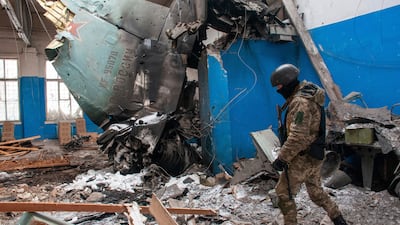
A Ukrainian serviceman walks past the vertical tail fin of a Russian Su-34 bomber lying in a damaged building in Kharkiv, Ukraine. AP Photo -
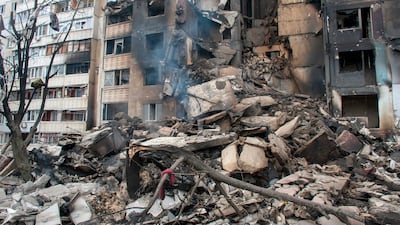
An apartment building damaged after shelling in Kharkiv, Ukraine. AP Photo -
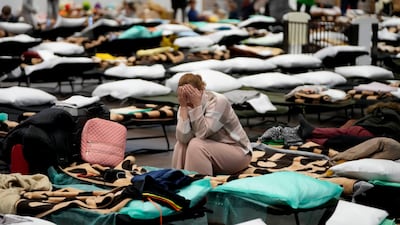
A woman puts her head in her hands as she sits on a cot in a shelter, set up for displaced persons fleeing Ukraine, inside a school gymnasium in Przemysl, Poland. AP Photo -
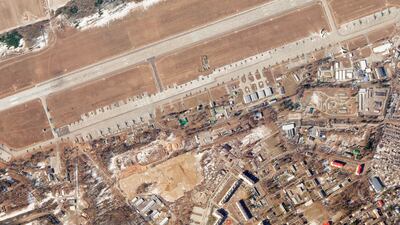
Belarussian and suspected Russian helicopters on the flight line at Machulishchy Air Base outside Minsk, Belarus. AP Photo -
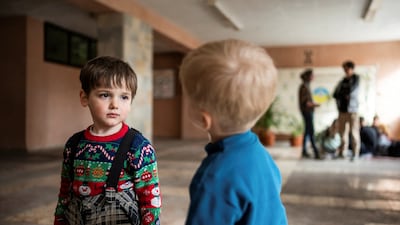
Children look on as people fleeing Russia's invasion of Ukraine shelter in a school, in Drohobych, Ukraine. Reuters -
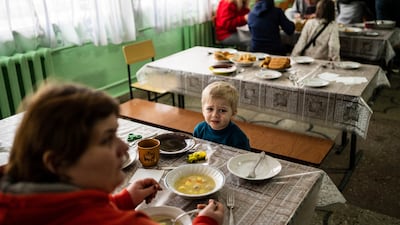
Families eat in the shelter. Reuters -
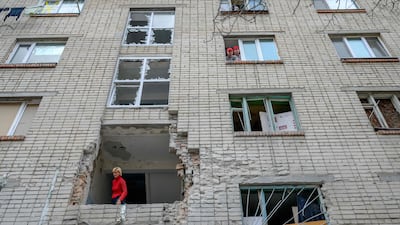
A woman looks out from a building damaged by Russian shelling in Mykolaiv, 100 kilometres away from Odesa, western Ukraine. AFP -
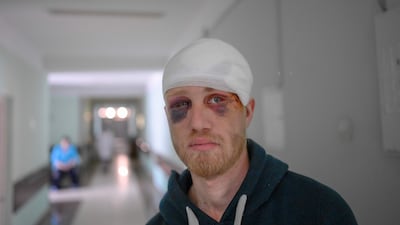
A wounded Ukrainian man waits in the corridor of the central hospital of Mykolaiv. AFP -
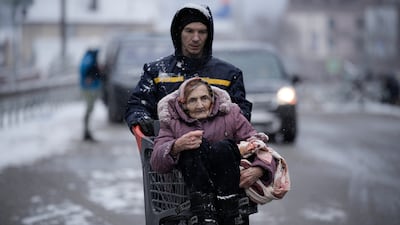
An elderly woman is carried in a shopping cart after being rescued from Irpin, on the outskirts of Kyiv, Ukraine. AP -
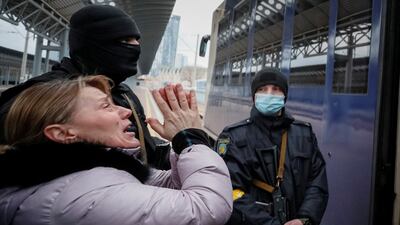
A woman reacts as a train carrying children from Kyiv's Central Children's Hospital leaves the Ukrainian capital on its way to Lviv. Reuters -
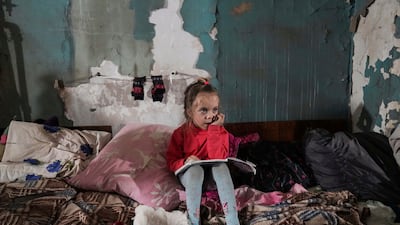
A girl sits in an improvised bomb shelter in Mariupol, Ukraine. AP -
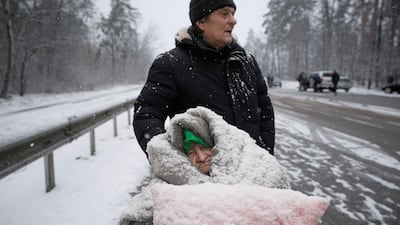
An elderly woman is coated in snow as she sits in a wheelchair after being rescued from Irpin. AP -
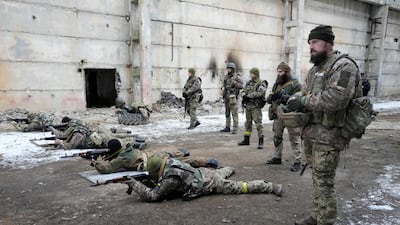
Belarusian volunteers take part in military exercises at the Belarusian Company base in Kyiv. AP -
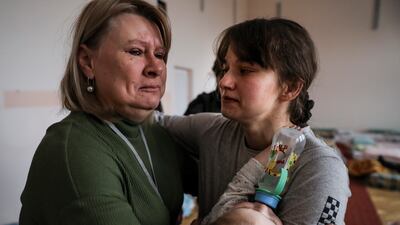
Lessa, left, director of a nursery school turned into a refugee shelter, cries as she hugs Olega, who arrived from Kyiv with her baby, near Lviv. EPA -
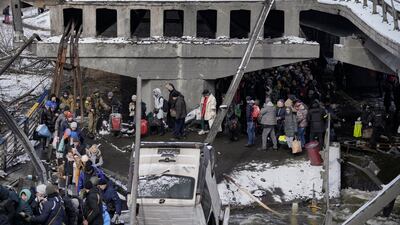
Ukrainians pass a damaged bridge as they flee from Irpin. AP -
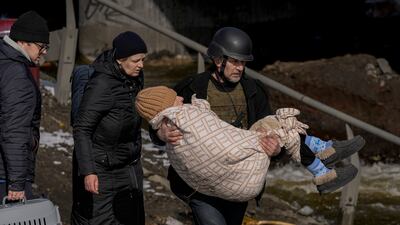
A man carries an elderly woman as people continue to leave Irpin. AP -
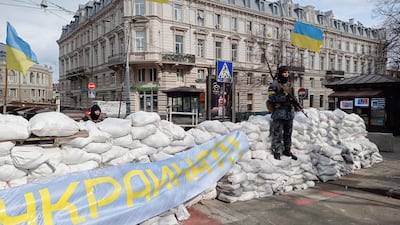
A soldier stands on a barricade made of sandbags in central Odesa, Ukraine. Reuters -
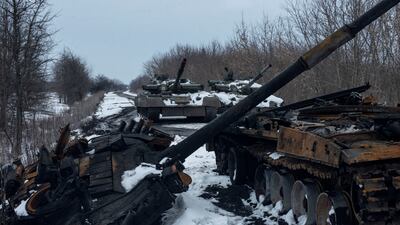
A charred Russian tank and captured tanks in the Sumy region. Reuters -
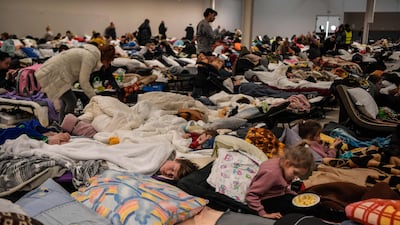
People rest at a temporary shelter for Ukrainian refugees in Przemysl, Poland. AFP -
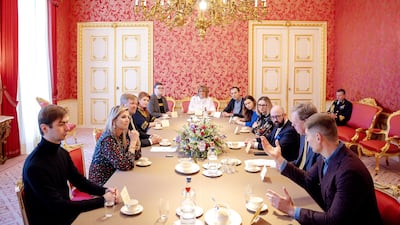
Ukraine's ambassador to the Netherlands, Maksym Kononenko, third right, and his wife Tetiana Doroshenko, fourth left, attend a meeting of members of the Ukrainian community with Dutch King Willem-Alexander, third left, and Queen Maxima, second left, to discuss the situation in Ukraine, in The Hague. EPA -
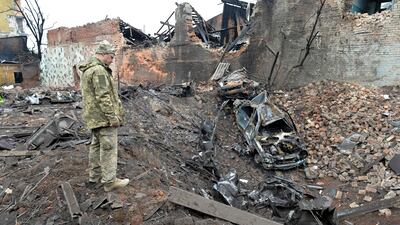
A Ukrainian soldier looks at the destruction after shelling in Ukraine's second-largest city of Kharkiv. AFP -
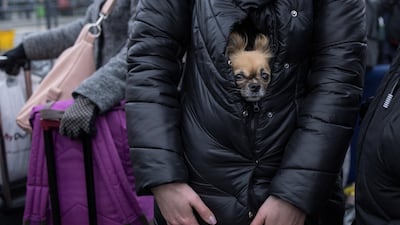
A refugee holds her dog as they wait for trains to Poland in Lviv, Ukraine. Reuters -
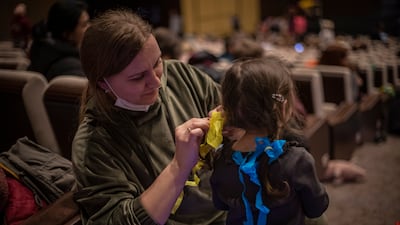
A woman ties ribbons in Ukrainian national flag colours in a girl's hair as people wait at a refugee assistance centre in Prague, Czech Republic. EPA -
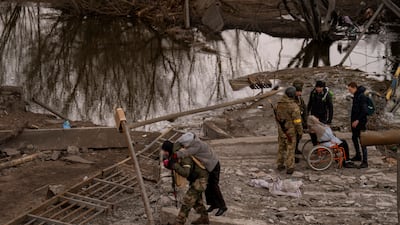
A Ukrainian soldier carries an elderly woman crossing the Irpin river on the outskirts of Kyiv. AP -
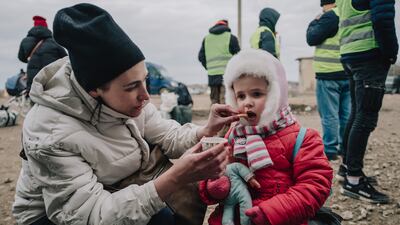
Lena, who had never left Ukraine before fleeing into Moldova, feeds Dasha, 3, soon after crossing the border. Erin Clare Brown for The National -
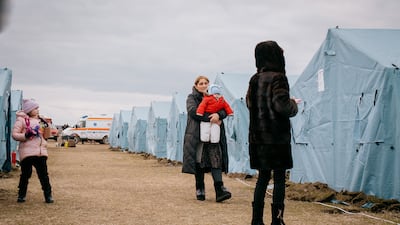
Refugees without immediate plans to move further inland can stay the night in tents set up on Moldova's side of the border. Erin Clare Brown for The National -
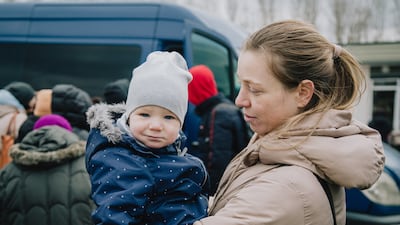
Tatiana and her son wait for a van that will carry them from the Moldovan border to Chisinau. Erin Clare Brown for The National -
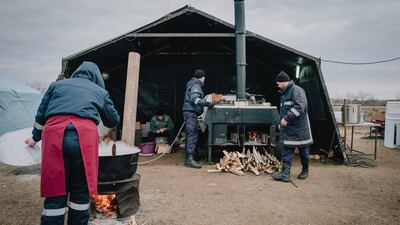
Each night, the Palanca refugee camp in Moldova feeds up to 300 people who arrive with no onward plans. Erin Clare Brown for The National -
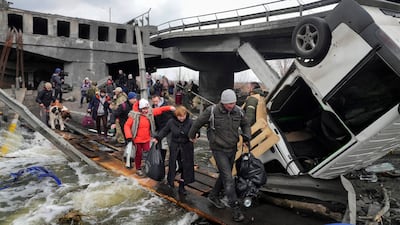
People pass a damaged bridge while fleeing the town of Irpin, close to the Ukrainian capital of Kyiv. AP -
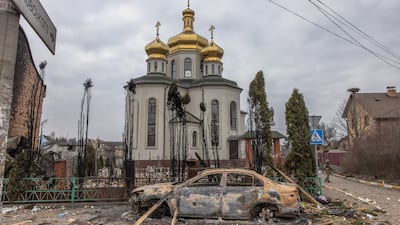
A Ukrainian soldier stands guard next to a church in Irpin. EPA -
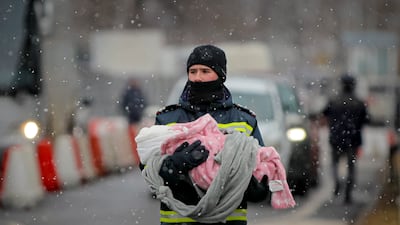
A firefighter holds the baby of a Ukrainian refugee at the border in Romania. AP -
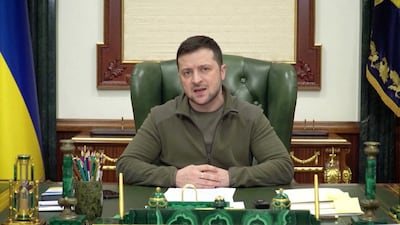
Ukrainian President Volodymyr Zelenskyy speaks in Kyiv. Reuters -
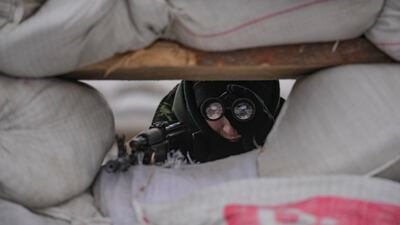
A Ukrainian soldier at a checkpoint in Kyiv. AP -
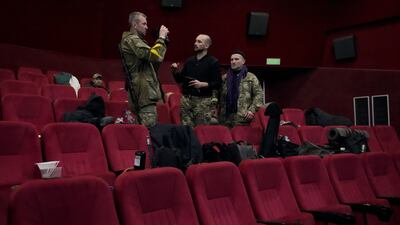
Ukrainian activist Ihor Mazur, left, a veteran of the war in the country's east, looks at a night-vision device in Kyiv. AP -
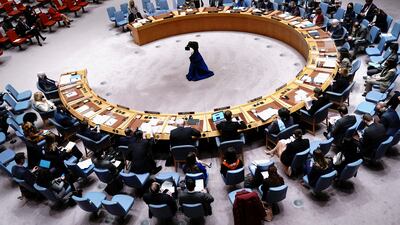
Ambassadors attend a UN Security Council meeting on threats to international security after Russia's invasion of Ukraine, in New York. Reuters -
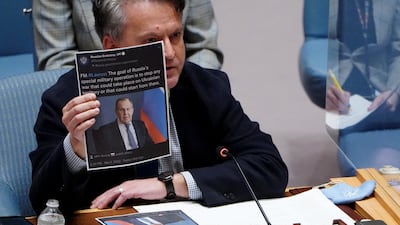
Ukraine's UN ambassador Sergey Kyslytsya holds a paper with an image of Russia's Foreign Minister Sergey Lavrov as he addresses the Security Council in New York. Reuters -
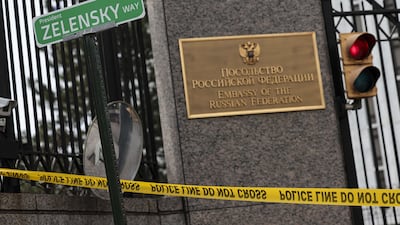
A road sign put up in support of Mr Zelenskyy outside Russia's embassy in Washington. AFP -
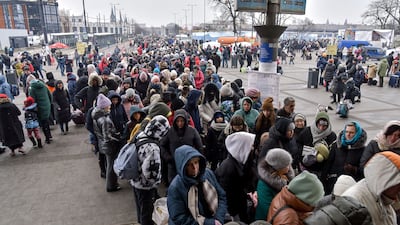
Ukrainian refugees at the train station in Lviv, western Ukraine. EPA -
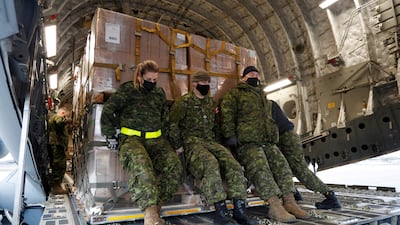
Lethal and non-lethal Ukrainian aid is loaded on to a plane bound for Poland by Canadian soldiers in Trenton, Ontario. Reuters -
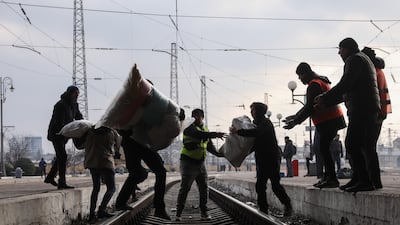
Volunteers carry medical aid and necessities at a train station in Lviv. EPA -
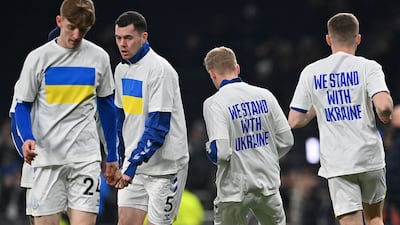
Everton players wear T-shirts in support of Ukraine as they warm up for an English Premier League football match against Tottenham Hotspur. AP -
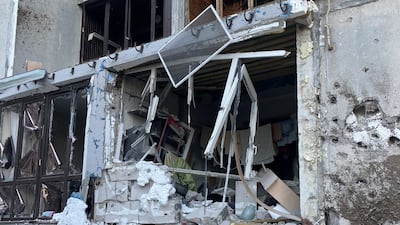
A residential building damaged by Russian shelling in Chernihiv, Ukraine. Reuters -
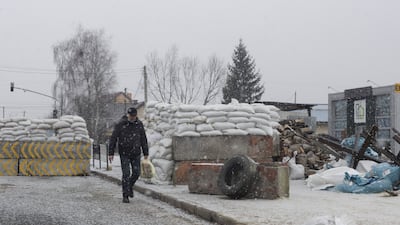
A man walks past a checkpoint in heavy snow in Lviv. Getty -
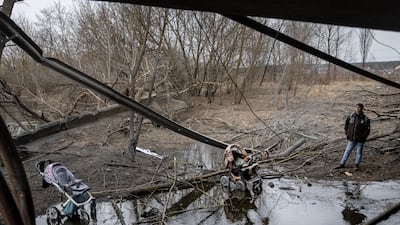
A man fleeing fighting in Irpin waits to cross a river after Russian forces entered the city. Getty -
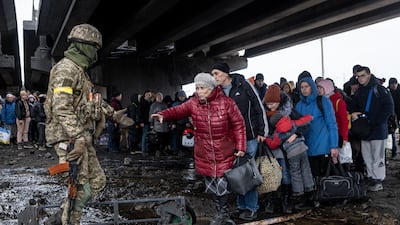
Soldiers assist Irpin residents underneath a damaged bridge as they flee. Getty -
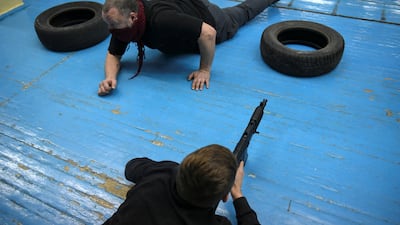
Ukrainian civilians who volunteered to join the Territorial Defence Forces take part in a training exercise in Odesa after Russia's invasion. Reuters -
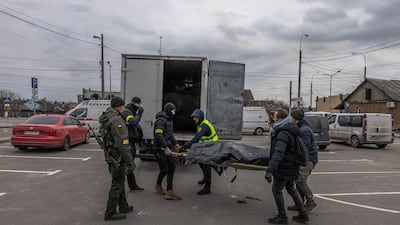
Men carry a body to a lorry as people flee from the frontline town of Irpin. EPA -
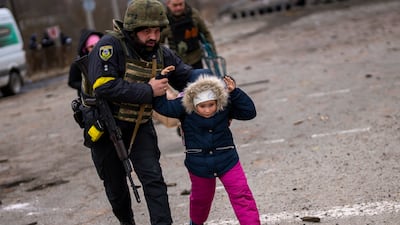
A Ukrainian police officer runs with a child as the sound of shelling echoes nearby in Irpin. AP -
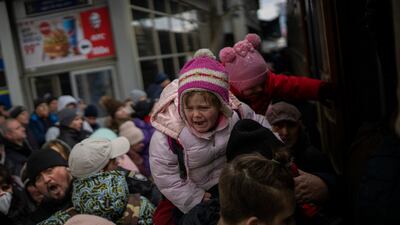
Parents and children struggle to board a train in Lviv. AP


It is understood that officials want to avoid drawing vulnerable Ukrainians to the area, where organised crime gangs exploit migrants hoping to cross the Channel.
Ukrainians already in Calais will be able to use the Eurostar for free to get to centres in Paris, Brussels and Lille, and Home Office staff will assess what additional support vulnerable people may need.
The pop-up facility in Lille is not intended to become a large-scale visa application centre.
A Downing Street spokesman said the centre was “en route to Calais” and “the Home Office are working quickly to set it up and we expect it to be set up in the coming days”.
The spokesman said it was not being set up in Calais because "we obviously want to make sure that we can provide the appropriate level of support that those who are seeking to enter the UK require.
“Obviously the Home Office and Border Force are best placed to make a call on where that would be best based to help support those people who are making their way through France.”
Home Office minister Kevin Foster told MPs there were “issues with providing specific application points at the port, but we are looking at how we can do it and we expect that to be set up within the next 24 hours”.
“We are already seeing people presenting at Calais with false documents claiming to be Ukrainian” and the government “will not take chances with the security of this country and our people,” Mr Foster said.
Responding to an urgent question by Conservative MP Sir Geoffrey Clifton-Brown on how the Home Office can speed up refugee applications from those leaving Ukraine, Mr Foster said: “A crucial part of the application process is providing biometrics so we can be sure applications are who they say they are."
These checks are in place to prevent impostors, such as Russian agents, from misusing the visa and humanitarian offers in place.
Mr Foster told the Commons more than 500 visas had been issued under the Ukraine Family Scheme, which was launched on Friday, and more than 10,000 applications had been submitted.
There are hundreds of people thought to be working to get visas processed, with more staff put in place in every centre in Europe.
The Home Office has taken up Defence Secretary Ben Wallace’s offer of staffing support from his ministry.
The first visa applications were received on Friday and were approved on Friday afternoon and Saturday.
It is understood to be taking staff about 20 minutes to process a completed application where biometrics have been taken.
None have been rejected, although a small number have been deferred because officials needed more information.
UK Prime Minister Boris Johnson defended the need for border checks on refugees fleeing to Britain from Ukraine.
“I think it is important that when you do have people coming to your country, maybe coming from a war zone where their previous history is unclear, what they have been up to, it is important to have checks," Mr Johnson said.
“That is one thing we are able to do. I think having some sort of check, some sort of control is an important feature of the way we do things. I think it is valuable.
“It doesn’t mean we aren’t going to be massively, massively generous. But I think to have a system of simply uncontrolled immigration isn’t right.”

