ISIS involvement suspected in Balochistan suicide attack as Pakistan mourns its dead


  • English
  • Arabic

A pall of gloom hung over Mastung town and neighbouring areas in Pakistan's Balochistan province as the victims of Friday's suicide attack were laid to rest.

“We are busy with funerals,” said Atta Ul Munim, the assistant police commissioner in Mastung. “Several bodies were sent to their native places outside Mastung city soon after the bombing yesterday.”

The Counter Terrorism Department has registered a case of suicide bombing and collected evidence from the blast scene, including body parts of the bomber for DNA testing, Muhammad Azam, the information duty officer with Mastung District Police, told The National.

In Mastung, people kept their businesses closed to mourn the victims. In other parts of Pakistan, there were demonstrations protesting against the attacks.

While no one has claimed responsibility for the attack in Mastung, militant group ISIS appears to be behind it, a security official told The National, requesting anonymity as he wasn't authorised to speak to the media.

ISIS carried out an attack days earlier in the same area after one of its commanders was killed there.

More than 59 people died and at least 70 were wounded on Friday in two bombing attacks in Pakistan, as crowds marked the birthday of the Prophet Mohammed.

Shortly after the first blast at the gathering in Mastung, another explosion rocked a mosque in Hangu, Khyber Pakhtunkhwa province, killing at least 5 people.

Muhammad Muavia, 13, witnessed the bombing in Mastung, and told The National: “I couldn't sleep the entire night.”

“My home is situated away from where the explosion occurred, but I had come to play cricket with my friends close to the rally venue when the incident happened.”

Mr Ul Munim said the condition of many victims remains critical.

The district police officer narrowly escaped the attack, having arrived at the venue to inspect arrangements for the event just moments before the explosion.

“There was no prior threat, and a day before the event, elders of the Ahle Sunnat sect met with the district administration authorities regarding arrangements for their public meeting,” he added.

The government may announce compensation for the victims, he said.

Kabir Ahmed, a 27-year-old student at Balochistan University, told The National that he rushed to the venue soon after the bombing.

“We took my cousin, who was injured, to the hospital in Mastung, but there wasn't any place to stand, let alone treat him. We then left for Quetta to find a hospital but my cousin died on the way,” Ahmed said.

  • More than 50 people were killed and dozens wounded on September 29 when a suicide bomber targeted a procession marking the birthday of the Prophet Mohammed in Pakistan's south-western Balochistan province. AFP
    More than 50 people were killed and dozens wounded on September 29 when a suicide bomber targeted a procession marking the birthday of the Prophet Mohammed in Pakistan's south-western Balochistan province. AFP
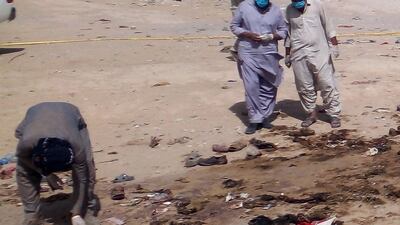
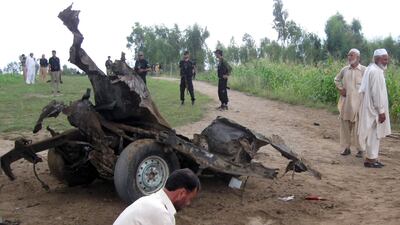
  • Security officials examine the site of the suicide bomb attack in Mastung, Balochistan, south-western Pakistan. AFP
    Security officials examine the site of the suicide bomb attack in Mastung, Balochistan, south-western Pakistan. AFP
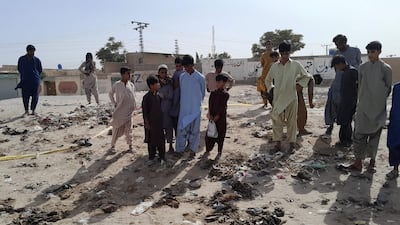
  • Local residents stand at the site of the explosion in Mastung, Balochistan, south-western Pakistan. AFP
    Local residents stand at the site of the explosion in Mastung, Balochistan, south-western Pakistan. AFP
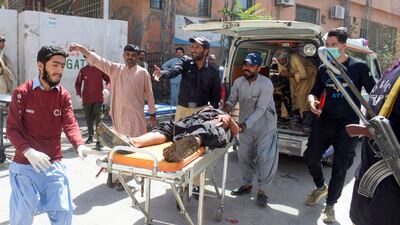
  • Paramedics and volunteers carry a blast victim on a stretcher into a hospital in Quetta after a suicide bombing in Mastung, Pakistan. AP
    Paramedics and volunteers carry a blast victim on a stretcher into a hospital in Quetta after a suicide bombing in Mastung, Pakistan. AP
  • People gather at a hospital in Quetta, Pakistan, as injured victims of the explosion are brought in. AP
    People gather at a hospital in Quetta, Pakistan, as injured victims of the explosion are brought in. AP
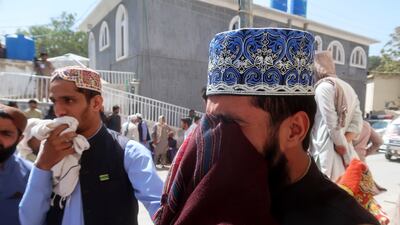
  • Relatives of victims of the Mastung explosion wait outside a hospital in Quetta, Pakistan. EPA
    Relatives of victims of the Mastung explosion wait outside a hospital in Quetta, Pakistan. EPA
  • Pakistani security officials stand guard as victims of the suicide bomb blast in Mastung are brought to hospitals in Quetta. EPA
    Pakistani security officials stand guard as victims of the suicide bomb blast in Mastung are brought to hospitals in Quetta. EPA
  • Rescue workers search for blast victims in the rubble of a collapsed mosque following a second suicide attack, in Hangu, in the north-western Khyber Pakhtunkhwa province of Pakistan. AFP
    Rescue workers search for blast victims in the rubble of a collapsed mosque following a second suicide attack, in Hangu, in the north-western Khyber Pakhtunkhwa province of Pakistan. AFP
  • At least 10 people were killed in a suicide bomb explosion at a mosque inside the gates of Doaba police station, in Hangu, north-western, Pakistan. EPA
    At least 10 people were killed in a suicide bomb explosion at a mosque inside the gates of Doaba police station, in Hangu, north-western, Pakistan. EPA
  • Investigators at the scene of the bomb attack, by two men, which brought down the roof of the mosque in Hangu, Khyber Pakhtunkhwa, Pakistan. EPA
    Investigators at the scene of the bomb attack, by two men, which brought down the roof of the mosque in Hangu, Khyber Pakhtunkhwa, Pakistan. EPA
  • A Pakistani security official stands guard near the scene of the suicide bomb blast at a mosque during Friday prayers in Khyber Pakhtunkhwa's Hangu district. EPA
    A Pakistani security official stands guard near the scene of the suicide bomb blast at a mosque during Friday prayers in Khyber Pakhtunkhwa's Hangu district. EPA

Mir Ali Mardan Domki, the caretaker chief minister of Baluchistan province, said all indications from the investigation suggest the attack was a suicide bombing.

Counter-terrorism investigators were working to reach conclusions that would be shared with the nation soon, he said.

The government plans to transfer critically wounded patients to Karachi for better treatment, and everyone injured and the families of the people killed will receive financial compensation, he said.

In the city of Lahore, members of Majlis-e-Ulema Nizamia, a religious body, gathered in front of a press club to condemn the bombing. Addressing the crowd, Maulana Abdus Sattar Saeedi demanded that the government move quickly against those involved in the attacks in Mastung and Hangu.

President Arif Alvi, Prime Minister Anwar-ul-Haq Kakar, Cabinet ministers, former lawmakers, heads of political parties, social and religious groups, and members of civil society also widely condemned the bombing and loss of precious lives.

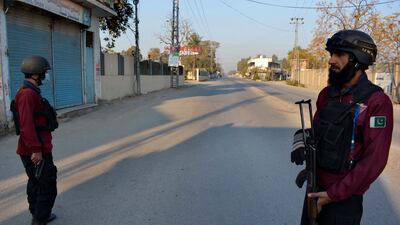
  • Security officers guard a road leading to a counter-terrorism centre in Bannu, a district in Pakistan's Khyber Pakhtunkhwa province. AP Photo
    Security officers guard a road leading to a counter-terrorism centre in Bannu, a district in Pakistan's Khyber Pakhtunkhwa province. AP Photo
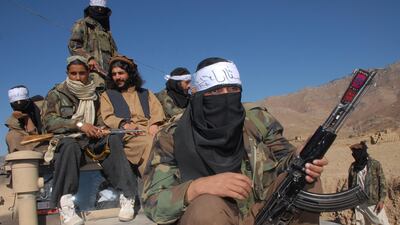
  • Pakistan's Taliban commander Latif Mehsud, centre, a close aide to the former chief of the Tehreek-e-Taliban Pakistan (TTP), Hakimullah Mehsud, sits on an armed vehicle in Khyber Pakhtunkhwa province. AFP
    Pakistan's Taliban commander Latif Mehsud, centre, a close aide to the former chief of the Tehreek-e-Taliban Pakistan (TTP), Hakimullah Mehsud, sits on an armed vehicle in Khyber Pakhtunkhwa province. AFP
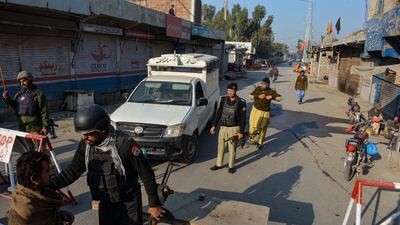
  • Officers stand guard along a road they blocked after Taliban militants seized a police station in Bannu. AFP
    Officers stand guard along a road they blocked after Taliban militants seized a police station in Bannu. AFP
  • Soldiers drive towards North Waziristan from Bannu at the start of an offensive against Pakistani Taliban militants in the restive ethnic Pashtun tribal region. Reuters
    Soldiers drive towards North Waziristan from Bannu at the start of an offensive against Pakistani Taliban militants in the restive ethnic Pashtun tribal region. Reuters
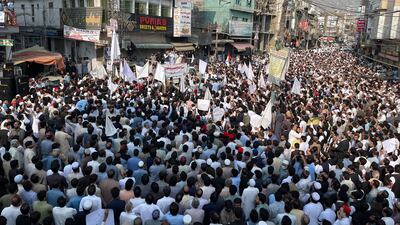
  • People take part in a protest a day after an attack on a school bus in Mingora, in the Swat District of Khyber Pakhtunkhwa. AFP
    People take part in a protest a day after an attack on a school bus in Mingora, in the Swat District of Khyber Pakhtunkhwa. AFP
  • Security officials and relatives attend a funeral ceremony of a slain policeman who was killed in an attack claimed by the TTP in the border town of Chaman. AFP
    Security officials and relatives attend a funeral ceremony of a slain policeman who was killed in an attack claimed by the TTP in the border town of Chaman. AFP
  • Pakistani security officials check identity cards at a roadside check point in Karachi. EPA
    Pakistani security officials check identity cards at a roadside check point in Karachi. EPA
  • Pakistani security officials in Karachi. EPA
    Pakistani security officials in Karachi. EPA
  • A Pakistani security official in Karachi. EPA
    A Pakistani security official in Karachi. EPA
  • Surrendered Taliban militants at a Pakistani military compound in Swat valley on August 20, 2009. AFP
    Surrendered Taliban militants at a Pakistani military compound in Swat valley on August 20, 2009. AFP
  • Pakistani security officials at the site of a bomb blast in Jandol town, 100km from the once Taliban-infested Swat Valley on September 16, 2012. AFP
    Pakistani security officials at the site of a bomb blast in Jandol town, 100km from the once Taliban-infested Swat Valley on September 16, 2012. AFP
  • Armed Pakistani militiamen gather in the former Taliban stronghold area of Puchar in Swat valley on September 14, 2009. AFP
    Armed Pakistani militiamen gather in the former Taliban stronghold area of Puchar in Swat valley on September 14, 2009. AFP
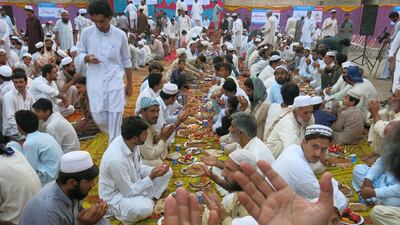
  • Internally displaced Pakistani civilians pray before breaking their fast during Ramadan in Bannu, northern Pakistan, on July 6, 2014. AFP
    Internally displaced Pakistani civilians pray before breaking their fast during Ramadan in Bannu, northern Pakistan, on July 6, 2014. AFP
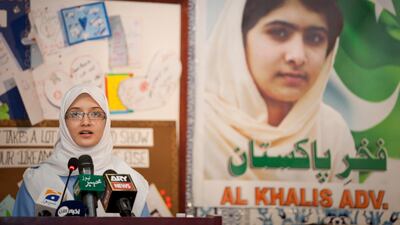
  • Ayesha Abdul Jalil, 16, speaks at a tribute to Malala Yousufzai, who was shot in the head by the Taliban in the Swat valley, at the Embassy of Pakistan in Abu Dhabi. Razan Alzayani / The National
    Ayesha Abdul Jalil, 16, speaks at a tribute to Malala Yousufzai, who was shot in the head by the Taliban in the Swat valley, at the Embassy of Pakistan in Abu Dhabi. Razan Alzayani / The National

Balochistan has suffered from separatist violence at the hands of Baloch insurgents, but the attacks carried out by the Pakistan Taliban underscore the mounting challenges facing Pakistan's army in the region.

The province has suffered intense violence in recent years between the government and the Pakistan Taliban.

On Friday, though, the Pakistan Taliban, formally known as Tehreek-e-Taliban Pakistan, denied involvement in the attacks.

“The loss of innocent lives in the blast in Mastung is deeply saddening,” said Muhammad Khurasani, a spokesman for the Pakistan Taliban.

Following the Taliban’s takeover of Afghanistan, ISIS lost ground and many of its fighters joined the Tehreek-e-Taliban Pakistan, which is already fighting the Pakistani government.

Pakistan was a major base of operations for the Afghan resistance against the Soviet Union, and militant networks have endured for decades in the country despite numerous military operations to oust them, starting in 2007 when the Pakistani Taliban came into existence.

With agency reports

HAJJAN
%3Cp%3EDirector%3A%20Abu%20Bakr%20Shawky%C2%A0%3C%2Fp%3E%0A%3Cp%3E%3Cbr%3EStarring%3A%20Omar%20Alatawi%2C%20Tulin%20Essam%2C%20Ibrahim%20Al-Hasawi%C2%A0%3C%2Fp%3E%0A%3Cp%3E%3Cbr%3ERating%3A%204%2F5%3C%2Fp%3E%0A
The specs

Engine: 3.9-litre twin-turbo V8

Transmission: seven-speed

Power: 620bhp

Torque: 760Nm

Price: Dh898,000

On sale: now

Libya's Gold

UN Panel of Experts found regime secretly sold a fifth of the country's gold reserves. 

The panel’s 2017 report followed a trail to West Africa where large sums of cash and gold were hidden by Abdullah Al Senussi, Qaddafi’s former intelligence chief, in 2011.

Cases filled with cash that was said to amount to $560m in 100 dollar notes, that was kept by a group of Libyans in Ouagadougou, Burkina Faso.

A second stash was said to have been held in Accra, Ghana, inside boxes at the local offices of an international human rights organisation based in France.

How much do leading UAE’s UK curriculum schools charge for Year 6?
  1. Nord Anglia International School (Dubai) – Dh85,032
  2. Kings School Al Barsha (Dubai) – Dh71,905
  3. Brighton College Abu Dhabi - Dh68,560
  4. Jumeirah English Speaking School (Dubai) – Dh59,728
  5. Gems Wellington International School – Dubai Branch – Dh58,488
  6. The British School Al Khubairat (Abu Dhabi) - Dh54,170
  7. Dubai English Speaking School – Dh51,269

*Annual tuition fees covering the 2024/2025 academic year

Who's who in Yemen conflict

Houthis: Iran-backed rebels who occupy Sanaa and run unrecognised government

Yemeni government: Exiled government in Aden led by eight-member Presidential Leadership Council

Southern Transitional Council: Faction in Yemeni government that seeks autonomy for the south

Habrish 'rebels': Tribal-backed forces feuding with STC over control of oil in government territory

SPEC SHEET

Display: 10.4-inch IPS LCD, 400 nits, toughened glass

CPU: Unisoc T610; Mali G52 GPU

Memory: 4GB

Storage: 64GB, up to 512GB microSD

Camera: 8MP rear, 5MP front

Connectivity: Wi-Fi, Bluetooth 5.0, USB-C, 3.5mm audio

Battery: 8200mAh, up to 10 hours video

Platform: Android 11

Audio: Stereo speakers, 2 mics

Durability: IP52

Biometrics: Face unlock

Price: Dh849

Mercer, the investment consulting arm of US services company Marsh & McLennan, expects its wealth division to at least double its assets under management (AUM) in the Middle East as wealth in the region continues to grow despite economic headwinds, a company official said.

Mercer Wealth, which globally has $160 billion in AUM, plans to boost its AUM in the region to $2-$3bn in the next 2-3 years from the present $1bn, said Yasir AbuShaban, a Dubai-based principal with Mercer Wealth.

Within the next two to three years, we are looking at reaching $2 to $3 billion as a conservative estimate and we do see an opportunity to do so,” said Mr AbuShaban.

Mercer does not directly make investments, but allocates clients’ money they have discretion to, to professional asset managers. They also provide advice to clients.

“We have buying power. We can negotiate on their (client’s) behalf with asset managers to provide them lower fees than they otherwise would have to get on their own,” he added.

Mercer Wealth’s clients include sovereign wealth funds, family offices, and insurance companies among others.

From its office in Dubai, Mercer also looks after Africa, India and Turkey, where they also see opportunity for growth.

Wealth creation in Middle East and Africa (MEA) grew 8.5 per cent to $8.1 trillion last year from $7.5tn in 2015, higher than last year’s global average of 6 per cent and the second-highest growth in a region after Asia-Pacific which grew 9.9 per cent, according to consultancy Boston Consulting Group (BCG). In the region, where wealth grew just 1.9 per cent in 2015 compared with 2014, a pickup in oil prices has helped in wealth generation.

BCG is forecasting MEA wealth will rise to $12tn by 2021, growing at an annual average of 8 per cent.

Drivers of wealth generation in the region will be split evenly between new wealth creation and growth of performance of existing assets, according to BCG.

Another general trend in the region is clients’ looking for a comprehensive approach to investing, according to Mr AbuShaban.

“Institutional investors or some of the families are seeing a slowdown in the available capital they have to invest and in that sense they are looking at optimizing the way they manage their portfolios and making sure they are not investing haphazardly and different parts of their investment are working together,” said Mr AbuShaban.

Some clients also have a higher appetite for risk, given the low interest-rate environment that does not provide enough yield for some institutional investors. These clients are keen to invest in illiquid assets, such as private equity and infrastructure.

“What we have seen is a desire for higher returns in what has been a low-return environment specifically in various fixed income or bonds,” he said.

“In this environment, we have seen a de facto increase in the risk that clients are taking in things like illiquid investments, private equity investments, infrastructure and private debt, those kind of investments were higher illiquidity results in incrementally higher returns.”

The Abu Dhabi Investment Authority, one of the largest sovereign wealth funds, said in its 2016 report that has gradually increased its exposure in direct private equity and private credit transactions, mainly in Asian markets and especially in China and India. The authority’s private equity department focused on structured equities owing to “their defensive characteristics.”

Updated: November 15, 2023, 11:21 AM