
Read more:
Sri Lankan Prime Minister Ranil Wickremesinghe has been appointed acting president after incumbent Gotabaya Rajapaksa fled to the Maldives, the parliamentary Speaker announced on Wednesday as thousands of protesters demanded both men step down.
"Because of his absence from the country, President Rajapaksa told me that he has appointed the prime minister to act as the president in line with the constitution," Mahinda Yapa Abeywardana said in a brief televised statement.
Sri Lanka declared a state of emergency on Wednesday, hours after Mr Rajapaksa fled the country.
Protesters had stormed Mr Wickremesinghe's office to demand his resignation.
Police said they would impose an indefinite curfew across the Western Province, which includes the capital Colombo, to contain the protests after Mr Rajapaksa flew to the Maldives in a military aircraft.
He left hours before he was expected to step down as widespread protests against his handling of a worsening economic crisis continued.
Thousands of demonstrators had mobbed the prime minster's office, prompting police to fire tear gas to hold them back from overrunning the compound.
"There are ongoing protests outside the prime minister's office in Colombo and we need the curfew to contain the situation," a senior police officer told AFP.
-
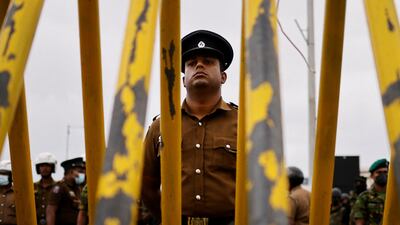
Security personnel stand guard after a raid on an anti-government protest camp in Colombo early on Friday, amid Sri Lanka's economic crisis. Reuters -
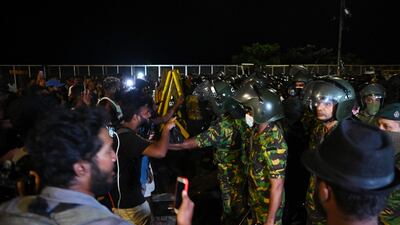
Anti-government protesters speak with members of Sri Lankan security forces. AFP -
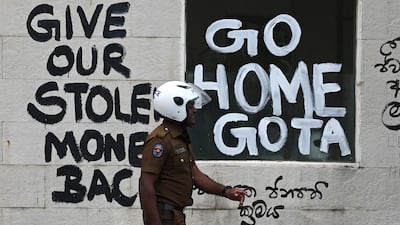
A policeman walks past slogans against the newly elected Sri Lankan President Ranil Wickramasinghe in Colombo. AFP -
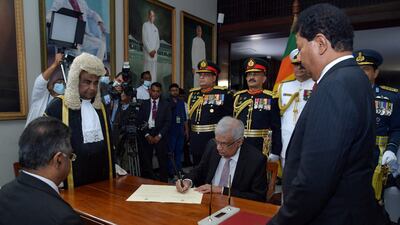
Ranil Wickremesinghe is sworn in as the new president of Sri Lanka by Chief Justice Jayantha Jayasuriya. Reuters -
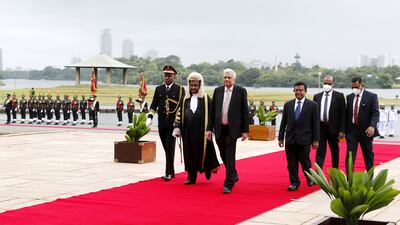
Mr Wickremesinghe, centre, arrives at his swearing-in ceremony in Colombo. EPA -

Ranil Wickremesinghe leaves a Buddhist temple in Colombo after he was named as Sri Lanka's eighth executive president. Reuters -
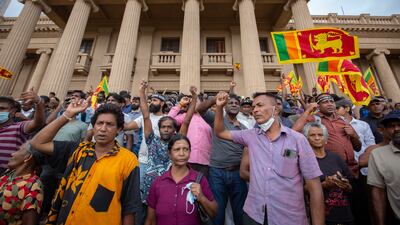
Sri Lankans protest after Mr Wickremesinghe defeated Dullas Alahapperuma, a member of the breakaway faction of the ruling Sri Lanka Podujana Peramuna party, by 134 votes to 82 in a parliamentary vote to pick the next president. Getty -
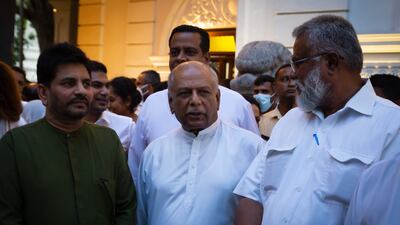
Dinesh Gunawardena, centre, leader of the House of Parliament, arrives at Gangaramaya Temple in Colombo. Getty -
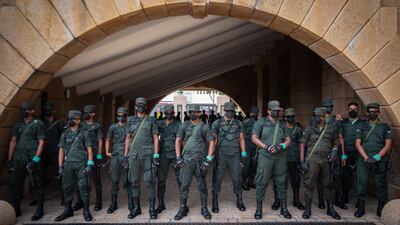
Soldiers stand guard at the Presidential Secretariat after Mr Wickremesinghe was announced as Sri Lanka's new president. Getty -
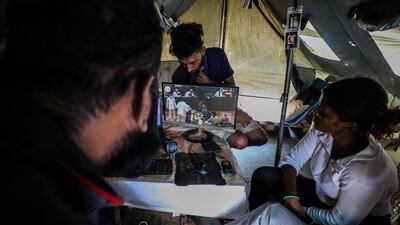
Protesters watch a live broadcast of the parliamentary vote to pick Sri Lanka's new president. EPA -
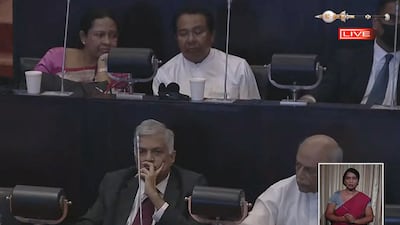
A screen grab of Mr Wickremesinghe, bottom left, during the vote count announcement in Sri Lanka's Parliament. AFP -
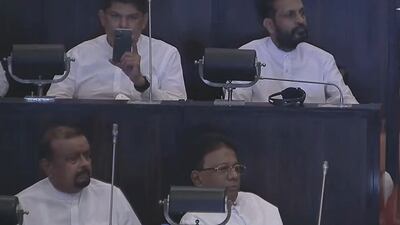
Mr Alahapperuma, bottom right, during the parliamentary vote in Colombo. AFP -
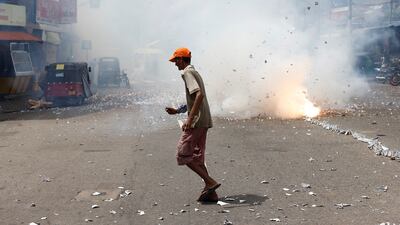
A supporter celebrates in Colombo after Mr Wickremesinghe was elected as president. Reuters -

Mr Wickremesinghe's supporters celebrate in the capital after his election as Sri Lankan president. Getty -
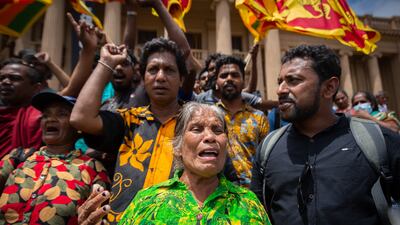
Sri Lankans protest after the announcement of Mr Wickremesinghe as president. Getty -
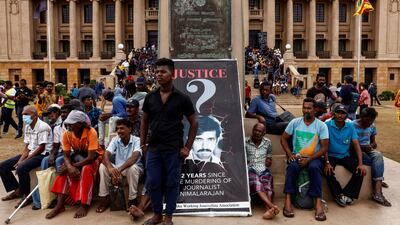
Demonstrators watch a public screen as voting begins in Sri Lanka's Parliament. Reuters -
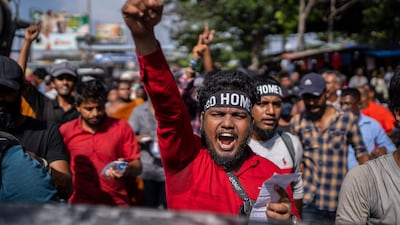
Protesters in Colombo demand Mr Wickremesinghe's resignation as prime minister and acting president before the parliamentary vote. AP -
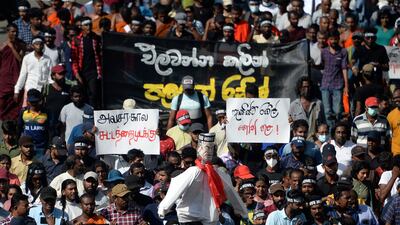
Demonstrators carry an effigy of Mr Wickremesinghe. AFP -
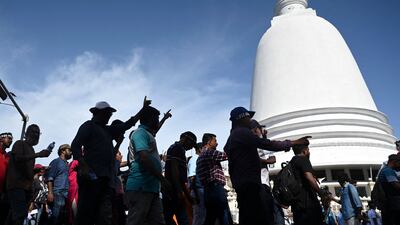
Demonstrators take part in a procession against Mr Wickremesinghe. AFP -
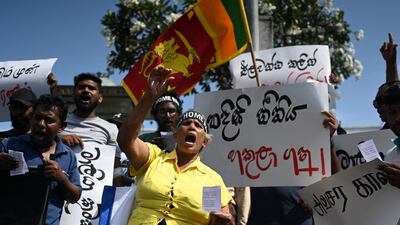
Demonstrators shout slogans. AFP -
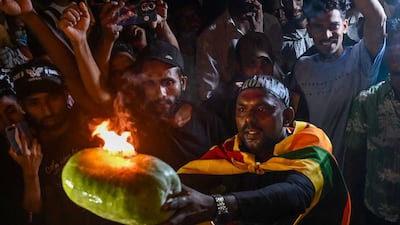
Sri Lankan demonstrators take part in a celebration in Colombo to mark the 100th day of protests. AFP -
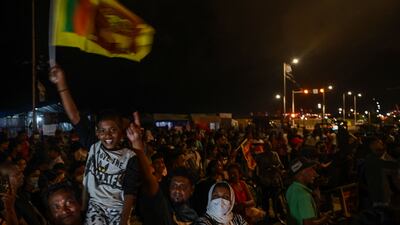
After months of street protests, Sri Lanka’s parliament will elect a new president to replace Gotabaya Rajapaksa on Wednesday. AFP -
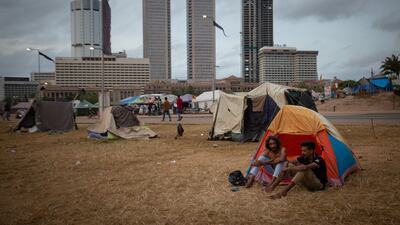
The country faces its worst economic crisis in decades due to the lack of foreign reserves, resulting in severe shortages of food, fuel, medicines and imported goods. Getty -
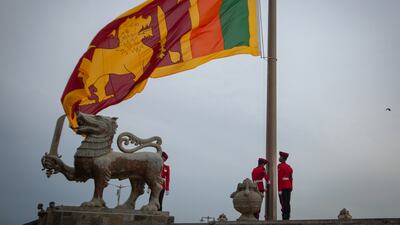
Soldiers lower the national flag at Galle Face Green in Colombo. Getty -

A demonstrator writes a slogan against acting president Ranil Wickremesinghe. AFP -
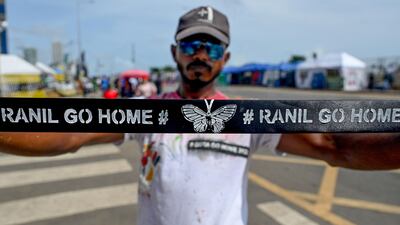
Mr Wickremesinghe is a top contender in the race to succeed Mr Rajapaksa. AFP -
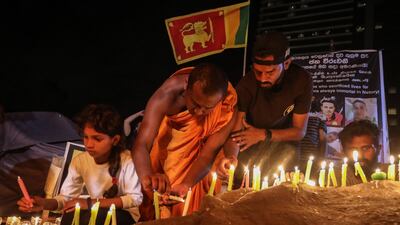
People light candles in the capital in memory of protesters killed or wounded since the demonstrations began. EPA -
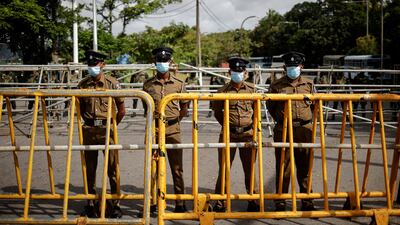
Police officers stand guard outside Parliament in Colombo. Reuters -
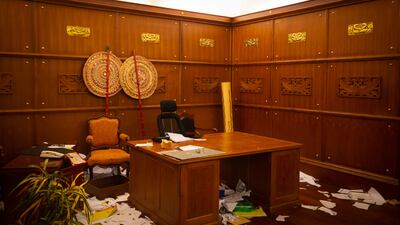
The vandalised office of the Sri Lankan president inside his official residence in the capital. Getty -
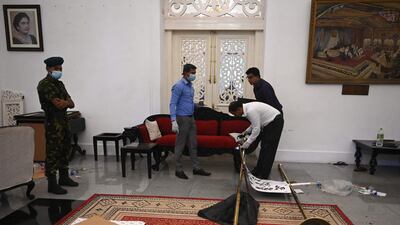
Police officials gather evidence at the president’s official residence after it was overrun by anti-government protesters on July 9. AFP -
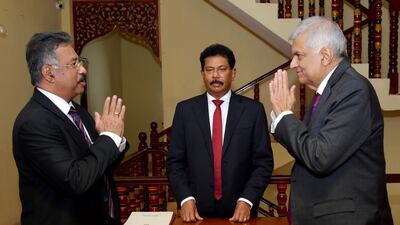
Sri Lankan Prime Minister Ranil Wickremesinghe, right, is sworn in as acting president by Chief Justice Jayantha Jayasuriya in Colombo. EPA -

Parliamentary Speaker Mahinda Yapa Abeywardena addresses the media in Colombo. AFP -
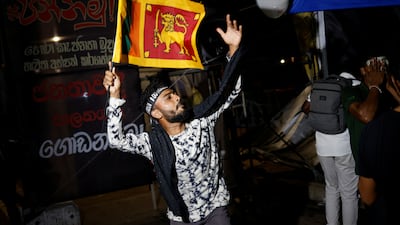
People dance in Colombo as they celebrate the resignation of Mr Rajapaksa amid the country’s economic crisis. Reuters -
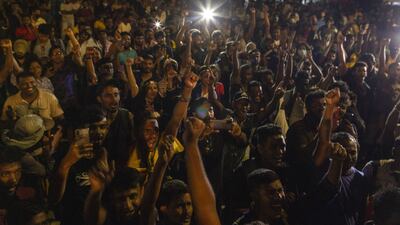
Demonstrators cheer after hearing news that Mr Rajapaksa had emailed his letter of resignation after fleeing months of anti-government protests. Bloomberg -
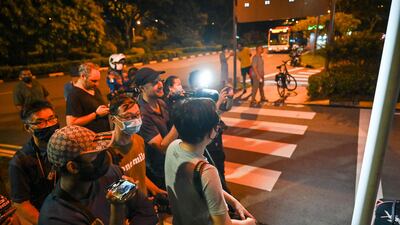
Members of the media wait outside the VIP complex of Changi International Airport in Singapore for the arrival of Mr Rajapaksa, his wife and two bodyguards. Sri Lanka's president left the Maldives on July 14 aboard a Saudia Airlines plane bound for Singapore. AFP -
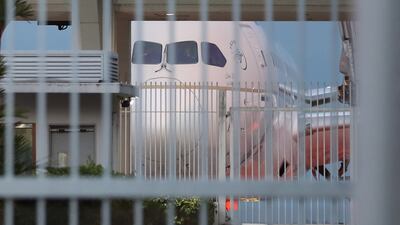
A Saudia Airlines plane believed to be carrying Mr Rajapaksa arrives on the tarmac at Changi Airport in Singapore. EPA -
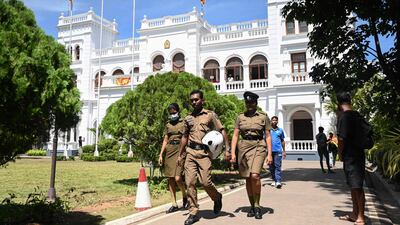
Police officers walk outside Sri Lankan Prime Minister Ranil Wickremesinghe's office, a day after thousands of anti-government protesters stormed the building, when he was named acting president. AFP -
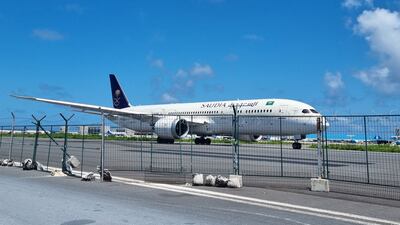
A Saudia airline Boeing 787 Dreamliner bound for Singapore and carrying Sri Lanka's fleeing president Gotabaya Rajapaksa, his wife and bodyguards prepares to take off at the Velana International airport, in the Maldives. AFP -
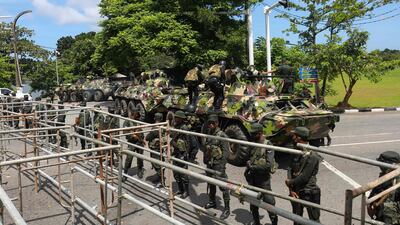
Sri Lankan soldiers stand guard near the parliament building in Colombo, a day after thousands of anti-government protesters stormed the prime minister's office. AFP -
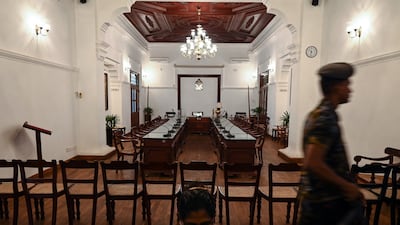
A soldier walks past a demonstrator sitting in a meeting room, at the prime minister's offices. AFP -

Soldiers patrol the buildings of the prime minister's office. AFP -

Troops make their way to an anti-government protest at the prime minister's office in Colombo, Sri Lanka. Bloomberg -

Demonstrators takes pictures inside the complex housing the Sri Lankan prime minister's offices. AFP -
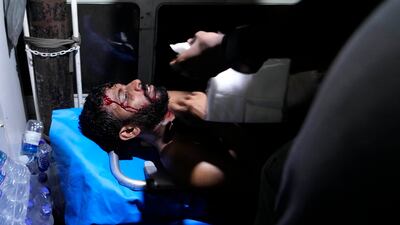
An injured protester lies in an ambulance after clashes with police near parliament in Colombo. AP -
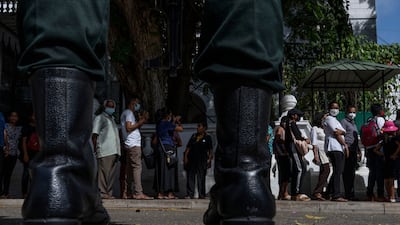
People wait to enter the presidential palace in Colombo, Sri Lanka. AP -
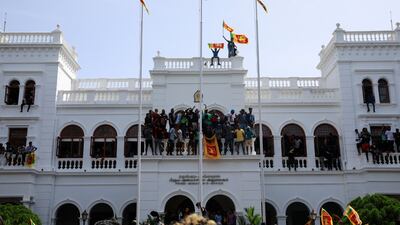
Protesters in Colombo hold Sri Lankan flags as they stand on top of the office of acting Prime Minister Ranil Wickremesinghe, amid the country's economic crisis. Reuters -
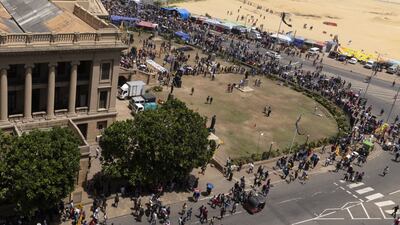
Protesters demand the resignation of Mr Wickremasinghe. Bloomberg -
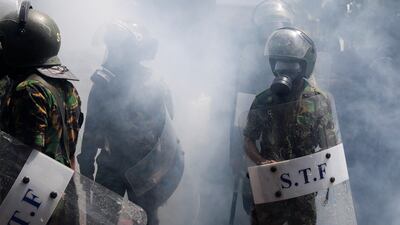
Police officers stand guard in Colombo. Reuters -
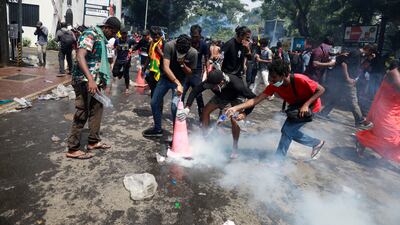
Police fire tear gas to control the crowds. Reuters -
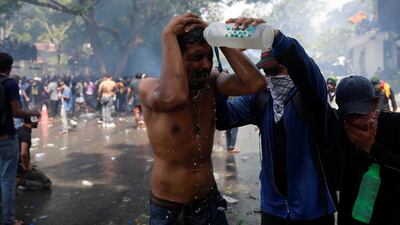
A protester pours water on a man as tensions soar. Reuters -
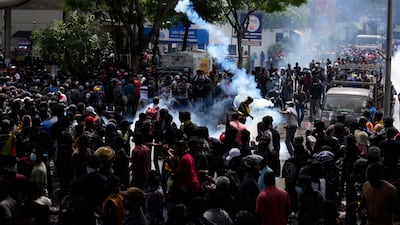
Protesters throw teargas shells. AP Photo -

Protesters storm Prime Minister Ranil Wickremesinghe's office in Colombo, Sri Lanka and demand his resignation, after President Gotabaya Rajapaksa fled the economic and political crisis for the Maldives. AP -
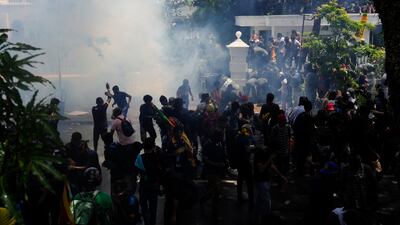
Police use tear gas to disperse Sri Lankan protesters outside the prime minister's office. AP -
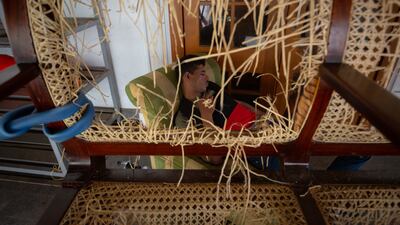
A protester sleeps on vandalised furniture inside the presidential palace in Colombo, which has been occupied by demonstrators for days. Getty Images -

A satellite image shows people gathered outside Sri Lanka's Parliament building in Colombo amid the country's economic and political crisis. AFP -

Youths play carrom inside the Sri Lankan prime minister's official residence, which was stormed by protesters at the weekend. Reuters -
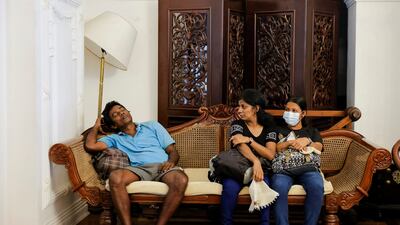
People sit on a couch inside the prime minister's official residence. The protests against the government have simmered since May, but erupted again last Saturday. Reuters -
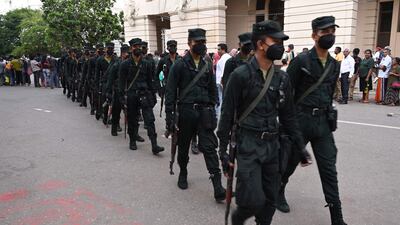
Army cadets march past people queuing to get inside Sri Lankan President Gotabaya Rajapaksa's official residence in Colombo. AFP -
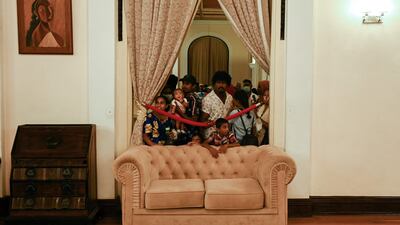
People visit Mr Rajapaksa's official residence in Colombo. It was reported on Wednesday that he had fled the country for the Maldives. AFP -
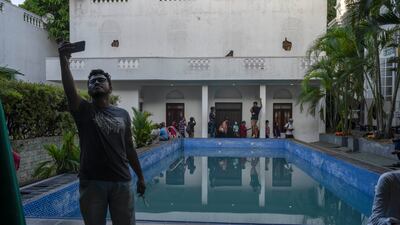
A man takes a selfie at the presidential palace. AP -
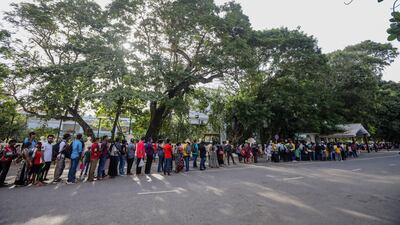
Sri Lankans line up to take a look inside the presidential palace in Colombo. EPA -
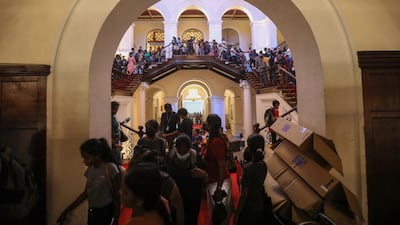
Crowds flock to take in the presidential palace. EPA -
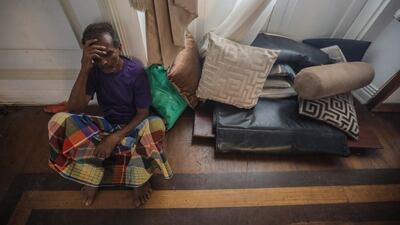
A man takes a rest inside the prime minister's official residence in Colombo. EPA -
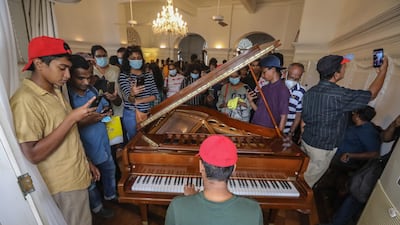
People sing songs inside the prime minister's official residence. EPA -
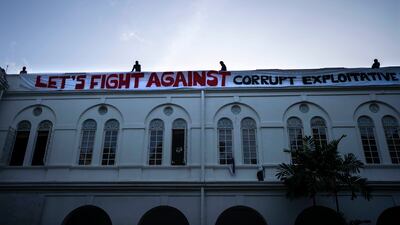
Protesters erect a banner on the presidential palace three days after it was stormed by anti-government demonstrators in Colombo. AP -

People wait in a queue to collect gas at a distribution point in Colombo. AFP -
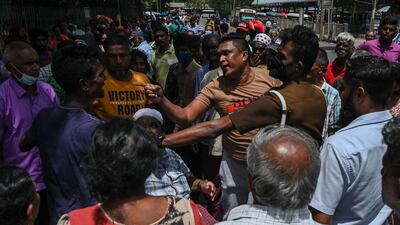
Sri Lankans quarrel as they wait for gas at a distribution point. AFP -

A driver of an autorickshaw sleeps inside his vehicle while waiting in a queue to buy petrol at a fuel station in Colombo. AP


A senior source told Reuters the president left for the archipelago's capital Male.
The country's air force said it provided a plane early on Wednesday to fly him, his wife and two security officials out of the country "under the provisions of the constitution and on a request by the government".
Key members of Sri Lanka's ruling party are keen to back Mr Wickremesinghe as their presidential nominee, a senior party source told Reuters on Wednesday. No decision has yet been taken.
Members met on Tuesday evening, with the "overwhelming consensus" being for Mr Wickremesinghe to replace Mr Rajapaksa.
The Indian High Commission in Colombo said on Twitter it "categorically denies baseless and speculative media reports" that India helped to arrange the departure of Mr Rajapaksa and his wife from Sri Lanka.

The president would most likely proceed to another Asian country, the source told Reuters.
The immigration official said the authorities could not prevent a sitting president from leaving the country.
Mr Rajapaksa was due to step down on Wednesday to make way for a unity government.
It comes after thousands of protesters stormed his and the prime minister's official residences on Saturday, demanding they step down.
The president has not been seen in public since Friday. Parliament will elect his replacement on July 20.
The Rajapaksa family, including Mr Gotabaya's brother, former prime minister Mahinda Rajapaksa, have dominated the politics of the country of 22 million for years. Most Sri Lankans blame them for current problems.
The tourism-dependent economy was hammered badly by the Covid-19 pandemic and a fall in remittances from overseas Sri Lankans, while a ban on chemical fertilisers damaged farm output. The ban was later reversed.
Import cuts on fuel, food and medicine
The Rajapaksas introduced populist tax cuts in 2019 that affected government finances, while shrinking foreign reserves curtailed imports of fuel, food and medicine.
Petrol has been severely rationed and long lines have formed in front of shops selling cooking gas. Headline inflation hit 54.6 per cent last month and the central bank has given a warning that it could rise to 70 per cent in coming months.
Mahinda Rajapaksa, who previously also served as president, resigned as prime minister in May after protests against the family turned violent. He remained in hiding at a military base in the east of the country for some days before returning to Colombo.
In May, the Rajapaksa government appointed Mohammed Nasheed, the Speaker of the Maldives parliament and a former president, to help co-ordinate foreign assistance for crisis-hit Sri Lanka.
The same month, Mr Nasheed publicly denied allegations that he was helping Mahinda Rajapaksa secure a safe haven in the Maldives.
The protests against the Sri Lankan government have simmered since May, but erupted again last Saturday when hundreds of thousands of people surged into Colombo and occupied key government buildings and residences.
On Tuesday, immigration officials prevented another of the president's brothers, former finance minister Basil Rajapaksa, from flying out of the country.
It was not clear where Basil Rajapaksa, who also holds US citizenship, was trying to go. He resigned as finance minister in early April amid street protests against fuel and food shortages, and quit his seat in Parliament in June.

