

Live updates: follow the latest news on Covid-19 variant Omicron
As new cases of the Omicron coronavirus variant are detected around the world, scientists now think it will take about two weeks to gather conclusive information, including how contagious it is.
"We don’t yet know whether Omicron is associated with more transmission, severe Covid-19 disease, risk of reinfections or risk of evading vaccines. Scientists at WHO and around the are working urgently to answer these questions," said Dr Tedros Andhanom, Director General of the World Health Organisation, speaking at the World Health Assembly on Monday.
Since its discovery only days ago by researchers in South Africa, governments have rushed to close borders as cases are discovered in countries on either side of the globe.
Here is a look at what we now know about Omicron so far:
How transmissible is the variant?
Scientists know that Omicron is genetically distinct from previous variants including the Beta and Delta variants, but do not know if these genetic changes make it any more transmissible or dangerous. So far, there is no indication the variant causes more severe disease.
US chief medical adviser Anthony Fauci told President Joe Biden on Sunday that it will take about two weeks to have more definitive information about the transmissibility and other characteristics of the Covid-19 Omicron variant, the White House said in a statement.
Dr Fauci also told President Biden “he continues to believe that existing vaccines are likely to provide a degree of protection against severe cases of Covid”.
-
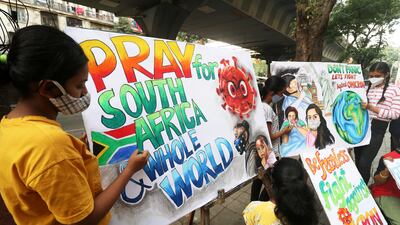
Indian students apply the finishing touches to paintings created to raise awareness of the variant in Mumbai. Reuters -

International travellers wearing personal protective equipment arrive at Melbourne's Tullamarine Airport as Australia records its first cases of the Omicron variant. AFP -
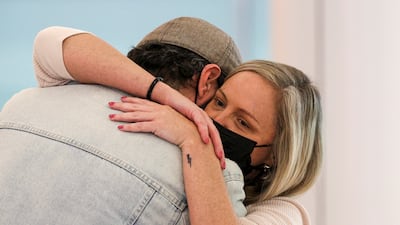
A greeting at the international terminal of Sydney Airport, as countries respond to the new variant. Reuters -
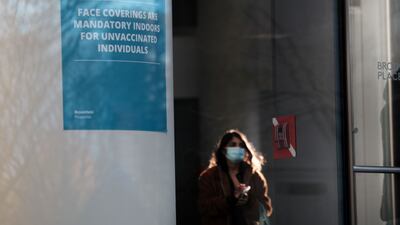
A sign asking people to wear face coverings in a building in Manhattan as the newly discovered Omicron variant appears in countries around the world. AFP -
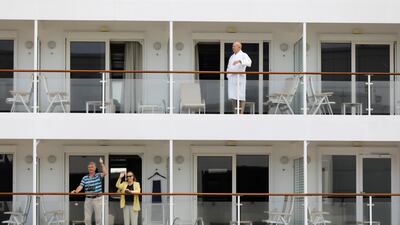
Tourists wave as the ‘Europa’ passenger liner arrives in South African waters off Cape Town as the new coronavirus variant Omicron spreads in other countries. Reuters -
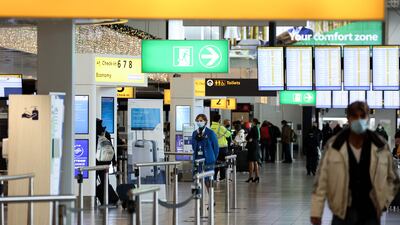
Schiphol airport in Amsterdam. Dutch health authorities said they have found another case of the Omicron Covid-19 variant among passengers arriving from South Africa, bringing the country’s total to 14. AFP -
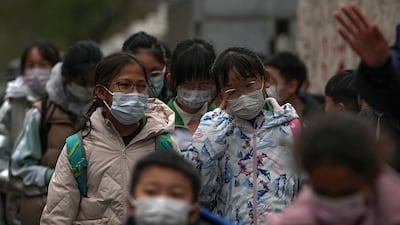
Pupils wear face masks in Beijing. Despite the global worry, scientists say it remains unclear whether the Omicron variant is more dangerous than other strains of the virus. AP -
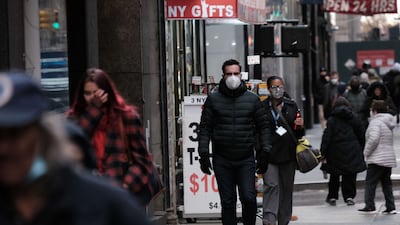
People wearing face masks in Manhattan. New York's governor has declared a state of emergency due to the risk of a surge of Covid-19 cases as winter sets in. AFP -

British Health Secretary Sajid Javid meets a member of staff at a vaccine centre in Guy's and St Thomas' Hospital, London. Getty Images -
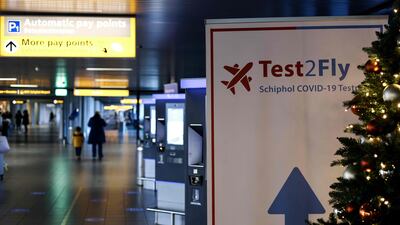
A sign points the way to a Covid-19 test centre at Schiphol Airport in the Netherlands. AFP -
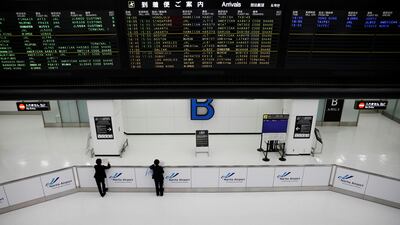
Narita International Airport in Japan is quiet after travel was restricted to prevent the spread of Omicron. Reuters -
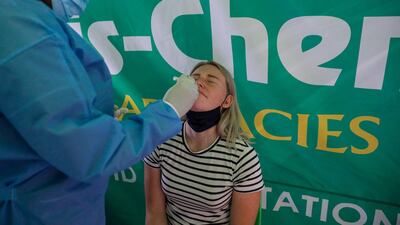
A PCR test at O.R. Tambo International Airport in Johannesburg. AFP -
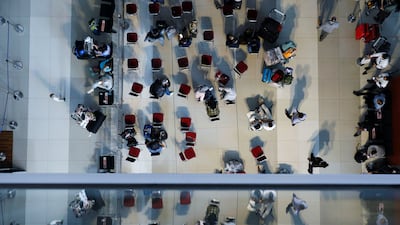
Soekarno Hatta International airport. Indonesia has banned the arrival of travellers who have recently been in eight southern African countries. Reuters -
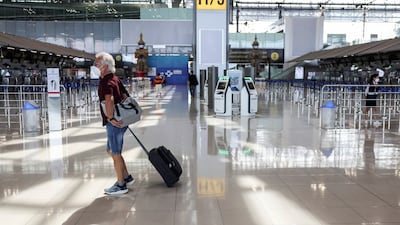
Suvarnabhumi Airport in Bangkok after Thailand banned entry from eight southern African countries due to the Omicron variant. Reuters -
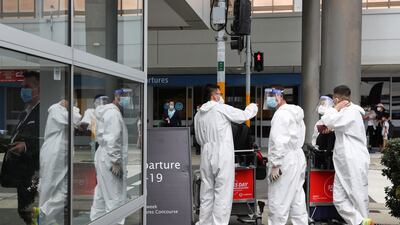
Travellers wear personal protective equipment outside the international terminal at Sydney Airport, Australia. Reuters -

Passengers wearing protective gear at Incheon International Airport in South Korea, where health authorities have imposed an entry ban on foreign arrivals from eight African countries, including South Africa. EPA -
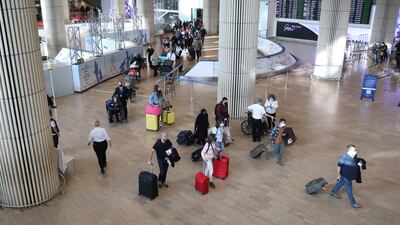
Ben Gurion International Airport near Tel Aviv. The Israeli government approved a 14-day ban on foreign arrivals over concerns about Omicron. EPA -
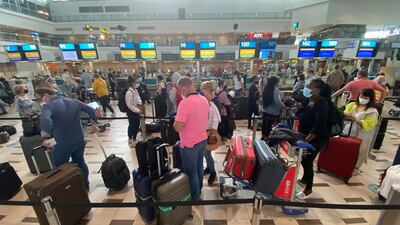
Travellers queuing in the hope of boarding an overbooked Lufthansa flight at Cape Town International Airport. Antonie Robertson / The National -
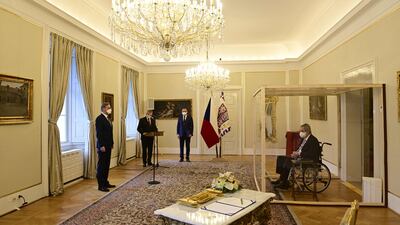
Covid-stricken Czech President Milos Zeman sits in a plastic cage as he appoints Petr Fiala as Prime Minister, near Prague. AFP -
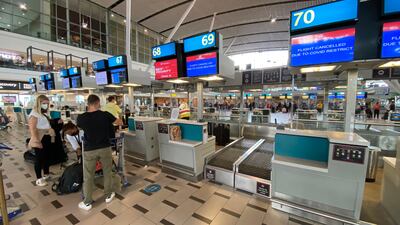
Tourists checking in at Cape Town International Airport in South Africa. Antonie Robertson / The National -
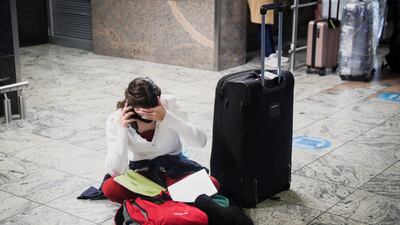
Several airlines have stopped flying out of South Africa amid the spread of the new variant, causing disruption at O.R. Tambo International Airport in Johannesburg. Reuters -
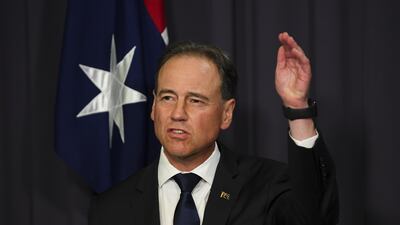
Australian Health Minister Greg Hunt at a press conference at Parliament House in Canberra. Two cases of the recently discovered Omicron variant were detected in New South Wales. EPA -
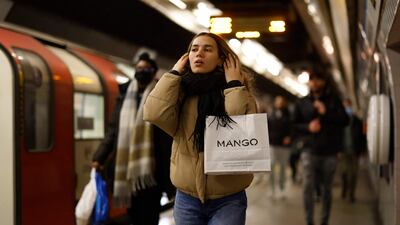
Passengers, many not wearing face coverings, on the London Underground. Health Secretary Sajid Javid said mandatory mask-wearing would return to shops and public transport in England but there are concerns over how the rule will be enforced. AFP -
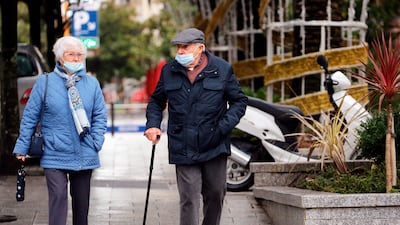
A stroll, with face masks, in Biarritz, south-western France. French Health Minister Olivier Veran said France had no confirmed cases of the Omicron variant and was not changing its strategy of increasing vaccinations and booster shots. AP -
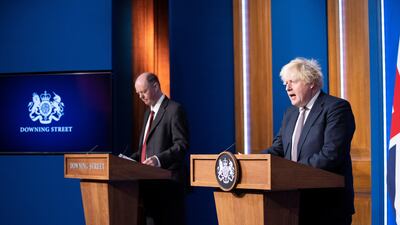
British Prime Minister Boris Johnson and Chief Medical Officer Chris Whitty during a press conference on the variant in London. Reuters


“It’s going to give us a period of time to enhance our preparedness,” Dr Fauci told ABC’s This Week.
Dr Francis Collins, director of the National Institutes of Health in the US, said there is no data yet that suggests the new variant causes more serious illness than previous Covid-19 variants.
“I do think it’s more contagious when you look at how rapidly it spread through multiple districts in South Africa,” Dr Collins told CNN.
The EU said it needs time to properly assess the implications of the variant. The bloc will push for greater vaccination rates, said EU Commission President Ursula von der Leyen. She said time should be spent focusing on precautionary action such as increasing the rate of vaccinations and of booster shots.
Where has Omicron been detected?
Since the first cases were detected in South Africa, Botswana and Hong Kong earlier this week, cases have also been reported in Belgium, Germany, Italy, the Czech Republic, Australia and the UK.
The Netherlands reported 13 Omicron cases on Sunday.
Six cases were identified in Scotland on Monday, the Scottish government said, adding that public health officials were working to establish the circumstances.
Canada’s first two cases were found in Ontario after two people who had recently travelled from Nigeria tested positive.
Australia has announced a third case as government leaders reconsidered plans to relax border restrictions this week. Arrivals from nine African countries are now required to quarantine in a hotel upon arrival.
Two German states reported a total of three cases in returning travellers at the weekend.
In Hong Kong, the two people who tested positive for the Omicron variant had received the Pfizer vaccine and exhibited very mild symptoms, such as a sore throat, said David Hui, a respiratory medicine expert and government adviser on the pandemic.
No cases have yet been discovered in the US, but Dr Fauci said: “Inevitably, it will be here.”
How have countries responded?
Israel moved to ban entry by foreigners and mandate quarantine for all citizens arriving from abroad.
Morocco said it would suspend all incoming flights for two weeks starting on Monday — among the most drastic of a growing list of travel measures being imposed around the world.
The UK, the US, Australia and the UAE have suspended travel to southern Africa.
Japan will suspend entry of all foreign visitors from around the world. Prime Minister Fumio Kishida said the measure will take effect Tuesday.
Australia, Austria, Bahrain, Brazil, Cyprus, the Czech Republic, France, Germany, Guatemala, Iran, Ireland, Italy, Jordan, the Netherlands, Oman, the Philippines, Qatar, Russia, Saudi Arabia, Sri Lanka and Thailand have also restricted travel to Africa.
South Korea has shelved plans to further relax measures due to the strain on its healthcare system from rising hospitalisation and death rates as well as the threat posed by the new variant.
The World Health Organisation said the variant is likely to spread internationally, posing a “very high” global risk and meaning that Covid-19 surges could have “severe consequences” in some areas.
Are the travel bans justified?

Restricting travel from the region is “prudent” and would buy authorities more time, said Neil Ferguson, an infectious diseases expert at Imperial College London.
Jeffrey Barrett, director of Covid-19 Genetics at the Welcome Sanger Institute, said the early detection of the new variant could mean restrictions taken now would have a bigger impact than when the Delta variant first emerged.
“With Delta, it took many, many weeks into India’s terrible wave before it became clear what was going on and Delta had already seeded itself in many places in the world and it was too late to do anything about it,” he said. “We may be at an earlier point with this new variant so there may still be time to do something about it.”
What other measures have been taken?
The UK has tightened rules on mask-wearing and on testing of international arrivals after finding two Omicron cases, but Health Secretary Sajid Javid said the government was nowhere near reinstating work-from-home or more severe social-distancing measures.
Spain announced it will not admit unvaccinated British visitors starting on Wednesday. Italy was going through lists of airline passengers who arrived in the past two weeks. France is continuing to push vaccinations and booster shots.

