



It has been a big year for the UAE, with a series of initiatives and announcements marking 50th anniversary celebrations that promise future prosperity as the nation strides towards its centenary.
Tied in with legal reforms and a change to the way we work, joining global economies with a Saturday to Sunday weekend from 2022, it has been a significant 12 months.
Changes to residential status and expansion of long-term visas made it easier for residents to plan for the future, and consider retiring in the Emirates for the first time.
A series of announcements in September revealed detailed plans for the future, with 50 national projects unveiled.
As the UAE prepares for 2022, here are just some of the changes that made 2021 special.
-
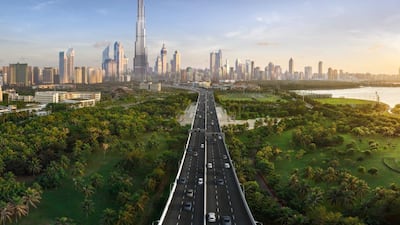
Beaches will be extended by 400 per cent and 60 per cent of Dubai will be nature reserves under the 2040 plan. Courtesy: Sheikh Mohammed bin Rashid Twitter -
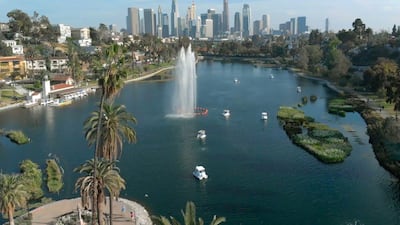
Beaches will be extended by 400 per cent and 60 per cent of Dubai will be nature reserves under the 2040 plan. Courtesy: Sheikh Mohammed bin Rashid Twitter -
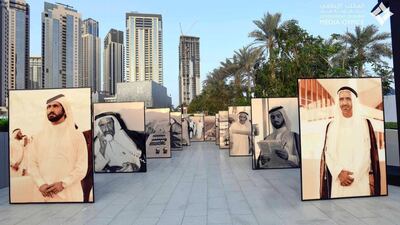
Historical images of Sheikh Mohammed bin Rashid and Sheikh Rashid, former Ruler of Dubai, at the presentation of the Dubai 2040 plan. Courtesy: Dubai Media Office -

The Dubai Urban Master Plan 2040, signed by Sheikh Mohammed bin Rashid, Vice President and Ruler of Dubai. Courtesy: Dubai Media Office -
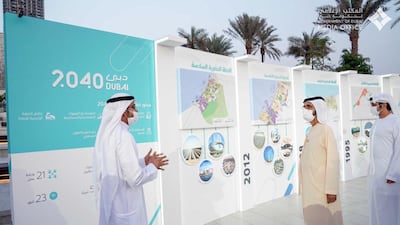
Sheikh Mohammed bin Rashid, Vice President and Ruler of Dubai, at an exhibition of the Dubai 2040 plan. Courtesy: Dubai Media Office -
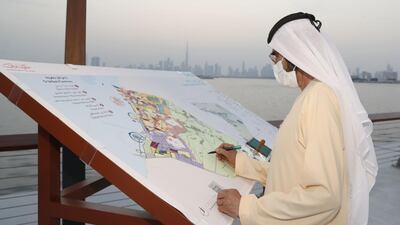
Sheikh Mohammed bin Rashid, Vice President and Ruler of Dubai, signs the Dubai Urban Master Plan 2040. Courtesy: Dubai Media Office -
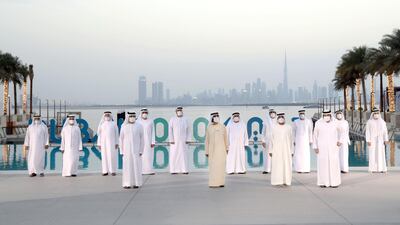
Sheikh Mohammed bin Rashid, Vice President and Ruler of Dubai, launches the Dubai 2040 Urban Master Plan. Wam -
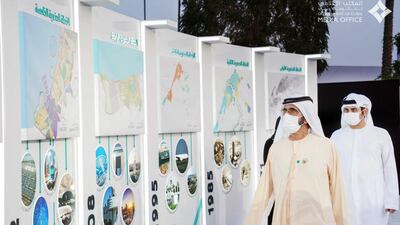
Sheikh Mohammed bin Rashid, Vice President and Ruler of Dubai, and Sheikh Maktoum bin Mohammed, Deputy Ruler of Dubai, at an exhibition of the Dubai 2040 plan. Courtesy: Dubai Media Office -

Sixty per cent of Dubai will be covered in nature reserves, under the 2040 plan unveiled by Sheikh Mohammed bin Rashid, Vice President and Ruler of Dubai. Courtesy: Sheikh Mohammed bin Rashid Twitter -
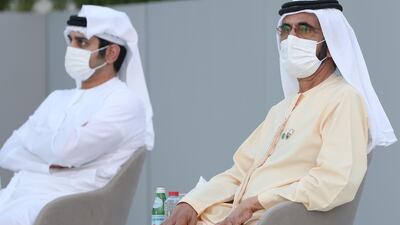
Sheikh Mohammed bin Rashid, Vice President and Ruler of Dubai, and Sheikh Maktoum bin Mohammed, Deputy Ruler of Dubai, launch the Dubai 2040 Urban Master Plan. Wam -
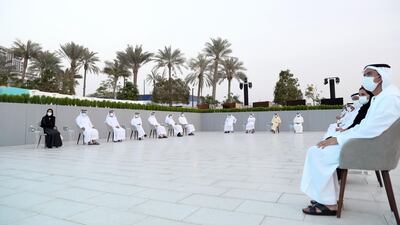
Sheikh Mohammed bin Rashid, Vice President and Ruler of Dubai, launches the Dubai 2040 Urban Master Plan. Wam -
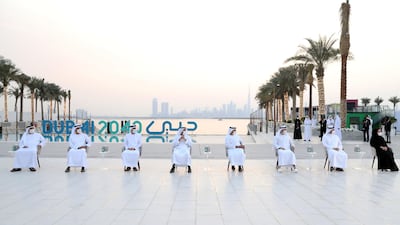
Sheikh Mohammed bin Rashid, Vice President and Ruler of Dubai, and Sheikh Maktoum bin Mohammed, Deputy Ruler of Dubai, launch the Dubai 2040 Urban Master Plan. Wam -
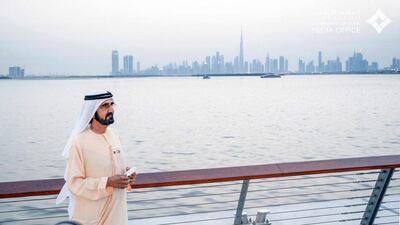
Sheikh Mohammed bin Rashid, Vice President and Ruler of Dubai, launched the Dubai 2040 plan with a move to overhaul the emirate's landscape. Courtesy: Dubai Media Office -
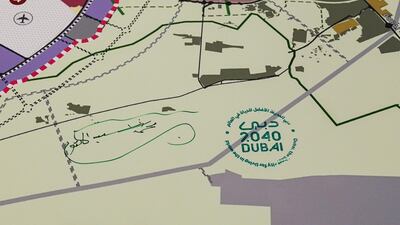
The Dubai Urban Master Plan 2040, signed by Sheikh Mohammed bin Rashid, Vice President and Ruler of Dubai. Courtesy: Dubai Media Office -

Since 1960, Dubai has implemented seven urban plans to keep up with the emirate's growing population. Courtesy: Dubai Media Office -
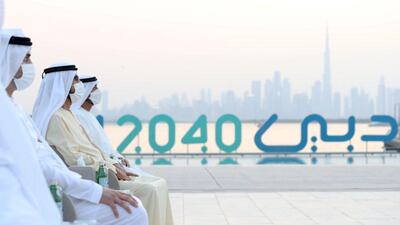
Sheikh Mohammed bin Rashid, Vice President and Ruler of Dubai, unveils the 2040 plan to overhaul the city's urban landscape. Courtesy: Sheikh Mohammed bin Rashid Twitter -
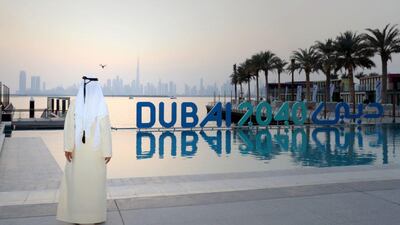
Sheikh Mohammed bin Rashid, Vice President and Ruler of Dubai, unveils the 2040 plan to overhaul the city's urban landscape. Courtesy: Sheikh Mohammed bin Rashid Twitter -

Since 1960, Dubai has brought in eight urban plans to keep up with the emirate's growing population. Courtesy: Dubai Media Office


Laying the foundations of a strong economy
The 50 projects initiative aims to boost economic growth. A huge fund of Dh5 billion ($1.36bn) will support Emirati initiatives in priority sectors and stimulate industry.
Partnership with Emirates Development Bank will provide further financial stimulus in technology over the next five years as the UAE transitions towards a 5G world and even greater internet connectivity.
Khaled Mohamed Balama, governor of the Central Bank of the UAE, said the bank’s plan for the next 50 years was based on several major areas.
They include adopting artificial intelligence, analysing big data, using digital identity and dealing with the repercussions of climate change on the banking and insurance sector.
Meanwhile, a new 10x10 programme of exports aims to boost UAE trade to global markets by 10 per cent.
China, the UK, Netherlands, Italy, Russia, Poland, Luxembourg, Australia, New Zealand and Indonesia are all set to benefit from greater international trade with the UAE in the years ahead.
Urban Plan 2040, Dubai
Among the year’s significant announcements was the 2040 Urban Plan for Dubai in March.
It promises to reshape the face of the nation’s most populous emirate, by enhancing and expanding existing communities, while developing new areas to attract residents.
Dubai’s latest development plan is the seventh since 1960 and will see five areas benefit from substantial work.
Land will be prioritised for education and health care, boosting facilities' existing capacity by 25 per cent.
Substantial focus has been placed on attracting more people to Dubai to enhance growth.
Areas for hotels and tourism will expand by 134 per cent, while the number of safe public beaches will grow by 400 per cent.
The plan places the natural world at its centre, with 60 per cent of Dubai to comprise of nature reserves and natural areas, and more than half of the population will live within 800 metres of public transport, reducing the reliance on cars to help cut emissions.
New visas and long-term residency
Early announcements to complement 50 years of unification were an expanded framework for visas to attract new talent to the country to live and work.
New “green visas” were made available for freelancers, highly skilled professionals, investors, entrepreneurs and top performing students. A further change allows children over the age of 15 to work for the first time.
Another breakthrough was the decision to allow graduates to sponsor themselves for the first time.
-
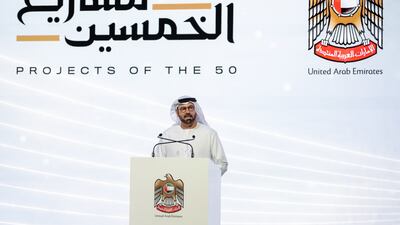
Emirati Minister of Cabinet Affairs Mohammad Al Gergawi. UAE Government Media -
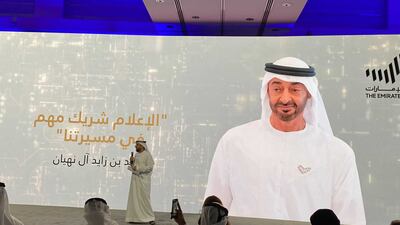
Saeed Al Eter, chairman of the UAE Government Media Office, addresses the audience at Emirates Towers in Dubai where he revealed 50 new projects for the UAE. All photos: Suhail Akram / The National -
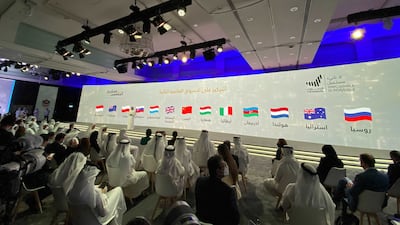
The country will seek $150 billion in inward investment by 2030. -
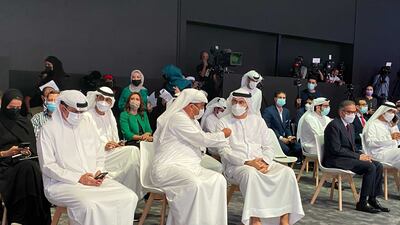
Senior officials set out a bold new vision for the country as it prepares to mark 50 years since the Union was formed. -
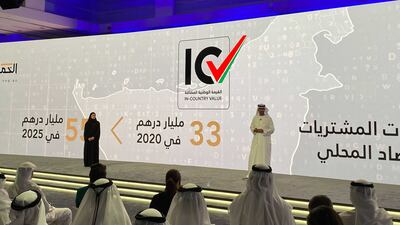
The drive will see billions pumped into the economy and hundreds of thousands of people trained and reskilled. -
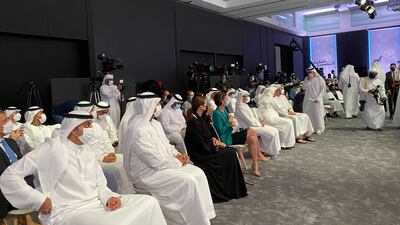
Officials, along with local and international media, listen intently as the projects and initiatives are unveiled. -
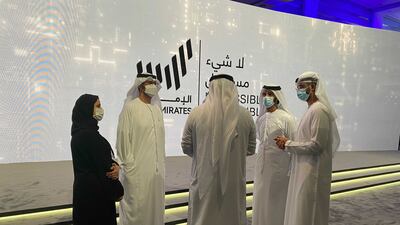
Ministers set out 'new era of prosperity and development'.


Technological developments
Data could well become the currency of the future, and new data protection laws promise greater online protection for consumers and restrict the proliferation of fake news.
Education in coding, the process of designing new computer programmes, is seen as central to technological growth.
The 100 Coders Every Day initiative will increase the number of coders from 64,000 to 100,000 in a year.
Incentives and benefits will be offered to support new programming companies.
-

The UAE sent an aircraft carrying emergency food and medical aid to Afghanistan in September 2021. All photos: Wam -

The UAE plane carried urgent medical and food aid to Afghanistan as part of its contribution to provide the basic and necessary needs of thousands of Afghan families. -

The aid will help meet the basic needs of thousands of Afghan families, especially the most vulnerable groups such as women, children and the elderly. -

The urgent assistance comes within the framework of the humanitarian role played by the UAE to provide full support to Afghan people in the current circumstances. -

The aid was sent on September 3, 2021, to assist thousands of Afghan families, especially the most vulnerable, such as women, children and the elderly.


UAE's commitment to humanitarian aid
The UAE aims to continue its presence as a beacon of hope and opportunity in a region often plagued by turmoil and uncertainty.
It values “good neighbourliness” as a foundation of national stability.
Distributing humanitarian aid has been a key component of the UAE's foreign policy, not just in 2021 but especially during the entire Covid-19 pandemic, sending aid worth hundreds of millions of dollars to countries, including large shipments of personal protective equipment.
The UAE was also central in aid efforts for Afghanistan after the US withdrawal.
Biggest legal changes in UAE's history
Throughout 2021 there have been a series of amendments to existing laws, and numerous new laws to change the country's way of life.
In total, more than 40 new and updated laws have been drafted in, and include the decriminalisation of alcohol consumption and cohabitation of unmarried couples.
Other significant changes include new laws for non-Muslims in Abu Dhabi, allowing them to conduct procedures such as inheritance claims, divorce and child custody disputes in the jurisdictions of their countries of origin.
Greater rights have also been legally passed for women, and include an increase in maternity leave by a minimum of 30 per cent.
Employers must now offer a minimum of 45 days at full pay plus 15 more days at 50 per cent pay under the new terms.
Other new laws under consideration will tackle money laundering and terrorist financing by changing the way charitable donations are made.
Non-profit organisations will also face greater scrutiny under new legislation.
There have also been changes to UAE drug laws that limit criminal action against those in possession of items containing cannabis extracts, such as in cosmetics and health products.
Items with traces of the drug — such as the THC compound — will instead be seized and destroyed, with no punishment for first-time possession.
Workers celebrate the UAE's Golden Jubilee — in pictures
-
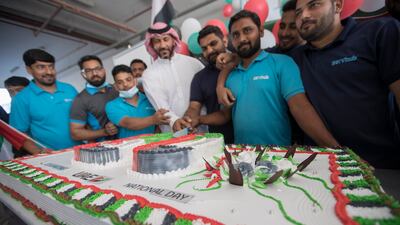
A team of 450 construction workers that helped bring Expo 2020 Dubai to life joined in with the Golden Jubilee celebrations on Thursday morning. Photos by Ruel Pableo for The National -
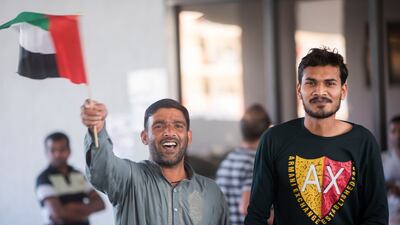
Imtiaz Afsar, right, a construction worker from India, said he was enjoying the celebrations with his 'new Dubai family'. -
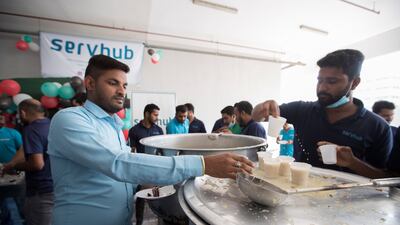
Workers enjoyed free cake and cups of badam kheer, a sweet, milky drink. -
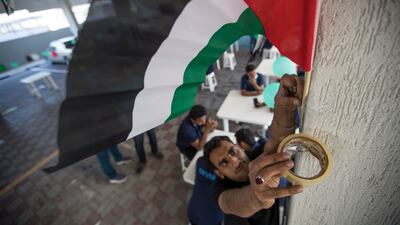
The entrance to the accommodation complex was decorated with UAE flags. -
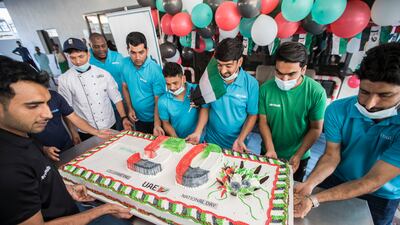
The workers were presented with a giant cake, measuring 1.5 metres. -
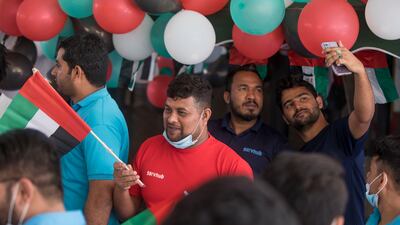
Around the site in Jebel Ali workers were seen enjoying their day off. -
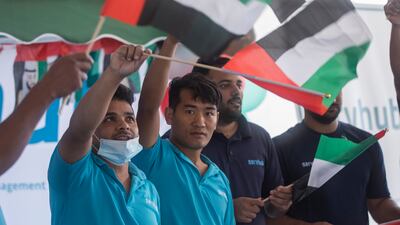
Some workers were also handed small gifts, including stationary and chocolates. -
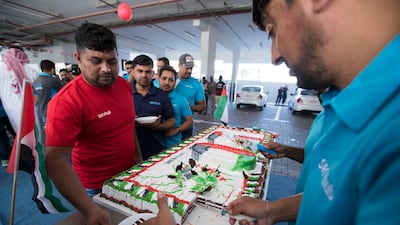
A worker receives a slice of cake. -
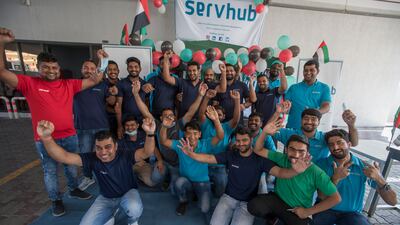
The workers enjoyed the morning off duty to celebrate the UAE's 50th anniversary.



