
Etihad Airways has trained crew members to be in-flight nannies to young passengers. Photo: Etihad Airways

10 tips for flying with babies and toddlers from Dubai and Abu Dhabi airports


Hayley Skirka
  • English
  • Arabic

Summer is in full swing, and while some travellers are off on trips with friends or on solo retreats, many of us are travelling with far less predictable companions. For parents flying with babies or toddlers, the prospect of air travel can be daunting.

“Pre-travel anxiety is incredibly common, especially before flying with young children for the first time,” says Sreevidhya Srinivas, a clinical psychologist for children and adolescents at Dubai’s Medcare Camali Clinic. “Parents aren’t just handling the logistics of travel, they’re also managing uncertainty, expectations and the emotional weight of worrying that things might go wrong.”

Having taken 17 flights with my now 22-month-old daughter, I get it. Gone are the days when my biggest concern was the in-flight movie. Now, flying means juggling naps, snacks and toddler moods. But what I’ve learnt is that it can go smoothly. And even when it doesn’t, it is short-lived.
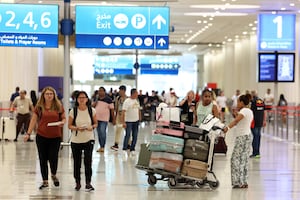
Here are 10 tips to make your next flight with little ones as fuss-free as possible.

1. Babies can travel earlier than you might think

My daughter’s first flight was at three months. She had reflux, colic and was entirely unpredictable. But the eight-hour flight from Dubai to Glasgow, although intense and sleepless, was manageable. The upside of flying with such young babies is that they’re immobile, small enough for the bassinet and mostly unaware of the chaos around them. The downside is their constant, unpredictable needs and that parents are navigating the journey on newborn-induced fatigue.

Airlines in the UAE, including Emirates and Etihad, usually allow babies to fly from seven days old, although medical clearance may be needed for those under two weeks or born prematurely.

“Most healthy, full-term infants can safely fly from two weeks,” says Dr Mohammed Harriss, a pulmonology specialist from Medcare Royal Specialty Hospital. “Where possible, I recommend waiting until they are six to eight weeks old. By then, babies have had their first vaccines and are more resilient to germs in crowded spaces.”

2. Master the airport experience

Plaza Premium Lounge in Terminal 3 at Dubai International Airport has a children's play area. Pawan Singh / The National

Skip duty-free shopping and instead use airport time to manage nappy changes and let toddlers burn off energy. I recommend arriving about two hours before your flight to check in, pass security and navigate terminals with little ones in tow.

If you’re flying with young children, you can’t use UAE e-gates, but family lanes at both Dubai and Abu Dhabi airports help speed up immigration. At security, laptops or iPads typically need to come out of bags, so have them handy. Flag to staff that you have baby liquids with you as these may need to be swabbed, but there’s no limit to how much you can bring. Whether you have to fold your pram depends on the airport and, in my experience, on the staff on duty. It’s best to be mentally prepared for it. A baby carrier can help here.

Once through formalities, Dubai International has a small play area near the B-Gates with a slide and climbing frame. Abu Dhabi’s Zayed International Airport has a play space for under-sixes just after passport control, and a sensory room, which is great for early or late flights.

“These rooms serve as excellent environments for self-regulation,” says Dr Srinivas. “They reduce auditory and visual input and help facilitate emotional downregulation.” You can prebook a 45-minute slot or just turn up and see if there is space.

Many airlines also offer early family boarding, a small but useful win for getting settled before passengers join.

3. Book a neighbour-free seat

Neighbour-free seating is a gamechanger. Hayley Skirka for The National

My number one travel hack when flying with little ones is to go with Etihad and take advantage of its Economy Neighbour-Free seats.

I’ve paid between Dh250 and Dh650 for this service, which allows you to block the seat beside you, giving your infant their own space for a fraction of the cost of a child’s fare. It’s not guaranteed, as it depends on flight loads, but it’s saved me hundreds of dirhams compared to buying a second seat.

Emirates and Qatar Airways offer similar options, but these can’t be pre-booked and can only be requested at the airport, subject to availability. If you do get the extra seat, your child still needs to be on your lap for take-off, landing and turbulence, but the added space is a game-changer.

4. Request a bassinet

Bassinet seats are usually in the bulkhead row, meaning more space. Even if your child has outgrown the bassinet itself, which is likely given they are restricted for children who are more than 11kg or 75cm on both Emirates and Etihad, the extra legroom is still valuable. Call your airline to reserve the seats, a service that is free of charge when travelling with a child under two.

Stretching out in the bassinet. Hayley Skirka for The National

My daughter is petite, so she fit in the bassinet until around 15 months. Even after that, I continue to book the seats for the extra room.

5. Anticipate take-off troubles

“Ear discomfort during take-off and landing is common due to changes in cabin pressure, and it can be particularly uncomfortable for infants and toddlers because their Eustachian tubes are still developing,” says Dr Harriss. Babies can drink milk or water during ascent and descent to help swallow and equalise pressure, while older toddlers can suck on a straw or sippy cup. Snacks also help.

Just remember elevation changes typically last longer than you think, so don’t go too fast with drinks, or have a second one ready.

6. In-flight entertainment

The in-flight information card can double up as a toy. Hayley Skirka for The National

Unpredictably, some of my daughter’s favourite in-flight toys have been a roll of painter’s tape and an in-flight safety card.

I now pack a few cheap surprises such as stickers, figurines and water colouring books, and wrap them in foil to hand out throughout the flight. Unwrapping is part of the fun, and foil makes security checks easier if you need to reveal what’s inside. If your toddler will watch a show, pre-download it and check it’s still valid while you have Wi-Fi. Some Netflix downloads expire in 48 hours.

Finally, don’t underestimate the joy of a friendly neighbour sat behind you. Games of peekaboo have been some of my daughter’s most fun in-flight moments.

7. Feeding time tips

For bottle-fed babies, the easiest option is ready-to-feed formula. Decant into sterilised bottles and ask the crew to heat them. If you have an impatient baby, it’s worth investing in a Nuby RapidCool. This insulated container chills milk back to drinking temperature in two minutes and is a lifesaver when crew hand you back an almost boiling bottle.

If you’re breastfeeding, it’s even easier, simply throw a scarf in your bag if you want some privacy. For older babies and toddlers, freeze food pouches before the flight. They’ll thaw gradually and be ready to eat mid-journey.

8. Pack a travel health kit

As well as travel essentials such as nappies and wipes, pack a health kit when you fly. “Essentials include a digital thermometer, pain relievers, saline spray and a bulb syringe or nasal aspirator for congestion,” says Dr Udhayesan Cherayil Nanu, a specialist paediatrician at Aster Clinic in Sharjah.

Admittedly, I only started doing this after flying from Japan with my daughter when she developed a fever mid-flight. The Etihad crew were fantastic and brought me a thermometer, but when they offered to call a doctor on the ground, my panic levels rose. If I’d had my own thermometer and medicine, I could’ve monitored and treated her calmly, without the drama.

9. Reconsider the red-eye

Red-eye flights can be great if your child nods off easily, but I’ve accepted they’re not for us as my daughter refuses to sleep more than half an hour when travelling and I end up stressed trying to keep her quiet while others rest.

“Red-eye flights can work well if your child has a predictable bedtime routine and is comfortable sleeping in different environments,” says Dr Yasir Shafi, a homoeopathic practitioner at Wellth Clinic. But, as he adds: “There’s pressure to keep the child quiet, which isn’t always realistic.”

If you do go red-eye, try to recreate bedtime. “Familiar routines are powerful sleep cues, even in-flight,” says Dr Harriss. “Bring a sleep sack, familiar pyjamas, white noise and a bedtime book.”

10. Stay calm

Meltdowns mid-air feel more intense, but they’re rarely as bad as you think. “Flying with young children can be unpredictable and, while preparation is important, flexibility is just as vital,” says Dr Nanu.

If a meltdown occurs, stay calm. “Your toddler feeds off your energy,” says Dr Srinivas. “If you panic or get flustered, they escalate too.” Acknowledging their emotions, offering comfort, and gently shifting their focus with a toy, snack or book can help.

I can personally attest that things don’t always go to plan when flying with toddlers, but for those hours you’re on the plane, focusing on your family's comfort is the best you can do. “Staying calm, compassionate and responsive is more important for children than perfect travel plans,” says Dr Shafi.


The bio

Favourite book: Peter Rabbit. I used to read it to my three children and still read it myself. If I am feeling down it brings back good memories.

Best thing about your job: Getting to help people. My mum always told me never to pass up an opportunity to do a good deed.

Best part of life in the UAE: The weather. The constant sunshine is amazing and there is always something to do, you have so many options when it comes to how to spend your day.

Favourite holiday destination: Malaysia. I went there for my honeymoon and ended up volunteering to teach local children for a few hours each day. It is such a special place and I plan to retire there one day.

MATCH INFO

Who: UAE v USA
What: first T20 international
When: Friday, 2pm
Where: ICC Academy in Dubai

UAE currency: the story behind the money in your pockets
UAE%20v%20West%20Indies
%3Cp%3EFirst%20ODI%20-%20Sunday%2C%20June%204%20%0D%3Cbr%3ESecond%20ODI%20-%20Tuesday%2C%20June%206%20%0D%3Cbr%3EThird%20ODI%20-%20Friday%2C%20June%209%26nbsp%3B%3C%2Fp%3E%0A%3Cp%3EMatches%20at%20Sharjah%20Cricket%20Stadium.%20All%20games%20start%20at%204.30pm%0D%3Cbr%3E%0D%3Cbr%3E%3Cstrong%3EUAE%20squad%3C%2Fstrong%3E%0D%3Cbr%3EMuhammad%20Waseem%20(captain)%2C%20Aayan%20Khan%2C%20Adithya%20Shetty%2C%20Ali%20Naseer%2C%20Ansh%20Tandon%2C%20Aryansh%20Sharma%2C%20Asif%20Khan%2C%20Basil%20Hameed%2C%20Ethan%20D%E2%80%99Souza%2C%20Fahad%20Nawaz%2C%20Jonathan%20Figy%2C%20Junaid%20Siddique%2C%20Karthik%20Meiyappan%2C%20Lovepreet%20Singh%2C%20Matiullah%2C%20Mohammed%20Faraazuddin%2C%20Muhammad%20Jawadullah%2C%20Rameez%20Shahzad%2C%20Rohan%20Mustafa%2C%20Sanchit%20Sharma%2C%20Vriitya%20Aravind%2C%20Zahoor%20Khan%0D%3C%2Fp%3E%0A

Mercer, the investment consulting arm of US services company Marsh & McLennan, expects its wealth division to at least double its assets under management (AUM) in the Middle East as wealth in the region continues to grow despite economic headwinds, a company official said.

Mercer Wealth, which globally has $160 billion in AUM, plans to boost its AUM in the region to $2-$3bn in the next 2-3 years from the present $1bn, said Yasir AbuShaban, a Dubai-based principal with Mercer Wealth.

Within the next two to three years, we are looking at reaching $2 to $3 billion as a conservative estimate and we do see an opportunity to do so,” said Mr AbuShaban.

Mercer does not directly make investments, but allocates clients’ money they have discretion to, to professional asset managers. They also provide advice to clients.

“We have buying power. We can negotiate on their (client’s) behalf with asset managers to provide them lower fees than they otherwise would have to get on their own,” he added.

Mercer Wealth’s clients include sovereign wealth funds, family offices, and insurance companies among others.

From its office in Dubai, Mercer also looks after Africa, India and Turkey, where they also see opportunity for growth.

Wealth creation in Middle East and Africa (MEA) grew 8.5 per cent to $8.1 trillion last year from $7.5tn in 2015, higher than last year’s global average of 6 per cent and the second-highest growth in a region after Asia-Pacific which grew 9.9 per cent, according to consultancy Boston Consulting Group (BCG). In the region, where wealth grew just 1.9 per cent in 2015 compared with 2014, a pickup in oil prices has helped in wealth generation.

BCG is forecasting MEA wealth will rise to $12tn by 2021, growing at an annual average of 8 per cent.

Drivers of wealth generation in the region will be split evenly between new wealth creation and growth of performance of existing assets, according to BCG.

Another general trend in the region is clients’ looking for a comprehensive approach to investing, according to Mr AbuShaban.

“Institutional investors or some of the families are seeing a slowdown in the available capital they have to invest and in that sense they are looking at optimizing the way they manage their portfolios and making sure they are not investing haphazardly and different parts of their investment are working together,” said Mr AbuShaban.

Some clients also have a higher appetite for risk, given the low interest-rate environment that does not provide enough yield for some institutional investors. These clients are keen to invest in illiquid assets, such as private equity and infrastructure.

“What we have seen is a desire for higher returns in what has been a low-return environment specifically in various fixed income or bonds,” he said.

“In this environment, we have seen a de facto increase in the risk that clients are taking in things like illiquid investments, private equity investments, infrastructure and private debt, those kind of investments were higher illiquidity results in incrementally higher returns.”

The Abu Dhabi Investment Authority, one of the largest sovereign wealth funds, said in its 2016 report that has gradually increased its exposure in direct private equity and private credit transactions, mainly in Asian markets and especially in China and India. The authority’s private equity department focused on structured equities owing to “their defensive characteristics.”

UAE currency: the story behind the money in your pockets
THE%20SPECS
%3Cp%3EEngine%3A%203-litre%20V6%20turbo%20(standard%20model%2C%20E-hybrid)%3B%204-litre%20V8%20biturbo%20(S)%0D%3Cbr%3EPower%3A%20350hp%20(standard)%3B%20463hp%20(E-hybrid)%3B%20467hp%20(S)%0D%3Cbr%3ETorque%3A%20500Nm%20(standard)%3B%20650Nm%20(E-hybrid)%3B%20600Nm%20(S)%0D%0D%3Cbr%3EPrice%3A%20From%20Dh368%2C500%0D%3Cbr%3EOn%20sale%3A%20Now%3C%2Fp%3E%0A
Groom and Two Brides

Director: Elie Semaan

Starring: Abdullah Boushehri, Laila Abdallah, Lulwa Almulla

Rating: 3/5

Simran

Director Hansal Mehta

Stars: Kangana Ranaut, Soham Shah, Esha Tiwari Pandey

Three stars

ULTRA PROCESSED FOODS

- Carbonated drinks, sweet or savoury packaged snacks, confectionery, mass-produced packaged breads and buns 

- Margarines and spreads; cookies, biscuits, pastries, cakes, and cake mixes, breakfast cereals, cereal and energy bars

- Energy drinks, milk drinks, fruit yoghurts and fruit drinks, cocoa drinks, meat and chicken extracts and instant sauces

- Infant formulas and follow-on milks, health and slimming products such as powdered or fortified meal and dish substitutes

- Many ready-to-heat products including pre-prepared pies and pasta and pizza dishes, poultry and fish nuggets and sticks, sausages, burgers, hot dogs, and other reconstituted meat products, powdered and packaged instant soups, noodles and desserts

Who's who in Yemen conflict

Houthis: Iran-backed rebels who occupy Sanaa and run unrecognised government

Yemeni government: Exiled government in Aden led by eight-member Presidential Leadership Council

Southern Transitional Council: Faction in Yemeni government that seeks autonomy for the south

Habrish 'rebels': Tribal-backed forces feuding with STC over control of oil in government territory

UAE currency: the story behind the money in your pockets
Klopp at the Kop

Matches 68; Wins 35; Draws 19; Losses 14; Goals For 133; Goals Against 82

  • Eighth place in Premier League in 2015/16
  • Runners-up in Europa League in 2016
  • Runners-up in League Cup in 2016
  • Fourth place in Premier League in 2016/17
The specs

Engine: 4.0-litre, twin-turbocharged V8

Transmission: nine-speed automatic

Power: 630bhp

Torque: 900Nm

Price: Dh810,000

Ms Yang's top tips for parents new to the UAE
  1. Join parent networks
  2. Look beyond school fees
  3. Keep an open mind
Moving%20Out%202
%3Cp%3E%3Cstrong%3EDeveloper%3A%3C%2Fstrong%3E%20SMG%20Studio%3Cbr%3E%3Cstrong%3EPublisher%3A%3C%2Fstrong%3E%20Team17%3Cbr%3E%3Cstrong%3EConsoles%3A%3C%2Fstrong%3E%20Nintendo%20Switch%2C%20PlayStation%204%26amp%3B5%2C%20PC%20and%20Xbox%20One%3Cbr%3E%3Cstrong%3ERating%3A%3C%2Fstrong%3E%204%2F5%3C%2Fp%3E%0A
Updated: July 14, 2025, 6:30 AM